 Telephone: +86-574-62838966
 E-mail : sale2@hengboyi.com


 en
en  English
 Español
 中文简体
中文简体
Choosing the Best Outdoor Decorative Solar Lights and Indoor Decorative String Lights
Home / News / Industry News / Choosing the Best Outdoor Decorative Solar Lights and Indoor Decorative String Lights
Industry News
Home / News / Industry News / Choosing the Best Outdoor Decorative Solar Lights and Indoor Decorative String Lights
Choosing the Best Outdoor Decorative Solar Lights and Indoor Decorative String Lights
Content
- 1 The Direct Answer: How to Choose Decorative Lighting That Works Indoors and Outdoors
- 2 Decorative String Lights Indoor vs Outdoor: Core Differences
- 3 Why Solar Lighting Products Are Gaining Ground in Outdoor Decoration
- 4 Key Features That Define the Best Outdoor Decorative Solar Lights
- 5 Comparing Decorative Lighting Styles Across Practical Attributes
- 6 Weatherproofing and Safety Standards for Outdoor Decorative Lighting
- 7 How to Choose Decorative String Lights for Indoor Spaces
- 8 Installation and Maintenance Best Practices for Outdoor Solar Lighting
- 9 Common Installation Mistakes to Avoid
- 10 Matching Decorative Lighting to Different Outdoor Settings
- 11 About Hengboyi
- 12 Frequently Asked Questions
The Direct Answer: How to Choose Decorative Lighting That Works Indoors and Outdoors
The most reliable approach to Decorative Lighting is to match the fixture to the environment rather than choosing a single style for every space. For interiors, warm-toned, low-voltage Decorative String Lights with dimmable settings and soft copper or rubber-coated wire are the safest and most flexible choice. For patios, gardens, and balconies, weatherproof solar lighting products rated at IP65 or higher remove the need for outlets and extension cords while still delivering consistent evening illumination. When a single set needs to move between a covered porch and an open garden bed, an IP65-rated solar string light with a detachable panel and at least 600 mAh battery capacity is generally the most dependable middle ground.
Buyers searching for the best outdoor decorative solar lights tend to prioritize three measurable factors: nightly runtime, water resistance, and light output consistency after repeated charge cycles. The sections below walk through each of these factors with supporting data, followed by guidance on indoor placement, weatherproofing standards, and a set of frequently asked questions.
Before comparing individual products, it helps to sort the decision by where the fixture will live and how long it needs to stay installed. A quick reference checklist covers most common scenarios:
- Bedroom, living room, or shelving display: warm-toned, dimmable, low-voltage decorative string lights indoor rated, no waterproofing required
- Covered patio or porch: IP44-rated decorative lighting is generally sufficient since the fixture is shielded from direct rain
- Open garden, fence line, or balcony railing: IP65-rated solar lighting products with a battery of at least 600 mAh
- Pathway, pond edge, or ground-level installation: IP67-rated solar fixtures built to tolerate standing water or temporary immersion
- Short-term event or seasonal display: lighter-duty multicolor string lights or portable solar strands that can be relocated easily
This sequence mirrors how most installation problems actually occur. A fixture rarely fails because the LEDs themselves wear out first; it typically fails because the water resistance rating did not match the environment it was placed in, or because a battery sized for a fairy strand was asked to power a brighter spotlight. Working through location first and style second avoids both of these common mismatches.
Decorative String Lights Indoor vs Outdoor: Core Differences
Although indoor and outdoor fixtures often look similar on a shelf, the internal build and rated tolerances are different. Decorative string lights indoor use typically favor a softer glow, a smaller bulb spacing, and a wire jacket that prioritizes flexibility over rigidity, since the lights are wrapped around furniture, mirrors, or headboards rather than stretched across open air. Voltage is usually stepped down through a plug-in transformer, and heat dissipation is designed around close contact with fabric, wood, or drywall.
Outdoor decorative lighting, by contrast, has to withstand temperature swings, ultraviolet exposure, condensation, and occasional direct rain. Wire insulation is thicker, connectors are sealed rather than exposed, and bulbs are set further apart to reduce heat buildup in enclosed housings. This is also where solar lighting products enter the picture, since removing the wired power connection eliminates one of the most common failure points in outdoor installations: water intrusion at the plug.
Wire gauge is another detail that is easy to overlook when comparing decorative lighting on appearance alone. A thicker copper gauge carries current with less resistance and less heat buildup, which matters more on longer runs where voltage drop can dim the far end of a strand. Indoor installations rarely exceed a single room's length, so a thinner gauge is usually adequate, but outdoor runs along a fence line or roofline often stretch well beyond what a single indoor-rated strand was designed to carry. Connecting too many indoor-rated strands end to end outdoors is a common cause of dimming or flickering at the far end of the run, independent of any water exposure issue.
The chart below summarizes how frequently decorative lighting is used across common indoor and outdoor spaces, based on typical installation patterns reported by residential and event lighting installers. Outdoor spaces account for the largest share of decorative lighting installations, led by patios and decks, while indoor use remains concentrated in bedrooms and living rooms where softer ambient lighting is preferred.
This distribution explains why manufacturers design separate indoor and outdoor product lines rather than a single universal fixture. A wire built to survive rain and ultraviolet exposure is typically stiffer than what feels comfortable draped across a headboard, while a soft indoor-grade wire would degrade quickly if left outside through a rainy season.
Why Solar Lighting Products Are Gaining Ground in Outdoor Decoration
Solar lighting products have become a common choice for outdoor decorative lighting because they remove dependence on nearby outlets, reduce the fire risk associated with extension cords left outdoors, and lower ongoing electricity draw. A solar panel paired with a small lithium or nickel-based battery collects charge throughout daylight hours and automatically activates the light strand at dusk, which also removes the need for a manual timer in most residential setups.
Runtime is the factor most buyers care about first, and it shifts meaningfully with the seasons because daylight hours and sun angle both change. The chart below tracks average nightly runtime for a mid-range solar decorative light across four seasons in a temperate climate. Summer produces the longest nightly runtime, typically exceeding ten hours, while winter charging is shorter due to lower sun angle and fewer daylight hours, which is an important planning factor for anyone comparing solar lighting products for year-round outdoor use.
The seasonal dip in winter runtime is normal and expected rather than a sign of a defective unit, and it is one of the reasons installation angle matters as much as panel size. A panel mounted flat against a fence in shade will underperform even in summer, while a panel angled toward unobstructed southern exposure can approach its rated runtime even with a smaller battery. Anyone comparing solar lighting products across a full year should weigh winter performance rather than judging a unit only on its best-case summer runtime.
Beyond seasonal runtime, solar lighting products also reduce the ongoing electricity draw associated with decorative lighting left on for several hours every evening. Because the panel recharges the battery using ambient daylight rather than grid power, a solar-powered strand offsets nearly all of its own nightly electricity use once installed, which is one of the more practical advantages of choosing solar lighting products for permanent outdoor fixtures such as fence lines, garden borders, and rooflines that would otherwise require a dedicated outdoor outlet.
The absence of a power cord also simplifies placement. A wired string light is constrained by the location of the nearest outlet and the length of an approved outdoor extension cord, while a solar fixture can be positioned anywhere it receives adequate sunlight during the day, including spots well away from the house such as a freestanding arbor, a detached shed, or a mid-yard tree line. This flexibility is a major reason solar lighting products have expanded beyond simple pathway markers into full decorative string light and net light formats over the past several years.
Automatic dusk-to-dawn operation is a secondary but practical advantage of most solar lighting products. Because the light sensor built into the panel triggers the strand at a set ambient light threshold, there is no need to remember to turn the fixture on each evening or to adjust a timer as sunset times shift across the year. This is particularly useful for larger properties with multiple decorative lighting zones, since each solar fixture manages its own schedule independently rather than relying on a single central timer that has to account for every zone at once.
Key Features That Define the Best Outdoor Decorative Solar Lights
Identifying the best outdoor decorative solar lights comes down to a short list of specifications rather than appearance alone. The following features consistently separate long-lasting installations from ones that fade or fail within a single season:
- Battery capacity of at least 600 mAh for basic fairy string lights, and 1200 mAh or higher for path lights or spotlights that draw more current
- An IP65 or higher water resistance rating for any fixture placed in an open, uncovered area
- A monocrystalline or polycrystalline solar panel, which charges more efficiently than lower-grade amorphous panels in partial shade
- Multiple lighting modes, such as steady glow, slow fade, and flicker-free flame effect, controlled through a sealed switch
- A wire jacket rated for outdoor ultraviolet exposure, since untreated plastic can become brittle within a single summer
Battery capacity in particular scales with how the fixture is used, since a spotlight drawing more current per LED needs a larger reserve than a low-draw fairy strand. The chart below compares typical battery capacity across four common categories of solar decorative lighting. Solar spotlights generally carry the largest battery capacity, often exceeding 2000 mAh, since they concentrate light output into a narrower beam and therefore consume more power per hour of operation than a diffused string light.
A larger battery is not automatically better if the panel cannot recharge it fully within a typical daylight cycle, so panel and battery should always be evaluated together. A 2200 mAh battery paired with an undersized panel will charge slower than its capacity suggests, which is why the most consistent solar lighting products pair battery size with a proportionally sized panel rather than maximizing one specification alone.
LED lifespan is a related specification that is easy to overlook because it rarely appears on the front of the packaging. Most decorative-grade LEDs are rated for tens of thousands of hours of operation, which at a typical usage pattern of five to eight hours per night translates into many years of nightly use before individual bulbs are expected to dim noticeably. In practice, the battery and the seals around it tend to wear out well before the LEDs themselves do, which is another reason battery capacity and water resistance rating deserve more attention during selection than the number of bulbs or their individual brightness rating.
Light output consistency across the length of a strand is a smaller but still noticeable factor, particularly on longer runs. A well-built strand maintains close to uniform brightness from the first bulb to the last, while a poorly regulated circuit can show a visible drop in brightness toward the far end, especially once several strands are connected together. This is generally controlled through the driver circuit rather than the LEDs themselves, so testing a full connected run before final installation, rather than judging brightness from a single short segment in a store display, gives a more accurate picture of how the fixture will actually perform once mounted.
Comparing Decorative Lighting Styles Across Practical Attributes
Warm white, multicolor, and flame-effect solar styles each perform differently depending on what a buyer values most. The radar chart below scores three common decorative lighting styles across five practical attributes on a scale of one to ten, based on typical product performance patterns reported in outdoor lighting installations. Warm white decorative string lights score highest for ambiance and ease of installation, while flame-effect solar lights score highest for energy efficiency because their lower per-bulb draw allows for a smaller, more efficient power system.
Multicolor sets score highest for versatility since they suit both everyday decoration and event-specific themes, but they generally trail warm white sets on ambiance because mixed color temperatures read as less cohesive in a residential setting. None of the three styles dominates every category, which is why matching the style to the specific goal of the space produces better results than defaulting to whichever style looks most striking in a product photo.
Durability scores are close across all three styles, which reflects how similar the underlying LED and wire technology has become regardless of the visual finish. The larger practical differences show up in ease of installation and energy efficiency, both of which are shaped more by the power source and control system than by the color or shape of the bulb itself. A flame-effect solar fixture and a plain warm white solar fixture generally share the same battery, panel, and wire construction, so the choice between them can be based purely on the visual effect a buyer wants rather than any meaningful difference in reliability.
Weatherproofing and Safety Standards for Outdoor Decorative Lighting
Ingress Protection ratings describe how well a fixture resists dust and water, and they are printed directly on most decorative lighting packaging as a two-digit code following the letters IP. The first digit describes solid particle protection and the second describes water resistance. For outdoor decorative lighting, the second digit is usually the more important number to check, since it determines whether a fixture can handle rain, sprinkler overspray, or direct ground contact.
| IP Rating | Protection Level | Recommended Setting | Typical Application |
|---|---|---|---|
| IP44 | Protected against solids larger than 1mm and light splashing | Covered outdoor areas and indoor rooms | Decorative string lights indoor use and covered patios |
| IP65 | Fully dust protected and resistant to low-pressure water jets | Open, uncovered outdoor areas | Garden beds, fences, and pathway solar lighting products |
| IP67 | Fully dust protected and resistant to temporary immersion | Ground level and wet-prone outdoor zones | Lighting placed near ponds, pools, or low drainage points |
A fixture rated below IP44 should generally stay indoors, since even brief exposure to rain can corrode internal connectors over time. It is also worth checking that the transformer or battery housing carries the same rating as the light strand itself, since a weatherproof strand connected to an unsealed control box does not provide full outdoor protection.
Connector design deserves the same attention as the rating printed on the box. Many outdoor decorative string lights use a rubber-gasketed male-to-female connector that forms a seal only when fully seated, so a connector that is left partially plugged in in order to link two strands at an angle can quietly defeat the water resistance rating even on an IP65 product. Positioning connection points under an eave, inside a weatherproof junction box, or at least off direct ground contact adds a practical margin of safety beyond the printed rating, particularly in regions with heavy seasonal rainfall.
IP testing is conducted under controlled laboratory conditions, so the printed rating describes performance under those specific test parameters rather than an unlimited guarantee against every possible weather event. A fixture rated IP65 is tested against low-pressure water jets from multiple angles for a defined period, which reflects normal rainfall reasonably well, but prolonged submersion or high-pressure spray from a garden hose exceeds what that rating certifies. Reading the rating as a description of tested conditions, rather than an absolute limit, leads to more realistic expectations about where a given fixture will hold up over several seasons.
How to Choose Decorative String Lights for Indoor Spaces
Selecting decorative string lights indoor use requires a slightly different checklist than outdoor selection, since safety around fabric, wood furniture, and enclosed wall space takes priority over weather resistance. The steps below outline a practical selection process for bedrooms, living rooms, and shelving displays.
- Confirm the color temperature is between 2700K and 3000K, which reads as warm white rather than a cooler, more clinical tone
- Choose a dimmable driver if the lights will be used behind a headboard or near a television, where full brightness can be distracting
- Check that the transformer is UL-listed or carries an equivalent regional safety certification before plugging into a standard household outlet
- Avoid running string lights under rugs or behind curtains where heat cannot dissipate, even with low-draw LED bulbs
- Use adhesive clips rather than nails or staples on wire jackets, since piercing the insulation increases the risk of a short circuit
Indoor decorative lighting is generally left running for longer stretches per session than outdoor lighting, since it often doubles as ambient room lighting rather than purely decorative accent lighting. This makes the dimming feature more than a cosmetic extra, since it allows one fixture to function as both a bright accent during setup and a low, restful glow later in the evening.
Placement inside a room affects perceived brightness more than most buyers expect. A strand mounted at eye level along a headboard or shelf reads as a distinct decorative accent, while the same strand tucked into a corner near the ceiling blends into general ambient light and loses much of its visual definition. Grouping bulbs closer together along a defined edge, such as a mirror frame or window outline, also tends to produce a cleaner look than draping a strand loosely across an open wall, since the eye follows a continuous line more easily than scattered points of light.
Cable management is worth planning before mounting rather than after, particularly for decorative string lights indoor installations near a bed or seating area where a visible transformer or trailing wire can undercut an otherwise tidy setup. Routing the wire along a baseboard, behind furniture, or through a cable channel keeps the transformer accessible for maintenance while keeping it out of the main sightline. Battery-powered indoor strands avoid this issue entirely, though they require periodic battery replacement or recharging and are generally better suited to smaller accent applications than to a strand meant to run for several hours every night.
Installation and Maintenance Best Practices for Outdoor Solar Lighting
Correct placement affects the performance of solar lighting products more than almost any other factor, including battery size. Panels should face the direction that receives the most unobstructed sunlight during the middle of the day, which is south-facing in the northern hemisphere and north-facing in the southern hemisphere. A panel tilted at roughly the same angle as local latitude generally captures more consistent light across the year than one mounted flat.
Routine maintenance is minimal but still matters. Wiping dust and pollen from the panel surface every few weeks during dry seasons keeps charging efficiency close to its rated level, since even a thin film of debris can reduce light absorption. Bringing removable battery packs indoors during extended freezing periods can also extend battery lifespan, since lithium batteries lose capacity more quickly in sustained sub-freezing temperatures. For fixtures that remain outdoors year-round, confirming that gaskets and seals around the battery compartment remain intact after winter is a useful seasonal check before the lights are needed again in spring.
When a solar fixture stops turning on at dusk, the cause is usually one of a small number of straightforward issues rather than a full unit failure. A dirty or shaded panel is the most common cause and is worth ruling out first, followed by a battery that has reached the end of its rechargeable lifespan, which typically shows up as a noticeably shorter runtime each week even after cleaning the panel. A stuck or corroded power switch inside the battery compartment is the third common cause, particularly on units that have been exposed to repeated moisture without a fully sealed switch cover. Checking these three points in order resolves the majority of reported issues without needing to replace the entire fixture.
Common Installation Mistakes to Avoid
Most complaints about decorative lighting trace back to a small set of avoidable installation errors rather than a defective product. Reviewing these before setup, rather than after a fixture has already underperformed for a season, saves both time and the inconvenience of returning or replacing a unit that was simply installed in the wrong way.
- Mounting a solar panel in partial shade for convenience rather than moving it to a fully sunlit spot, which quietly reduces runtime well below the rated figure
- Connecting more strands end to end than the manufacturer's stated maximum, which increases the risk of overheating at the final connector
- Leaving a rubber-gasketed connector only partially seated when linking two outdoor strands at an angle, which can compromise the water resistance rating
- Using an indoor-rated strand outdoors under the assumption that a covered porch provides enough protection from wind-driven rain
- Coiling excess wire tightly against a heat source, such as a light fixture housing, instead of routing slack along a cooler surface
- Skipping the seasonal check on battery compartment seals, which allows small amounts of moisture to accumulate gradually over multiple winters
None of these mistakes are difficult to avoid once they are identified, and most take only a few extra minutes during initial setup. Because decorative lighting is often installed once and then left in place with minimal attention, catching these details early has a much larger effect on long-term reliability than any single specification on the packaging.
A short walkthrough after installation, checking that every connector is fully seated, every panel faces open sky, and every wire run is routed away from direct heat, generally takes less time than the initial setup itself. Building this final check into the installation process, rather than treating it as optional, is one of the simplest ways to extend the working life of both wired and solar decorative lighting.
Matching Decorative Lighting to Different Outdoor Settings
The same decorative lighting principles apply differently depending on the specific outdoor setting, and reviewing a few common scenarios makes the selection criteria easier to apply in practice. A covered patio with a roofline benefits from a fixed wired or plug-in strand, since the covered structure already limits rain exposure and a permanent power source avoids the need for seasonal battery checks. An open garden bed, by contrast, is better suited to solar lighting products staked directly into the soil, since running a power cord across open lawn creates both a tripping hazard and an unnecessary point of water exposure.
Balconies present a middle case, since space is limited and many buildings restrict permanent wiring modifications. A battery-powered or solar-charged strand that clips onto a railing without drilling is usually the most practical option, and a detachable panel allows the battery pack to be angled toward the sun even when the railing itself faces a less favorable direction. Wedding and event venues place a different set of demands on decorative lighting, since the installation is temporary, often spans a wide area such as a tent ceiling or tree canopy, and needs to be set up and removed within a single day. For this scenario, lightweight multicolor or warm white string lights with simple clip mounts tend to be easier to manage than solar fixtures, since event lighting is rarely left in place long enough to depend on daily solar charging.
Ground-level pathways and pond edges represent the most demanding outdoor setting, since fixtures here are exposed to standing water, irrigation overspray, and direct soil contact. This is the one setting where the higher IP67 rating discussed earlier is worth prioritizing over a lower-rated option, even if the lower-rated fixture offers a similar appearance or bulb count.
Bulb spacing and warmth also shift by setting in ways that are easy to overlook when comparing products side by side online. A wide bulb spacing that looks sparse in a small product photo often reads as appropriately subtle once stretched across a large tree canopy or long fence line, while the same spacing on a small balcony railing can look thin and underwhelming. As a general guide, larger open areas tend to suit wider bulb spacing and a warmer, softer tone, while smaller defined edges such as a balcony rail or window frame benefit from closer spacing so the outline of the space reads clearly after dark.
About Hengboyi
Founded in 2003, Ningbo Hengboyi Lamp Co., Ltd. specializes in the development and manufacture of decorative string lights and solar lighting products. The company operates production and testing facilities focused on consistent design quality and reliable performance, and its products are used by lighting brands and distributors across a range of international markets.
Manufacturing Expertise and Quality Control
With extensive experience in decorative lighting and string light production, Ningbo Hengboyi Lamp Co., Ltd. maintains established production lines that support stable supply and predictable delivery schedules. Quality inspection is applied at each stage from raw material intake through finished product testing, with fixtures evaluated against recognized safety and waterproofing benchmarks before shipment.
Product Range and Customization
The company's catalog spans waterproof string lights, LED decorative lights, solar lighting products, and flame-style lights, allowing buyers to source multiple decorative lighting categories from a single supplier. Customization options extend to voltage, wire length, wire type, overall appearance, and packaging, with prototype development available based on drawings or reference samples.
International Trade and Service
Ningbo Hengboyi Lamp Co., Ltd. holds independent export qualifications and maintains familiarity with international market regulations, complete shipping documentation, and coordinated logistics for global clients. The company's team supports inquiries directly, offering one-on-one communication and after-sales support intended to sustain long-term, mutually beneficial partnerships.
Because decorative lighting and solar lighting products span such a wide range of use cases, from a single indoor bedroom strand to a full outdoor event installation, Ningbo Hengboyi Lamp Co., Ltd. positions its production and customization services around covering that full range from one facility rather than splitting sourcing across multiple suppliers for different lighting categories.
Frequently Asked Questions
Q1: What is the difference between decorative string lights indoor and outdoor models?
Indoor models generally use softer, more flexible wire jackets and lower minimum weatherproofing since they are not exposed to rain or ultraviolet light. Outdoor models use thicker insulation, sealed connectors, and an IP rating of at least IP44, with IP65 or higher recommended for fully exposed areas. Wire gauge is also typically heavier on outdoor models to support longer runs without excessive voltage drop.
Q2: How long do solar lighting products typically stay illuminated after a full charge?
Most residential solar decorative lights run between five and ten hours per night on a full charge, depending on battery capacity, panel size, and the season. Summer charging generally supports the longest nightly runtime, while winter runtime is shorter due to reduced daylight. Panel placement toward unobstructed sunlight for most of the day has a larger effect on runtime than battery size alone.
Q3: Can decorative string lights be left outside during winter?
Fixtures rated IP65 or higher can typically remain outdoors through winter as long as the battery or transformer housing carries the same rating. Removable battery packs benefit from being brought indoors during extended freezing periods, since sustained cold can reduce battery lifespan over time. Checking gaskets and seals before the first winter storm is a simple way to catch wear before it leads to moisture damage.
Q4: What color temperature is recommended for decorative lighting in living spaces?
A color temperature between 2700K and 3000K is generally recommended for living rooms and bedrooms, since it produces a warm white tone that pairs well with most interior finishes. Cooler temperatures above 4000K tend to read as more clinical and are less commonly used for ambient decorative lighting. A dimmable driver adds further flexibility, letting the same fixture serve as a brighter accent or a low background glow depending on the time of evening.
Q5: Do the best outdoor decorative solar lights require direct sunlight to charge properly?
Direct, unobstructed sunlight produces the fastest and most complete charge, though most panels can still gather partial charge in bright indirect light. Consistent shade for most of the day will noticeably reduce runtime regardless of battery capacity, so panel placement should be checked before assuming a unit is underperforming. Relocating the panel a short distance to a sunnier spot, even if the light head stays in the same place, often resolves a short-runtime complaint.
Q6: How many string light strands can be safely connected end to end?
The maximum connectable strand count is set by the manufacturer and printed on the packaging or tag, since it depends on wire gauge and total wattage draw. Exceeding the stated limit can cause overheating at the connector, so the printed limit should be treated as a firm boundary rather than a general guideline. When a longer run is needed, using a separate power source for each section is safer than exceeding a single strand's rated connection count.
Product Categories
Recommended News
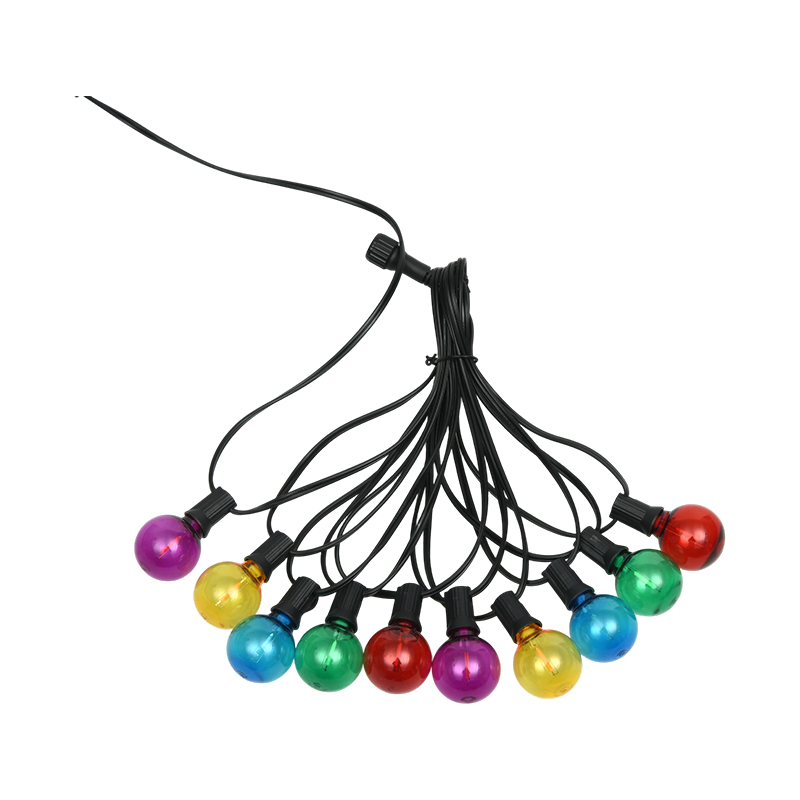
2026-05-21G40 Clip-on E12 Spiral Colored Decorative String Lights
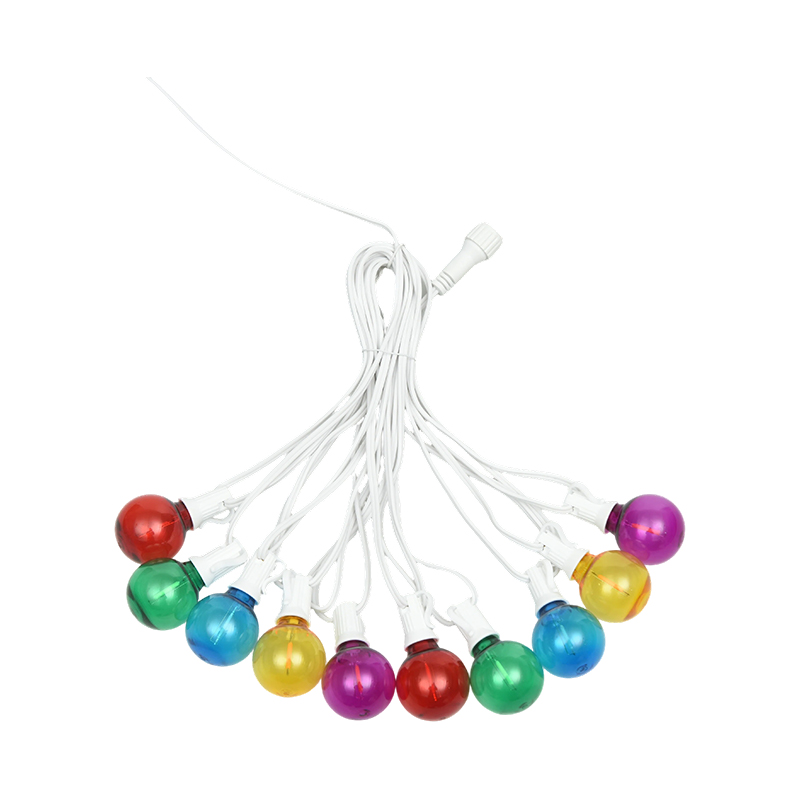
2026-05-21G40 Clip-on E12 Spiral Colored Decorative String Lights(White style)
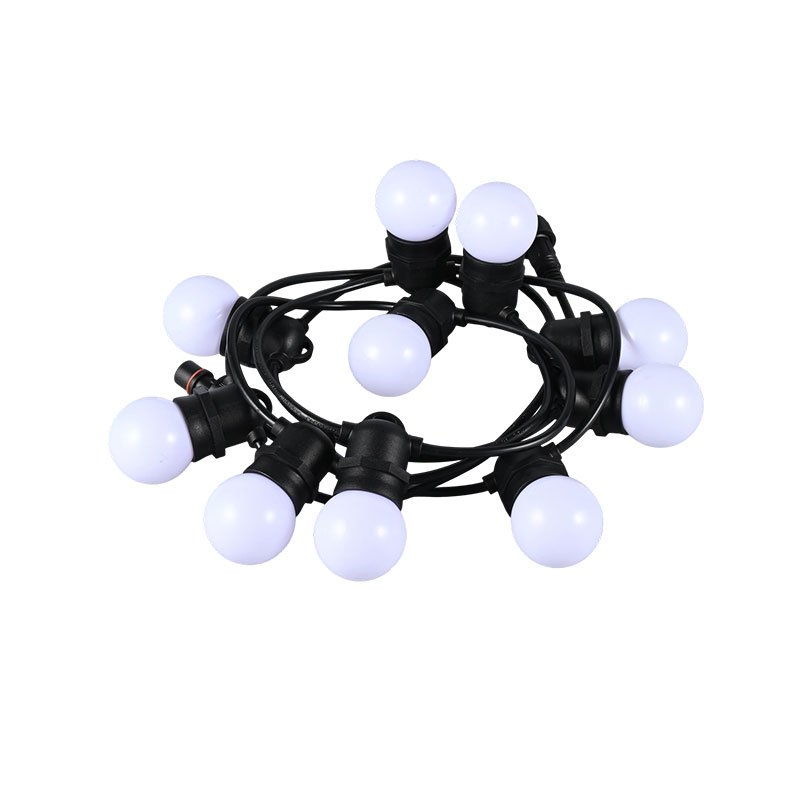
2026-05-21G45 Outdoor E27 White Light String Lights
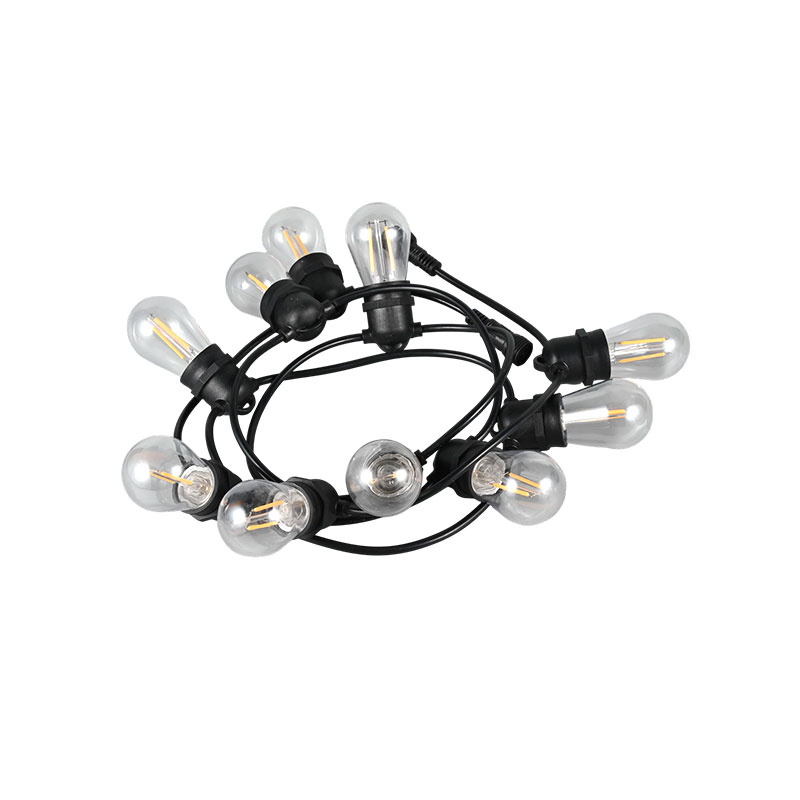
2026-05-21S14 Outdoor E27 Warm White String Lights
2026-05-21US Standard S14 String Lights, Integrated E26 Spiral Socket, Warm White Light, Heavy-Duty Engineering Model
2026-05-21G40 Clip-on E12 Spiral Warm White String Lights
Related Products
-
 View More
-
 View More
G40 Clip-on E12 Spiral Colored Decorative String Lights(White style)
-
 View More
G45 Outdoor E27 White Light String Lights
-
 View More
S14 Outdoor E27 Warm White String Lights
-
 View More
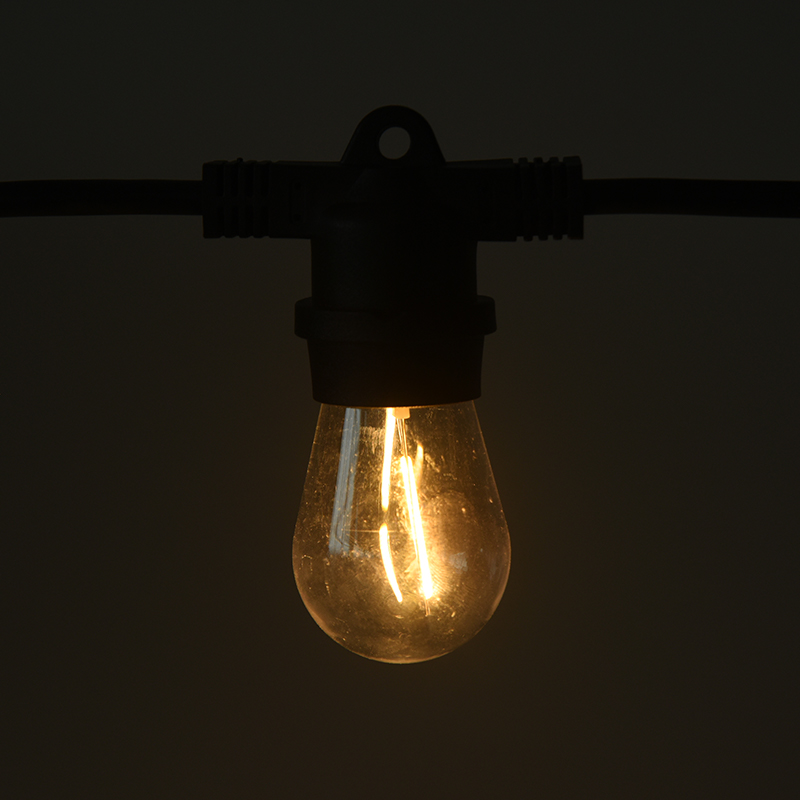
US Standard S14 String Lights, Integrated E26 Spiral Socket, Warm White Light, Heavy-Duty Engineering Model
-
 View More
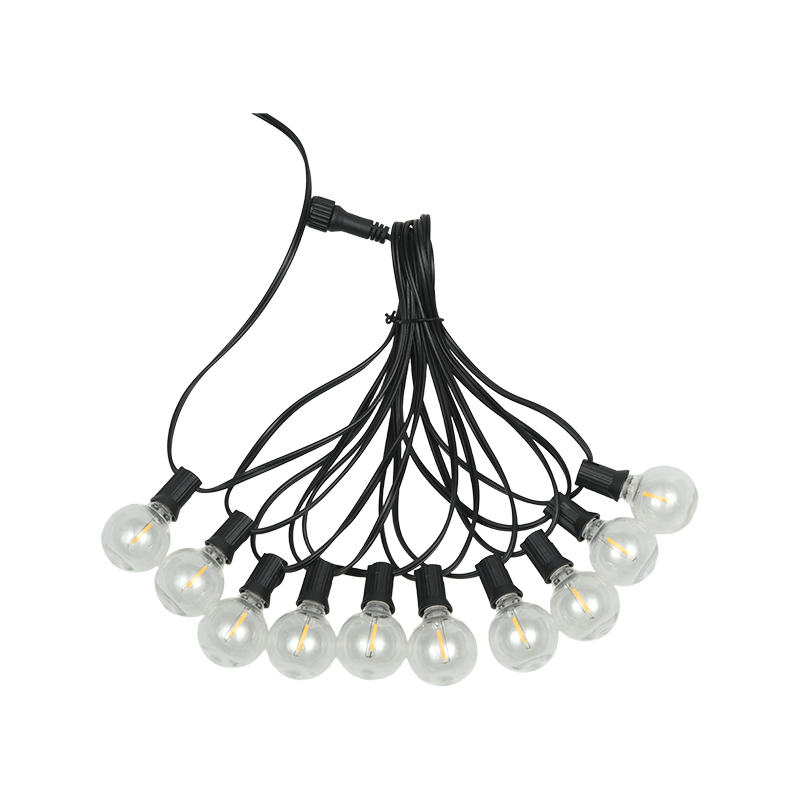
G40 Clip-on E12 Spiral Warm White String Lights
Hengboyi are always ready to help you and answer your question if you need.
Request A Quote
Contact Info.
 Mob: +86-13901119074
 Tel: +86-574-62838966
 E-mail: sale2@hengboyi.com
 Add: No. 18 Rongchuang Road, Mingwei Village, Lizhou Street, Yuyao City, Ningbo, Zhejiang Province, China
Quick Links
Product List
Copyright Ningbo Hengboyi Lamp Co., Ltd. All rights reserved.
China best outdoor decorative solar lights Manufacturer
Custom decorative string lights indoor Factory

