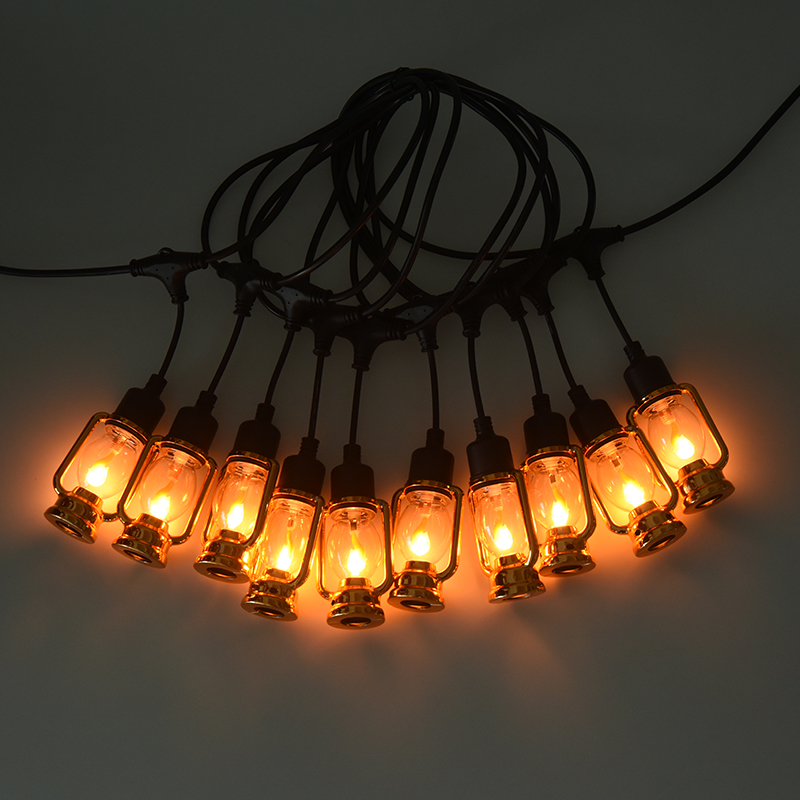
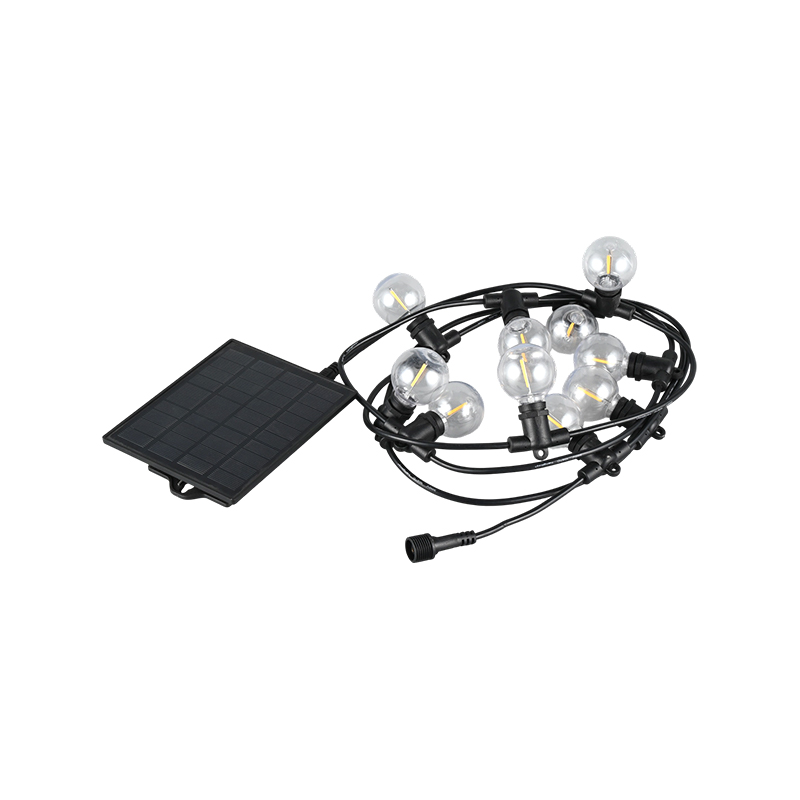
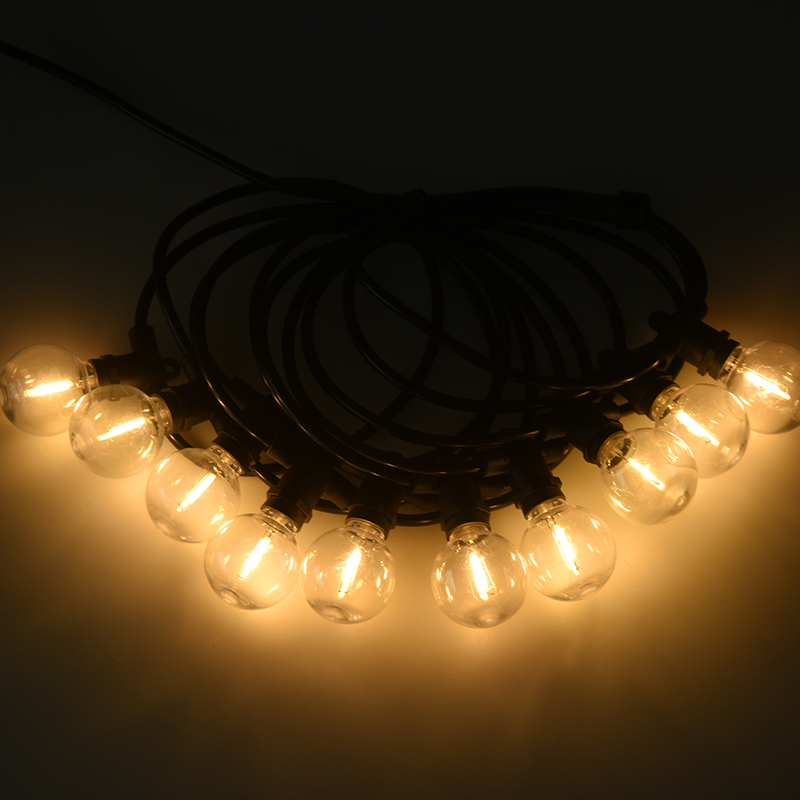
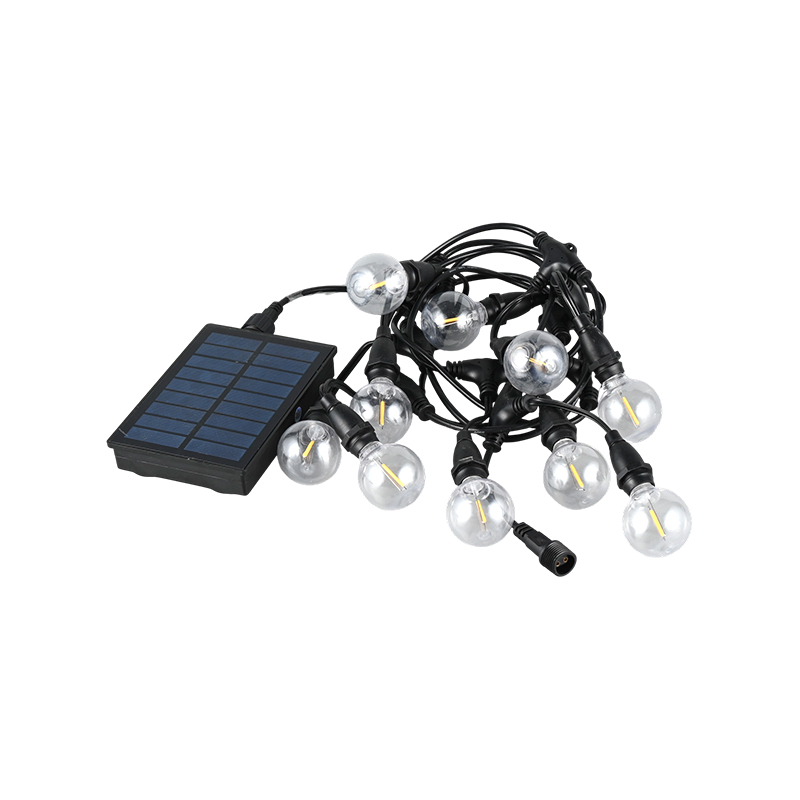
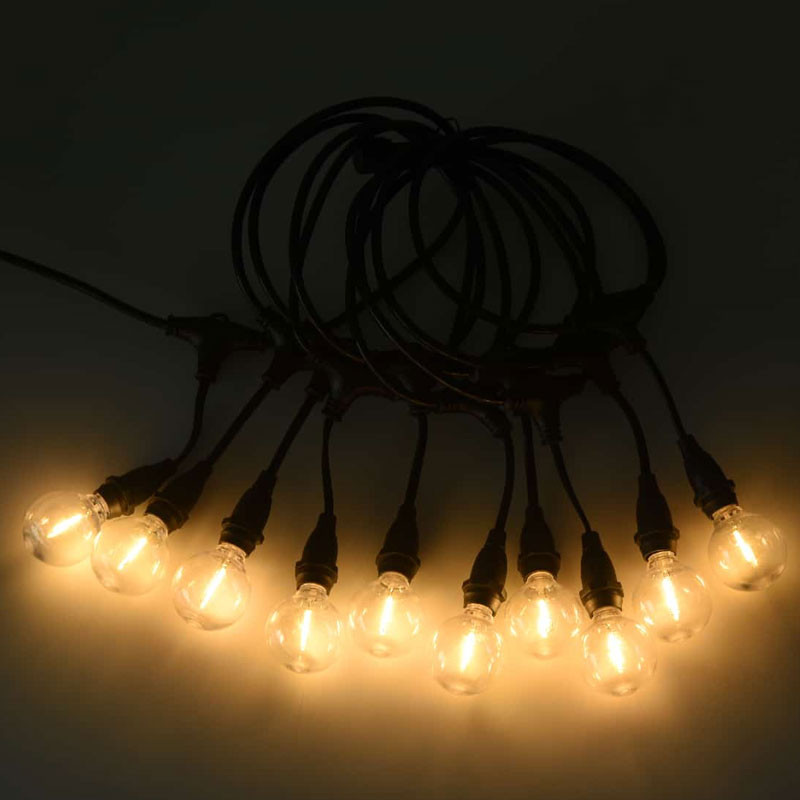
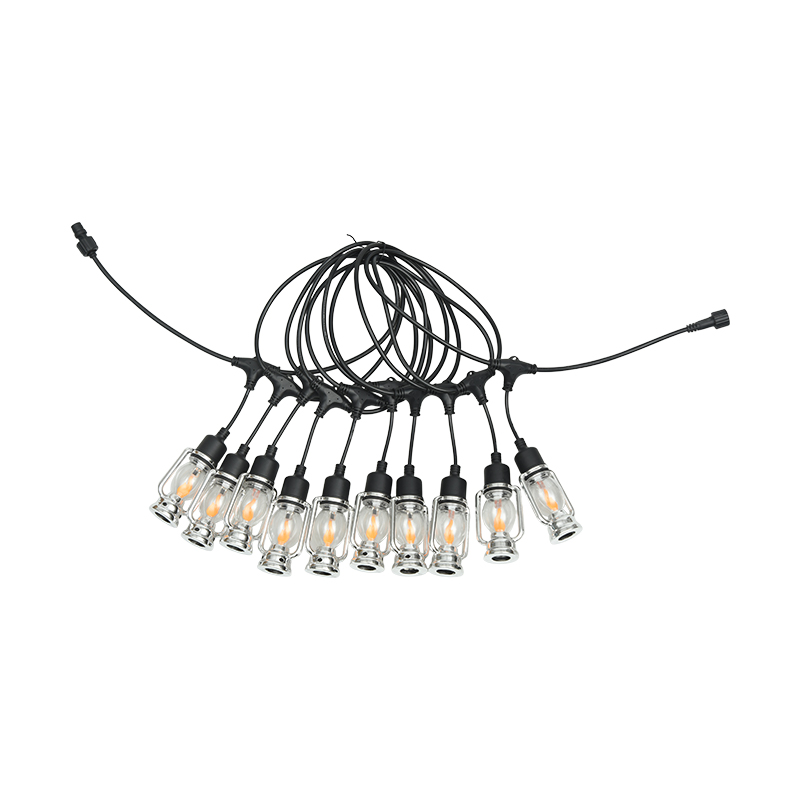
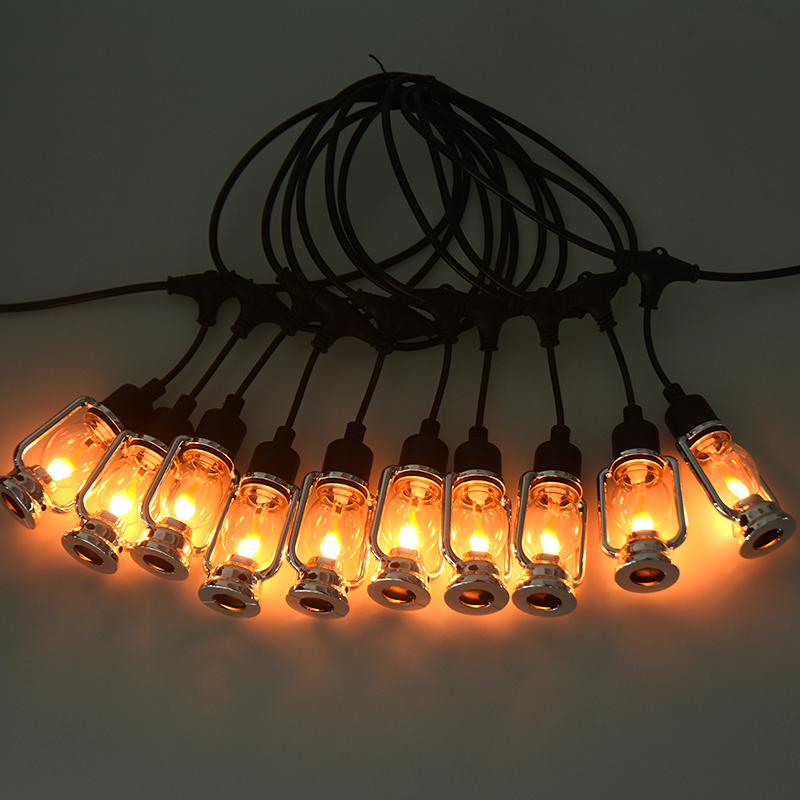
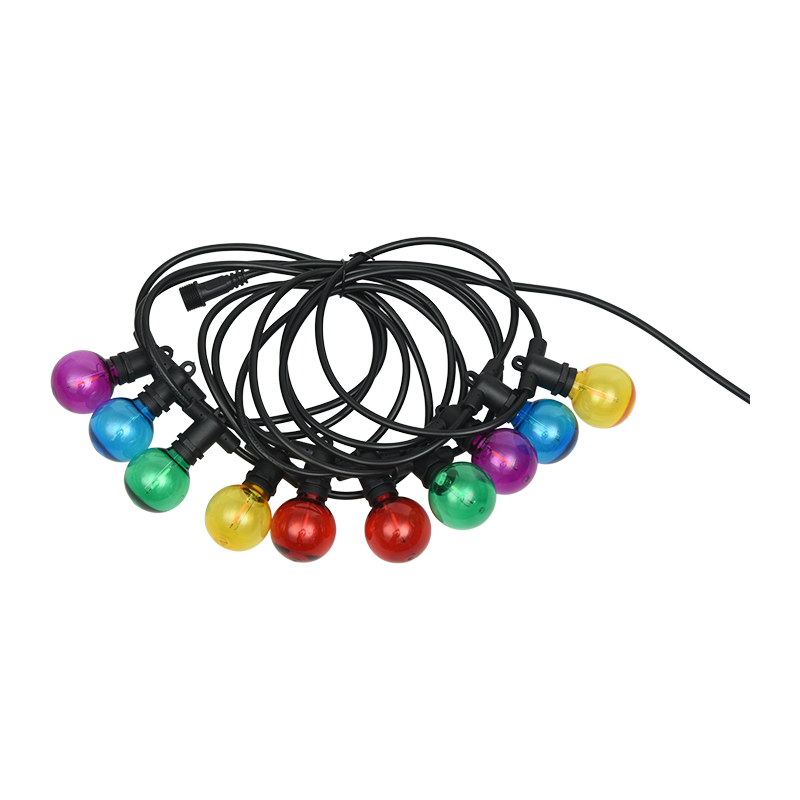
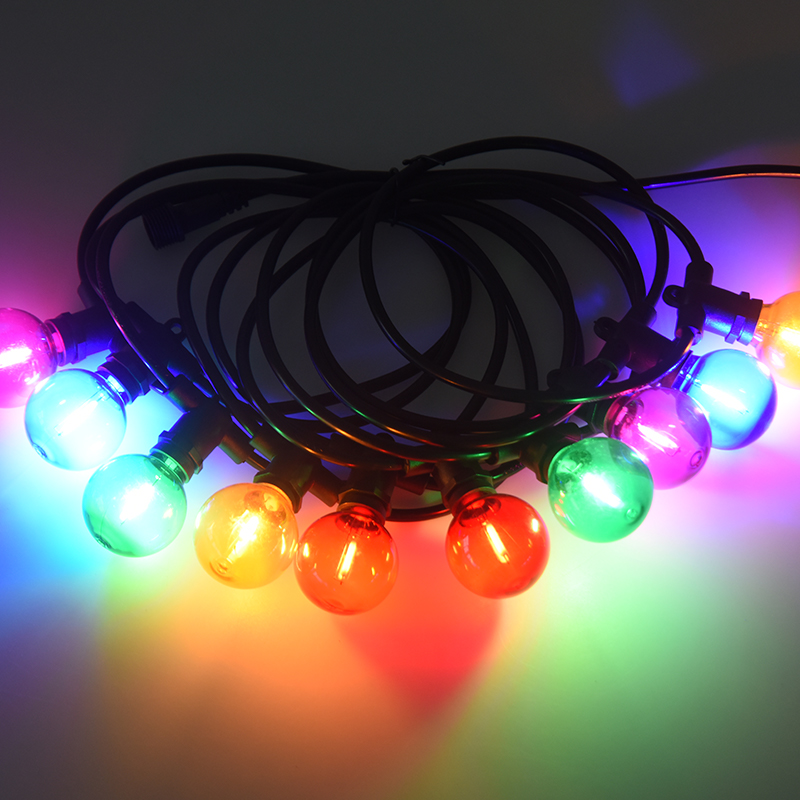
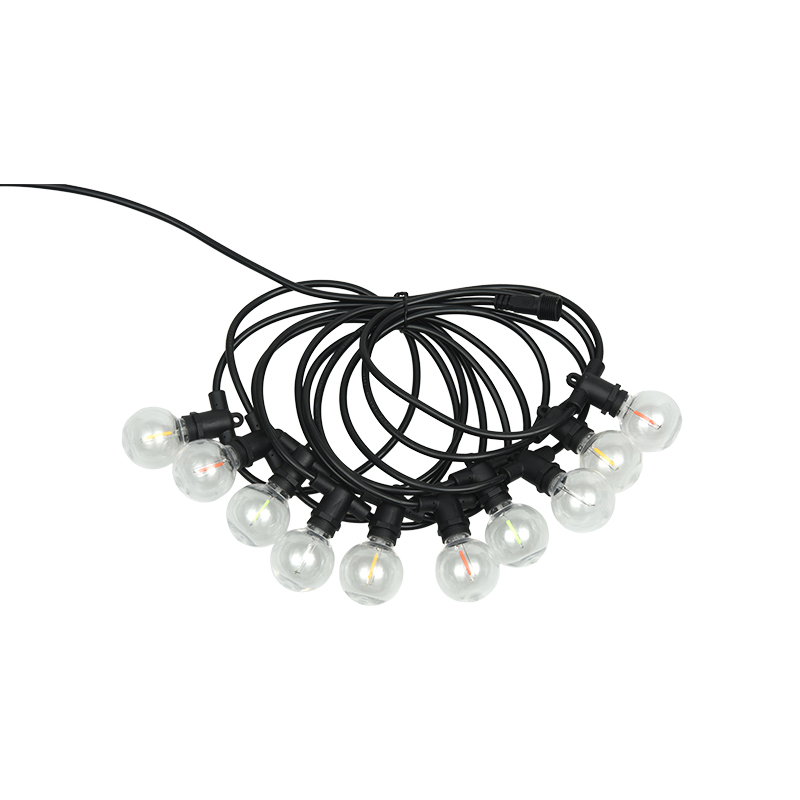
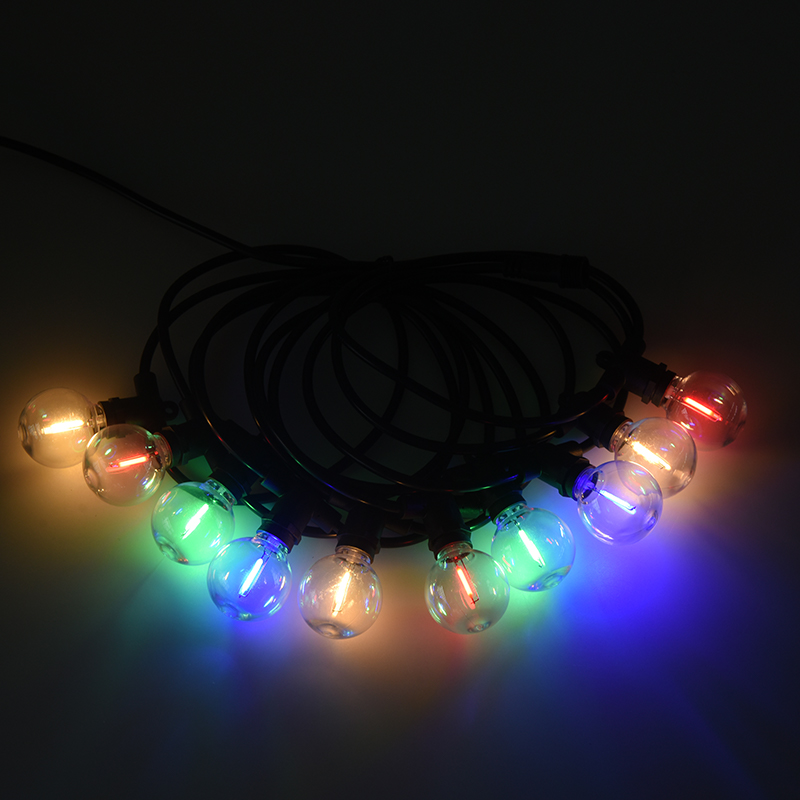
Solar string lights are energy-efficient professional lighting products designed specifically for indoor and outdoor decoration and creating a festive atmosphere. Solar string lights require no wiring, are easy to install, and combine durability and aesthetics, making them suitable for various scenarios. They are an excellent choice for home patios and gardens, as well as a practical option for commercial parties, weddings, and holiday decorations. With their energy-saving, worry-free, waterproof, and weather-resistant advantages, they have become a popular choice for green indoor and outdoor decoration.
Product Advantages: Energy Saving & Environmental Protection: Powered by solar energy, zero electricity costs, zero pollution, in line with green environmental protection concepts, and more economical in the long run. Easy Operation: Automatic light-sensor control, no manual switching required, no wiring needed, simple installation. Waterproof & Weather-Resistant: IP65 high-level waterproof rating, moisture-proof and dustproof, suitable for long-term outdoor use, unafraid of heavy rain and sun exposure, highly durable.
Applicable Scenarios: This solar string light is suitable for various indoor and outdoor decorative scenarios. It can be used to decorate private outdoor spaces such as gardens, patios, and terraces, beautifying the environment and adding atmosphere; it can also be used for parties, weddings, and holiday events; it is also suitable for commercial scenarios such as parks, scenic spots, and guesthouses, providing lighting without wiring, combining practicality and aesthetics.
About
Ningbo Hengboyi Lamp Co., Ltd.
As OEM commercial solar string lights manufacturer and ODM solar patio string lights factory, Ningbo Hengboyi Lamp Co., Ltd. (formerly Yuyao Hengli Auto Parts Factory), established in 2003, is located in Yuyao City, Zhejiang Province, known as the "Hometown of Plastics in China." It is a manufacturer integrating R&D, production, sales, and self-operated export, primarily focusing on precision plastic product processing and high-tech electronic products. Its main business scope includes: lighting fixtures, lighting accessories, electronic products, and various injection molded parts, rubber parts, and hardware parts.
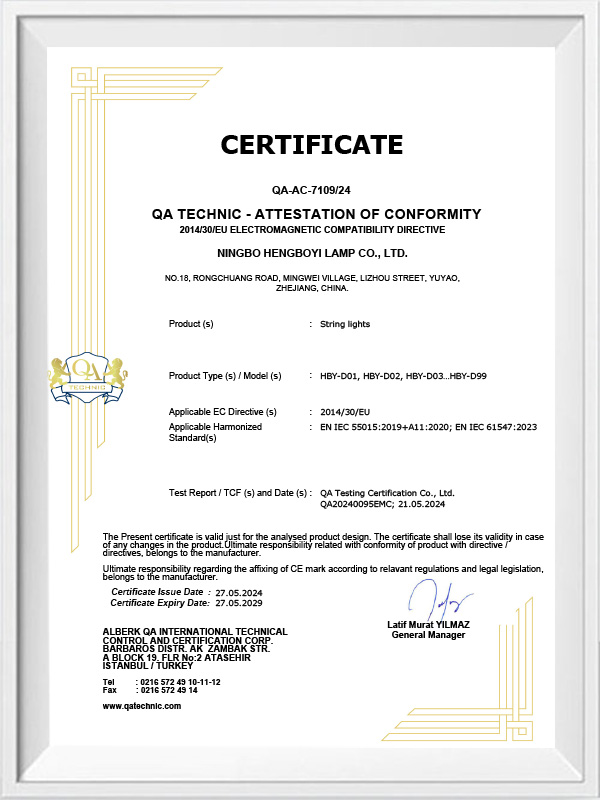
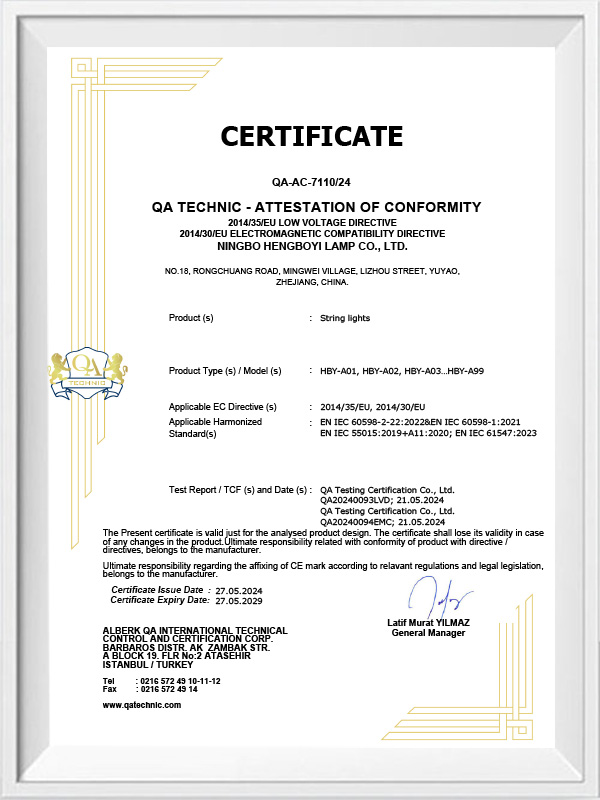
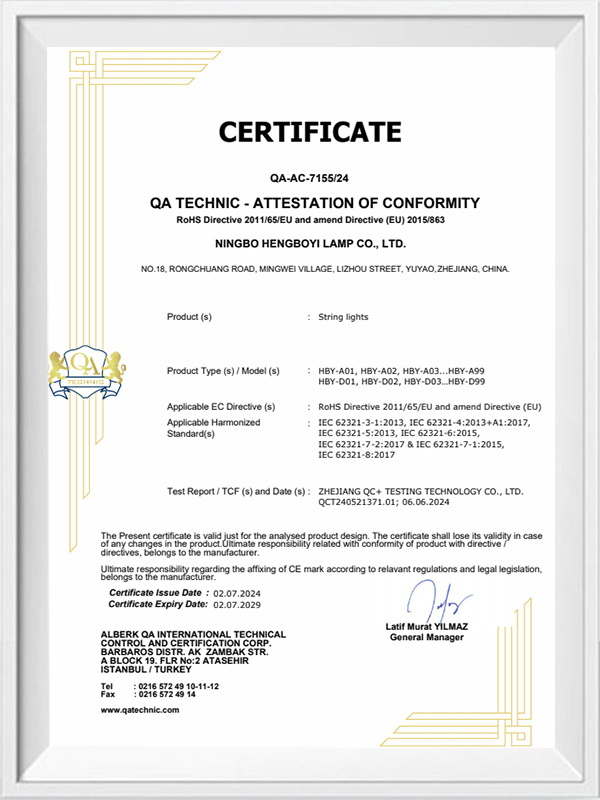
The company possesses complete processing, production, and testing equipment, a sound management system, strong technical capabilities, and advanced production processes, and has passed relevant quality system certifications. It has accumulated rich experience in the manufacturing and design of lighting fixtures and accessories. Both the appearance design and quality of its products have received consistent recognition and praise from domestic and international customers, establishing long-term cooperative relationships and becoming a designated supplier for lighting manufacturers both domestically and internationally.
Since its establishment, the company has adhered to the corporate philosophy of "Quality First, Integrity Foremost, Scientific Management, Pragmatic Innovation," sincerely treating every customer.
A brief that lands in our inbox often reads like this: smart LED lights, 10 meters, warm white, remote control, outdoor use, 5,000 sets, ship by August. It sounds complete. It actually leaves about eight decisions open, and every one of them changes the price, the lead time, or the warranty profile...
A hotel group in Rotterdam ordered 600 white paper lantern lights for a courtyard relaunch in late spring. The shades arrived on schedule, the paper was clean, and the production run matched the sample photographs. The problem surfaced two days before the opening: the cord sets in the shipment were...
A buyer opens a carton of five-metre festoon sets on a warehouse floor, lifts one bulb against the window, and asks the question that almost every decorative lighting order eventually runs into: why does this glass look greener, thinner and slightly out of round compared with the sample we approved...
How Do Outdoor Solar String Lights Work for Garden Spaces?
Outdoor solar string lights convert daylight into stored energy through a small photovoltaic panel, then release that energy as soft illumination once darkness falls, without relying on a wired power source. This makes waterproof solar string lights a practical option for gardens, patios, fences, and pathways where running an electrical cable is inconvenient or impossible. The core components are a solar panel, a rechargeable battery, an LED string, and a light sensor or control chip that manages the charge and discharge cycle. Because the panel absorbs sunlight throughout the day, the stored energy is gradually released at night, and the length of illumination depends on both sunlight exposure and battery capacity. Understanding how these parts work together helps explain why placement, angle, and weather resistance all influence how well garden solar string lights perform in real conditions.
In this article, we walk through the technology behind solar patio string lights, compare performance data across common design variables, and outline practical guidance for selecting and installing solar decorative lights for different outdoor environments. Each data point referenced is drawn from general photovoltaic and outdoor lighting industry knowledge, and where a specific figure is used, the general source category is noted so readers can evaluate the context.
Core Components and Charging Technology Behind Solar String Lights
The solar panel used in most outdoor solar string lights is typically monocrystalline, polycrystalline, or amorphous silicon, and each type differs in conversion efficiency, cost of production, and physical flexibility. Monocrystalline panels generally offer the highest conversion efficiency per unit area, which is useful for compact string light designs where panel space is limited. Polycrystalline panels are slightly less efficient but remain a widely used balance between output and manufacturing simplicity. Amorphous panels are thinner and more flexible, which can be advantageous for curved or low-profile enclosures, though their efficiency under the same light conditions is generally lower than crystalline types. According to general photovoltaic industry references, such as overviews published by the U.S. Department of Energy on solar cell technologies, efficiency differences among these panel types commonly fall within a broad range depending on manufacturing quality and cell design.
Relative Charging Efficiency by Panel Type
This horizontal bar chart compares the relative charging efficiency of the three common panel types used in waterproof solar string lights, with longer bars representing a higher conversion rate under similar sunlight exposure. Monocrystalline panels sit at the top of the chart because their single-crystal structure allows electrons to move with less resistance, translating into a stronger charge for the same panel size. Polycrystalline panels occupy the middle position, reflecting their status as a widely adopted compromise between performance and manufacturing efficiency. Amorphous panels appear shortest on the chart, not because they are unsuitable, but because their thin-film structure trades some efficiency for flexibility and lower material use. For buyers evaluating solar string lights, this comparison illustrates why panel type is one of several factors that influence how quickly the battery reaches full charge on a clear day. It also explains why placement in direct, unobstructed sunlight matters more for lower-efficiency panel types than for high-efficiency ones.
Daily Sunlight Charging Patterns and What They Mean for Nighttime Runtime
The amount of energy a solar panel collects changes throughout the day, following the arc of the sun from morning through late afternoon. Charging intensity is generally low in early morning hours, increases toward a midday peak, and gradually declines as the sun moves lower in the sky. This pattern directly affects how much energy is available to power garden solar string lights after sunset, since the battery stores whatever has been collected during daylight hours. Cloud cover, shade from trees or structures, and seasonal changes in day length can shift this curve, which is why installation location plays a meaningful role in consistent nighttime performance.
Typical Daily Charging Intensity Curve
This area and line chart illustrates a typical daily charging curve for outdoor solar string lights installed in an open, unshaded location, with the vertical axis representing charging intensity and the horizontal axis representing time of day. The curve rises steadily from early morning, reaches its peak near midday when the sun is highest and most direct, and then tapers off through the afternoon as the angle of sunlight becomes less favorable. This pattern is consistent with general solar irradiance behavior described in resources such as NREL solar radiation data summaries. The shaded area under the line represents cumulative energy collected, which correlates with how long the LED string can remain lit after dusk. A narrower or flatter curve, often caused by partial shading or overcast conditions, results in a shorter nighttime runtime, which is why full-sun placement is consistently recommended for solar patio string lights. Recognizing this pattern also helps set realistic expectations for performance during shorter daylight periods in autumn and winter months.
Common Application Scenarios for Solar Decorative Lights
Because solar string lights require no wiring, they are commonly used across a range of outdoor settings where flexibility and ease of installation matter. Gardens remain the most frequent application, followed by patios and outdoor seating areas, then pathways, and finally temporary event or seasonal decoration use. This distribution reflects the practical advantage of solar power in areas without convenient access to an electrical outlet, as well as the growing popularity of ambient outdoor lighting for everyday outdoor living spaces.
General Usage Distribution Across Outdoor Settings
This donut chart shows a general breakdown of how garden solar string lights and related products are typically applied across different outdoor environments, based on common industry usage patterns rather than a single proprietary survey. Garden use represents the largest segment, which aligns with the fact that gardens often lack accessible power outlets and benefit most from a self-contained lighting solution. Patio and outdoor seating areas form the second largest segment, reflecting demand for ambient lighting during evening gatherings. Pathway lighting follows, valued for improving visibility and safety along walkways without the cost and disruption of trenching for electrical cable. The smallest segment covers temporary event and seasonal decoration use, where the ability to quickly install and later relocate the lights is a key advantage. Together, these categories show that solar decorative lights serve a broad range of practical and aesthetic outdoor needs rather than a single narrow use case.
Waterproof Ratings and Durability Performance
Durability under outdoor conditions depends on several interacting factors, including the ingress protection (IP) rating, the material used for the LED string casing, the quality of the seal around the solar panel housing, and the resistance of the battery compartment to moisture. An IP65 or higher rating generally indicates strong protection against dust and water jets, which is a common benchmark referenced in general outdoor electronics standards published by the International Electrotechnical Commission. Waterproof solar string lights built to this standard are designed to withstand rain, dew, and general outdoor humidity across seasonal changes, though performance can still vary based on installation quality and long-term UV exposure of the casing material.
Performance Profile Across Key Durability Dimensions
This radar chart maps five performance dimensions commonly used to evaluate solar string lights for outdoor use: water resistance, UV stability, battery life, brightness, and ease of installation. Each axis represents a separate quality factor, and the shaded shape formed by connecting the values gives a visual sense of how balanced or uneven a product's overall performance profile is. A well-rounded shape suggests that no single weakness is likely to undermine the product's reliability outdoors, while a lopsided shape would indicate a strength in one area offset by a gap in another. Water resistance and UV stability are particularly important for products marketed as waterproof solar string lights, since prolonged sun exposure can degrade plastic casings over time even when the water seal itself remains intact. Battery life reflects how consistently the light performs across multiple charge cycles, which tends to decline gradually as rechargeable batteries age. Ease of installation matters most for garden and patio applications, where the appeal of a solar product often lies in its ability to be mounted without tools, brackets, or professional help.
Choosing and Installing Solar Patio String Lights
Selecting the right outdoor solar string lights for a given space involves matching panel placement, string length, and mounting method to the physical characteristics of the location. A few practical steps can meaningfully improve both charging performance and long-term durability.
Position the solar panel in a location that receives direct, unobstructed sunlight for the majority of the day, avoiding shade from roof overhangs, trees, or fences.
Angle the panel to face the general direction of peak sun exposure for the installation's geographic latitude, rather than mounting it flat against a vertical surface.
Confirm the IP rating of both the LED string and the panel enclosure before permanent installation in areas exposed to rain or sprinklers.
Clean the panel surface periodically, since dust, pollen, and debris buildup can reduce charging efficiency over time.
Check seasonal daylight changes, as shorter winter days generally reduce total charging time and may shorten nighttime runtime.
General comparison of factors affecting solar string light performance in different outdoor zones
Installation Zone
Typical Sun Exposure
Moisture Exposure
Recommended IP Rating
Open Garden Beds
High
Moderate
IP65 or higher
Covered Patio
Moderate
Low
IP44 or higher
Pathway or Fence Line
Moderate to High
High
IP65 or higher
As shown in the table above, moisture exposure and sun access vary meaningfully between installation zones, which is why a single IP rating is not universally optimal for every location. Areas with higher rainfall contact, such as open garden beds and pathways, generally benefit from a higher waterproof rating, while covered patios face lower direct moisture exposure but still require basic splash resistance.
About Ningbo Hengboyi Lamp Co., Ltd.
As an OEM commercial outdoor lighting supplier and ODM decorative outdoor commercial lighting factory, Ningbo Hengboyi Lamp Co., Ltd. (formerly Yuyao Hengli Auto Parts Factory), established in 2003, is located in Yuyao City, Zhejiang Province, an area known for its strong plastics manufacturing base. The company integrates research and development, production, sales, and self-operated export, with a primary focus on precision plastic product processing and related electronic products. Its main business scope covers lighting fixtures, lighting accessories, electronic components, and a range of injection molded, rubber, and hardware parts used across outdoor lighting applications, including solar string lights and related decorative lighting products.
The company maintains complete processing, production, and testing equipment, supported by a structured management system and established technical capabilities. Over years of operation, it has built experience in the design and manufacturing of lighting fixtures and accessories, with product appearance and quality receiving consistent recognition from both domestic and international customers. This has enabled long-term cooperative relationships and a role as a designated supplier for lighting manufacturers in multiple markets. Since its founding, the company has followed a corporate philosophy centered on quality, integrity, scientific management, and pragmatic innovation, applying this approach to the development of garden solar string lights and other outdoor lighting solutions.
Industry Trends Shaping the Future of Outdoor Solar Lighting
Interest in outdoor solar lighting has grown alongside broader adoption of renewable and low-maintenance home improvement products, as homeowners increasingly look for outdoor lighting options that reduce installation complexity. Industry commentary on outdoor lighting trends has noted rising interest in warm-white LED tones and flexible copper wire designs for solar decorative lights, which allow the string to be shaped around trees, railings, and garden structures. Manufacturers such as Ningbo Hengboyi Lamp Co., Ltd. have continued refining panel efficiency and waterproof sealing methods in response to this demand, reflecting a broader industry shift toward more resilient outdoor solar products designed for year-round exposure rather than short-term seasonal use.
Frequently Asked Questions
Q1: How long do solar string lights typically stay on at night?
Runtime depends on the battery capacity, panel efficiency, and how much direct sunlight the panel receives during the day. A fully charged unit installed in an unshaded location can generally provide several hours of illumination, though this duration tends to decrease during shorter winter days or after periods of overcast weather.
Q2: Can waterproof solar string lights be left outside year-round?
Products rated IP65 or higher are generally designed to withstand continuous outdoor exposure, including rain and humidity. That said, periodic inspection of the seals and casing is recommended, since UV exposure and temperature fluctuations over multiple seasons can gradually affect plastic components.
Q3: Where should the solar panel be positioned for best charging results?
The panel should be placed where it receives direct sunlight for most of the day, away from shade cast by trees, walls, or roof overhangs. Angling the panel toward the sun's typical path, rather than mounting it flat against a vertical surface, generally improves charging consistency.
Q4: What is the difference between garden and patio solar string light setups?
Garden setups typically prioritize higher waterproof ratings due to greater moisture and weather exposure, while patio setups, often partially covered, can perform well with a lighter waterproof rating while still benefiting from consistent sun exposure for the panel itself.
 Telephone: +86-574-62838966
 E-mail : sale2@hengboyi.com


 en
en  English
 Español
 中文简体
中文简体
 Mob: +86-13901119074
 Tel: +86-574-62838966
 E-mail: sale2@hengboyi.com
 Add: No. 18 Rongchuang Road, Mingwei Village, Lizhou Street, Yuyao City, Ningbo, Zhejiang Province, China
