 Telephone: +86-574-62838966
 E-mail : sale2@hengboyi.com


 en
en  English
 Español
 中文简体
中文简体
Commercial String Lights Guide: Uniform, Waterproof Outdoor Lighting
Industry News
Home / News / Industry News / Commercial String Lights Guide: Uniform, Waterproof Outdoor Lighting
Commercial String Lights Guide: Uniform, Waterproof Outdoor Lighting
Content
- 1 What Commercial String Lights Are Built to Solve
- 2 Market Growth and Adoption of String Lighting
- 3 Solving Uneven Brightness: The Circuit Design Behind Uniform Light
- 4 Comparing Common String Light Formats
- 5 Evaluating a Manufacturing Partner for Bulk Orders
- 6 Understanding Waterproof Ratings for Outdoor Use
- 7 Standard Power Versus Low Voltage String Lights
- 8 Where Outdoor and Patio String Lights Are Most Commonly Used
- 9 Performance Comparison Across Key Buying Criteria
- 10 Installation Guidance for Large-Area Projects
- 11 About Ningbo Hengboyi Lamp Co., Ltd.
- 12 Frequently Asked Questions
- 12.1 Q1: What makes commercial string lights different from basic decorative sets?
- 12.2 Q2: What does an IP44 waterproof rating mean for outdoor string lights?
- 12.3 Q3: Do these string lights require a separate transformer to install?
- 12.4 Q4: What causes flickering or dimming in string light installations?
- 12.5 Q5: Where are patio string lights and outdoor string lights most commonly installed?
- 12.6 Q6: How can buyers reduce long-term maintenance costs for outdoor string lighting?
String lights are designed specifically for large-area indoor and outdoor lighting and decoration needs, and the single factor that most determines whether a string light performs well at commercial scale is a stable, low-loss circuit design that keeps brightness even from the first bulb to the last. A poorly engineered string suffers from a well-known problem: the bulbs nearest the power source burn brighter while the bulbs at the far end grow visibly dimmer, an effect caused by voltage drop across the conductor. A properly engineered string lights system controls this loss through wire gauge, circuit segmentation, and current management, completely resolving uneven brightness at the beginning and end of the run. This guide explains how that engineering works, where commercial string lights are most effectively deployed, and what buyers should verify before specifying a system for outdoor buildings, streets, courtyards, or indoor spaces.
This guide is written for the people who make purchasing and specification decisions for large-area lighting projects, including facilities managers, landscape and hospitality designers, municipal procurement staff, and contractors sourcing decorative lighting on behalf of commercial clients. Rather than treating string lights as a purely seasonal or purely aesthetic product, the discussion below focuses on the engineering and specification details that determine whether a large installation performs consistently for years, or begins showing uneven brightness and connector failures within a single season.
What Commercial String Lights Are Built to Solve
At their core, string lights consist of a continuous wire or cable fitted with light sources at regular intervals, intended to be hung across a span rather than mounted as a single fixture. What separates a commercial-grade product from a basic decorative set is not the bulb itself but the supporting circuit and cable system behind it. Commercial installations frequently run outdoor string lights across spans of many meters, sometimes connecting multiple sets end to end to cover a courtyard, streetscape, or building facade. Under these conditions, a conventional low-quality circuit design allows voltage to drop steadily as current travels along the wire, and by the time the signal reaches the final bulbs in a long run, brightness can fall noticeably compared with the first section.
A well-designed circuit minimizes this loss through adequate conductor thickness and controlled current draw per segment, keeping the voltage drop within a narrow tolerance across the full length of the installation. The practical result is that LED string lights built on this kind of circuit produce a light color that stays uniform and soft across the entire run, without flicker, without glare, and without the visibly uneven brightness pattern that undermines the appearance of lower-quality alternatives. For large-area decoration projects, where dozens or hundreds of meters of lighting may be connected together, this single engineering detail has more effect on final appearance than bulb style or color temperature choice.
Market Growth and Adoption of String Lighting
Demand for decorative string lighting has grown steadily as both residential and commercial buyers invest more in outdoor living space and nighttime ambiance. According to Deep Market Insights, the global string lights market was valued at USD 1.15 billion in 2024 and is projected to reach approximately USD 1.68 billion by 2030, reflecting a compound annual growth rate of 6.6 percent, with outdoor decorative applications forming the largest single segment of that market. This growth pattern is consistent with broader outdoor lighting trends, where hospitality, event, and municipal buyers are increasingly treating decorative lighting as a standard part of property presentation rather than a seasonal accessory.
This upward curve reflects a combination of structural and behavioral shifts rather than a single short-term trend. Homeowners and property operators alike have continued to invest in outdoor living spaces well beyond the initial post-pandemic surge, treating patios, courtyards, and rooftop areas as extensions of usable living or commercial space that benefit from evening lighting. Hospitality operators, including restaurants, hotels, and event venues, have moved away from purely seasonal lighting setups toward permanent festoon-style installations that remain in place year-round, which increases both the average order size and the durability requirements placed on each fixture. Growth in LED adoption within the category has also supported market expansion, since LED-based string lights offer longer service life and lower running cost than incandescent alternatives, encouraging repeat and expanded purchasing rather than one-time seasonal buys. Finally, increasing awareness of energy efficiency has pushed buyers toward LED products across nearly all segments of the category, reinforcing the shift already underway in the broader outdoor lighting market.
Regional demand patterns add further context for sourcing and specification decisions. Industry analysis from Deep Market Insights indicates that North America leads global demand, supported by an established culture of backyard leisure, holiday lighting, and outdoor dining, while Asia-Pacific is identified as the fastest-growing region, driven by festival activity, urban population growth, and rising disposable income. Europe shows strong adoption as well, with particular emphasis on energy-efficient LED and eco-certified lighting products, reflecting the same efficiency-driven purchasing pattern seen elsewhere in the outdoor lighting category. For buyers managing installations across multiple regions or properties, this pattern reinforces the value of standardizing on a single well-documented product platform, since consistent circuit design and waterproofing performance matter equally regardless of the specific region or climate an installation is deployed in.
Solving Uneven Brightness: The Circuit Design Behind Uniform Light
Voltage drop is a basic electrical phenomenon: as current travels through a conductor, resistance in the wire causes a gradual loss of voltage along its length. In a poorly designed string light circuit, this loss becomes visible as dimming bulbs toward the end of a run, particularly across longer spans or when multiple sets are connected end to end. A high-quality circuit design addresses this through adequate conductor sizing relative to the total current load, and in longer commercial runs, through segmented power feeds that reduce the distance any single point on the circuit is from a power source. The result is that losses remain minimal even under higher current conditions, keeping voltage drop well controlled across the full installation.
The chart below illustrates the general difference in brightness consistency between a conventional, unoptimized string light circuit and a well-controlled circuit design across a long run, expressed as relative brightness percentage along the string length.
This illustrative comparison shows why circuit engineering matters more than most buyers initially expect when evaluating string lights for large-area projects. A conventional, unoptimized circuit can lose a substantial share of brightness by the end of a long run, creating a visibly fading effect that undermines the intended decorative outcome, particularly when the installation outlines a building facade or spans an entire street or plaza. An optimized circuit, by contrast, maintains brightness within a narrow band across the full length, so the difference between the first and last bulb is minor rather than dramatic. This is the practical meaning behind the claim of uniform and stable light color: it is not a marketing description but a measurable outcome of wire gauge, current management, and segmentation decisions made during product engineering. Buyers evaluating string lights for large installations should ask suppliers directly how voltage drop is controlled across long runs, since this detail has a greater effect on final appearance than bulb style, spacing, or color temperature.
Comparing Common String Light Formats
String lights are available in several bulb and cable formats, and matching the format to the intended use is a practical first step before evaluating any individual product further. Globe-style bulbs spaced along a heavier gauge cable are among the most common formats for large-area outdoor decoration, since the rounded bulb diffuses light softly and remains visible and legible across long spans used to outline building contours or span open plazas. Fine-wire formats with closely spaced micro LEDs, often used for wrapping trees or outlining smaller architectural features, prioritize a dense field of light points over individual bulb visibility, which produces a different visual effect better suited to accent decoration than to primary area lighting.
Cable and connector construction differ meaningfully between formats as well, and this is where much of the performance difference between products actually originates. Wear-resistant, UV-stabilized cable jacketing resists cracking and brittleness after repeated exposure to sunlight and temperature cycling, which matters more for permanent or semi-permanent outdoor installations than for short-term seasonal displays. Connector housings on higher-quality string light formats are typically designed to resist moisture intrusion at the connection point, since this is one of the most common failure locations in outdoor electrical products generally, independent of the light source itself. When comparing formats for a specific project, buyers should weigh visual effect, span length, and expected installation duration together, rather than selecting a format based on bulb appearance alone.
The table below summarizes how common string light formats align with typical project types, to support faster format selection during the planning stage.
| Format | Typical Project Type | Visual Effect |
|---|---|---|
| Globe bulb, standard spacing | Patios, plazas, street spans | Soft, wide-angle diffusion |
| Micro LED, dense spacing | Tree wrapping, facade outlines | Dense point-light field |
| Heavy-duty commercial cable | Permanent installations, long spans | Consistent brightness at scale |
Evaluating a Manufacturing Partner for Bulk Orders
For buyers placing large or recurring orders of string lights, the manufacturing partner behind the product matters as much as the specification sheet. Consistency across production batches determines whether a multi-site installation maintains uniform color temperature and brightness performance, while in-house testing infrastructure determines whether waterproof and circuit performance claims are backed by repeatable verification rather than one-time sample testing. Buyers should ask about quality control practices covering raw material inspection, in-line production checks, and final product testing, since a manufacturer that tests only finished samples has less visibility into where defects actually originate in the production process.
Customization capability is also a meaningful factor for commercial buyers who need specific cable lengths, bulb spacing, or connector configurations to match a particular installation plan. A manufacturer capable of producing prototypes based on drawings or reference samples allows a design or facilities team to validate a configuration before committing to a full production run, which reduces the risk of costly reorders later. Export documentation and logistics experience round out the evaluation, since international shipments require accurate customs classification and reliable coordination to avoid delays that could push back an installation timeline, particularly for projects tied to a specific opening date or seasonal deadline.
Understanding Waterproof Ratings for Outdoor Use
Ingress Protection ratings, written as IP followed by two digits, are the internationally recognized standard for describing how well an electrical product resists solid particles and moisture. The first digit indicates protection against dust and solid objects on a scale of zero to six, and the second digit indicates protection against water on a scale of zero to nine. A rating of IP44 means a product is protected against solid objects larger than one millimeter and against water splashed from any direction, which provides basic and reliable protection for daily rain exposure and humid outdoor environments without requiring the higher sealing complexity needed for full water immersion resistance.
For most large-area outdoor decoration applications, including building outlines, street and tree decoration, and open plaza or courtyard installations, an IP44 rating offers a practical balance between weather resistance and overall product design, since these fixtures are typically exposed to rain and humidity rather than submersion or high-pressure water contact. Combined with durable, wear-resistant wiring that resists breakage and aging, this level of protection is intended to extend service life and reduce later maintenance costs across long-term outdoor use, particularly across seasonal humidity and rainfall cycles.
| IP Rating | Protection Level | Typical Use Case |
|---|---|---|
| IP20 | Dust only, no moisture protection | Indoor-only spaces |
| IP44 | Splash resistant from any direction | Patios, courtyards, covered outdoor areas |
| IP65 | Protected against low-pressure water jets | Fully exposed rooftop or facade installations |
| IP67 | Protected against temporary immersion | Poolside, waterfront, low-lying ground fixtures |
Standard Power Versus Low Voltage String Lights
String lighting systems are generally built around one of two power approaches, and understanding the difference helps buyers choose the right configuration for a given project. Fixtures rated for standard household AC power, typically AC220-240V, connect directly to an existing outlet without requiring an additional transformer, which simplifies installation and reduces the number of components that need to be sourced, mounted, and maintained on site. This approach works well for large-area outdoor decoration where installation speed and simplicity matter, since the fixture can be connected and operated without professional electrical work beyond a standard outdoor-rated outlet.
By contrast, low voltage string lights operate through a step-down transformer that reduces the supply voltage before it reaches the light circuit, which is a common approach in landscape lighting and certain safety-sensitive installations where reducing circuit voltage is a design priority. Low voltage systems generally require an additional transformer component and careful planning of transformer placement and cable runs, which adds a step to installation compared with a direct-connect standard voltage system. Neither approach is universally superior; the right choice depends on project scale, existing electrical infrastructure, and installation preferences, and buyers should confirm which power configuration a given product uses before finalizing an order, since the two are not interchangeable without additional hardware.
In practice, the choice between standard voltage and low voltage string lights often comes down to the scale and location of the installation rather than a fixed rule. Large-area outdoor decoration projects covering plazas, streets, or extended building facades commonly favor standard voltage direct-connect systems, since they reduce the number of components on site and simplify sourcing for large orders. Landscape-focused installations, particularly those integrated closely with garden beds, pathways, or areas where reduced circuit voltage is preferred for the specific application, are more likely to use a low voltage configuration with a dedicated transformer. Buyers planning a mixed installation that spans both large open areas and closer landscape features should map out these zones separately during the planning stage, since a single power configuration may not be the most practical choice across every section of a larger property.
Where Outdoor and Patio String Lights Are Most Commonly Used
Verified Market Reports indicates that outdoor applications accounted for roughly 60 percent of the global string lights market in 2023, with indoor applications making up the remaining 40 percent, and identifies indoor string lights as the fastest-growing sub-segment going forward as home décor and seasonal lighting trends continue to expand. This split reflects the fact that outdoor decoration remains the primary demand driver for the category, even as indoor adoption accelerates in parallel.
This distribution aligns closely with how string lights are actually deployed across commercial and residential settings. Outdoor decoration remains dominant because string lights outline building contours, clearly highlighting architectural lines and enhancing nighttime visibility for hospitality, retail, and municipal properties. Streets and trees represent another major outdoor application, where string lighting creates a warm and cohesive urban nightscape along pedestrian routes and commercial corridors. Open public spaces such as plazas, parks, and scenic areas use string lighting to create a lively atmosphere that extends usable hours into the evening, supporting foot traffic and public engagement in a way that daytime lighting alone cannot achieve. Private outdoor spaces, including courtyards, terraces, and gardens, round out the outdoor category, where string lights beautify the environment and add ambiance for both everyday use and event-specific decoration. The growth of indoor applications, meanwhile, reflects an expanding use case in cafes, retail interiors, and event spaces where string lights are used to add warmth and visual texture to interior design schemes.
Performance Comparison Across Key Buying Criteria
When evaluating string lights for a large-area commercial or residential project, buyers typically weigh five criteria together: brightness uniformity, installation simplicity, weather resistance, durability, and visual quality such as flicker-free and glare-free operation. A well-engineered LED string light system is designed to score consistently well across all five, since each of these criteria stems from the same underlying engineering decisions around circuit design, cable construction, and component sealing. The radar profile below illustrates a representative performance balance for a properly engineered commercial string light system.
This profile reflects the direct relationship between engineering choices and buyer-facing outcomes. Brightness uniformity and installation simplicity score highest because these two factors are the most immediately visible to end users and installers, and both stem directly from circuit design and standard-voltage direct connection rather than added hardware complexity. Weather resistance follows closely, supported by durable, wear-resistant wiring and an appropriate IP rating matched to the installation environment. Visual quality, covering flicker-free and glare-free operation, is closely tied to the same circuit stability that governs brightness uniformity, since voltage fluctuation is a common cause of visible flicker in lower-quality systems. Durability and energy efficiency round out the profile, both benefiting from LED technology and quality wire construction that resists breakage and aging over repeated seasonal use. Buyers should treat this profile as a starting framework, then request specific test data from suppliers for the criteria most relevant to their project, particularly weather resistance documentation for fully exposed installations.
Installation Guidance for Large-Area Projects
Because string lights are designed specifically for large-area coverage, installation planning benefits from a few consistent practices regardless of the specific venue. Since fixtures rated for AC220-240V connect directly to household power without an additional transformer, installation teams should confirm that outdoor-rated outlets and appropriate circuit capacity are available at planned connection points before ordering, since retrofitting electrical infrastructure after delivery adds unnecessary delay to a project timeline. Cable routing should account for wind movement and thermal expansion across long spans, with adequate slack built into mounting points to prevent strain on connectors during temperature swings or storm conditions.
- Confirm total run length and connection points before ordering to match circuit capacity to project scale
- Verify outdoor-rated power access at each planned connection point ahead of installation
- Allow adequate cable slack at mounting points to accommodate wind and temperature movement
- Inspect connector seals seasonally, particularly before periods of heavy rainfall or humidity
- Group large installations into manageable zones for easier maintenance and independent control
For installations outlining building contours or spanning long street or plaza distances, planning the layout in advance with attention to mounting point spacing helps preserve the uniform, soft light color that a well-engineered circuit is designed to deliver. Regular seasonal inspection of connectors and mounting hardware, rather than waiting for a visible fault to appear, remains the most effective way to extend service life and reduce unplanned maintenance across large commercial installations.
A simple maintenance calendar helps formalize this practice rather than leaving it to informal observation. A pre-season inspection before the period of heaviest use, typically covering visual bulb function and connector tightness, catches most developing issues before they become visible failures. A post-storm check after any significant weather event, focused specifically on connection points and mounting anchors, addresses the most common cause of unexpected outages in outdoor installations. A periodic cleaning pass, removing dust and residue buildup from bulb surfaces, helps maintain consistent perceived brightness over time, since surface buildup can measurably reduce light output even when the underlying LED and circuit remain fully functional. Documenting these checks across a multi-site property portfolio also creates a useful record for identifying whether any particular installation is experiencing issues at a higher rate than others, which can help isolate site-specific factors such as drainage or sun exposure that may be accelerating wear.
About Ningbo Hengboyi Lamp Co., Ltd.
Ningbo Hengboyi Lamp Co., Ltd., formerly Yuyao Hengli Auto Parts Factory, was established in 2003 and is located in Yuyao City, Zhejiang Province, an area widely recognized as a center for plastics manufacturing in China. The company integrates research and development, production, sales, and self-operated export within a single organization, with a primary business focus on precision plastic product processing and high-tech electronic products. Its main business scope covers lighting fixtures, lighting accessories, electronic products, and a range of injection molded parts, rubber parts, and hardware components.
The company maintains complete processing, production, and testing equipment, supported by a structured management system, established technical capabilities, and advanced production processes, and has passed relevant quality system certifications. Over its years of operation, Hengboyi has accumulated substantial experience in the manufacturing and design of lighting fixtures and accessories, including waterproof string lights and waterproof LED string lights engineered for consistent outdoor performance. Both the appearance design and quality of its products have received recognition from domestic and international customers, supporting long-term cooperative relationships and a position as a designated supplier for lighting manufacturers both within China and internationally.
Since its establishment, the company has adhered to a corporate philosophy centered on quality first, integrity foremost, scientific management, and pragmatic innovation, applying this approach consistently across its relationships with customers. This combination of manufacturing depth, quality system certification, and export experience positions Hengboyi as a practical sourcing partner for buyers seeking reliable, well-documented commercial string lighting for large-area outdoor and indoor decoration projects.
Frequently Asked Questions
Q1: What makes commercial string lights different from basic decorative sets?
Commercial string lights are built around a stable circuit design that controls voltage drop across long runs, keeping brightness uniform from the first bulb to the last. Basic decorative sets are often designed for shorter spans and may not maintain the same brightness consistency when connected across large installations.
Q2: What does an IP44 waterproof rating mean for outdoor string lights?
An IP44 rating means the fixture is protected against solid objects larger than one millimeter and against water splashed from any direction, which covers daily rain and humid outdoor conditions. This provides basic and reliable outdoor protection suitable for patios, courtyards, and similar covered or semi-exposed areas.
Q3: Do these string lights require a separate transformer to install?
Fixtures rated for AC220-240V connect directly to a standard household power supply without requiring an additional transformer, simplifying installation. This differs from low voltage string lights, which rely on a step-down transformer as part of the overall system.
Q4: What causes flickering or dimming in string light installations?
Flickering and end-of-run dimming are most commonly caused by voltage drop across an undersized conductor or by connecting too many light sets in a single continuous run without adequate circuit segmentation. A well-controlled circuit design minimizes this loss and keeps light output stable across the full length.
Q5: Where are patio string lights and outdoor string lights most commonly installed?
Common installations include patios, courtyards, and gardens for private outdoor spaces, along with building contour outlines, street and tree decoration, and open plazas or parks for larger commercial and public projects. The same product line is often suitable across all of these settings when engineered for consistent outdoor performance.
Q6: How can buyers reduce long-term maintenance costs for outdoor string lighting?
Selecting fixtures with durable, wear-resistant wiring and an appropriate IP rating for the installation environment reduces the likelihood of early failure. Scheduling seasonal inspection of connectors and mounting points, particularly after heavy rain or storm events, further extends service life and limits unplanned repairs.
Product Categories
Recommended News
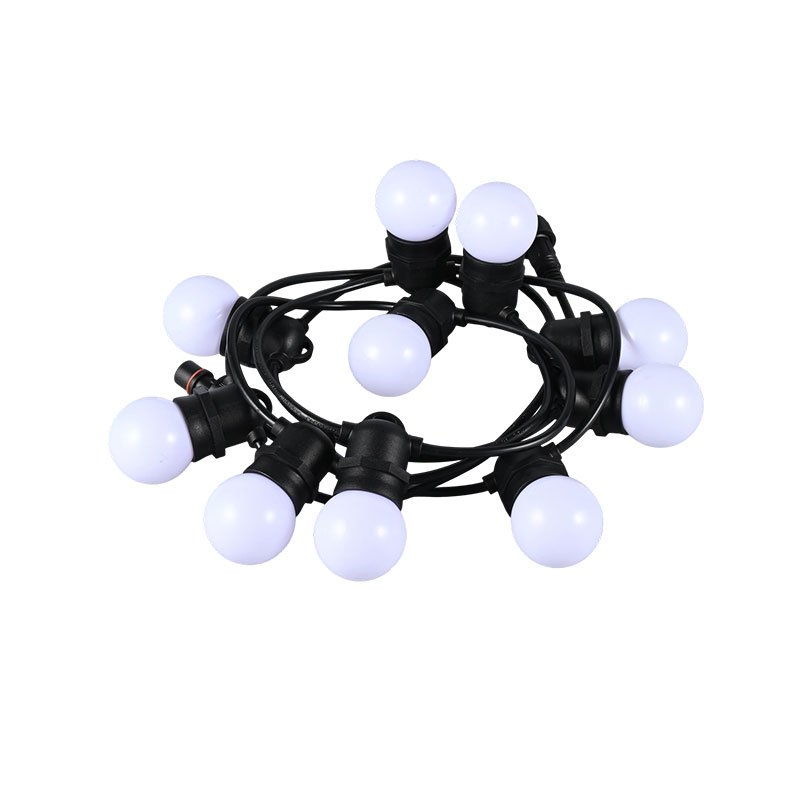
2026-05-21G45 Outdoor E27 White Light String Lights
2026-05-21S14 Light Guide Pillar Pendant Type E27 Spiral String Lights
2026-05-21S14 Outdoor E27 Warm White String Lights
2026-05-21US Standard S14 String Lights, Integrated E26 Spiral Socket, Warm White Light, Heavy-Duty Engineering Model
2026-05-21S14 Hanging E27 Spiral RGBWY Multi-Color String Lights
2026-05-21G45 Hanging Type E27 Spiral RGB Synchronized Flashing String Lights
Related Products
-
 View More
-
 View More
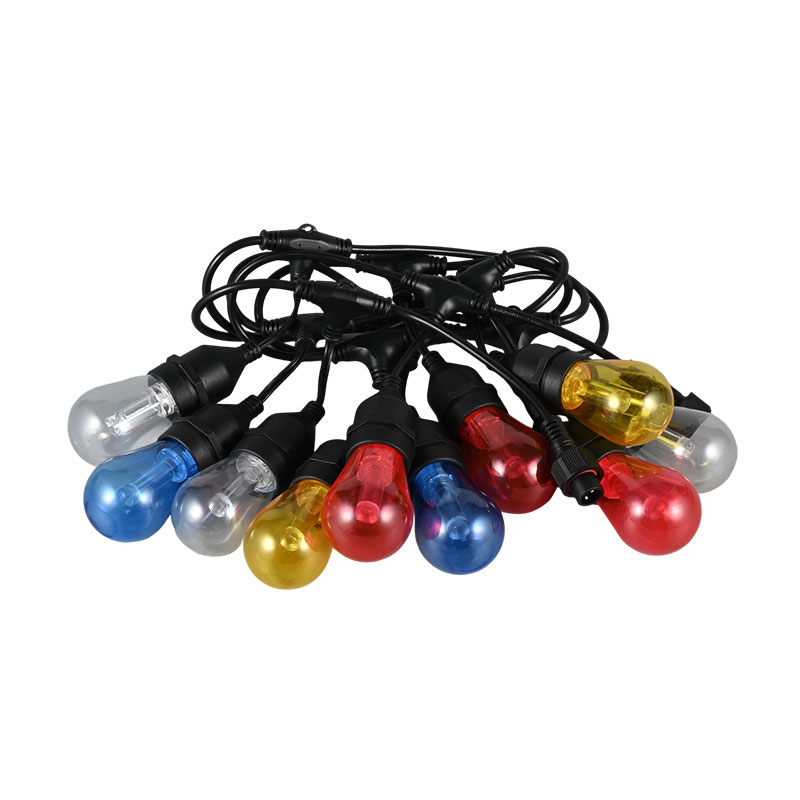
S14 Light Guide Pillar Pendant Type E27 Spiral String Lights
-
 View More
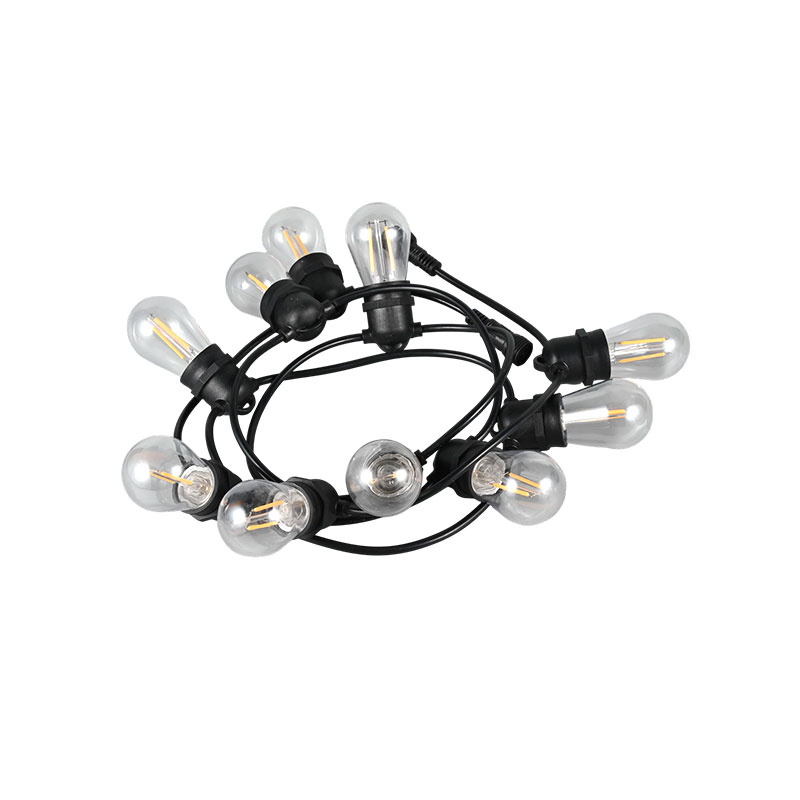
S14 Outdoor E27 Warm White String Lights
-
 View More
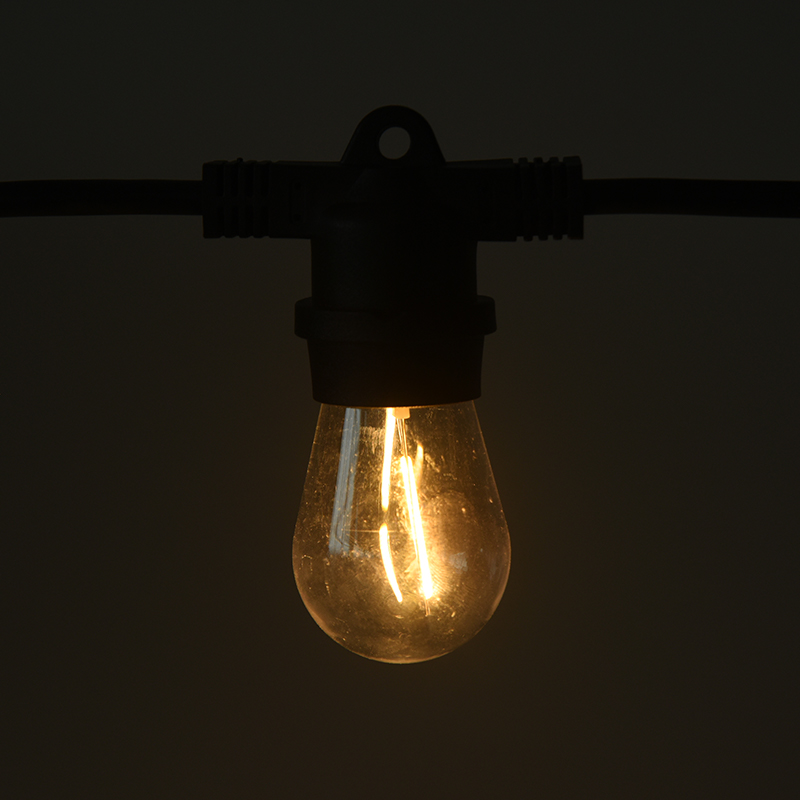
US Standard S14 String Lights, Integrated E26 Spiral Socket, Warm White Light, Heavy-Duty Engineering Model
-
 View More
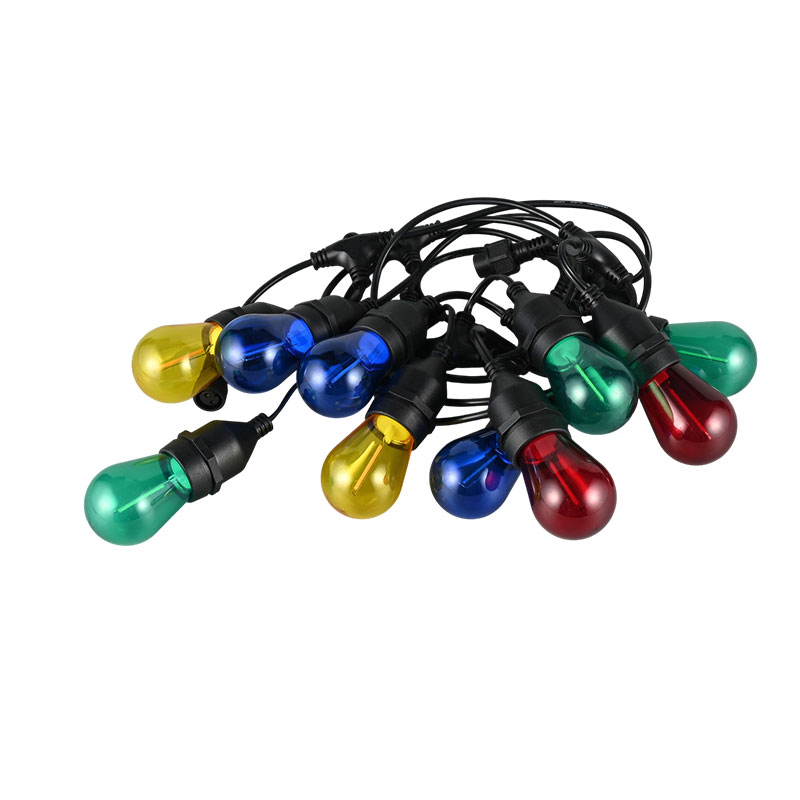
S14 Hanging E27 Spiral RGBWY Multi-Color String Lights
-
 View More
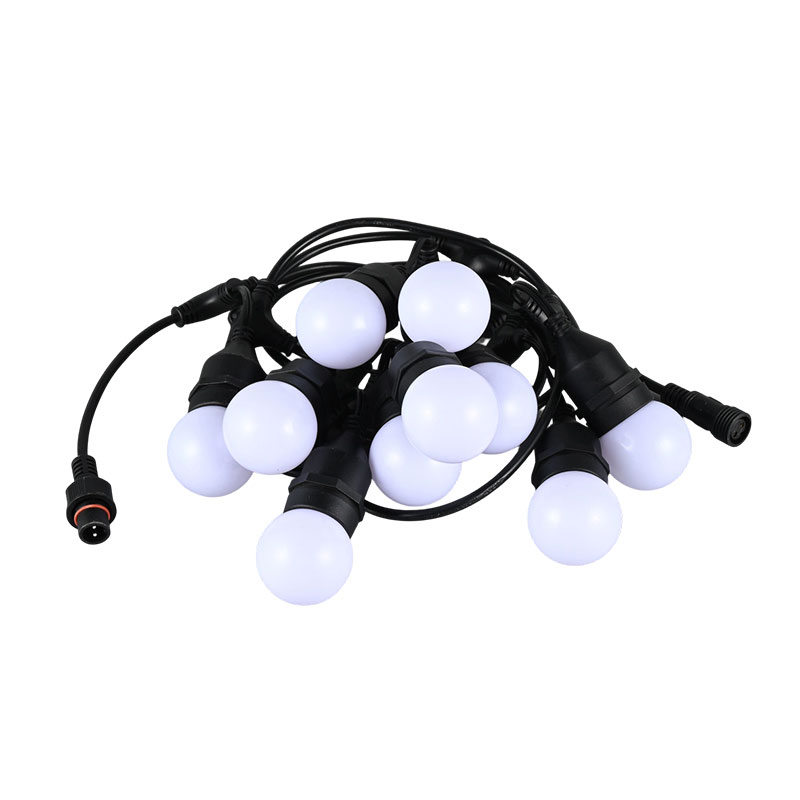
G45 Hanging Type E27 Spiral RGB Synchronized Flashing String Lights
Hengboyi are always ready to help you and answer your question if you need.
Request A Quote
Contact Info.
 Mob: +86-13901119074
 Tel: +86-574-62838966
 E-mail: sale2@hengboyi.com
 Add: No. 18 Rongchuang Road, Mingwei Village, Lizhou Street, Yuyao City, Ningbo, Zhejiang Province, China
Quick Links
Product List
Copyright Ningbo Hengboyi Lamp Co., Ltd. All rights reserved.
China best outdoor decorative solar lights Manufacturer
Custom decorative string lights indoor Factory

