 Telephone: +86-574-62838966
 E-mail : sale2@hengboyi.com


 en
en  English
 Español
 中文简体
中文简体
Decorative Commercial Outdoor Lighting: Types, Uses & Buying Guide
Industry News
Home / News / Industry News / Decorative Commercial Outdoor Lighting: Types, Uses & Buying Guide
Decorative Commercial Outdoor Lighting: Types, Uses & Buying Guide
Content
- 1 What Makes Decorative Commercial Outdoor Lighting Effective
- 2 Common Types of Decorative Commercial Outdoor Lighting and Their Characteristics
- 3 Core Structure and Working Principles Behind Reliable Outdoor Fixtures
- 4 Application Scenarios and Key Selection Criteria
- 5 Where Decorative Outdoor Fixtures Are Deployed: Application Mix
- 6 Detailed Comparison of Decorative Outdoor Lighting Categories
- 7 LED Penetration Across Outdoor and Decorative Lighting Categories
- 8 Industry Growth Trajectory for Outdoor Lighting
- 9 Comparing Aesthetic and Performance Attributes Across Fixture Types
- 10 Maintenance Guidance for Long-Term Performance
- 11 Partnering with an OEM and ODM Decorative Outdoor Lighting Manufacturer
- 12 Frequently Asked Questions
- 12.1 Q1: What is the difference between decorative and purely functional commercial outdoor lighting?
- 12.2 Q2: What IP rating should decorative commercial outdoor lighting have?
- 12.3 Q3: How long do LED decorative outdoor fixtures typically last?
- 12.4 Q4: What should a business consider when choosing an OEM or ODM outdoor lighting manufacturer?
What Makes Decorative Commercial Outdoor Lighting Effective
Effective decorative commercial outdoor lighting balances three requirements at once: an architectural or landscape-appropriate aesthetic, weatherproof construction rated for continuous outdoor exposure, and light output tuned to the safety and branding needs of the site. For commercial properties such as retail centers, hospitality venues, corporate campuses, and mixed-use developments, decorative fixtures are rarely an afterthought anymore. They are specified early in a project, alongside structural and landscape planning, because the lighting scheme directly shapes how a property is perceived after dark and how safely people move through it once the sun goes down.
According to Grand View Research, commercial applications accounted for 66.48% of outdoor lighting market revenue in 2024, underscoring how central decorative and functional outdoor fixtures have become to non-residential construction, renovation, and facilities upgrade projects. Buyers researching decorative commercial outdoor lighting are typically trying to resolve one of three questions: which fixture type fits a given application, how competing fixture categories compare on performance and long-term ownership cost, and how to identify a manufacturing partner capable of delivering consistent quality at commercial order volumes. This guide works through all three, using current market data, structural explanations, and side-by-side comparisons to support a more informed sourcing decision for facilities managers, architects, lighting designers, distributors, and procurement teams.
Throughout this article, "decorative" is used in its practical commercial sense: fixtures engineered to contribute visible design value — a distinctive housing silhouette, a warm architectural glow, a finish that complements a building facade — while still meeting the illumination, durability, and safety standards expected of commercial-grade outdoor equipment. That combination of form and function is what separates decorative commercial outdoor lighting from purely utilitarian floodlighting or security lighting.
The reasons commercial property owners invest in this category typically fall into two connected buckets: brand experience and site safety. A well-lit, thoughtfully designed exterior communicates that a property is maintained and cared for, which influences how customers, tenants, and visitors perceive a business before they ever step inside. At the same time, uneven or poorly maintained outdoor lighting is a recognized contributor to slip-and-fall risk and reduced perceived security around entrances, parking areas, and pathways. A capable commercial outdoor lighting supplier or manufacturer typically addresses both concerns in a single fixture line, offering consistent color temperature and finish options for brand alignment alongside verified light distribution data for safety and code-adjacent planning purposes.
Key takeaway: decorative commercial outdoor lighting succeeds when aesthetic design, weatherproof engineering, and site-appropriate light performance are specified together rather than treated as separate decisions.
Common Types of Decorative Commercial Outdoor Lighting and Their Characteristics
Commercial properties typically combine several fixture categories to layer light across a site rather than relying on a single product type. Each category below serves a distinct role in a decorative outdoor lighting plan, and understanding the differences helps specifiers avoid over- or under-lighting a space.
Post-Top Lanterns
Post-top lanterns sit atop a pole and are among the most recognizable decorative outdoor lighting fixtures used along walkways, plazas, and parking areas. Their housing shapes — lantern-style, globe, or contemporary geometric forms — are often chosen to match a property's architectural theme, while internal LED modules provide broad, even area illumination.
Bollard Lighting
Bollard lights are short, ground-mounted columns used to define pathways, garden borders, and low-level pedestrian routes. They provide downward, low-glare illumination that is well suited to guiding foot traffic without creating harsh contrast, and they double as subtle landscape accents in courtyards and entry sequences.
Wall-Mounted Sconces
Wall sconces mount directly to building facades near entrances, stairwells, and covered walkways. Decorative sconces are frequently selected for hospitality and retail exteriors because they reinforce brand identity at eye level while supplying task-level light for doorways and signage.
Pendant and String Fixtures
Pendant fixtures and outdoor-rated string lighting are used in dining terraces, courtyards, and event spaces where ambiance takes priority over uniform illuminance. These fixtures rely on weatherproof cabling and IP-rated housings to withstand suspended outdoor use.
In-Ground Uplights
Recessed in-ground fixtures are installed flush with paving or turf to uplight trees, facades, signage, and architectural columns. Because they are walked and driven over, in-ground uplights require reinforced, load-rated housings and high ingress protection.
Step and Path Lights
Compact step and path fixtures are embedded into risers, retaining walls, or low garden walls to mark elevation changes and pathway edges. They are a safety-driven category as much as a decorative one, since their primary function is preventing trips on stairs and uneven grade changes.
In practice, most commercial projects do not select a single fixture type but instead layer two or three of these categories to create a coherent lighting hierarchy. A typical hotel entrance sequence, for example, might combine post-top lanterns along the arrival drive, bollards along the pedestrian path, wall sconces flanking the entrance doors, and step lights on any exterior stairs — each category handling the portion of the scene it is best suited for rather than one fixture type trying to cover every function. Working with a decorative outdoor lighting supplier that manufactures across several of these categories can simplify this layering process, since finish, color temperature, and control compatibility can be matched across the full fixture set rather than sourced from multiple vendors with inconsistent specifications.
Key takeaway: a complete decorative commercial outdoor lighting scheme typically layers post-top, wall, ground, and accent fixtures rather than relying on one category to do every job.
Core Structure and Working Principles Behind Reliable Outdoor Fixtures
Regardless of style, nearly every decorative commercial outdoor lighting fixture shares the same functional architecture. Understanding these components helps buyers evaluate build quality beyond surface appearance.
- Housing and body — typically die-cast aluminum, stainless steel, or weather-resistant engineering plastic, chosen for corrosion resistance and dimensional stability across temperature swings.
- LED light engine — a chip-on-board or discrete LED array mounted to a metal-core circuit board for heat dissipation, driving both light output and long-term lumen maintenance.
- Driver and power compartment — converts incoming AC or low-voltage DC power into a regulated current for the LED module, and is usually the component most sensitive to moisture ingress and heat.
- Optical lens or diffuser — shapes beam angle and distribution, controls glare, and protects the light source from debris and impact.
- Gasket sealing — silicone or rubber seals at every housing seam that determine the fixture's ingress protection (IP) rating against dust and water.
- Mounting hardware and finish — pole adapters, wall brackets, or ground stakes, combined with powder-coat or anodized finishing for long-term corrosion resistance.
Modern LED light engines used in commercial-grade outdoor fixtures commonly achieve luminous efficacy above 150 lumens per watt, a substantial improvement over legacy high-intensity discharge sources, and industry lighting resources widely report rated operating lifespans in the range of 25,000 to 50,000 hours under normal thermal conditions. Heat management inside the housing is the single largest factor affecting how close a fixture gets to its rated lifespan outdoors, which is why heat-sink design and driver placement matter as much as the visible housing style.
Surface finish plays a supporting but important role in this structure as well. Powder-coated aluminum and anodized finishes are widely used on decorative housings because they resist UV fading and coastal corrosion better than uncoated metal, which matters for fixtures expected to hold their color and finish appearance for many years outdoors. Manufacturers that also produce their own injection-molded and hardware components in-house are generally better positioned to keep finish, tolerance, and gasket fit consistent across large production runs, since every part of the housing assembly is controlled under one production process rather than sourced piecemeal from separate vendors.
The schematic below illustrates a typical exploded structure for a decorative post-top or bollard fixture, showing how the diffuser, LED engine, heat-sink body, driver compartment, and mounting base stack together into a sealed weatherproof assembly.
Simplified exploded structure of a typical decorative outdoor fixture, from diffuser lens down to mounting base.
Key takeaway: sealed driver compartments and metal-core heat dissipation are usually better predictors of long-term reliability than the visible housing style.
Application Scenarios and Key Selection Criteria
Matching a decorative commercial outdoor lighting fixture to a site starts with understanding the scenario it will serve, then working through a fixed set of technical selection criteria. The table below places common commercial scenarios alongside the criteria most likely to determine fixture suitability. Treating these two lists side by side is a useful habit for specifiers: a scenario on the left should always be checked against every criterion on the right before a fixture is finalized, rather than selecting a fixture on appearance first and retrofitting the technical requirements afterward.
Typical Application Scenarios
|
Key Selection Criteria
|
Common Control Configurations
Beyond fixture type, the control method plays a major role in energy use and maintenance. Facilities teams generally choose from a small set of standard configurations:
Standalone / Manual
Simple on-off switching, typically used for low-traffic accent lighting. Photocell-Controlled
Automatically activates at dusk, the most common configuration for pathway and entrance fixtures. Timer-Controlled
Runs on a fixed daily schedule, often paired with photocells for seasonal adjustment. Motion-Sensor-Integrated
Adds occupancy detection for secondary paths and service areas to reduce run hours. Networked / Smart-Ready
Connects to a central control platform for zone dimming, scheduling, and remote diagnostics.
These configurations are not mutually exclusive, and larger properties frequently mix them across a site. A parking structure might use photocell control for general area lighting while adding motion sensors to stairwells and service corridors, then layer a networked platform over the entire system for centralized scheduling and fault reporting. When evaluating a decorative commercial outdoor lighting manufacturer or wholesaler, it is worth confirming which control protocols their drivers support natively, since retrofitting control compatibility after installation is considerably more disruptive than specifying it up front.
Key takeaway: matching fixture type to scenario is only half the decision — IP rating, optics, and control configuration determine whether the fixture performs reliably over its full service life.
Where Decorative Outdoor Fixtures Are Deployed: Application Mix
Before looking at fixture-level comparisons, it helps to understand where decorative commercial outdoor lighting actually gets deployed at a market level. This context explains why so many manufacturers now design specifically for commercial rather than purely residential buyers. Procurement patterns also differ sharply between the two segments, which affects everything from minimum order quantities to finish customization options. The chart below summarizes the split between commercial and residential-or-other applications based on published market research. These figures help frame the sourcing guidance that follows in later sections.
Commercial applications — 66.48% Residential and other — 33.52%
According to Grand View Research, commercial applications held a 66.48% revenue share of the outdoor lighting market in 2024, more than double the share attributable to residential and other uses combined. This split is consistent with how commercial properties treat outdoor lighting as recurring, budgeted infrastructure rather than a one-time consumer purchase. Separately, Mordor Intelligence reports that commercial venues represented 65.53% of the global outdoor lighting market in 2024, a closely aligned figure from an independent research firm that reinforces the same underlying pattern. Mordor Intelligence also found that B2B tenders accounted for 62.13% of 2024 sales by distribution channel, meaning the majority of outdoor lighting purchasing in this space still runs through structured procurement processes such as project specifications, distributor agreements, and contractor bids rather than direct retail purchase. Online channels are growing faster, at an estimated 13.57% CAGR, but from a smaller base. For manufacturers and suppliers, this data indicates that commercial-grade certification-adjacent quality control, consistent lead times, and the ability to support project specifications matter more than consumer-facing marketing. For buyers, it means that decorative commercial outdoor lighting is typically sourced through supplier relationships built around technical documentation, sample approval, and repeat ordering rather than single-unit retail transactions. The relatively steady commercial share across two independent reports also suggests this is a structural feature of the market rather than a short-term trend, which is useful context when planning multi-year lighting refresh budgets for a property portfolio.
Key takeaway: roughly two-thirds of outdoor lighting demand is commercial, and most of that demand moves through B2B procurement channels rather than retail.
Detailed Comparison of Decorative Outdoor Lighting Categories
The table below compares the six fixture categories introduced earlier across the technical dimensions that most often determine fit for a given project.
| Fixture Type | Typical Mounting | Light Distribution | Common IP Rating | Typical Housing Material |
|---|---|---|---|---|
| Post-Top Lantern | Pole-top | Wide, area-focused | IP65 | Die-cast aluminum |
| Bollard Light | Ground-mounted | Downward, low glare | IP65 | Aluminum or stainless steel |
| Wall Sconce | Facade-mounted | Directional, up/down | IP54–IP65 | Aluminum or engineered plastic |
| Pendant / String Fixture | Suspended / catenary | Ambient, diffuse | IP44–IP65 | Polycarbonate or rubberized cable |
| In-Ground Uplight | Recessed, flush | Narrow, upward beam | IP67–IP68 | Stainless steel |
| Step / Path Light | Recessed in wall or riser | Low, wide-angle wash | IP65–IP67 | Aluminum or stainless steel |
A few patterns stand out from this comparison. Fixtures that sit at or below ground level — in-ground uplights and step lights — consistently carry the highest ingress protection ratings, since they face standing water, foot traffic, and debris that pole-top and wall fixtures rarely encounter. Pendant and string fixtures generally carry the widest range of IP ratings because they span everything from covered patio use to fully exposed courtyard installations, so buyers should confirm the specific rating rather than assuming all decorative string lighting is interchangeable. Housing material also correlates closely with mounting position: stainless steel appears most often in walk-over or drive-over applications where mechanical load and corrosion resistance both matter, while die-cast aluminum remains the standard for pole-top and wall fixtures where weight and thermal performance are the priority.
Beyond the specifications in the table, most commercial buyers also compare fixture categories on finish and customization flexibility. Post-top lanterns and wall sconces typically offer the widest range of housing finish and color options, since their larger surface area is a natural focal point for architectural coordination, while in-ground and step fixtures are usually kept in a small set of neutral finishes because they are meant to recede visually into paving or landscaping rather than stand out. For ODM projects, this means design flexibility budgets are often better spent on the fixture categories people actually look at directly — post-top lanterns, sconces, and pendant fixtures — rather than spread evenly across every category in a lighting plan.
Key takeaway: IP rating requirements rise sharply as fixtures move closer to ground level, so specification should be driven by installation position, not fixture category alone.
LED Penetration Across Outdoor and Decorative Lighting Categories
LED conversion is often assumed to be nearly complete across outdoor lighting, but category-level data tells a more nuanced story. Government-tracked adoption figures break the outdoor sector into general fixtures and decorative-specific categories, and the gap between them is instructive for buyers planning upgrades. Understanding where LED penetration is still low helps explain why certain decorative fixture types remain a growth opportunity for both manufacturers and specifiers. The chart below compares LED penetration across outdoor lighting overall, indoor lighting overall, and decorative lighting specifically. These figures come from the U.S. Department of Energy's LED Adoption Report, which tracks installed lighting stock rather than only new shipments.
According to the U.S. Department of Energy's LED Adoption Report, the outdoor lighting sector reached 51.4% LED penetration of installed stock, notably higher than the 29.8% penetration seen indoors, which reflects how quickly municipalities and commercial property owners have converted streetlights, parking areas, and general area lighting to LED. However, the same report identifies decorative lamps as the category with the lowest installed LED penetration, rising from just 7.9% in 2016 to 16% in 2018 — still far below the outdoor sector average. This gap exists because decorative fixtures often prioritize a specific housing aesthetic, color temperature, or dimming behavior that took longer for LED replacement products to match convincingly compared to standardized floodlights and area lights. The same DOE analysis notes that the outdoor sector contributed roughly 40% of total energy savings from LED lighting nationally in 2018, despite representing a smaller share of total installed fixtures than the indoor sector, which illustrates how much impact each outdoor LED conversion delivers relative to its cost. For decorative commercial outdoor lighting specifically, this data points to continued retrofit opportunity: properties still running legacy decorative fixtures on halogen, compact fluorescent, or early-generation LED technology stand to gain disproportionately from upgrading, both in energy cost and in maintenance frequency, since modern LED modules require far fewer relamping cycles than the technologies they replace. It also explains why manufacturers have invested heavily in decorative-specific LED engineering — matching color rendering, dimming curves, and beam control to traditional decorative fixture aesthetics — rather than simply retrofitting generic LED modules into legacy housings.
Key takeaway: decorative fixtures still trail the broader outdoor lighting sector in LED conversion, which means decorative-specific retrofit programs remain one of the more overlooked energy-saving opportunities for commercial properties.
Industry Growth Trajectory for Outdoor Lighting
Understanding where the outdoor lighting market is headed helps buyers and suppliers plan longer-term sourcing and product-development decisions rather than reacting to short-term demand swings. Multiple independent research firms track this market, and while their absolute figures vary by methodology, the direction and pace of growth are broadly consistent. The chart below plots a global outdoor lighting market growth trajectory from 2025 through 2030, built by interpolating annual values from the compound annual growth rate reported by Mordor Intelligence. The published anchor points are a 2025 market size of $16.27 billion and a 2030 forecast of $22.27 billion, growing at a 6.48% CAGR. The intermediate yearly values shown are a straight-line estimate derived from that published rate, not individually reported figures.
The upward trajectory reflects several converging drivers documented across multiple market reports. Mordor Intelligence attributes ongoing growth in part to smart-city investment, with connected poles carrying sensors and communication hardware transforming lighting infrastructure into multifunction urban assets rather than single-purpose fixtures. Retrofit and replacement demand is another significant driver, as properties still running legacy technology convert to LED to capture the energy and maintenance savings discussed in the previous section. Regionally, Mordor Intelligence's North America-specific research found that commercial outdoor lighting demand is projected to expand at a 7.32% CAGR through 2031 in that region, slightly ahead of the residential segment, while LED technology already commands 79.45% of the North America outdoor lighting market as of 2025. Asia-Pacific is highlighted across several reports as the fastest-growing region, which aligns with rapid commercial construction activity and rising urban infrastructure investment in the region. Grand View Research separately found the broader U.S. outdoor lighting market is expected to grow at a 7.8% CAGR from 2025 to 2030, a figure in the same general range as the global CAGR shown in the chart. For manufacturers and suppliers, sustained mid-to-high single-digit growth of this kind supports continued investment in production capacity and decorative-specific product development, since demand is not concentrated in a single short-term replacement cycle but is instead distributed across new construction, retrofit, and smart-infrastructure upgrade projects over multiple years.
Precedence Research's separate tracking of the outdoor LED lighting segment specifically — as distinct from the broader outdoor lighting category that includes non-LED sources — puts that market at $39.07 billion in 2025, growing toward $152.76 billion by 2035 at a 14.61% CAGR, a considerably faster pace than the blended market figure shown above. The gap between the two growth rates is itself informative: it suggests that most of the overall market's growth is coming from LED products displacing older technology within a market that is growing only moderately in total unit terms, rather than from an equivalent surge in non-LED decorative fixture demand. For buyers, that reinforces the retrofit opportunity discussed earlier — the fastest-growing part of the category is specifically LED-based decorative and outdoor fixtures, not outdoor lighting in general.
Key takeaway: outdoor lighting demand growth is broad-based across new construction, retrofit, and smart-infrastructure projects, supporting steady multi-year sourcing rather than a single short-term buying cycle.
Comparing Aesthetic and Performance Attributes Across Fixture Types
Numbers alone do not fully capture how buyers choose between fixture categories. Specifiers routinely weigh softer, comparative attributes such as aesthetic versatility, maintenance burden, and installation flexibility against one another when narrowing a shortlist. Because these attributes are judged rather than measured, the comparison below is presented as an illustrative profile based on typical product characteristics observed across common commercial fixture categories, rather than as data drawn from a specific market report. The radar chart compares post-top lanterns, bollard lights, and wall-mounted sconces across five practical dimensions on a simple one-to-five scale, where a larger area generally indicates a more balanced, general-purpose fixture category.
Post-Top Lanterns Bollard Lights Wall-Mounted Sconces
Post-top lanterns generally score highest on aesthetic versatility and light distribution, which is consistent with their role as the primary area-lighting fixture in a decorative scheme, but they tend to score lower on installation flexibility since they require pole infrastructure and a defined layout plan. Bollard lights show a more balanced profile across maintenance ease, energy efficiency, and installation flexibility, reflecting their simpler ground-level access for servicing and their compatibility with low-voltage wiring runs in landscaped areas. Wall-mounted sconces score particularly well on maintenance ease and installation flexibility, since they piggyback on existing building electrical infrastructure and are typically reachable without a lift or ladder, but their light distribution is more localized and directional compared to pole-mounted alternatives. None of the three categories dominates every dimension, which is precisely why most commercial projects specify a combination of fixture types rather than standardizing on a single product across an entire site. Buyers evaluating a shortlist should treat this kind of comparison as a starting framework for internal discussion rather than a fixed ranking, since site-specific factors such as pole spacing, existing electrical infrastructure, and local maintenance staffing can shift the practical trade-offs in either direction. Manufacturers offering OEM and ODM development support can often adjust housing design, mounting hardware, or optical components within a given fixture category to shift its profile closer to a project's specific priorities, which is one of the practical advantages of working with a manufacturing partner rather than sourcing only catalog-standard products.
Key takeaway: no single fixture category leads on every attribute, which is why most commercial sites combine post-top, bollard, and wall-mounted fixtures rather than standardizing on one type.
Maintenance Guidance for Long-Term Performance
Decorative commercial outdoor lighting is built for long service intervals, but routine maintenance still meaningfully extends fixture life and preserves light quality. A structured maintenance schedule also makes it easier to catch small issues, such as a failing gasket, before they lead to a full fixture replacement.
- Inspect lenses and diffusers quarterly and clean away dust, salt residue, or organic buildup that can reduce light output over time.
- Check gasket seals and silicone seams for cracking or shrinkage, particularly after temperature extremes, since a compromised seal is the most common path for moisture ingress.
- Open driver compartments during scheduled service visits to check for condensation or corrosion around connectors.
- Test photocell, timer, and motion-sensor settings seasonally, since daylight length changes can cause fixtures to activate at the wrong times if sensors are not recalibrated.
- Inspect mounting hardware, pole bases, and anchor points for corrosion or loosening, especially in coastal or high-wind locations.
- Track lumen output over time where possible, so relamping or fixture replacement can be planned proactively rather than reactively.
- Clear leaves, mulch, or snow away from ground-mounted and in-ground fixtures to prevent heat buildup and blocked drainage paths.
Because LED light engines rated at 25,000 to 50,000 hours can remain in service for well over a decade under typical dusk-to-dawn operating schedules, most of the maintenance burden over a fixture's life comes from the mechanical and electrical components — seals, drivers, and mounting hardware — rather than the light source itself. Building a simple maintenance log by fixture location makes it far easier to spot recurring problem areas, such as a specific site with unusually high sensor failure rates, which often points to a site-specific issue like vibration or drainage rather than a fixture defect.
For portfolios with dozens or hundreds of fixtures, it is also worth confirming spare-parts and replacement-driver availability with the original manufacturer or wholesaler before a large-scale rollout, rather than after the first failures appear. Housings, lenses, and drivers sourced from the same production line as the original fixtures tend to fit and finish-match more reliably than generic aftermarket substitutes, which keeps a multi-year lighting program looking consistent across a property even as individual components are serviced or replaced over time.
Key takeaway: over the life of a decorative outdoor fixture, seals, drivers, and mounting hardware require more attention than the LED light source itself.
Partnering with an OEM and ODM Decorative Outdoor Lighting Manufacturer
Given how much of commercial outdoor lighting demand flows through B2B procurement, choosing the right manufacturing partner is often as important as choosing the right fixture design. Buyers typically look for a supplier that can support both catalog-standard products and custom OEM or ODM development, since commercial projects frequently require housing, finish, or optical adjustments that off-the-shelf products cannot fully address.
Ningbo Hengboyi Lamp Co., Ltd., established in 2003 and based in Yuyao City, Zhejiang Province — an area widely known within China's manufacturing sector for its concentration of plastics processing capability — is one such manufacturer working in this space. Operating as an OEM commercial outdoor lighting supplier and ODM decorative outdoor commercial lighting factory, the company integrates research and development, production, sales, and self-operated export under one roof. Its core business spans lighting fixtures, lighting accessories, and related electronic products, supported by in-house capability in precision injection-molded parts, rubber components, and hardware parts — the same categories of components discussed earlier in the structural breakdown of a typical decorative outdoor fixture.
The company maintains processing, production, and testing equipment across its facility, supported by an internal management system covering incoming materials, in-process production, and outgoing inspection. Over time, this has translated into long-term cooperative relationships with lighting brands both domestically and internationally, with the company operating as a designated supplier for a number of them. The stated corporate philosophy — quality first, integrity foremost, scientific management, and pragmatic innovation — reflects the kind of consistency that commercial buyers generally prioritize when selecting a decorative outdoor lighting manufacturer for recurring or large-scale orders, particularly where housing tooling, finish matching, and component sourcing all need to stay consistent across repeat production runs.
Key takeaway: for recurring or large-volume decorative commercial outdoor lighting programs, a manufacturer that combines R&D, in-house component production, and export experience can offer more consistency than sourcing fixtures and components separately.
Frequently Asked Questions
Q1: What is the difference between decorative and purely functional commercial outdoor lighting?Functional or utilitarian fixtures, such as basic floodlights, are designed primarily to maximize illuminance at the lowest cost. Decorative commercial outdoor lighting is engineered to also contribute to a property's visual identity through housing design, finish, and light quality, while still meeting the same weatherproofing and performance standards expected of commercial-grade equipment. |
Q2: What IP rating should decorative commercial outdoor lighting have?This depends on installation position. Pole-top and wall fixtures are commonly specified around IP65 for dust and water-jet resistance, while ground-level and in-ground fixtures typically require IP67 or higher because they face standing water, foot traffic, and debris directly. |
Q3: How long do LED decorative outdoor fixtures typically last?Commercial-grade LED light engines are commonly rated for 25,000 to 50,000 hours of operation, which can translate to well over a decade of service under typical dusk-to-dawn schedules. Actual service life also depends heavily on heat management, driver quality, and how well the housing seals are maintained. |
Q4: What should a business consider when choosing an OEM or ODM outdoor lighting manufacturer?Key factors include in-house production and testing capability, experience with the specific fixture categories being sourced, ability to support custom housing or finish requirements, consistent quality control across repeat orders, and export or logistics experience if the buyer is sourcing internationally. |
Product Categories
Recommended News
2026-05-22G40 Ball Bubble E12 Spiral Mouth Colorful LED Decorative Festoon Lighting
2026-05-22G40 Ball Bubble E12 Spiral Mouth Colorful Decorative Festoon Lighting
2026-05-21G40 Clip-on E12 Spiral Colored Decorative String Lights
2026-05-21G40 Clip-on E12 Spiral Colored Decorative String Lights(White style)
2026-05-21S14 Outdoor E27 Warm White String Lights
2026-05-21G45 Outdoor E27 White Light String Lights
Related Products
-
 View More
-
 View More
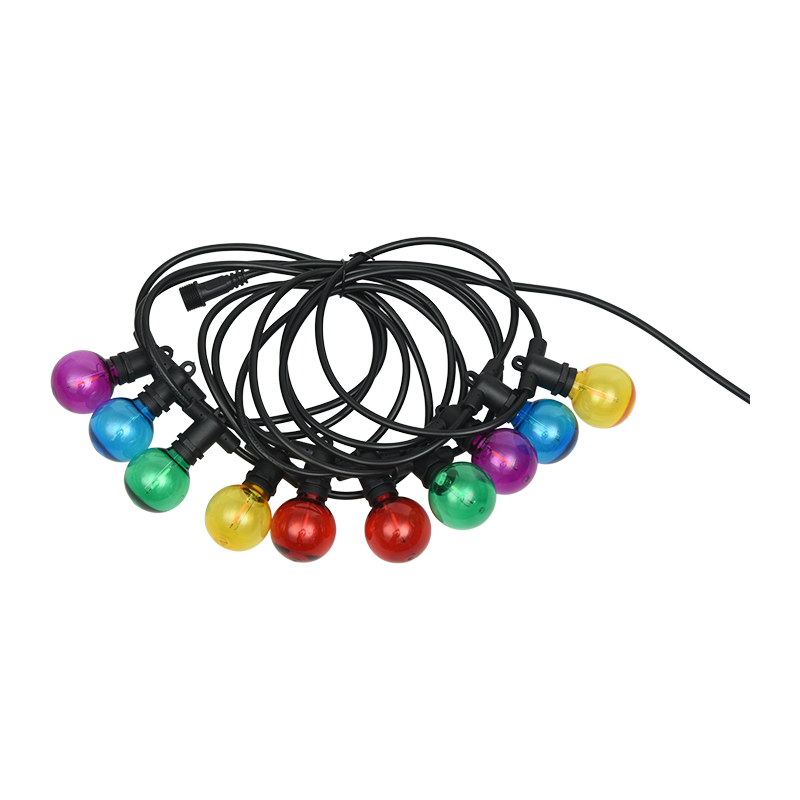
G40 Ball Bubble E12 Spiral Mouth Colorful Decorative Festoon Lighting
-
 View More
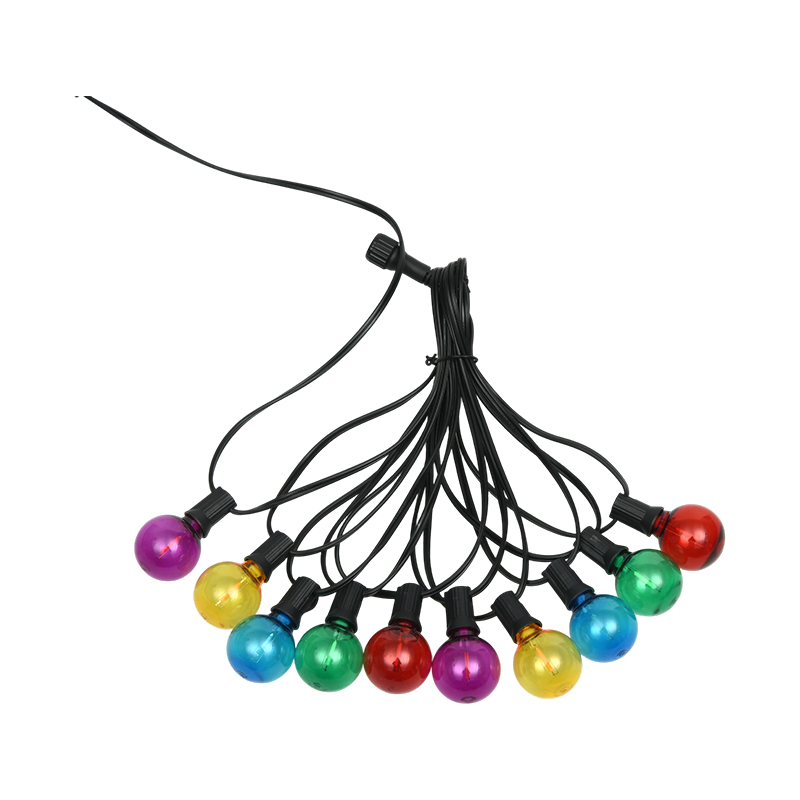
G40 Clip-on E12 Spiral Colored Decorative String Lights
-
 View More
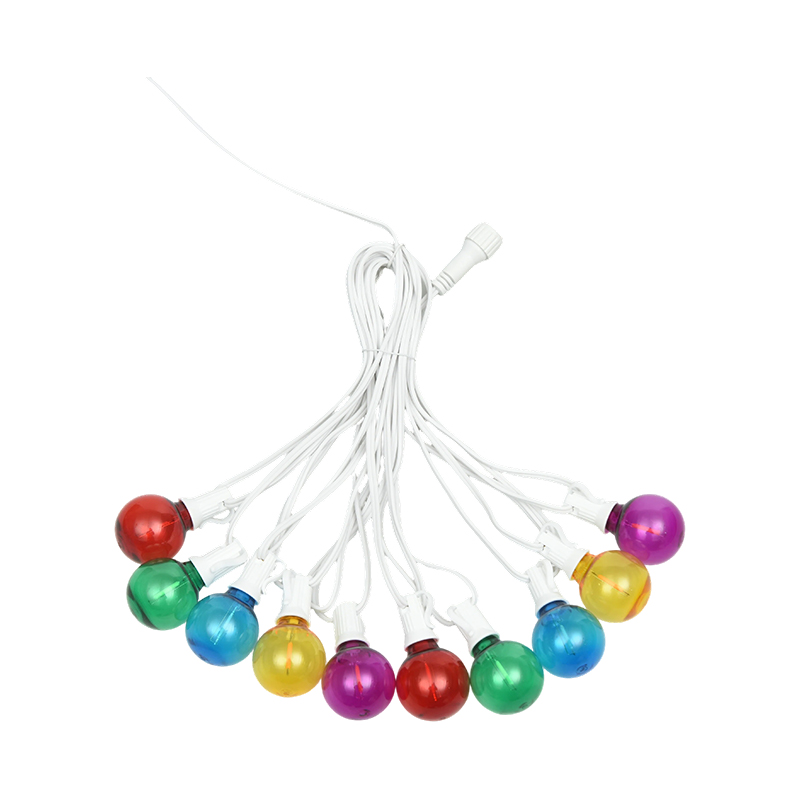
G40 Clip-on E12 Spiral Colored Decorative String Lights(White style)
-
 View More
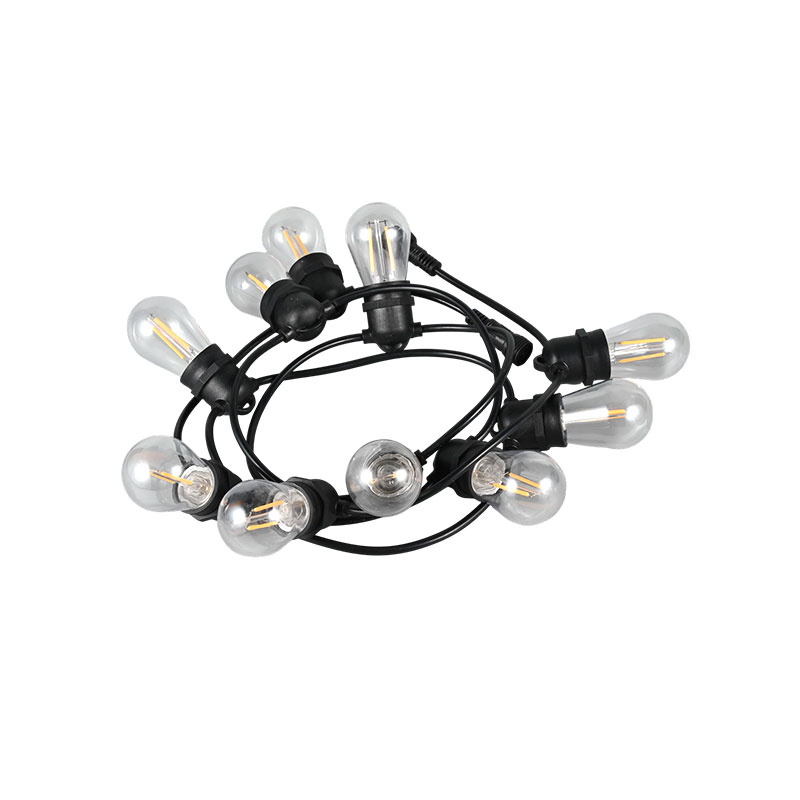
S14 Outdoor E27 Warm White String Lights
-
 View More
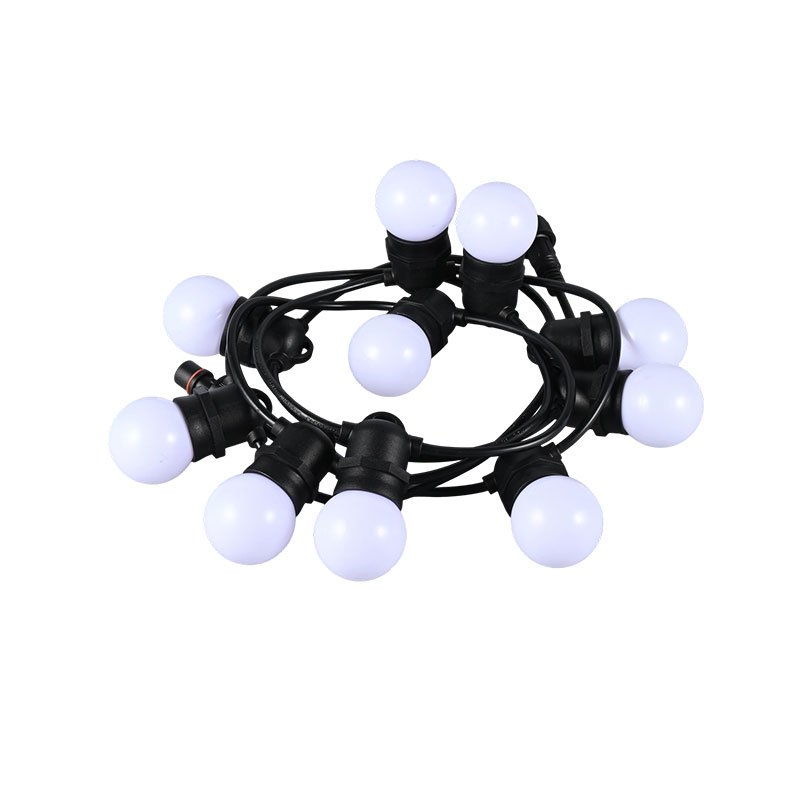
G45 Outdoor E27 White Light String Lights
Hengboyi are always ready to help you and answer your question if you need.
Request A Quote
Contact Info.
 Mob: +86-13901119074
 Tel: +86-574-62838966
 E-mail: sale2@hengboyi.com
 Add: No. 18 Rongchuang Road, Mingwei Village, Lizhou Street, Yuyao City, Ningbo, Zhejiang Province, China
Quick Links
Product List
Copyright Ningbo Hengboyi Lamp Co., Ltd. All rights reserved.
China best outdoor decorative solar lights Manufacturer
Custom decorative string lights indoor Factory

