 Telephone: +86-574-62838966
 E-mail : sale2@hengboyi.com


 en
en  English
 Español
 中文简体
中文简体
Outdoor Solar String Lights Manufacturer: Types, Specs & Buying Guide
Industry News
Home / News / Industry News / Outdoor Solar String Lights Manufacturer: Types, Specs & Buying Guide
Outdoor Solar String Lights Manufacturer: Types, Specs & Buying Guide
Content
- 1 What Outdoor Solar String Lights Are and Why Buyers Are Switching to Them
- 2 Common Types and Design Variants of Outdoor Solar String Lights
- 3 Core Structure and Working Principle of Solar String Lights
- 4 Solar Panel Technology: Monocrystalline, Polycrystalline and Thin-Film Compared
- 5 Battery Chemistry and Runtime Performance for Solar String Lights
- 6 Global Market Growth and Industry Trends for Solar String Lights
- 7 Application Scenarios and Selection Criteria for Outdoor Solar String Lights
- 8 Detailed Comparison: Solar String Lights vs Traditional Electric String Lights
- 9 IP Rating, Weatherproofing and Durability Standards to Check
- 10 Sourcing from an Outdoor Solar String Lights Manufacturer: OEM and ODM Considerations
- 11 Maintenance and Care Guide for Outdoor Solar String Lights
- 12 Frequently Asked Questions
- 12.1 Q1: How many hours of direct sunlight do outdoor solar string lights need to charge fully?
- 12.2 Q2: Can outdoor solar string lights work in cloudy or low-sunlight climates?
- 12.3 Q3: What is the typical lifespan of the battery in solar string lights before replacement is needed?
- 12.4 Q4: What should B2B buyers ask an outdoor solar string lights manufacturer before placing a bulk or OEM order?
What Outdoor Solar String Lights Are and Why Buyers Are Switching to Them
Outdoor solar string lights are self-contained LED lighting strands that combine a small photovoltaic panel, a rechargeable battery, a light sensor, and a run of weatherproof LED bulbs into a single wire-free unit, and for most patio, garden, hospitality, and municipal lighting projects they now deliver brightness and multi-season durability comparable to wired festoon lighting without the cost or complexity of running electrical cable to the site. Because the panel charges during the day and the battery automatically powers the string from dusk until the stored charge is used, the fixture requires no outlet, no trenching, and no electrician, which is the core reason procurement teams, landscape designers, and hospitality operators increasingly specify solar string lights for new outdoor lighting programs rather than defaulting to mains-powered festoon sets.
This guide is written for buyers who need to evaluate Outdoor Solar String Lights at a technical and sourcing level rather than a decorative one: distributors building a seasonal catalog, hospitality groups specifying fixtures across multiple properties, landscape contractors comparing suppliers, and import teams vetting an Outdoor Solar String Lights Manufacturer for a private-label or OEM program. It walks through the common product types on the market, how the internal components work together, how solar panel and battery technology differ across price tiers, what current market data shows about category growth, how to match a product to an application, how solar compares to wired alternatives on a factor-by-factor basis, what ingress-protection ratings actually mean for outdoor durability, what to check when sourcing from a manufacturer, and how to keep an installed system performing over several seasons.
Key takeaway: Solar String Lights remove the two biggest cost drivers of outdoor lighting projects — cable runs and electrician labor — while still requiring buyers to evaluate panel type, battery chemistry, and IP rating with the same rigor as any wired fixture.
Common Types and Design Variants of Outdoor Solar String Lights
Not all products sold under the label Outdoor Solar String Lights serve the same purpose, and buyers who treat the category as one product tend to over- or under-specify for their site. The four variants below cover most of what is currently manufactured for garden, hospitality, and event use, and each trades off bulb spacing, cord thickness, and light output differently.
- Mini or fairy LED strings use small, closely spaced LED bulbs on a thin copper or PVC-coated wire, favored for wrapping trellises, small trees, and railings where a soft ambient glow is the goal rather than task lighting.
- Globe or bead strings, sometimes referenced by the consumer G30/G40 bulb-size convention, use round frosted or clear plastic globes on a heavier cord and are the most common choice for patio canopies, pergolas, and restaurant terraces.
- Filament-style strings use warm-glow LED filaments inside a glass-look shell to mimic vintage Edison bulbs, and are popular for wedding venues, rooftop bars, and café seating areas where aesthetic consistency with indoor fixtures matters.
- Commercial festoon strings use a heavier rubber or reinforced PVC cord with replaceable screw-in bulbs, built for longer runs and repeated setup and teardown by event rental fleets, hospitality chains, and municipal park departments.
Beyond bulb style, buyers typically choose between a fixed warm white (2700K–3000K) color temperature for residential and hospitality ambiance, a cool white (5000K–6500K) option for higher-visibility pathway or security use, or a color-changing (RGB) string with a remote for event and seasonal decoration. Cord length also varies by tier: entry-level consumer strings commonly run 10 to 15 meters, while commercial-grade festoon products are increasingly offered in 20 to 50 meter runs, sometimes with multiple strings designed to connect end-to-end for large venues.
| Type | Bulb Style | Typical Length | Common Application |
|---|---|---|---|
| Mini / Fairy LED | Small exposed LEDs | 10–30 m | Trellis, trees, railings |
| Globe / Bead | Round frosted globes | 10–15 m | Pergola, patio, terrace |
| Filament-Style | Warm filament LEDs | 10–20 m | Weddings, rooftop bars, cafés |
| Commercial Festoon | Replaceable screw-in bulbs | 20–50+ m | Hospitality chains, parks, event rental |
Key takeaway: Matching bulb style and cord grade to the venue matters more than brightness alone — a commercial festoon cord will outlast a fairy-light strand in a high-traffic hospitality setting even at similar lumen output.
Core Structure and Working Principle of Solar String Lights
A solar string light is a small closed-loop energy system, and understanding its structure explains most of the performance differences buyers encounter between low-cost and commercial-grade products. During daylight hours, the photovoltaic panel converts sunlight into direct-current electricity, which passes through a small charge controller circuit that regulates the current flowing into the rechargeable battery so it charges without being overloaded or damaged by voltage spikes. The battery, typically housed in a sealed compartment attached to the panel or mounted separately along the cord, stores that energy until a photoresistor-based light sensor detects falling ambient light at dusk and automatically closes the circuit that powers the LED strand.
From that point, the LEDs draw down the stored charge through the night, and most commercial units include a mode button or remote control offering steady-on, slow-fade, twinkle, or flash lighting patterns, along with an override switch to disable the light sensor for testing or manual control. Higher-tier products separate the panel, battery, and sensor into a weatherproof housing distinct from the cord itself, which allows the panel to be mounted in full sun on a stake or bracket even when the LED run itself is strung across a partially shaded pergola or fence line, a configuration that meaningfully improves charging consistency compared to designs where the panel is fixed to the same structure as the lights.
Simplified isometric structure diagram of an outdoor solar string light system and its core components.
Key takeaway: A separable panel-and-battery module that can be mounted independently of the LED cord is a strong indicator of a commercial-grade design rather than an entry-level decorative product.
Solar Panel Technology: Monocrystalline, Polycrystalline and Thin-Film Compared
The panel is the single component most responsible for how reliably an outdoor solar string light charges across seasons, and three panel technologies currently appear in the category. Monocrystalline silicon panels are cut from a single continuous silicon crystal, which lets electrons flow with fewer internal boundary losses and typically yields the highest conversion efficiency of the three. Polycrystalline panels are cast from multiple silicon fragments melted together, which is a simpler and lower-cost manufacturing process but leaves more grain boundaries for electrons to cross, reducing output per unit of panel area. Thin-film or amorphous panels deposit a much thinner semiconductor layer on a flexible or rigid backing, which lowers material cost and allows curved or compact panel shapes but at the lowest efficiency of the group.
Because outdoor solar string lights typically use small panels — often only a few centimeters across — efficiency differences matter disproportionately compared with rooftop solar, since a low-efficiency panel that size simply cannot capture enough energy on a short winter day to fully charge a battery for an all-night lighting cycle. This is why commercial-grade string light lines increasingly specify monocrystalline panels even at a modest cost premium, reserving thin-film panels for lower-cost decorative products intended for shorter nightly run times. Industry efficiency comparisons place monocrystalline panels in the 20% to 23% range, polycrystalline panels in the 15% to 17% range, and thin-film or amorphous panels in the 10% to 13% range, according to comparative solar panel data published by TheGreenWatt and American Sentry Solar. Separately, industry tracking cited by A1 Solar Store estimates that monocrystalline cells account for roughly 98% of global solar cell production by 2026, reflecting how far the broader solar supply chain has already shifted toward the higher-efficiency technology that also benefits small-format lighting applications.
Before looking at the efficiency comparison below, it helps to note that these percentages describe how much of the sunlight striking the panel surface is converted into usable electricity, that a higher percentage means a smaller panel can deliver the same nightly runtime, that panel efficiency does not by itself determine total light output since LED count and battery capacity also matter, that buyers sourcing for northern latitudes or heavily shaded installation sites should weight efficiency more heavily than buyers in consistently sunny regions, and that efficiency figures are typically measured under standardized test conditions rather than real installed conditions.
Chart 1: Typical Conversion Efficiency by Solar Panel Type
Monocrystalline Silicon — up to 23%
Polycrystalline Silicon — up to 17%
Thin-Film / Amorphous — up to 13%
Efficiency ranges compiled from TheGreenWatt and American Sentry Solar panel comparison data.
The gap between monocrystalline and thin-film efficiency shown above translates directly into panel size and mounting flexibility for a string light product. A monocrystalline panel can be built roughly half the surface area of a thin-film panel while capturing a similar amount of daily energy, which is why compact stake-mounted commercial units almost always use monocrystalline cells. Polycrystalline sits in a middle tier that many mid-priced garden lighting lines still use, offering a reasonable balance of charging performance and unit cost. Buyers sourcing for climates with fewer sunlight hours, more cloud cover, or shorter winter days should treat panel type as a primary specification rather than an afterthought, because a thin-film panel that performs adequately in a sunny climate may struggle to fully charge the same battery through a cloudy autumn week. It is also worth noting that panel efficiency interacts with panel angle and orientation: even a high-efficiency panel underperforms if it is mounted flat rather than tilted toward the sun's typical arc, so manufacturers that include an adjustable bracket or stake angle are effectively helping the panel technology perform closer to its rated efficiency in real installations. For B2B buyers comparing multiple factories, asking directly which panel technology is used, rather than relying on general marketing language, is one of the fastest ways to separate premium product lines from entry-level ones.
Key takeaway: Monocrystalline panels deliver roughly 35% to 75% higher conversion efficiency than thin-film panels of the same size, which is the main reason commercial-grade solar string lights favor monocrystalline cells despite the higher component cost.
Battery Chemistry and Runtime Performance for Solar String Lights
Battery chemistry determines two things buyers care about most after brightness: how many seasons the fixture will run before the battery needs replacing, and how consistently it performs through a run of cloudy days. Three battery chemistries dominate the outdoor solar lighting category. Nickel-metal hydride (NiMH) batteries remain the most common choice in entry-to-mid-tier products because they are inexpensive and widely available in standard AA or AAA form factors, but they carry a comparatively high self-discharge rate of around 15% to 20% per month, according to battery guidance published by Hykoont. Lithium-ion batteries offer higher energy density and better cold-weather performance than NiMH, though standard lithium-ion cells can shut down or underperform in extreme cold without additional thermal design. Lithium iron phosphate (LiFePO4) batteries are increasingly positioned as the premium option for commercial and four-season installations because they combine a wide stable operating range, cited by multiple battery suppliers including Linkind and Hykoont as roughly -20°C to 60°C, with the longest cycle life of the three chemistries.
Cycle life is worth explaining before the chart below, because it is the number that most directly predicts how many years a battery lasts under daily charge-and-discharge use rather than how many hours it runs on a single charge. Each full charge-discharge cycle causes small structural wear inside the battery, and once a battery has gone through its rated number of cycles, its usable capacity typically drops enough that nightly runtime becomes noticeably shorter even though the battery still technically functions. Manufacturers rarely publish this figure prominently, so it is a useful question to ask directly when comparing suppliers. The three chemistries differ substantially on this metric, and the difference compounds over several years of daily outdoor use.
Chart 2: Typical Charge-Discharge Cycle Life by Battery Chemistry
~750
~1,500
~2,500
NiMH
500–1,000 cycles
Li-ion
1,000–2,000 cycles
LiFePO4
2,000–3,000 cycles
Cycle life ranges based on battery guidance published by Hykoont and UFine Battery.
Reading the chart together with typical daily use, a NiMH battery cycling once per day tends to reach the end of its useful cycle life within one to two years of outdoor service, which lines up with field guidance suggesting NiMH-powered garden lights are often replaced annually in demanding climates. A lithium-ion battery in the 1,000 to 2,000 cycle range generally covers two to four years of daily use before capacity fade becomes noticeable, while LiFePO4 batteries in the 2,000 to 3,000 cycle range can realistically support three to five or more years of daily charge cycles, which is why commercial festoon lighting programs with high replacement costs increasingly specify LiFePO4 even though the unit cost is higher. Beyond cycle count, the practical difference buyers notice on-site is cold-weather reliability: NiMH and standard lithium-ion cells lose capacity and can behave unpredictably below freezing, while LiFePO4 is more commonly cited as maintaining stable output across a wider seasonal temperature swing. For hospitality and municipal buyers evaluating total cost of a lighting program rather than unit price alone, a modest per-unit premium for LiFePO4 batteries can reduce replacement frequency enough to lower the effective annual cost of the installation, particularly for hard-to-access mounting locations such as tall pergolas or municipal light poles where battery swaps carry real labor cost.
| Chemistry | Typical Cycle Life | Cold-Weather Behavior | Typical Product Tier |
|---|---|---|---|
| NiMH | 500–1,000 cycles | Weaker below freezing | Entry to mid-tier |
| Lithium-ion | 1,000–2,000 cycles | Moderate, needs thermal design | Mid to upper tier |
| LiFePO4 | 2,000–3,000 cycles | Stable across wide range | Commercial / four-season |
Key takeaway: Battery chemistry, not panel size alone, is usually the deciding factor in how many years a solar string light program runs before component replacement is needed.
Global Market Growth and Industry Trends for Solar String Lights
Third-party market research consistently points to the same directional story: solar-powered lighting is growing faster than the broader decorative lighting category it sits inside, and buyers building a multi-year sourcing strategy benefit from understanding that trend rather than a single snapshot figure. According to a solar string lights market report published by 360iResearch, the global solar string lights market was estimated at approximately $3.78 billion in 2025, is expected to reach roughly $4.14 billion in 2026, and is projected to grow at a compound annual growth rate of about 12.16%, reaching close to $8.45 billion by 2032. That growth rate outpaces the wider string lights category, which a separate report from Deep Market Insights values at approximately $1.15 billion in 2024 growing to roughly $1.68 billion by 2030 at a CAGR closer to 6.6%, suggesting that solar-powered variants are steadily gaining share within total string light demand rather than simply growing alongside it.
Trend analysis published by Accio, drawing on search behavior and market reports, adds useful context: broader solar lighting demand is expected to exceed $15 billion by 2030, with smart features and IoT connectivity cited as an emerging growth lever, and search interest for solar string lights specifically shows clear seasonal spikes tied to holiday and outdoor event periods rather than flat year-round demand. Deep Market Insights also reports that North America currently leads demand for the broader string lights category while Asia-Pacific is the fastest-growing region, a pattern consistent with rising outdoor living investment and festival-driven purchasing in that region. Before the trend chart below, it is worth noting that these figures come from different research firms using different scope definitions, that solar string lights specifically are usually treated as a subsegment of the larger string lights or solar lighting market, that CAGR figures compound annually rather than linearly, that regional demand patterns vary meaningfully by climate and outdoor living culture, and that report figures should be read as directional industry signals rather than precise forecasts for any single supplier's order volume.
Chart 3: Global Solar String Lights Market Size Trend (USD Billion)
Source: 360iResearch, Solar String Lights Market Size & Share 2025-2030 report.
The upward slope in the chart above reflects several compounding demand drivers rather than a single cause. Rising outdoor living investment among residential consumers has expanded the addressable base for decorative lighting generally, and within that base, sustainability considerations and avoided electricity costs are steering a growing share of purchases toward solar-powered options specifically. Hospitality operators retrofitting rooftop bars, pool decks, and outdoor dining areas increasingly favor solar strings where cabling would be disruptive or costly to install, and municipal buyers deploying park and walkway lighting benefit from the same cable-free installation advantage at scale. For an Outdoor Solar String Lights Manufacturer or supplier evaluating where to invest product development, the gap between the 12.16% CAGR reported for solar string lights specifically and the roughly 6.6% to 8% CAGR reported for string lights broadly is a reasonably strong signal that solar variants will continue taking share from wired equivalents over the coming years. Because different research firms report meaningfully different absolute market sizes depending on how they define the category, the table below lays out several published estimates side by side rather than presenting one figure as definitive, which gives buyers a clearer picture of the range analysts are working within.
| Research Source | Segment Covered | Base Year Value | Projected Value / CAGR |
|---|---|---|---|
| 360iResearch | Solar string lights (global) | $3.78B (2025) | $8.45B by 2032 / 12.16% |
| Deep Market Insights | String lights, all types | $1.15B (2024) | $1.68B by 2030 / 6.6% |
| Verified Market Reports | String lights, all types | $2.1B (2022) | $3.5B by 2030 / 7.3% |
Key takeaway: Independent research firms report solar string lights growing at roughly double the CAGR of the broader string lights category, indicating solar variants are gaining category share rather than merely riding overall market growth.
Application Scenarios and Selection Criteria for Outdoor Solar String Lights
Choosing the right product starts with matching the fixture to where and how it will actually be used, and that pairing looks different for a residential garden than it does for a hospitality rooftop or a municipal park. The table below sets typical application scenarios next to the selection criteria that most directly affect whether a given product will perform well in that setting, so buyers can work across the two columns together rather than treating brightness or price as the only variables.
Typical Application Scenarios
|
Key Selection Criteria
|
Sunlight availability is the criterion buyers most often underweight. A site with consistent, unobstructed sun for at least four to six hours a day will support most panel technologies, but a partially shaded courtyard or a site with a short winter day length benefits from specifying a monocrystalline panel and a higher-capacity battery to compensate. Run length matters because longer LED strings draw more current across the same conductor, and commercial festoon products designed for 30 to 50 meter runs typically use a thicker gauge wire and, in some cases, a mid-line booster or secondary panel to maintain consistent brightness end to end, a detail worth asking about directly for large installations. Bulb replaceability is a practical maintenance consideration: sealed strings are usually less expensive up front but require full replacement when a section fails, while festoon-style products with screw-in bulbs let facility staff replace individual bulbs, which lowers long-term maintenance cost for large hospitality or municipal deployments.
Key takeaway: Sunlight hours at the actual install site, not headline lumen output, is the single factor most likely to determine whether a solar string light performs consistently through an entire season.
Detailed Comparison: Solar String Lights vs Traditional Electric String Lights
Buyers frequently ask whether solar string lights are simply a like-for-like substitute for mains-powered festoon lighting or whether the two serve genuinely different use cases. In practice, the answer depends on the specific factor being compared, and the table below sets the two options side by side across the dimensions that most often decide a procurement choice.
| Factor | Solar-Powered String Lights | Grid-Connected Electric String Lights |
|---|---|---|
| Power Source | Onboard panel + rechargeable battery | Mains electricity via outlet or hardwiring |
| Installation | No cabling; panel placement matters | Requires outlet access or fixed wiring |
| Running Cost Exposure | No metered electricity draw once installed | Adds to metered load with heavy nightly use |
| Weather Dependency | Charge output varies with daily sunlight | Runs consistently regardless of daylight |
| Typical Best Fit | Remote, seasonal, or off-grid installations | Permanent sites near existing power with heavy use |
One technology both options share is the LED bulb itself, and it is worth understanding why LEDs became the default even for wired string lights before comparing solar and electric further. LED components consume dramatically less energy than the incandescent bulbs they replaced across the broader lighting industry, which matters for solar products because it directly reduces how much battery capacity is needed to sustain a night of illumination, and it matters for grid-connected products because it lowers the metered electricity cost of running long festoon installations nightly. The chart below isolates that single, well-documented efficiency gain before the comparison discussion continues.
Chart 4: LED Energy Savings Versus Incandescent String Light Bulbs
Source: U.S. Department of Energy LED efficiency data, cited in Verified Market Reports string lights industry analysis.
A roughly 75% reduction in energy consumption, as reported by the U.S. Department of Energy and referenced in Verified Market Reports' string lights market analysis, is a large enough gap that it reshapes both sides of the comparison table above. For grid-connected festoon lighting, it means the metered cost disadvantage relative to solar has narrowed considerably compared with the incandescent era, since modern LED festoon strings draw far less current than older bulb technology did. For solar-powered strings, the same efficiency gain is what makes small, low-wattage panels and compact batteries viable at all, since an incandescent-equivalent bulb load would require a panel and battery far too large to be practical in a garden stake or hanging cord format. In practice, this means the decision between solar and grid-connected lighting today comes down less to raw energy efficiency, since both formats now typically use LEDs, and more to installation logistics, sunlight availability at the site, and how the buyer wants to manage long-term running costs and cable infrastructure. Sites with existing outdoor power infrastructure and very heavy nightly use, such as a permanently installed hotel courtyard, may still favor grid-connected festoon systems for consistency, while sites without convenient power access, seasonal installations, or locations where trenching cable is impractical or costly increasingly favor solar.
Key takeaway: Because both solar and grid-connected string lights now typically use the same efficient LED bulb technology, the practical choice between them usually comes down to installation access and sunlight availability rather than energy efficiency alone.
IP Rating, Weatherproofing and Durability Standards to Check
Because solar string lights are, by definition, permanently exposed to the outdoor environment, the Ingress Protection (IP) rating printed on the panel, battery housing, and connectors is one of the most reliable durability indicators a buyer can check before ordering. The rating uses two digits: the first indicates protection against solid particles such as dust, on a scale of 0 to 6, and the second indicates protection against water, on a scale of 0 to 9, so a higher second digit specifically reflects better resistance to rain, splashing, or submersion. The cards below summarize the ratings most commonly seen on outdoor string light components and the conditions each is realistically suited for.
IP44
Protected against splashing water from any direction; suitable for covered patios and sheltered mounting positions, less suited to fully open exposure.
IP65
Fully dust-tight and protected against low-pressure water jets; a common baseline for LED strands used in open garden and patio settings.
IP67
Dust-tight and protected against temporary submersion up to one meter; suited to fixtures exposed to heavy rain or ground-level flooding.
IP68
Dust-tight and protected against continuous submersion beyond one meter; typically specified for waterside, pool-adjacent, or fully unsheltered commercial sites.
IP rating alone does not fully describe durability, and buyers evaluating a manufacturer should also ask about cord jacket material and connector design. A UV-stabilized PVC or rubber cord jacket resists cracking and discoloration from prolonged sun exposure far better than untreated plastic, which is a common failure point on lower-cost products after a single summer of continuous outdoor use. Connector joints between string segments should include a rubber gasket or overmolded seal rather than a simple plastic snap-fit, since joints are typically where water intrusion begins on a festoon system. Panel and battery housings are commonly molded from ABS or polycarbonate, both of which offer reasonable UV and impact resistance, and stainless steel or galvanized mounting hardware resists corrosion far longer than uncoated steel stakes or brackets in coastal or high-humidity installations.
Key takeaway: An IP65 rating is generally an adequate baseline for sheltered garden and patio use, while fully exposed commercial or waterside installations warrant IP67 or IP68 rated components.
Sourcing from an Outdoor Solar String Lights Manufacturer: OEM and ODM Considerations
For distributors, hospitality procurement teams, and importers building a private-label or bulk lighting program, choosing an Outdoor Solar String Lights Manufacturer involves a different set of questions than buying a finished retail product. Beyond panel type, battery chemistry, and IP rating already covered above, it is worth asking a supplier about component traceability, including where the LED chips and battery cells originate, since inconsistent component sourcing between production runs is a common cause of quality variation that only shows up after a product has been in the field for a season. It is also worth understanding whether a factory offers OEM production, building a design the buyer already owns, or ODM development, adapting or customizing an existing product line to a buyer's branding and specification, since the two paths carry different lead-time and design-input implications. In-house testing capability, such as accelerated weather exposure testing or battery cycle testing before a design ships to production, is another differentiator worth asking about directly, along with whether a supplier can support private-label packaging and documentation for a buyer's own retail or contract channel.
Ningbo Hengboyi Lamp Co., Ltd., formerly Yuyao Hengli Auto Parts Factory, is one example of a manufacturer serving this part of the market as an OEM commercial outdoor lighting supplier and ODM decorative outdoor commercial lighting factory. Established in 2003 and based in Yuyao City, Zhejiang Province — an area known within China's manufacturing sector as the "Hometown of Plastics" — the company integrates research and development, production, sales, and self-operated export under one roof, with a business scope spanning lighting fixtures, lighting accessories, electronic products, and related injection-molded, rubber, and hardware components. Its production base includes processing, production, and testing equipment supporting precision plastic product manufacturing alongside electronic assembly, which is the combination of capabilities that a solar string light product, spanning injection-molded housings, printed circuit assemblies, and battery integration, typically requires from a single supplier. The company has built long-term relationships with domestic and international lighting customers around its stated operating philosophy of quality first, integrity foremost, scientific management, and pragmatic innovation, and it positions itself as a designated supplier for lighting manufacturers sourcing both fixture components and finished decorative lighting products.
When evaluating any manufacturer in this category, buyers are well served by requesting sample units for real-world testing at the intended install site or a comparable climate before committing to a bulk order, since laboratory-rated specifications for panel efficiency, IP rating, and battery cycle life translate imperfectly into field performance depending on local sun angle, humidity, and temperature swings. Asking a supplier directly how their product line differs across price tiers — specifically which tiers use monocrystalline versus polycrystalline panels, and which battery chemistry is standard versus optional — is usually the fastest way to align a bulk order with the actual performance requirements of a project rather than relying on general marketing descriptions.
Key takeaway: B2B buyers get the most useful comparison across manufacturers by asking specific, component-level questions — panel technology, battery chemistry, IP rating, and testing capability — rather than comparing suppliers on general product descriptions alone.
Maintenance and Care Guide for Outdoor Solar String Lights
Solar string lights require less ongoing maintenance than wired equivalents, but a small amount of routine care meaningfully extends both charging performance and overall fixture lifespan. The steps below apply broadly across residential, hospitality, and municipal installations, with the understanding that higher-traffic commercial sites benefit from following this schedule more strictly than a low-use residential garden.
- Position the panel for maximum daily sun exposure, generally facing the equator-ward direction for the installation's hemisphere, and avoid mounting it beneath overhangs, awnings, or dense tree canopy.
- Wipe the panel surface every four to six weeks to remove dust, pollen, or debris, since even a thin layer of buildup measurably reduces the amount of sunlight reaching the cell.
- Check the on/off switch and mode setting if a strand fails to illuminate, since many field issues trace back to the unit being left in the off position or a mode setting rather than an actual component failure.
- Inspect cord jackets and connector joints at the start and end of each outdoor season for cracking, discoloration, or loose seals, replacing damaged sections before they allow water intrusion.
- In regions with extended sub-freezing winters, follow the manufacturer's guidance on whether to disconnect or bring the battery indoors, since prolonged extreme cold can accelerate capacity loss in NiMH and standard lithium-ion cells.
- Plan for battery replacement on the schedule implied by its chemistry — roughly one to two years for NiMH, two to four years for lithium-ion, and three to five or more years for LiFePO4 — rather than waiting for complete failure, since a battery nearing end-of-life often causes gradually shortening nightly runtime before it stops charging altogether.
- Avoid mounting the panel near artificial security or street lighting that could interfere with the dusk-to-dawn light sensor, which can cause the strand to stay off or switch on later than expected.
- For seasonal installations, such as event lighting or holiday displays, coil and store the strand indoors during the off-season rather than leaving it exposed year-round, which reduces cumulative UV and weather exposure on the cord jacket.
Key takeaway: Most solar string light performance issues in the field trace back to panel placement, dust buildup, or a battery reaching the end of its rated cycle life, all of which are preventable with a simple seasonal maintenance routine.
Frequently Asked Questions
Q1: How many hours of direct sunlight do outdoor solar string lights need to charge fully?Most outdoor solar string lights are designed to reach a usable overnight charge with roughly four to eight hours of direct, unobstructed sunlight, though the exact figure depends on the panel type, battery capacity, and LED count on the strand. Monocrystalline panels generally reach a full charge faster than polycrystalline or thin-film panels of the same size, which matters most for sites with shorter winter daylight hours. |
Q2: Can outdoor solar string lights work in cloudy or low-sunlight climates?Solar string lights can still function in cloudy climates, but performance depends heavily on panel efficiency and battery capacity, since diffuse light through cloud cover produces meaningfully less charge than direct sun. Buyers in consistently overcast or short-daylight regions should prioritize monocrystalline panels and higher-capacity batteries, and consider positioning panels in the most open, unobstructed spot available even if that means separating the panel from the LED strand itself. |
Q3: What is the typical lifespan of the battery in solar string lights before replacement is needed?Battery lifespan depends on chemistry: NiMH batteries typically last one to two years of daily outdoor cycling, lithium-ion batteries typically last two to four years, and LiFePO4 batteries can realistically support three to five years or more, based on published cycle-life comparisons across the three chemistries. Gradually shorter nightly runtime is usually the first sign that a battery is approaching the end of its useful cycle life. |
Q4: What should B2B buyers ask an outdoor solar string lights manufacturer before placing a bulk or OEM order?Buyers should ask which solar panel technology and battery chemistry are standard on the specific product line being quoted, what IP rating applies to the panel, battery housing, and cord connectors, whether the factory supports OEM or ODM development and private-label packaging, and whether sample units are available for on-site testing before a bulk order is confirmed. Component-level answers to these questions are generally more useful for comparing suppliers than general marketing descriptions. |
Product Categories
Recommended News
2026-05-21G45 Outdoor E27 White Light String Lights
2026-05-21S14 Light Guide Pillar Pendant Type E27 Spiral String Lights
2026-05-21S14 Outdoor E27 Warm White String Lights
2026-05-21US Standard S14 String Lights, Integrated E26 Spiral Socket, Warm White Light, Heavy-Duty Engineering Model
2026-05-21S14 Hanging E27 Spiral RGBWY Multi-Color String Lights
2026-05-21G45 Hanging Type E27 Spiral RGB Synchronized Flashing String Lights
Related Products
-
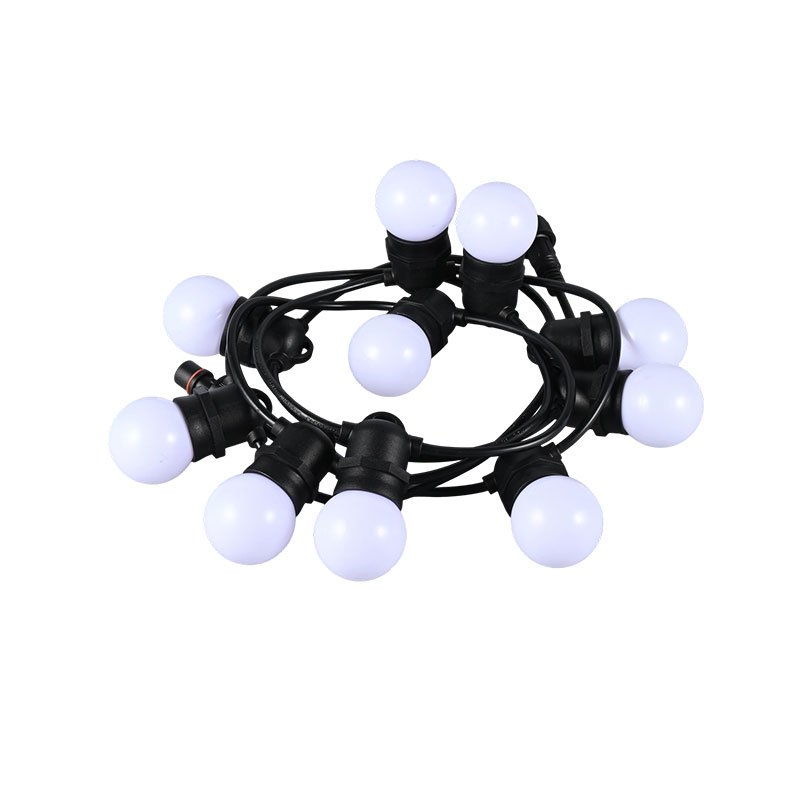 View More
-
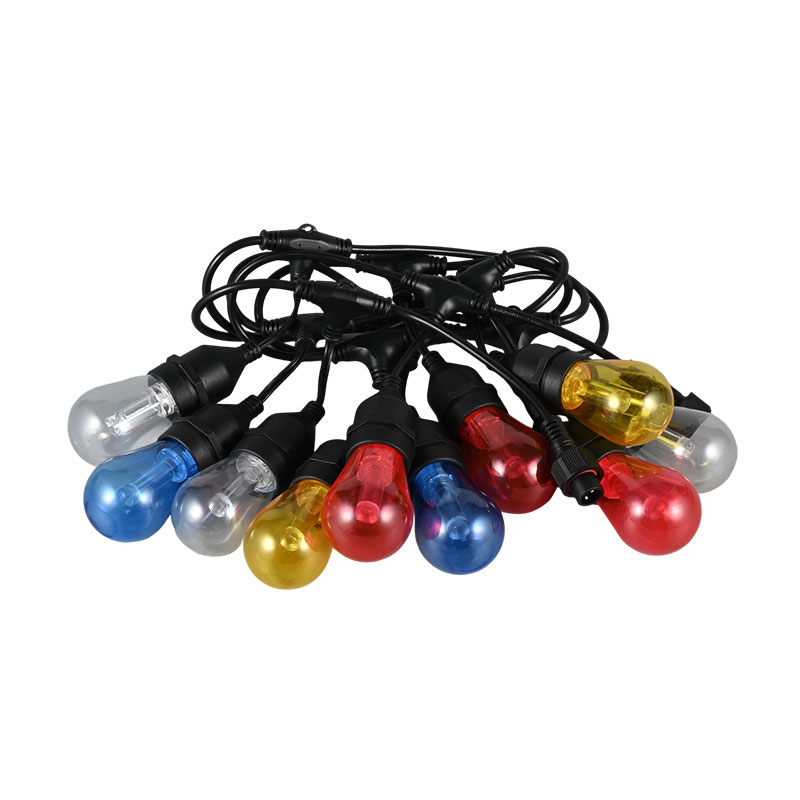 View More
S14 Light Guide Pillar Pendant Type E27 Spiral String Lights
-
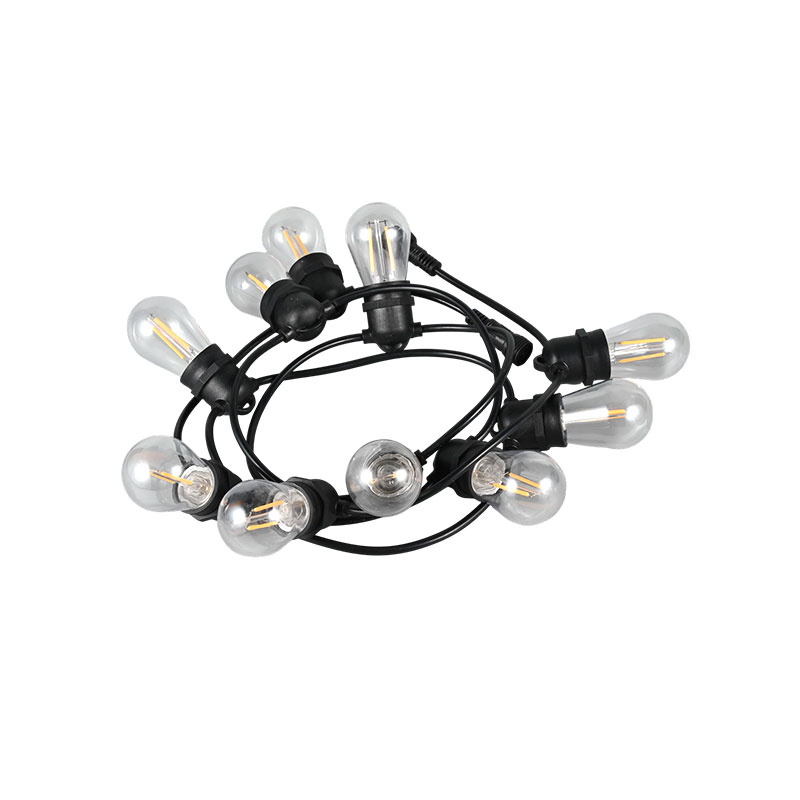 View More
S14 Outdoor E27 Warm White String Lights
-
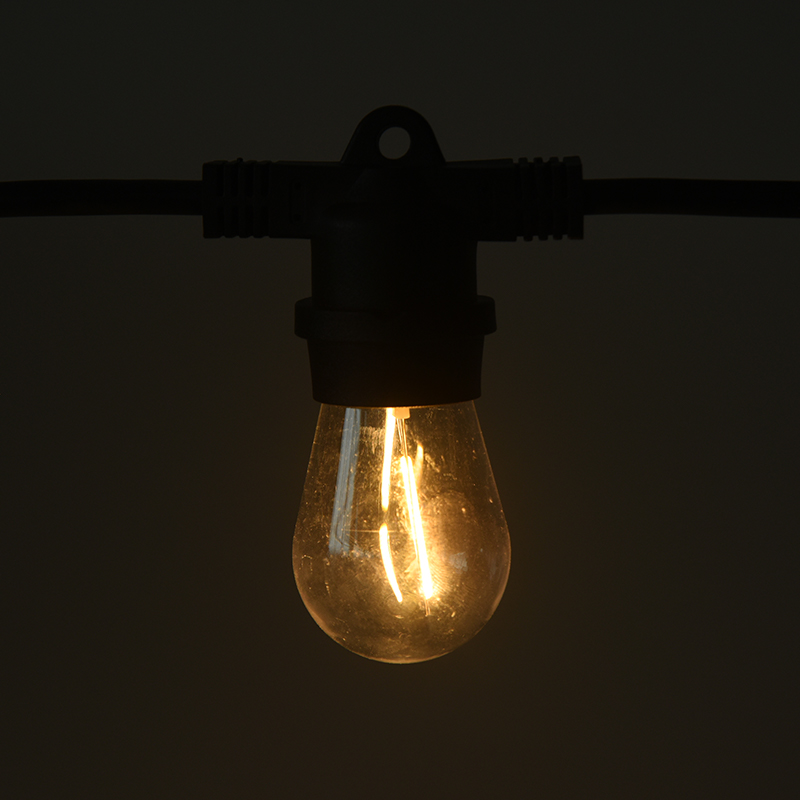 View More
US Standard S14 String Lights, Integrated E26 Spiral Socket, Warm White Light, Heavy-Duty Engineering Model
-
 View More
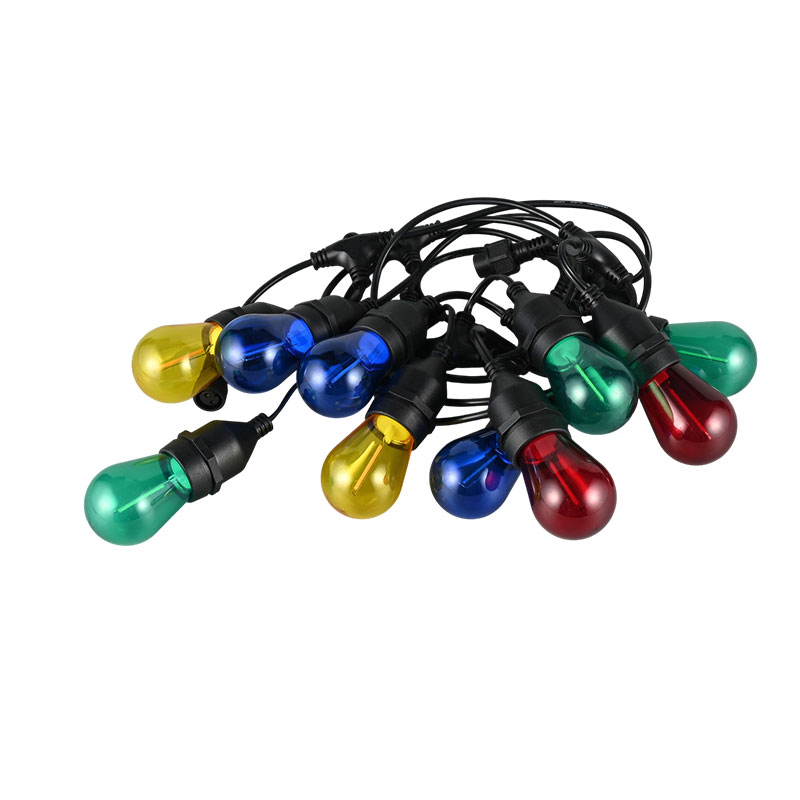
S14 Hanging E27 Spiral RGBWY Multi-Color String Lights
-
 View More
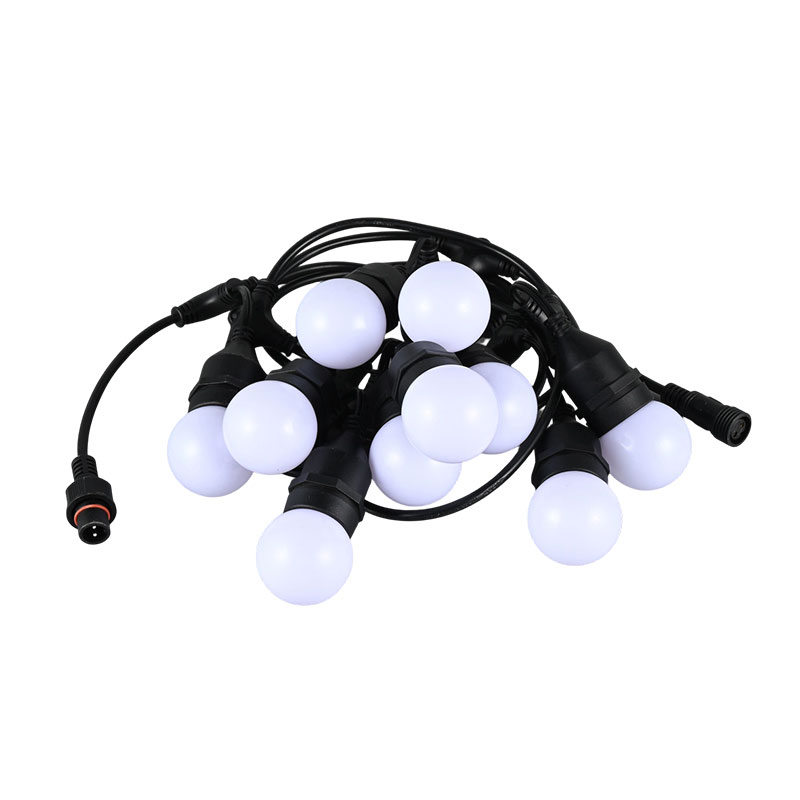
G45 Hanging Type E27 Spiral RGB Synchronized Flashing String Lights
Hengboyi are always ready to help you and answer your question if you need.
Request A Quote
Contact Info.
 Mob: +86-13901119074
 Tel: +86-574-62838966
 E-mail: sale2@hengboyi.com
 Add: No. 18 Rongchuang Road, Mingwei Village, Lizhou Street, Yuyao City, Ningbo, Zhejiang Province, China
Quick Links
Product List
Copyright Ningbo Hengboyi Lamp Co., Ltd. All rights reserved.
China best outdoor decorative solar lights Manufacturer
Custom decorative string lights indoor Factory

