Versatile String Lights Indoor & Outdoor Solutions are string lighting product lines engineered to move between a covered indoor space and a fully exposed outdoor patio without requiring separate fixtures for each setting, and the direct answer for anyone comparing options is that this versatility comes down to three factors: a weatherproof housing rated for outdoor exposure, a low-voltage or properly insulated power system, and a connectable design that supports multiple runs without exceeding safe load limits. This article focuses specifically on the practical engineering and selection questions buyers face when specifying string lights that need to perform reliably in both indoor and outdoor commercial settings, including voltage and cable run considerations, bulb shape and socket types, and how commercial-grade string lights differ from residential products. Restaurants, hotels, retail storefronts, and event venues increasingly rely on a single string light product line for both an interior dining room and an adjacent outdoor terrace, which reduces inventory complexity and creates a more consistent lighting appearance across connected spaces. Readers evaluating a supplier for indoor and outdoor string lighting will find technical comparisons, data visualizations, and a practical selection checklist throughout the sections below.
Bulb Shape and Socket Types Explained
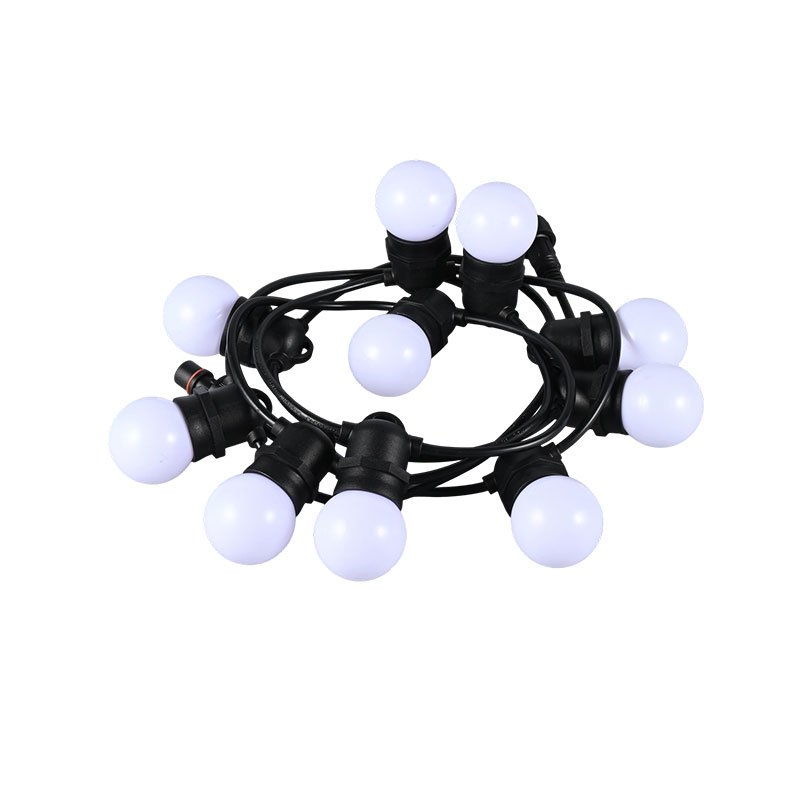
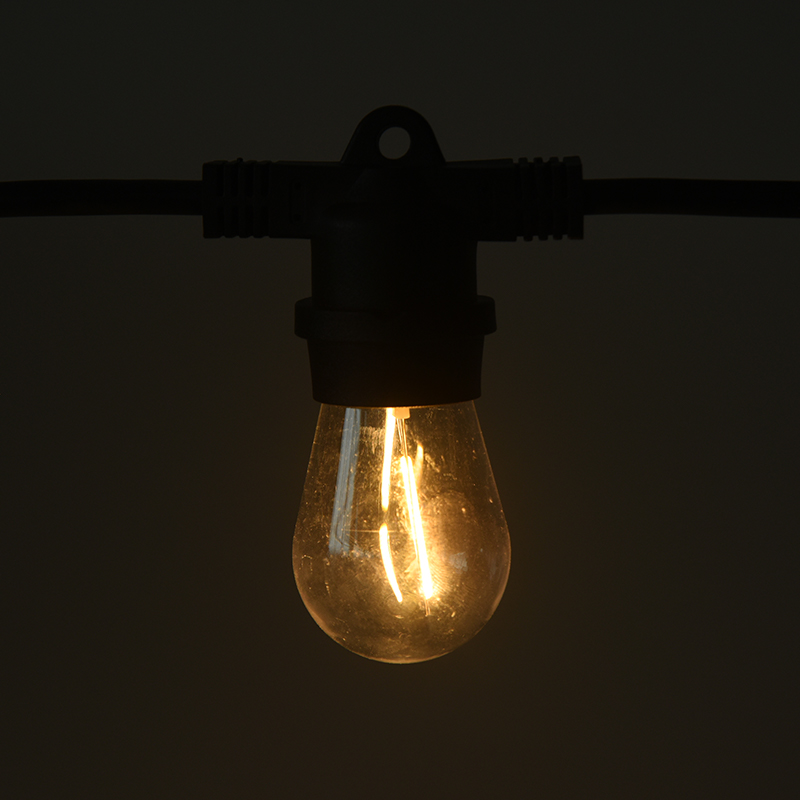
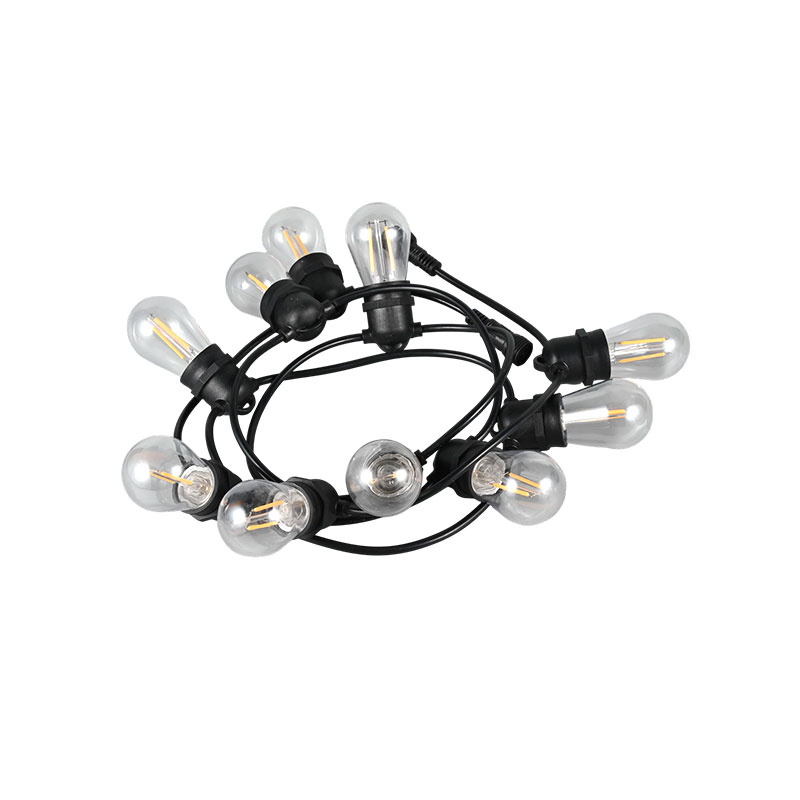
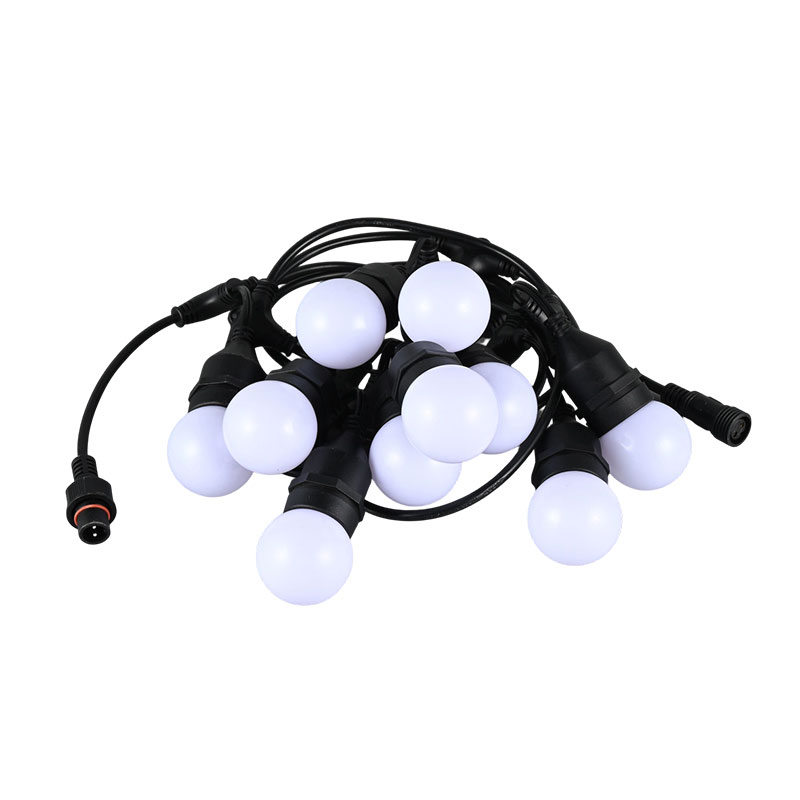
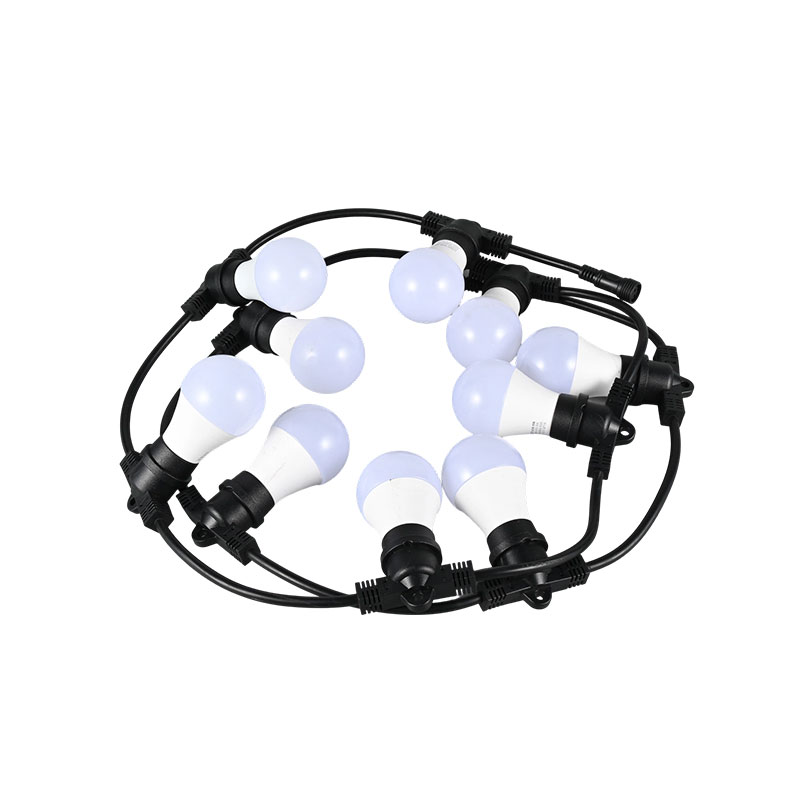
String lights are available in several common bulb shapes and socket types, and choosing the right combination affects both the visual character of an installation and its practical durability in outdoor conditions. Globe-shaped bulbs, often using an E12 or E26 socket depending on bulb size, are widely used in commercial patio and restaurant settings because their rounded shape diffuses light evenly and reads clearly even at a distance. Edison-style bulbs, recognizable by their visible filament design, are popular for a warmer, more vintage aesthetic often chosen for hospitality and event spaces. Mini or fairy-light style bulbs use a smaller, more densely spaced format and are commonly chosen for tree wrapping, canopy installations, or backdrop lighting rather than as the primary overhead light source. The table below summarizes these common formats alongside their typical socket type and most common commercial application.
Common string light bulb shapes, socket types, and typical commercial applications
Bulb Shape
Common Socket Type
Typical Application
Globe (G40/G50)
E12
Patios, outdoor dining, storefront canopies
Globe (G80/G95)
E26
Large open venues, festoon-style overhead runs
Edison filament
E26
Hospitality, bars, event backdrops
Mini/fairy light
Fixed/non-removable
Tree wrapping, canopy fill, backdrop layering
Selecting the right bulb shape is not purely aesthetic; larger globe bulbs and E26 sockets are generally easier to service and replace individually in a commercial setting, while fixed mini-light strands are typically replaced as a full section when a segment fails. For a venue that combines an indoor dining room and an outdoor terrace, many commercial buyers standardize on a single globe bulb format across both spaces to maintain a consistent appearance while still allowing the outdoor run to carry an appropriate weatherproof rating.
Voltage Systems and Cable Run Length
One of the more technical but important considerations for indoor and outdoor string light installations is the voltage system used, since this affects both installation safety and how far a single run of lights can extend before voltage drop begins to noticeably dim bulbs at the far end of the strand. Standard line-voltage string lights, typically operating at 120V or 230V depending on regional electrical standards, can generally support longer cable runs before voltage drop becomes a practical concern, while low-voltage systems, commonly 24V or 48V, are often preferred in event and hospitality settings for added electrical safety in areas where guests may have direct contact with fixtures. The scatter plot below illustrates a general, illustrative relationship between cable run length and voltage drop percentage across a range of typical installation lengths, based on standard electrical engineering principles governing resistance and current flow through a conductor rather than a measurement from one specific product test. This relationship is useful for installers planning longer festoon-style runs across large patios or event spaces, since excessive voltage drop can result in visibly dimmer bulbs toward the end of a long run if the correct gauge cable or power injection points are not used.
Each orange point in this scatter plot represents a general expected voltage drop level at a given cable run length, and the dashed trend line shows the overall upward relationship between the two variables: as cable run length increases, voltage drop tends to increase as well, consistent with fundamental electrical resistance principles governing current flow through a conductor. The scattered rather than perfectly linear positioning of the points reflects the fact that real-world voltage drop is also influenced by cable gauge, ambient temperature, and total connected load, so the relationship trends upward without following an exact straight line in practice. For shorter runs under roughly 15 to 20 meters, voltage drop is generally minimal enough that most standard commercial string light products perform consistently across the full run. For longer installations spanning large patios, courtyards, or event venues, installers often mitigate rising voltage drop by using a heavier gauge cable, adding a secondary power injection point partway along the run, or splitting a single long run into two shorter parallel runs fed from separate connection points. Buyers planning a large-scale indoor-to-outdoor string light installation should ask suppliers directly about maximum recommended run length before voltage drop becomes visually noticeable, since this figure varies meaningfully between different wattage and voltage configurations.
Connectable Runs and Maximum Load Limits
Beyond individual cable run length, most commercial string light product lines specify a maximum number of standard-length strands that can be connected end to end from a single power source, and exceeding this limit can create a safety risk by overloading the circuit or connector components. The bar chart below compares typical maximum connectable run counts across three common wattage and bulb configurations referenced in general commercial string lighting specification guidance, presented as an illustrative range rather than an exact figure for one specific product. Lower-wattage LED configurations generally support a higher number of connectable strands from a single source than higher-wattage incandescent-style configurations, since LED bulbs draw considerably less current per bulb across the same string length. This distinction is particularly relevant for large event installations or long storefront runs, where installers need to plan how many individual strands can be safely daisy-chained before requiring an additional power source or a power injection point along the run.
The chart shows a clear pattern where low-wattage LED string lights support the highest number of connectable strands, followed by standard LED configurations, with incandescent-style strands supporting the fewest connections from a single power source. This pattern directly reflects the lower current draw of LED bulbs compared with incandescent-style filament bulbs operating at a comparable brightness level, which allows more LED strands to be safely daisy-chained before reaching the maximum current rating of the connector and cable components. For large outdoor installations, such as a courtyard or a multi-section patio combining several connected runs, specifying LED-based string lights not only reduces energy consumption but also simplifies the physical installation by requiring fewer separate power sources or extension points across the space. It is important to note that manufacturer-specified maximum connectable strand counts should always be treated as a hard limit rather than a general guideline, since exceeding this figure can create genuine fire or equipment damage risk regardless of how the installation appears to be performing in the short term. Buyers and installers planning a connected multi-strand installation should request the specific maximum connectable count documented for the exact product being purchased rather than relying on general industry figures such as those shown in this illustrative chart.
Commercial Grade vs Residential Grade String Lights
Not all string lights marketed for outdoor use are built to the same durability standard, and understanding the difference between commercial-grade and residential-grade products is important for buyers specifying lighting for a business rather than a private residence. The radar chart below compares these two general product categories across five practical criteria: weatherproof rating, connector durability, continuous operating hour rating, bulb replaceability, and cable gauge thickness, based on general product category characteristics widely discussed in commercial lighting specification guidance rather than a single laboratory comparison. Commercial-grade string lights are generally designed for extended nightly operation across many months or years of continuous outdoor exposure, while residential-grade products are often designed with a lighter-duty cable gauge and connector system suited to seasonal or occasional use rather than nightly commercial operation. This distinction matters directly for venues such as restaurants and hotels that operate outdoor string lighting every evening year-round, since a residential-grade product installed in this context may show connector wear or cable fatigue considerably sooner than a purpose-built commercial-grade alternative.
The orange polygon representing commercial-grade string lights extends further across nearly every axis in this comparison, particularly connector durability, operating hour rating, and cable gauge thickness, reflecting the heavier-duty construction generally used in products designed for nightly business use. The gray polygon representing residential-grade string lights is comparatively smaller across these same axes, consistent with its typical design intent around occasional or seasonal home use rather than continuous commercial operation. Bulb replaceability shows a smaller gap between the two categories, since many residential-grade products still offer individually replaceable bulbs even if the overall cable and connector system is lighter duty. This comparison is a useful reference for procurement teams evaluating quotations that may appear similar in basic appearance and price positioning but differ substantially in underlying construction quality once each component is reviewed individually. For a venue that combines an indoor dining room and outdoor terrace under a single versatile string light installation, specifying a commercial-grade product across both zones generally supports more consistent long-term performance than mixing grades between the two areas.
Structural Overview of a Connectable String Light System
To make the physical connection system of a versatile indoor and outdoor string light product easier to understand, the isometric diagram below labels the primary components involved in a typical connectable strand. Since no photographic image was provided for this article, the diagram uses a simplified technical illustration style rather than a photo-realistic rendering, and it should be read as a general schematic rather than an exact reproduction of any single product. Each strand begins with a male plug connector at one end and a female connector at the opposite end, allowing multiple strands to be linked together end to end up to the manufacturer's specified maximum connectable count. An in-line fuse is commonly positioned near the plug end of the strand to provide overcurrent protection in the event of a fault elsewhere in the connected run. Along the main cable, bulb sockets are spaced at regular intervals, with each socket sealed against moisture ingress at the point where the bulb housing meets the cable jacket.
This schematic illustrates how the male and female connectors at opposite ends of each strand allow multiple standard-length runs to be joined into a single continuous installation, which is the mechanism referenced earlier in the discussion of maximum connectable strand counts. The in-line fuse positioned near the plug end provides a critical safety function by interrupting current flow in the event of a short circuit or fault condition elsewhere along the connected run, protecting both the installation and the building's electrical circuit. Regularly spaced bulb sockets along the main cable are each individually sealed, which is the component most directly responsible for the strand's overall weatherproof performance when used in an exposed outdoor setting. Understanding this construction helps buyers evaluating a supplier of Versatile String Lights Indoor & Outdoor Solutions ask more specific questions about fuse rating, connector sealing method, and socket spacing rather than relying solely on a general outdoor-rated label on a product listing. A supplier with strong in-house capability across injection molded connector components and electronic assembly is generally better positioned to maintain consistent sealing and connector quality across every strand produced.
Growing Adoption of Low-Voltage String Lighting Systems
Low-voltage string lighting systems, commonly operating at 24V or 48V rather than standard line voltage, have seen growing adoption in commercial and hospitality settings due to the added electrical safety margin they offer in areas with direct guest contact. The area chart below presents a general, illustrative upward trend in adoption of low-voltage string lighting systems within commercial hospitality and event settings over a recent multi-year period, consistent with broader lighting industry commentary rather than an exact reproduction of a specific data set. This trend is generally attributed to growing safety awareness in venues where string lighting is installed at low heights or within reach of guests, along with continued advances in LED efficiency that make low-voltage systems practical for longer runs than was previously feasible with older lighting technology.
The upward slope in this area chart reflects a pattern consistent with general commentary in commercial and hospitality lighting design discussions, where low-voltage string lighting adoption has grown more quickly in recent years as venues increasingly prioritize guest safety alongside visual atmosphere. Earlier years in the trend show a more gradual increase, consistent with a period when low-voltage systems were less common outside of specialized event lighting applications. The steeper incline toward the right side of the chart aligns with growing designer and venue operator interest in string lighting installed at low heights, such as over outdoor dining tables or within reach of seating areas, where a low-voltage system reduces electrical risk compared with standard line-voltage alternatives. For manufacturers and wholesalers supplying versatile indoor and outdoor string lighting, this trend supports continued investment in low-voltage product lines alongside standard line-voltage options, since venue operators increasingly request both configurations depending on the specific installation height and guest interaction level expected at a given location. Buyers planning a new indoor-to-outdoor string light installation can use this trend as context when deciding whether a low-voltage or standard voltage system better fits their specific venue layout and safety requirements.
How to Select the Right String Light Supplier
Selecting a supplier for versatile indoor and outdoor string lighting involves reviewing several technical factors alongside general product appearance. The following checklist outlines key considerations for procurement teams and designers evaluating a supplier for a hospitality, retail, or event lighting project.
Confirm the maximum connectable strand count and whether it fits the planned installation layout
Check whether a low-voltage option is available for installations within direct guest reach
Review bulb shape and socket type options to match the desired visual style across indoor and outdoor zones
Verify connector sealing method and in-line fuse rating for overcurrent protection
Ask whether the product line is classified as commercial grade or residential grade
Evaluate in-house manufacturing capability, including injection molded connector components and electronic assembly
Request relevant quality system certifications supporting consistent production standards
Working through this checklist helps buyers avoid specifying a string light product that looks similar to other options on a spec sheet but differs meaningfully in connector durability, voltage system, or maximum safe run length once installed at full scale across an indoor and outdoor venue.
About Ningbo Hengboyi Lamp Co., Ltd.
As an OEM commercial outdoor lighting supplier and ODM decorative outdoor commercial lighting factory, Ningbo Hengboyi Lamp Co., Ltd., formerly Yuyao Hengli Auto Parts Factory, was established in 2003 and is located in Yuyao City, Zhejiang Province, known as the Hometown of Plastics in China. The company integrates research and development, production, sales, and self-operated export, with a primary focus on precision plastic product processing and high-tech electronic products. Its main business scope includes lighting fixtures, lighting accessories, electronic products, and various injection molded parts, rubber parts, and hardware parts. The company possesses complete processing, production, and testing equipment, a sound management system, strong technical capabilities, and advanced production processes, and has passed relevant quality system certifications. It has accumulated rich experience in the manufacturing and design of lighting fixtures and accessories, and both the appearance design and quality of its products have received recognition from domestic and international customers, establishing long-term cooperative relationships and becoming a designated supplier for lighting manufacturers both domestically and internationally. Since its establishment, the company has adhered to the corporate philosophy of Quality First, Integrity Foremost, Scientific Management, Pragmatic Innovation, sincerely treating every customer.
Frequently Asked Questions
Q1: What makes string lights suitable for both indoor and outdoor use? A weatherproof, sealed housing rated for outdoor exposure combined with a properly insulated or low-voltage power system allows the same string light product to be used in a covered indoor space or an exposed outdoor patio.
Q2: How many string light strands can be connected together? Maximum connectable strand counts vary by wattage and voltage configuration, with lower-wattage LED strands generally supporting more connections than higher-wattage incandescent-style strands, so the manufacturer's specified limit should always be followed.
Q3: What is the difference between commercial grade and residential grade string lights? Commercial grade string lights generally use heavier gauge cable, more durable connectors, and are rated for extended nightly operation, while residential grade products are typically designed for occasional or seasonal home use.
Q4: Should a venue choose low-voltage or standard voltage string lights? Low-voltage systems are often preferred for installations within direct guest reach due to added electrical safety, while standard voltage systems generally support longer cable runs before voltage drop becomes noticeable.
 Telephone: +86-574-62838966
 E-mail : sale2@hengboyi.com

 en
en  English
 Español
 中文简体
中文简体
 View More
 View More
 View More
 View More
 View More
 View More
 Mob: +86-13901119074
 Tel: +86-574-62838966
 E-mail: sale2@hengboyi.com
 Add: No. 18 Rongchuang Road, Mingwei Village, Lizhou Street, Yuyao City, Ningbo, Zhejiang Province, China
