 Telephone: +86-574-62838966
 E-mail : sale2@hengboyi.com


 en
 English
 Español
 中文简体

Indoor Christmas Light Ideas by Room: A Practical Guide for Brands and Wholesalers
Content
- 1 Indoor Christmas Light Ideas at a Glance: Match the Format to the Room
- 2 Window and Curtain Ideas for Indoor Christmas Lights
- 3 Mantel, Shelf and Sideboard Ideas That Need Almost No Fixings
- 4 Staircase and Banister Ideas: Where Indoor Christmas Lights Look Most Expensive
- 5 Bedroom Ideas: Low-Output Indoor Christmas Lights That Stay On
- 6 Dining Room and Kitchen Ideas: Warm, Food-Friendly Glow
- 7 Tree Lighting Ideas: Bulb Counts, Spacing and Layer Depth
- 8 Colour Strategy: Warm White, Multicolour and RGB in the Same Range
- 9 Control and Power: The Questions Buyers Ask Most
- 10 Where Indoor Christmas Light Demand Sits: A Planning Split
- 11 Safety, IP Ratings and Certification for Indoor Christmas Lights
- 12 Sourcing Indoor Christmas Lights: MOQ, Customisation and Lead Times
- 13 Choosing a Manufacturer or Wholesaler for Indoor Christmas Lights
- 14 Frequently Asked Questions About Ideas for Indoor Christmas Lights
- 14.1 Which ideas for indoor Christmas lights work best in a small flat?
- 14.2 How many lights do I need for a 1.8 m tree?
- 14.3 Can indoor Christmas lights be left on overnight?
- 14.4 Is warm white or multicolour better for retail?
- 14.5 Can indoor string lights be used outside?
- 14.6 What should a wholesaler ask before placing a first order?
- 14.7 What is a realistic minimum order and lead time?
Every autumn the same request lands in our inbox from three or four different buyers: a photo of a finished room, a rough price target, and one question — which of the popular ideas for indoor Christmas lights are actually worth putting into next season's programme? The honest answer is less glamorous than the photograph. The indoor Christmas light ideas that keep selling are the simple ones: one format per room, one colour temperature per set, one power method, and a fixing detail that works on plasterboard, timber and glass without leaving a mark.
That is the conclusion we come back to throughout this guide. Everything below — window curtains, mantel garlands, staircase wraps, bedroom glow, tree layering, colour mixes, controls and safety — is really an explanation of why that short answer holds, and what it means for the specification you send to a factory.
It is written for brands, importers and wholesalers rather than for a single household decorating one living room. Ningbo Hengboyi Lighting has been manufacturing string lights and solar lighting since 2003, supplying lighting brands and manufacturers in export markets, so the examples here lean towards what has to survive a container, a retail shelf and a customer's second Christmas with the same product.
Indoor Christmas Light Ideas at a Glance: Match the Format to the Room
The fastest way to kill a good idea is to specify the wrong format for the surface. A curtain light that looks perfect across a window looks heavy on a narrow mantel; a festoon strand that flatters a staircase looks sparse on a tree. Before discussing styling, it helps to fix the mechanical match.
| Room or surface | Suggested format | Typical bulb and socket | Practical density | What to watch when sourcing |
|---|---|---|---|---|
| Window frame or curtain backdrop | Curtain string lights or clip-on strings | G40 or C7 on E12, 5 m runs | 10 to 15 cm between drops, 2 to 3 panels per standard window | Panel width and drop length must match the claim on the retail box |
| Mantel, shelf, sideboard | Garland-wrapped string lights | ST38 or C7 warm white | Two strands per 1.8 m of mantel | Battery versus plug-in split, cable colour, switch access |
| Staircase and banister | Rubber-cord string lights | S14 or G45 on E27 | Three to four wraps per metre of rail | Abrasion resistance, connector position, cable length per drop |
| Bedroom and children's room | Low-output fairy or vintage strings | ST38 1 W on E12 | One strand per 3 m of headboard | Timer function, surface temperature, small-part warnings |
| Dining room and kitchen | Short warm-white runs or centrepiece | C45 or G45 on E27 | One strand of 3 to 5 m per table | Easy cleaning, no cable near heat sources, dimming option |
| Christmas tree | Layered mini or S14 strings | E12 mini bulbs or E27 S14 | 60 to 100 bulbs per 0.3 m of tree height | Spare bulbs, fuse access, branch-to-branch flexibility |
| Entryway and mirror | Clip-on or battery strings | G40 clip-on on E12 | One strand per 1.5 m of frame | Fixing method that will not damage paint or timber |
Read the table as a starting point for a specification sheet, not as a rule book. The density column matters most, because it is the number buyers forget to state and factories therefore guess. A 5 m strand carrying ten G40 bulbs and a 5 m strand carrying twenty C7 bulbs look completely different in the same room, even though both are described as decorative string lights on the invoice.
Once the format is fixed, the styling decisions become much easier. The rest of this guide works room by room, with the sourcing consequence attached to each idea.
Fix the format and the density before you discuss styling — a strand that is wrong for the surface cannot be rescued by a nicer colour.
Window and Curtain Ideas for Indoor Christmas Lights
Windows earn their reputation honestly: they are the one indoor surface that also works from the street. A framed window reads as deliberate from inside and outside, which is why it is usually the first application a buyer asks us to quote.
Framing the pane rather than covering it
A single strand run around the inside of the frame, clipped or hooked at each corner, gives a clean outline without blocking daylight. G40 clip-on strands work well because the clip holds the bulb away from the glass and the cable sits flat against the rebate. Leave roughly 10 cm of slack at each corner so the cable does not pull tight when the window is cleaned.
The curtain backdrop
A curtain light turns the whole opening into a soft panel of light. For a typical 1.2 m wide window, two or three panels at 10 to 15 cm drop spacing is enough; going denser makes the room feel narrower rather than warmer. A seven-colour synchronous RGB curtain strand gives the retailer a single SKU that covers both a warm-white December and a colourful party season, which reduces the number of variants they have to hold in stock.
Insert
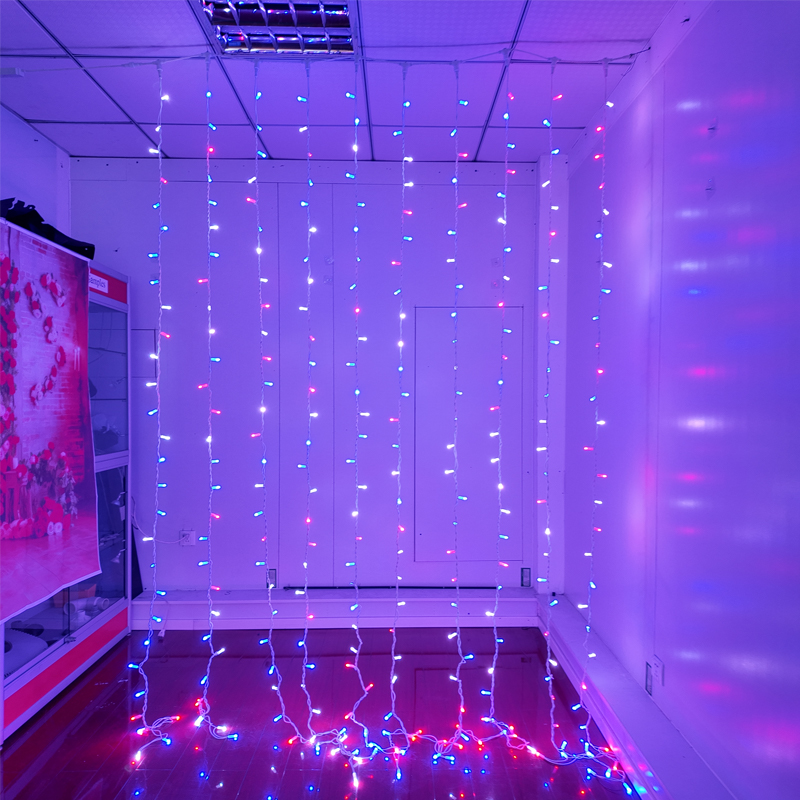 7-Color RGB Curtain Light String with 300 LEDsA 3.5 m curtain-style RGB string with ten strips and 300 LEDs, offering synchronous colour modes for window displays and event decoration.View Product →
For buyers building a window programme, the practical questions are always the same three: what is the exact drop length, is the controller reachable without removing the panel, and does the packaging state the panel width honestly. A curtain strand sold as covering a standard window but delivered at 1 m wide will generate returns whatever the light quality is like.
Windows sell twice — to the household and to the street — so specify the panel width and drop length precisely and put both figures on the box.
Mantel, Shelf and Sideboard Ideas That Need Almost No Fixings
If a room has a mantel, half the decorating problem is already solved. The mantel is at eye level when seated, it hides cable behind garland and ornaments, and it needs no wall fixings at all, which matters for rental properties.
The working method is straightforward. Weave the strand through the greenery rather than laying it on top, so the bulbs appear to grow out of the foliage. Two strands along a 1.8 m mantel gives an even wash; one strand gives a dotted line. Warm white in the 2700 to 3000 K range remains the safest seller for this application because it flatters timber, brick and painted surfaces.
Shelving and sideboards follow the same logic at a smaller scale. A short run behind a row of books, or a single strand looped into a glass vase, reads as considered rather than festive-overload. This is where battery operation earns its premium: no cable trailing to a socket, no extension lead across a hearth. The trade-off is runtime, so specify the timer and the expected hours per battery set honestly on the packaging.
Glass shade strands deserve a mention here too, because a visible filament or a tinted shade gives a shelf display a warmer, older look than a bare LED. The sourcing risk is breakage in transit, so packaging design and drop testing matter as much as the bulb specification.
Mantel and shelf displays sell on warmth and convenience — two strands per mantel, warm white, battery power, and no visible cable.
Staircase and Banister Ideas: Where Indoor Christmas Lights Look Most Expensive
Staircases are the most photographed indoor application and also the one that generates the most returns when a strand is under-specified. A banister is a handling surface: it gets gripped, brushed and leaned on, so the cable is doing mechanical work, not just decorative work.
Rubber-cord string lights handle this better than thin PVC cable, particularly on a painted rail where the cord will rub against the hand. Three to four wraps per metre of rail gives a generous, full look without the strand disappearing into the garland. On longer flights, plan the run so the plug or battery box lands at the bottom or on a landing, not halfway up where nobody can reach it.
Two practical notes for buyers. First, ask for the cable length between the first bulb and the plug, because a short lead can leave an expensive-looking display hanging from a socket that is in the wrong place. Second, consider the wrap direction: on a curved handrail the strand should follow the outside of the curve so that the bulbs sit proud of the timber rather than pressing into it.
Staircases also reward restraint. A single warm-white wrap with a few ornaments reads better than three colours competing on the same rail, and it photographs well from below, which is exactly the angle most customers see it from.
Treat the banister as a handling surface: rubber cord, three to four wraps per metre, and a lead length that reaches the socket.
Bedroom Ideas: Low-Output Indoor Christmas Lights That Stay On
Bedroom lighting is the application that changes behaviour. A warm strand behind a headboard or across a picture rail becomes the light people use in the evening instead of the ceiling fixture, which is why it stays up well past January.
The specification should therefore be gentler than a living room display. Low-wattage vintage bulbs, around 1 W each on an E12 base, give a soft amber glow that is comfortable at close range. A 3 m run along the headboard, or a short swag above a window, is usually enough. Bright multicolour strings belong in the children's playroom rather than above a pillow.
Safety and comfort questions come up more often here than anywhere else. Buyers want to know whether the strand can be left on for hours, whether the bulbs get hot, and whether there is a timer. With LED sources the heat question is mostly about the driver and the plug adaptor rather than the bulb, so those components deserve the same attention as the light source itself. A simple timer removes the "did I switch it off" worry entirely.
For retailers, bedroom sets sell best as small, complete packages: one strand, one timer, one set of adhesive clips, one clear instruction card. Bundling the clips is a small cost and removes the most common reason for a return.
Bedroom sets are used as everyday lighting, so specify low output, cool-running components and a timer — and bundle the fixings.
Dining Room and Kitchen Ideas: Warm, Food-Friendly Glow
Dining rooms punish bad light. A strand that looks charming in a hallway can make food look grey at close range, so colour temperature and colour rendering matter more here than brightness.
The safest approach is warm white placed above eye level: a run along the top of kitchen cabinets, a swag above a window, or a short strand woven into a table centrepiece at the far end. Keeping the source out of the direct sightline avoids glare and keeps the food the focus. If a centrepiece strand is planned, specify a battery box small enough to hide under the arrangement and a switch that can be reached without dismantling it.
Kitchens add grease and moisture to the list. An indoor-rated strand is fine on top of cabinets, but the cable should be routed away from hobs and extraction points, and the connectors should be positioned where they can be wiped. Resistance to cleaning is a design decision, not an afterthought, and it is worth discussing with a manufacturer before the packaging claims are written.
In dining and kitchen areas, keep the source above eye level, warm white, and physically clear of heat and grease.
Tree Lighting Ideas: Bulb Counts, Spacing and Layer Depth
A tree lit with a single strand wrapped around the outside looks exactly like a tree with a single strand wrapped around the outside. Depth comes from layering, and layering is a specification question, not a styling secret.
The industry shorthand is 60 to 100 bulbs per 0.3 m of tree height for mini lights, which puts a 1.8 m tree in the 500 to 600 bulb range and a 2.1 m tree around 700 to 800. Larger bulbs change the maths: S14 and ST38 strands are usually spaced 20 to 30 cm apart, so a 1.8 m tree might carry only 30 to 50 of them, and the look is deliberately nostalgic rather than dense.
Three layers make the difference. The inner layer sits close to the trunk and is barely visible, the middle layer follows the branches, and the outer layer picks out the tips. Most buyers specify one strand type and expect the customer to work out the layers, which is a missed opportunity: a carton that states a recommended bulb count for small, medium and large trees reduces hesitation at the shelf edge.
Practical details to lock down before production: the distance from plug to first bulb, the number of bulbs between fuses, the availability of spare bulbs in the carton, and whether the strand can be reconnected end to end. Trees are the one application where a spare bulb policy genuinely affects review scores.
Depth beats density — specify bulb counts per tree size, plan three layers, and always include spare bulbs.
Colour Strategy: Warm White, Multicolour and RGB in the Same Range
Colour is where a coherent range becomes a confusing one. Buyers often ask for every option, then discover that eight colour variants sit on the shelf and two of them do all the selling.
A workable split for most indoor programmes is roughly 60 percent warm white, 25 percent multicolour and 15 percent controllable or RGB. Warm white carries the design-led retail accounts, multicolour carries family and children's ranges, and the controllable segment carries the higher price points and the online listings that need a video.
The controllable end has moved a long way. Synchronised RGB strands let a whole run change colour together without any of the bulbs drifting out of step, and multi-colour versions push further by putting several colours on a single strand so a garland can shift from red and gold to blue and white. These are the sets that justify a higher retail price, provided the remote is intuitive and the memory function holds the last setting after a power cut.
Insert
 S14 E27 Spiral RGBWY Hanging Decorative String LightsFive-colour pendant string lights in a 5 m, ten-lamp layout, with connectable strings and IP44 protection for patios, parties and commercial displays.View Product →
One caution on RGB: the same strand can look excellent in a photograph and slightly cold in a real room, because the white end of the mix is usually cooler than a dedicated warm-white bulb. Buyers who plan to market the set for December living rooms should check the white setting in a furnished space, not on a sample board.
Build the range around one dominant colour temperature and treat RGB as the premium tier, not as a replacement for warm white.
Control and Power: The Questions Buyers Ask Most
Power method decides where an idea can physically go. Plug-in strands suit mantels, trees and windows near a socket; battery strands suit shelves, mirrors and rented rooms; solar strands suit conservatories and window boxes, with the panel placed where it actually sees daylight.
Remote control has become the default expectation on mid-range sets, and infrared remotes remain the cheapest way to deliver it. The limitations are worth stating plainly in the marketing: infrared needs line of sight, so a remote that works across a room may not work from behind a curtain. Radio-frequency and app-controlled sets solve that but add cost, certification work and support queries.
Timers matter more than most catalogs admit. A six-hour-on, eighteen-hour-off cycle matches how people actually use indoor decorative lighting, and it removes the overnight question entirely. Where a driver is involved, the quality of that component usually determines the failure rate in the second season, so it is not the place to accept the cheapest quotation.
Choose the power method to match the surface, and treat the driver and timer as reliability components rather than cost items.
Where Indoor Christmas Light Demand Sits: A Planning Split
Buyers assembling a mixed programme usually start from a single total and then discover that the room mix drives the format mix. The two sentences below set out a starting allocation we suggest when a customer is building an indoor range from scratch rather than repeating last year's order.
Suggested allocation of an indoor Christmas light programme by application
Living room and mantel28%
Windows and curtains22%
Christmas tree18%
Bedroom14%
Dining and kitchen10%
Staircase and entry8%
The living room and mantel share is large because it absorbs most of the warm-white volume, which is also the easiest segment to repeat across seasons. Windows and curtains justify their weight because a curtain strand is a distinct product rather than a longer version of something else, and it carries a higher unit price. The tree share is smaller than most people expect, partly because tree lights are often bought once every few years rather than annually.
Bedroom, dining and staircase applications are the ones that reward a supplier able to work in smaller runs with custom lead lengths and battery configurations. They are also the applications where a single well-chosen format, such as a clip-on G40 or a short warm-white vintage strand, can cover two or three rooms at once and reduce the SKU count without reducing the offer. Adjust the split to your own channel, but keep the logic: allocate by format family, not by colour, and let the volume follow the surfaces you can actually serve.
Allocate the programme by format family first; colour variants multiply a range, they do not build one.
Safety, IP Ratings and Certification for Indoor Christmas Lights
Indoor decorative lighting is low-risk when it is specified properly, and predictable when it is not. The three areas that cause most of the trouble are moisture, heat and connectors.
Strictly indoor sets are typically rated IP20 and are intended for dry rooms. A strand used on a window that suffers condensation, or on a porch that gets rain, needs a higher rating and a different connector design. Selling an IP20 set into a damp application is the classic mismatch, and it is usually visible in the reviews before it is visible in the returns report.
Heat is mostly a driver and adaptor question. Bulbs themselves run cool at LED wattages, but a cheap adaptor in a confined space is a different matter, so the plug and driver should be sourced to the same standard as the light string. Connectors deserve scrutiny too: screw-together joints that hold up in a dry hallway may not hold up in a bathroom or a conservatory.
Documentation is where a serious supplier separates from a trading company. Depending on the destination market, buyers need CE and RoHS documentation, UKCA for the United Kingdom, and UL or ETL listing for North America, alongside test reports for the cable, the plug and the light output. Ask for the reports by model number, not by product family, and check that the model number on the report matches the one on your purchase order.
Match the IP rating to the real installation, and verify certification reports by exact model number before the order is confirmed.
Sourcing Indoor Christmas Lights: MOQ, Customisation and Lead Times
Once the ideas are settled, the order becomes a manufacturing conversation. Three variables decide whether it goes smoothly: how much can be customised, how long the sample and production cycle takes, and how much of the range has to be shared across markets.
Customisation in decorative string lights usually covers voltage, total length, cable colour and type, bulb count and spacing, plug type and packaging. A manufacturer able to work from a drawing or a physical sample can shorten the development loop considerably, which matters when a retail window is fixed and the artwork deadline is not negotiable.
Vintage-style warm-white sets are a good example of where small specification choices change the whole product. A 1 W bulb on an E12 base with a warm-white output and a visible filament reads as traditional; the same string with a different shade or a shorter lead reads as generic. Getting the connector, the lead length and the packaging right is often more valuable than adding features.
Insert
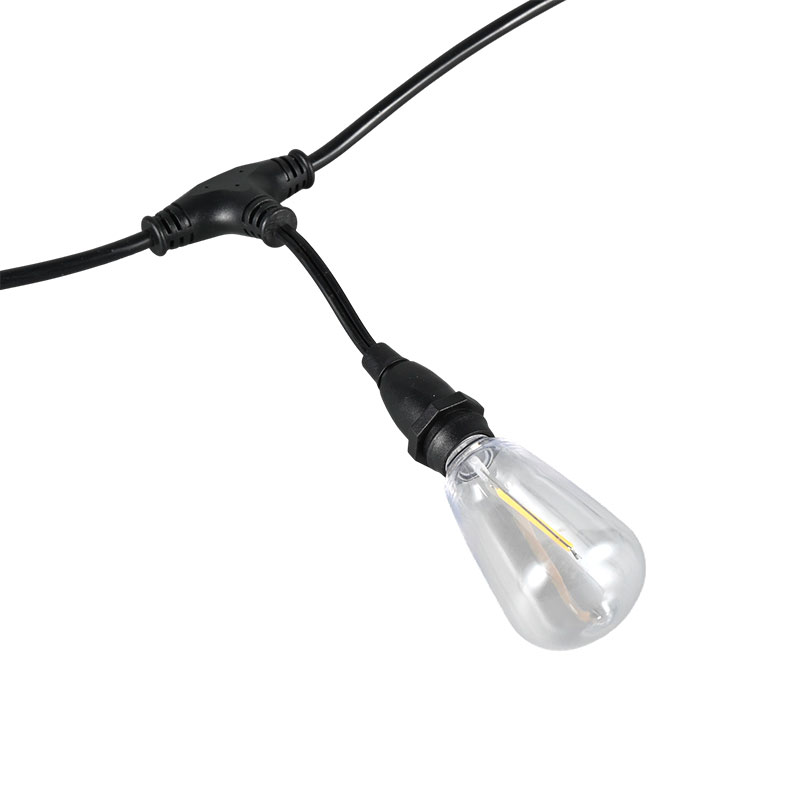 ST38 Vintage E12 Warm White Pendant String LightsA 5 m, ten-bulb ST38 string in 2700K warm white, with connectable sections and IP44 protection for cafés, gardens and storefront ambiance.View Product →
Lead times should be discussed in stages rather than as a single number: sample approval, material preparation, production, testing and packing. Buyers who ask for the staged timeline usually discover that the bottleneck sits in artwork approval rather than on the line, and can therefore plan around it.
Customisation is where margin is made — voltage, length, cable, spacing and packaging are all worth negotiating before price.
Choosing a Manufacturer or Wholesaler for Indoor Christmas Lights
Most sourcing problems trace back to a short list of questions that were never asked. The checklist below is the one we suggest to buyers evaluating any supplier, including us.
- Can the factory show production and test facilities, not only a trading office?
- Are the light output, colour temperature and bulb count verified on the production line or only on the sample?
- Which certification reports exist, and do the model numbers match the quotation?
- What is the realistic sample turnaround from a drawing or a physical reference?
- How are spare bulbs, fuses and instruction sheets handled in the carton?
- What is the agreed defect rate, and how are DOA units replaced?
- Can packaging be developed in-house, and is a drop test performed before shipment?
A supplier that answers these plainly is usually also the one that answers emails during production. That matters more than a marginally lower unit price, because the cost of a late container is rarely absorbed by the saving.
Explore the relevant collections
Judge a supplier on documentation, sample speed and defect policy — the price difference disappears long before the delivery risk does.
Frequently Asked Questions About Ideas for Indoor Christmas Lights
Which ideas for indoor Christmas lights work best in a small flat?
Concentrate on two surfaces rather than six. A curtain panel across the main window and one warm-white strand along a shelf or mantel give the room a complete look without crowding it. Battery operation avoids trailing leads in rooms with few sockets, and clip-on fixings protect rented walls.
How many lights do I need for a 1.8 m tree?
For mini lights, 500 to 600 bulbs across three layers is a reliable working figure. For larger vintage bulbs such as S14 or ST38, 30 to 50 bulbs at 20 to 30 cm spacing gives the traditional look. Always confirm the plug-to-first-bulb distance as well, since it affects where the tree can stand.
Can indoor Christmas lights be left on overnight?
LED strands run cool, but the safer habit is a timer. A six-hour-on cycle covers an evening and switches itself off. If a set has no timer, switching off at the socket before bed removes both the fire risk and the electricity question entirely.
Is warm white or multicolour better for retail?
Both sell, but they sell to different shoppers. Warm white carries design-led interiors and adult gifting; multicolour carries family rooms and children's ranges. A rough 60/25/15 split between warm white, multicolour and controllable sets keeps a range balanced without an excessive SKU count.
Can indoor string lights be used outside?
Only if the product is rated for it. An IP20 indoor set used on a balcony or porch will fail at the connector long before the bulbs do. If a customer wants one product for both, specify a damp-rated set from the start rather than relying on the customer to read the label.
What should a wholesaler ask before placing a first order?
Ask for the model-specific test reports, the sample lead time, the carton drop-test result, the spare bulb policy and the defect rate. Ask also whether packaging artwork can be produced in-house, because that step usually determines whether the shipment lands before the retail window.
What is a realistic minimum order and lead time?
It depends on how much of the product is standard and how much is customised. Standard formats move faster than custom lengths, cable colours or packaging. Requesting a staged timeline — sample, materials, production, testing, packing — gives a far more useful answer than a single delivery date.
The best indoor Christmas light ideas are the ones a customer can install in ten minutes and a factory can repeat to the same specification next year.
Related Products
-
 View More
-
 View More
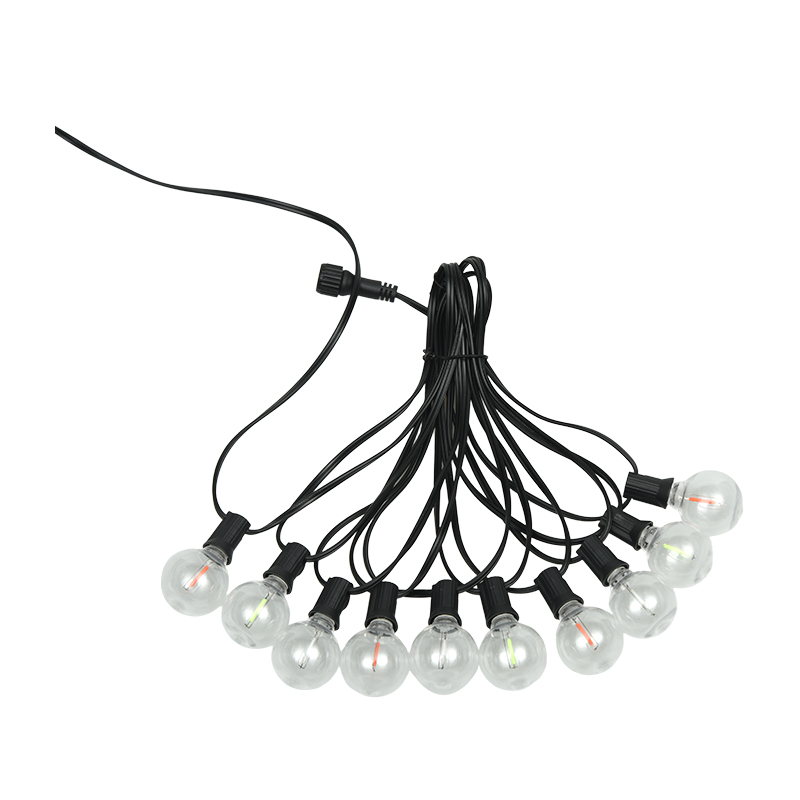
S14 Light Guide Pillar Pendant Type E27 Spiral String Lights
-
 View More
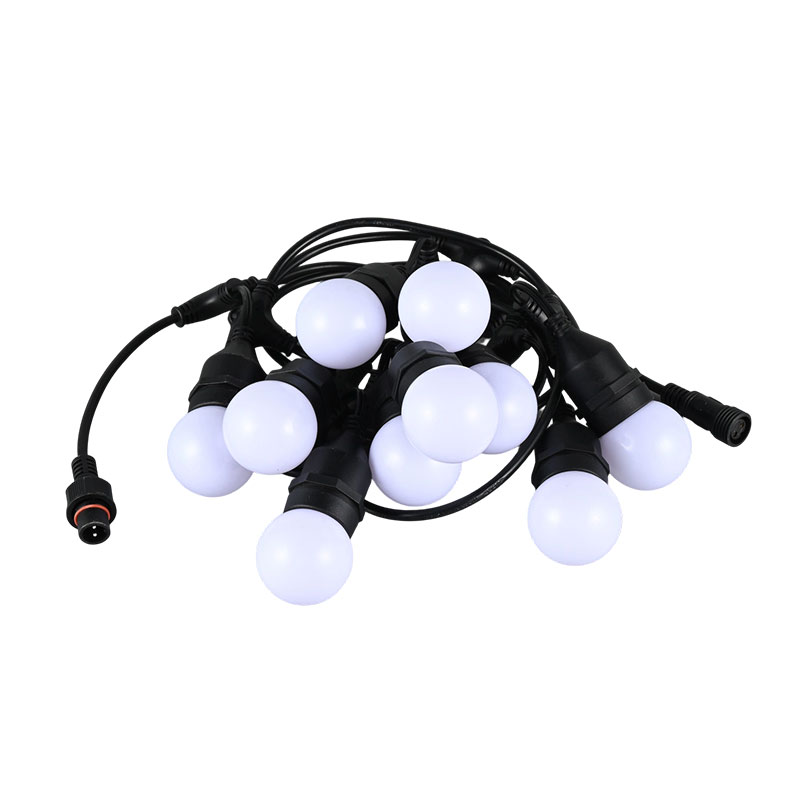
G40 Clip-on E12 Spiral Colored String Lights
-
 View More
G45 Hanging Type E27 Spiral RGB Synchronized Flashing String Lights
-
 View More
C45 Pendant Type E27 Spiral String Lights
-
 View More
C45 Hanging Type E27 Spiral RGB Synchronized Flashing String Lights
Hengboyi are always ready to help you and answer your question if you need.
Request A Quote
Contact Info.
 Mob: +86-13901119074
 Tel: +86-574-62838966
 E-mail: sale2@hengboyi.com
 Add: No. 18 Rongchuang Road, Mingwei Village, Lizhou Street, Yuyao City, Ningbo, Zhejiang Province, China
Quick Links
Product List
QR CODE
Copyright Ningbo Hengboyi Lamp Co., Ltd. All rights reserved.
China best outdoor decorative solar lights Manufacturer
Custom decorative string lights indoor Factory

