 Telephone: +86-574-62838966
 E-mail : sale2@hengboyi.com


 en
 English
 Español
 中文简体

Lighting CRI Rating: A Practical Buyer's Guide for Decorative String Lights
Content
- 1 What a Lighting CRI Rating Actually Measures
- 2 Which Lighting CRI Ratings Make Sense for Decorative String Lights?
- 3 CRI vs CCT, R9, TM-30, and Why Kelvin Alone Misleads Buyers
- 4 Where CRI Matters Most in Outdoor and Commercial Projects
- 5 How to Specify CRI in a Purchase Order Without Creating Costly Ambiguity
- 6 Common CRI Mistakes That Raise Returns and Rework
- 7 How Ningbo Hengboyi Lighting Approaches CRI and Decorative Lighting Specifications
- 8 FAQ: Lighting CRI Rating Questions Buyers Ask
- 8.1 What is a good lighting CRI rating for decorative string lights?
- 8.2 Does CRI matter for outdoor string lights?
- 8.3 Is CRI 80 good enough?
- 8.4 What is R9, and why do buyers ask for it?
- 8.5 Can a supplier quote CRI without a test report?
- 8.6 How should a wholesaler verify CRI across batches?
- 8.7 Does CRI apply to solar string lights?
- 8.8 Is a higher CRI always better for decorative lighting?
Two decorative string light samples can look identical on a spec sheet: same 5 m length, same E27 socket, same warm white color temperature. Put them beside red brick, wood, plants, or printed fabric, and one sample makes the scene look flat while the other keeps the reds and skin tones natural. That difference is often a lighting CRI rating issue, not a brightness or Kelvin issue. For B2B buyers, the practical answer is simple: treat CRI as a minimum performance requirement, not a marketing badge. For most outdoor decorative string lights, CRI 80 is a workable baseline; CRI 90+ is the safer target for hospitality, retail, event, and premium residential projects where color appearance is part of the guest experience.
Because CRI is reported on a 0 to 100 scale, a single number can hide as much as it reveals. A manufacturer may quote "high CRI" without stating the test method, the R9 value, or the tolerance between production batches. A supplier may show a lab report for one sample while the shipment uses a different LED bin. A wholesaler may mix CRI 80 and CRI 90 lamps in one carton because the outer labels look similar. Those gaps create returns, rework, and disputes that are avoidable when the purchase order defines the lighting CRI rating clearly.
In a B2B quotation, CRI often sits beside color temperature, lumen output, IP rating, and warranty. That placement is useful, but it can also suggest that all CRI numbers are interchangeable. They are not. The same CRI value can describe a well-controlled production LED and a low-cost platform that shifts under dimming or battery voltage changes. Buyers who understand that difference can compare samples more fairly and write specifications that suppliers can actually hold in mass production.
CRI is a specification to control, not a slogan to repeat; set a minimum score, request evidence, and define batch tolerance before ordering decorative string lights.
What a Lighting CRI Rating Actually Measures
CRI stands for color rendering index. It compares how a light source makes eight standard color samples appear against a reference light source of the same color temperature. The result is scaled to 100, which represents the reference source. A lighting CRI rating of 80 means the test samples are, on average, reasonably close to the reference. A rating of 90 or above means the color shift is smaller and usually more acceptable in spaces where people judge the color of materials, food, merchandise, or skin.
Three details matter in a B2B conversation. First, CRI is not brightness; lumens and candela describe light output. Second, CRI is not color temperature; 2700 K, 3000 K, and 4000 K describe the white tone, while CRI describes how well that white tone renders other colors. Third, the basic CRI average is built from eight samples, R1 to R8, so it can miss a weak red rendering performance. That is why buyers increasingly ask for R9, the red sample, and sometimes for TM-30 or a full R1 to R15 report.
What the average score can hide
A lamp can post an overall CRI of 82 and still make red fabric look muddy if R9 is very low. Warm white decorative lamps are especially sensitive to this because reds, woods, bricks, and skin tones are common in outdoor hospitality and residential settings. A responsible manufacturer should be able to explain which LED platform was used, whether the CRI value is typical or minimum, and how the value holds across dimming or battery voltage changes.
Testing conditions also matter. A bare lamp tested on a bench may not represent the finished string light after a colored diffuser, glass shade, or solar controller is added. For decorative products, the buyer should ask whether the CRI value applies to the complete fixture or only to the LED component. That distinction affects the visual result more than many catalog buyers expect.
A lighting CRI rating is useful only when it is tied to a test method, a minimum value, and the color samples that matter for the scene.
Which Lighting CRI Ratings Make Sense for Decorative String Lights?
For decorative string lights, the right CRI target depends on what the light is expected to do. A garden fence or tree line seen from a distance has different color demands from a restaurant terrace where guests evaluate food, flowers, and seating fabrics. The chart below gives a practical starting point for buyer conversations. It is not a rule that replaces sample testing, but it helps align product development, sourcing, and quality control around the same language.
Typical CRI bands for decorative lighting decisions
70-79: Basic utility 70-79
80-89: Standard decorative 80-89
90-94: Premium hospitality 90-94
95-100: Specialty retail 95-100
The 70 to 79 band is usually a utility choice for temporary or long-view decorative installations where color subtlety is secondary. The 80 to 89 band is the working range for many outdoor string lights, solar festoon lights, and general garden lighting; it keeps warm white scenes acceptable without pushing cost too hard. The 90 to 94 band is where hospitality, retail display, and higher-end residential projects often settle because reds, wood, and planting look more natural. The 95 and above band is a specialty target for color-critical merchandise, gallery-like settings, or projects where the buyer has a clear reason to pay for tighter color performance.
For a buyer sourcing decorative string lights from a manufacturer, the key is to match the CRI band to the end use instead of ordering the highest number by default. A wholesaler selling into garden centers may not need CRI 95 across the entire range. A supplier serving hotel groups may need a written minimum CRI and R9 value for the warm white SKUs used on terraces and dining areas. This is where a product line with different LED platforms can help, because one specification does not fit every sales channel.
 G45 Outdoor E27 White Light String LightsOutdoor E27 string light with frosted G45 lamps and a 5m/10-lamp format, suited to terrace and garden projects where CRI and IP requirements are specified.View Product →
One example is the G45 outdoor E27 white light string light, which is suited to buyers who need a familiar outdoor format and can specify the CRI target according to the project. The product format is practical for terraces and garden zones, but the purchase order still needs a clear CRI value, CCT, IP rating, and sample approval process.
A simple selection matrix for buyers
A buyer can keep the selection process practical by asking three questions. Is the light seen from a distance or close up? Are reds, wood, food, or skin tones part of the scene? Will the buyer inspect a sample or only compare catalog data? If the answers point to close viewing and color-critical materials, CRI 90+ becomes easier to justify. If the product is a long-run garden set sold on price and viewed from several meters away, CRI 80 can be a better commercial fit.
The matrix should also include R9. A CRI 90 product with a very low R9 may still disappoint in a restaurant courtyard with red umbrellas or wooden tables. A CRI 85 product with a reasonable R9 can look better than its average suggests. Buyers do not need a laboratory in every office, but they do need to ask for the right data and compare samples under the same light and background.
Use CRI 80 as the baseline for general decorative string lights and move to CRI 90+ when the scene depends on natural-looking reds, wood, food, or merchandise.
CRI vs CCT, R9, TM-30, and Why Kelvin Alone Misleads Buyers
Color temperature is the first thing many buyers notice, but it does not tell you whether colors will look right. A 2700 K lamp can have a high CRI and make wood look warm and natural. Another 2700 K lamp can have a low CRI and make the same wood look gray or flat. The table below separates the metrics that often get mixed together in quotations.
| Metric | What it describes | What to ask for |
|---|---|---|
| CRI | Average color rendering of R1 to R8 samples | Minimum CRI, test report, and approved sample |
| R9 | Red rendering, important for warm white and hospitality scenes | Minimum R9 value and whether it is typical or guaranteed |
| CCT | White tone in Kelvin, such as 2700 K or 3000 K | Nominal CCT and acceptable tolerance |
| TM-30 | More detailed color fidelity and gamut information | Optional report for premium or color-critical projects |
| IP rating | Dust and water protection for outdoor products | Actual IP rating, cable type, and test basis |
| Lumen output | Total light output, not color quality | Minimum lumens at rated voltage or battery condition |
The practical risk is a quotation that says "warm white, high CRI" without numbers. That phrase cannot be inspected, compared, or enforced. A better purchase order says "CRI minimum 90, R9 minimum 50, CCT 2700 K plus or minus 150 K, sample approval required." For outdoor products, the IP rating and cable construction belong in the same specification because color performance is irrelevant if water ingress causes early failure.
TM-30 is useful when a buyer needs a more detailed view of color fidelity and gamut, but it should not replace a clear CRI minimum for routine orders. Many suppliers and manufacturers still work in CRI because it is widely understood and easy to compare across quotations. The right approach is to use CRI as the common language, add R9 where red rendering matters, and request TM-30 only when the project justifies the extra testing cost.
How to read a CRI report without overreading it
A CRI report should be read as a snapshot of one sample under one test condition. It does not prove that every production batch will match. The buyer should look for the test standard, the sample identity, the CCT, and whether the reported value is typical or minimum. If the report is for a bare LED but the finished string light uses a deep amber diffuser, the visual result may differ from the report. That is why sample approval remains important even when the paperwork looks complete.
Kelvin describes the white tone; CRI and R9 describe how materials look under that white tone, so specify both.
Where CRI Matters Most in Outdoor and Commercial Projects
Outdoor decorative lighting is often judged from a distance, but the color effect still matters. A restaurant terrace with red umbrellas, wooden tables, and green planters will show poor red rendering quickly. A hotel garden with warm white festoon lights may look acceptable at CRI 80 in broad view, yet the same installation can look dull near seating areas where guests see skin tones and fabric. A retail courtyard or event tent has similar demands because merchandise and photo backgrounds are part of the experience.
Solar string lights add another variable: the LED, diffuser, and battery voltage can all affect the final appearance. A solar product that looks warm and bright in a catalog photo may render colors differently after the battery voltage drops or after the lens has been aged by UV exposure. Buyers should ask for sample evaluation under realistic charge and discharge conditions, not only a short bench test.
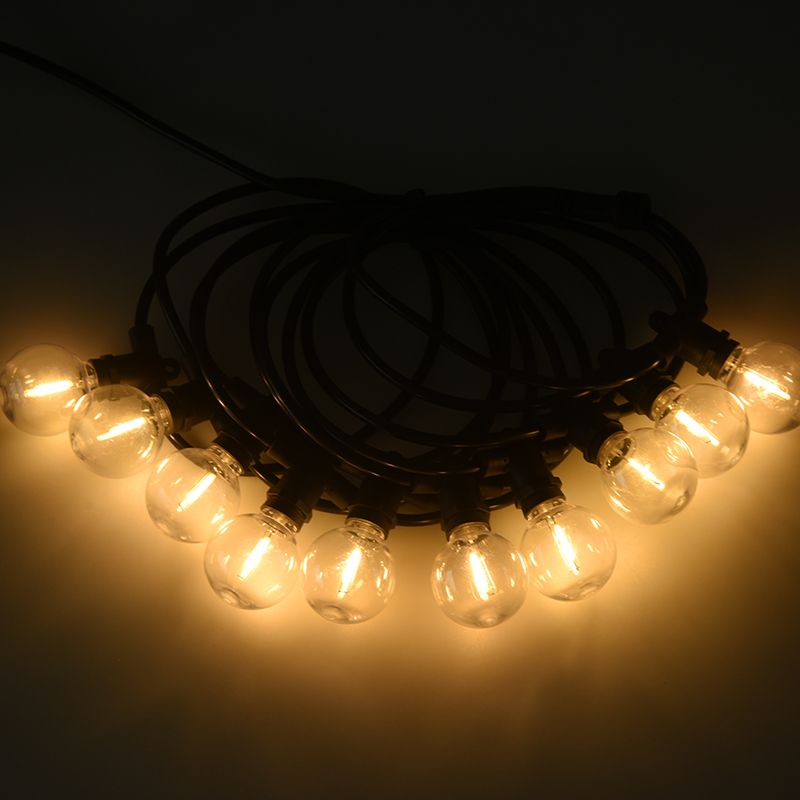 G40 Integrated Solar String Light with E12 HolderIntegrated solar G40 string light with E12 holders, 5m length and 10 bulbs, useful for garden and patio projects requiring sample evaluation under charge and discharge conditions.View Product →
The G40 integrated solar string light with E12 lamp holder and 5 m length is an example of a solar format that can be specified for garden and patio projects. For this type of product, the CRI target should be confirmed together with the solar panel size, battery capacity, run time, and diffuser material, because those choices influence the final color appearance.
In commercial projects, the highest CRI is not always the best commercial decision. A wholesaler may need a balanced range: CRI 80 for long-run garden sets, CRI 90 for hospitality-facing warm white sets, and a specialty CRI 95 option for display areas. That range lets the supplier serve different price points without creating confusion between SKUs. Clear SKU naming and label data help prevent mixed shipments.
Solar products and color stability
Solar decorative lights are often bought for spaces without mains power, such as gardens, fences, courtyards, and temporary event zones. The buyer should not assume that the CRI value measured at full battery is the same as the value after several hours of discharge. A supplier with experience in solar lighting can explain how the controller and battery affect brightness and color over the run time. That explanation is more useful than a single catalog number.
For hospitality buyers, the safest approach is to approve the complete solar fixture in the intended scene. Check the warm white tone against wooden furniture, red fabric, and planting. Review the product after a full charge and after a partial discharge. If the color shift is visible at the end of the run time, the specification may need a different LED platform or a larger battery reserve.
Match CRI to the viewing distance and the color-critical objects in the scene, then verify solar and outdoor products under realistic operating conditions.
How to Specify CRI in a Purchase Order Without Creating Costly Ambiguity
A CRI requirement becomes useful only when it can be checked at incoming inspection and during production. The purchase order should state the minimum value, the test method, the sample approval basis, and the acceptable batch tolerance. It should also connect CRI to the product construction, because a high CRI lamp in a poor housing will not meet the project expectation.
- State the minimum CRI and the test sample set. For general decorative string lights, write "CRI 80 minimum, R1 to R8 average" and add "R9 minimum 0" or a higher R9 target if reds matter.
- Define CCT and tolerance separately. A warm white 2700 K target with a plus or minus 150 K tolerance is clearer than "warm white" alone.
- Require a sample approval report. Ask for the LED bin, driver or solar controller details, diffuser material, and the measured CRI of the approved sample.
- Set batch tolerance. A common approach is to require production batches to stay within two CRI points of the approved sample, with a documented retest if the LED supplier changes.
- Add R9 for hospitality, retail, and residential projects. R9 is the red sample and is often the first place a low-cost LED platform shows weakness.
- Link CRI to IP rating, cable type, and warranty. For outdoor string lights, the enclosure and cable construction protect the color performance over time.
 S14 Outdoor E27 Warm White String LightsOutdoor E27 warm white string light with 2700K output, 5m/10-lamp format and IP44 protection, suited to commercial terraces where CRI and batch consistency are confirmed.View Product →
The S14 outdoor E27 warm white string light is a format often used in commercial outdoor settings where a warm white look and a defined CRI target can be specified together. Buyers should confirm whether the quoted CRI is typical or minimum, and whether the same LED platform will be used across repeat orders.
When a supplier changes LED bins to protect lead time or cost, the CRI value can move even if the CCT label stays the same. A written change-notification clause is therefore useful. It does not need to be complex: the supplier should notify the buyer before changing the LED platform, diffuser, or solar controller, and the buyer should have the right to request a new sample approval.
A practical purchase-order clause buyers can adapt
A workable clause can be short: "Warm white decorative string light, CCT 2700 K plus or minus 150 K, CRI minimum 90, R9 minimum 50, complete fixture tested with production diffuser. Production batches shall remain within two CRI points of the approved sample. Supplier shall notify buyer before any LED bin, driver, controller, or diffuser change and shall provide a new sample for approval." That language gives the factory a clear target and gives the buyer a clear inspection basis.
Not every order needs that level of control. A low-cost seasonal program may only need CRI 80 and a visual sample match. A hotel or retail program may need the full clause. The important point is to choose the level of control intentionally instead of using the same vague phrase for every project.
A CRI requirement is enforceable only when the purchase order states the minimum, the test basis, the sample approval, and the change-notification rule.
Common CRI Mistakes That Raise Returns and Rework
Most CRI problems do not begin in the factory; they begin in unclear buying language. "High CRI" and "true color" are not measurable specifications. A quotation that lists only color temperature invites a shipment that meets the Kelvin label but fails the visual expectation. The following mistakes appear often in decorative lighting sourcing.
- Treating CRI as a brightness metric. CRI does not tell you lumens, beam spread, or how far the light will throw.
- Assuming CRI 80 and CRI 90 look the same in every scene. The gap is subtle in distant foliage and obvious near red fabric, wood, and skin.
- Ignoring R9. A good average CRI can still hide weak red rendering, which is exactly what warm white outdoor lighting often needs.
- Comparing reports from different test conditions. A lab report for a bare lamp does not automatically represent a finished string light with a colored diffuser.
- Mixing batches without a tolerance rule. Two shipments can both be labeled CRI 90 and still look different if the LED bins are not controlled.
- Using CRI language for RGB products without defining the white point. RGB and pixel-controlled products need separate white-color specifications.
These mistakes cost more than a tighter specification. They can cause site visits, sample replacements, rework, and lost repeat orders. A manufacturer that understands the end scene can often propose a practical CRI band and an R9 target without overengineering the product. That is more useful than a catalog page that repeats "high CRI" without evidence.
Another common error is to approve a sample under office lighting and then install the product outdoors at night. The background, ambient light, and viewing distance change the way color is judged. A sample that looks acceptable on a white table may look weak against red brick or dark wood. Buyers should evaluate the sample in a scene that resembles the final installation, or at least against the materials that will be nearby.
Replace vague "high CRI" claims with a minimum value, R9 target, sample approval, and batch tolerance.
How Ningbo Hengboyi Lighting Approaches CRI and Decorative Lighting Specifications
Ningbo Hengboyi Lighting has focused on decorative string lights and solar lighting since 2003, serving lighting brands and manufacturers in export markets. The company describes advanced production and testing facilities, strict quality control from incoming materials to finished goods, and independent export qualification with complete documentation. For a B2B buyer, those capabilities matter because CRI control depends on incoming LED control, production consistency, and the ability to trace a batch when a customer reports a color issue.
The product range covers solar string lights, solar wall lights, curtain string lights, and plugin string lights, with formats such as G40, G45, C7, S14, ST38, and E12 or E27 sockets. Custom options include voltage, length, wire type, appearance, and packaging, and the company states that it can develop prototypes from drawings and samples. That flexibility is useful when a buyer needs a CRI target applied to a specific decorative format rather than a standard catalog lamp.
For projects that need weather-rated constructions, review the waterproof string lights collection before finalizing IP and cable requirements.
For a closer look at production checks, testing claims, and export support, see the factory profile.
As a manufacturer and supplier working with wholesalers and brand owners, the practical starting point is a short specification brief: end use, CRI minimum, R9 target, CCT and tolerance, IP rating, expected run time, and sample approval process. With those inputs, a decorative lighting factory can recommend a realistic LED platform and avoid quoting a CRI number that the product cannot hold in mass production.
That approach also helps product development. A buyer may want one warm white platform for a hotel terrace, another for a garden center range, and a third for a solar fence light. If the factory understands the scene and the price target, it can propose the right CRI band for each product instead of forcing a single premium LED into every SKU. The result is usually a more balanced range and fewer surprises at incoming inspection.
CRI control works best when the factory, buyer, and quality team agree on the scene, the minimum value, and the change-control process before production.
FAQ: Lighting CRI Rating Questions Buyers Ask
What is a good lighting CRI rating for decorative string lights?
For general garden, patio, and event decorative string lights, CRI 80 is a workable baseline. For hospitality, retail, and premium residential projects where reds, wood, food, or skin tones are visible, CRI 90 or higher is usually a safer target. The final choice should also consider R9, CCT, sample appearance, and budget.
Does CRI matter for outdoor string lights?
Yes. Outdoor scenes contain red brick, wood, plants, fabric, and food, and those materials can look flat when red rendering is weak. The effect is less obvious from a distance and more obvious near seating, dining, or display areas. Solar and plugin products should both be evaluated with the same scene-based approach.
Is CRI 80 good enough?
CRI 80 is often good enough for long-view garden lighting and price-sensitive decorative ranges. It is usually not the best choice for close-view hospitality or retail settings where color appearance affects the customer experience. A buyer can use CRI 80 for one SKU and CRI 90 for another instead of forcing every product into one specification.
What is R9, and why do buyers ask for it?
R9 is the red color sample in the CRI test set. A product can have a respectable average CRI and still render reds poorly if R9 is low. Warm white decorative lighting often benefits from a defined R9 minimum, especially in restaurants, hotels, and residential projects with wood or red fabric.
Can a supplier quote CRI without a test report?
A supplier can quote a target, but a buyer should distinguish between a target and a verified value. Request the test basis, the sample measured, and whether the number is typical or minimum. For repeat orders, include a change-notification clause so the LED platform cannot change without sample approval.
How should a wholesaler verify CRI across batches?
Keep an approved sample, compare incoming batches under the same viewing conditions, and require a retest when the LED bin or diffuser changes. A written tolerance, such as two CRI points from the approved sample, is more useful than a one-time report. This is especially important when multiple factories or production lines are involved.
Does CRI apply to solar string lights?
Yes. Solar string lights use LEDs and diffusers, and both affect color appearance. Battery voltage, controller behavior, and lens aging can also change the final look. Buyers should evaluate solar samples under realistic charge and discharge conditions, not only in a short bench test.
Is a higher CRI always better for decorative lighting?
Higher CRI is not automatically better for every product. It may add cost, reduce available LED options, or push the design toward a platform that does not fit the price target. The better question is whether the scene needs the extra color performance. A distant garden set may be well served by CRI 80, while a hotel dining terrace may justify CRI 90+ with a defined R9.
FAQ answers should point back to the same rule: define the scene, set a minimum CRI and R9 target, and verify the sample and batch.
A lighting CRI rating is one of the simplest specifications to write and one of the easiest to leave ambiguous. The useful approach is not to chase the highest number in every SKU. It is to decide where the product will be seen, how close the viewer will be, which materials must look natural, and what the buyer can inspect at sample approval and incoming quality control. For general decorative string lights, CRI 80 is often a practical baseline. For hospitality, retail, and premium residential work, CRI 90+ with a defined R9 target is a more defensible specification.
Buyers comparing a manufacturer, supplier, or wholesaler should ask for the same evidence every time: minimum CRI, test method, R9, CCT tolerance, IP rating, sample approval, and batch change control. When those points are written into the purchase order, the CRI number becomes a working quality requirement rather than a catalog phrase.
Set CRI by scene and viewing distance, then enforce it with sample approval, R9, and batch tolerance.
Related Products
-
 View More
-
 View More
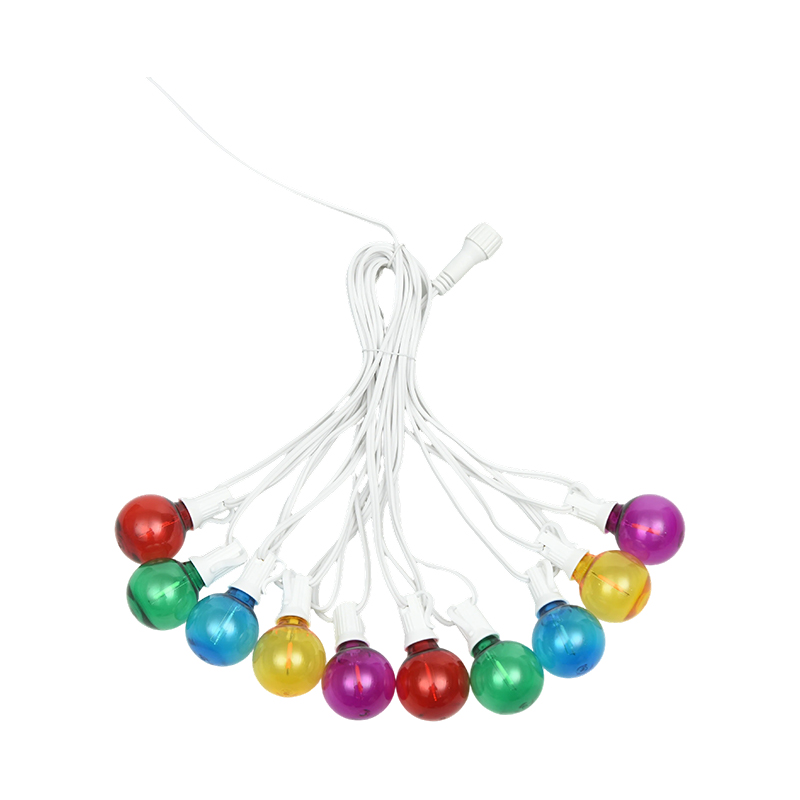
G40 Clip-on E12 Spiral Colored Decorative String Lights(White style)
-
 View More
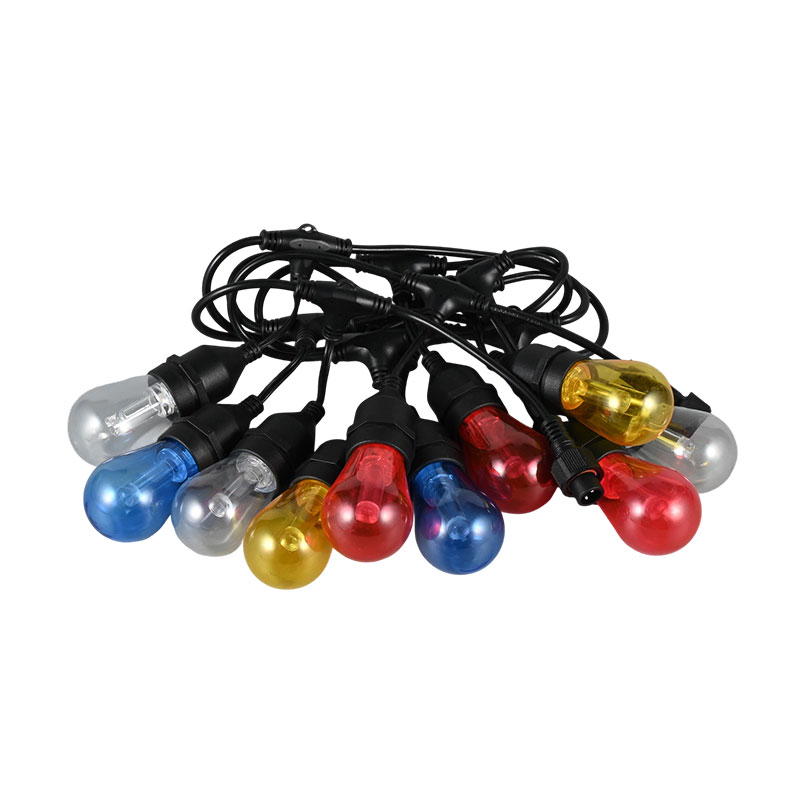
S14 Light Guide Pillar Pendant Type E27 Spiral String Lights
-
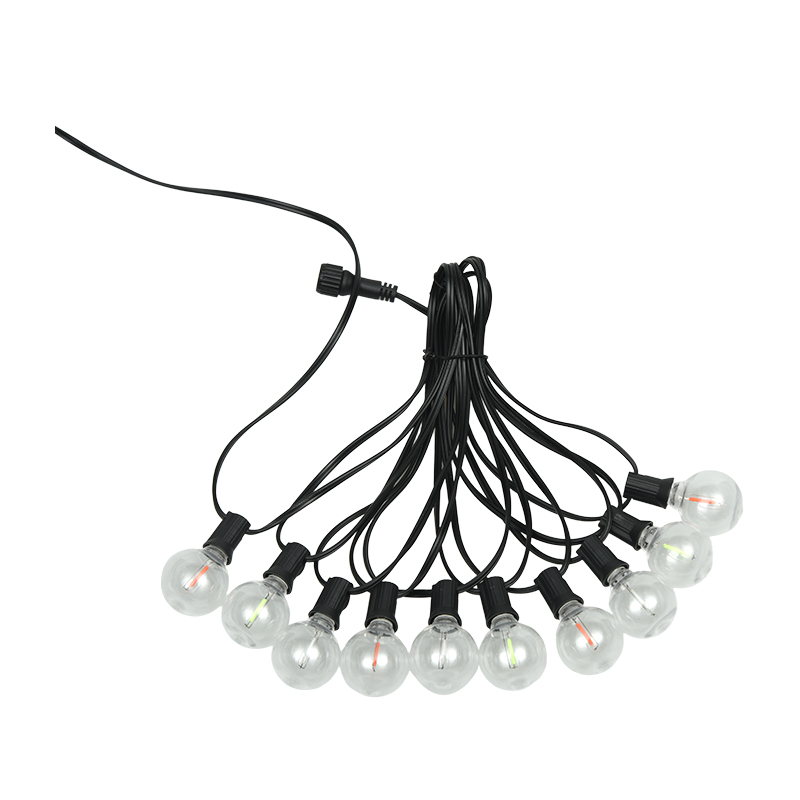 View More
G40 Clip-on E12 Spiral Colored String Lights
-
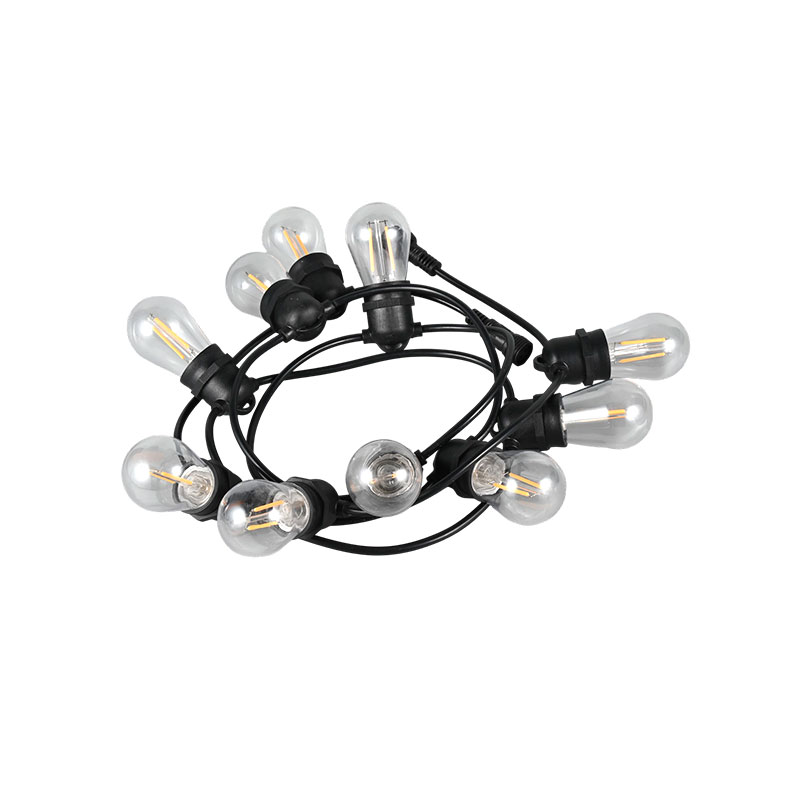 View More
S14 Outdoor E27 Warm White String Lights
-
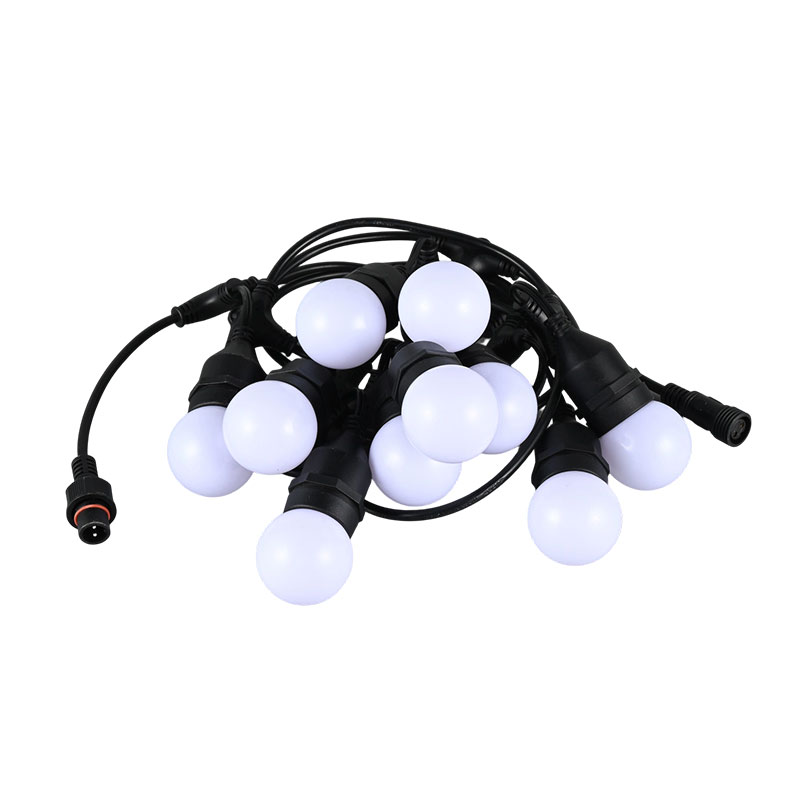 View More
G45 Hanging Type E27 Spiral RGB Synchronized Flashing String Lights
Hengboyi are always ready to help you and answer your question if you need.
Request A Quote
Contact Info.
 Mob: +86-13901119074
 Tel: +86-574-62838966
 E-mail: sale2@hengboyi.com
 Add: No. 18 Rongchuang Road, Mingwei Village, Lizhou Street, Yuyao City, Ningbo, Zhejiang Province, China
Quick Links
Product List
QR CODE
Copyright Ningbo Hengboyi Lamp Co., Ltd. All rights reserved.
China best outdoor decorative solar lights Manufacturer
Custom decorative string lights indoor Factory

