 Telephone: +86-574-62838966
 E-mail : sale2@hengboyi.com

 en
en  English
 Español
 中文简体
中文简体
Curtain Lights for Every Space: Custom LED Curtain String Lights Manufacturer
Content
- 1 What Are Curtain Lights?
- 2 Types of Curtain Lights for Different Ambiences
- 3 Curtain Light Configurations You Can Source from Our Factory
- 4 Curtain Lights Wholesale: Key Specifications to Evaluate
- 5 Power Consumption of Curtain Lights at a Glance
- 6 Where Curtain Lights Work Best: Commercial and Residential Uses
- 7 Custom Curtain Lights: How a Manufacturer Adds Value
- 8 Curtain Light Care and Maintenance
- 9 Frequently Asked Questions About Curtain Lights
- 10 Related Reading for Professional Buyers
- 11 Conclusion
Planning a lighting installation for a café window, a wedding stage, or a retail facade brings up one common question: how do you create a full wall of light without visible mounting tracks or heavy fixtures? Curtain lights use parallel vertical strings to turn a narrow horizontal cable into a dense, even glow. For project buyers, they offer faster installation, simpler storage, and a lower cost per square meter than most panel lights. This guide comes from the perspective of a decorative lighting manufacturer that has supplied branded curtain string lights to wholesalers and project teams for years. The goal is to help you choose the right specification, avoid common procurement mistakes, and work with a manufacturer who can deliver consistent quality.
Key point: Curtain lights are a practical way to cover large vertical areas with evenly distributed decorative light.
What Are Curtain Lights?
Curtain lights are a category of decorative lighting in which LED sockets and bulbs are arranged along a main wire, with short vertical drop wires hanging from it. When installed along a ceiling, window frame, or horizontal support, the drops form the appearance of a glowing curtain. The spacing between drops, the distance between sockets on each drop, and the total number of LEDs determine the visual density and the overall effect.
Common specifications include a horizontal main cable length of 5 to 10 meters, drop lengths of 1 to 3 meters, and socket spacing between 10 and 30 centimeters. Some designs use a transparent wire so the structure disappears, while others use a rubber or PVC wire for outdoor weather resistance. For most commercial projects, LED curtain lights consume far less power than incandescent versions while producing a more even and controllable light output.
Key point: Understanding the main cable, drop spacing, and socket layout is the first step to selecting the right curtain light.
Types of Curtain Lights for Different Ambiences
Curtain lights are available in several configurations, and the right choice depends on the mounting location, the desired light color, and the control system.
| Type | Light Source | Best Use | Typical Control |
|---|---|---|---|
| Warm white curtain lights | LED filament or SMD | Restaurants, bedrooms, permanent indoor decor | ON/OFF or dimmer |
| RGB curtain lights | Addressable RGB SMD LEDs | Stage backdrops, festivals, themed events | Remote, app, or DMX |
| Waterproof outdoor curtain lights | LED filament in silicone or tube | Patios, balconies, building facades | IP65-rated plug or hardwired |
| Solar curtain lights | Integrated LED solar panel | Areas without power access | Photocell plus timer |
| Pixel-controllable curtain lights | RGBW individually addressable LEDs | Complex animated scenes | PC-based pixel controller |
For buyers who want to test a ready-made design before developing a custom product, a 7-color synchronous RGB curtain light string offers an excellent balance of simplicity and visual impact. The main wire supports multiple hanging drops, and one remote or controller synchronizes color changes across the entire set, which is ideal for retail shelves and event rentals.
Key point: Choose a curtain light type based on mounting location, light color, and control requirement, not just brightness.
Curtain Light Configurations You Can Source from Our Factory
Our factory supplies curtain lighting solutions for brands, wholesalers, and project buyers. The following products are part of our standard range and can be customized for voltage, lead wire length, drop length, and packaging.
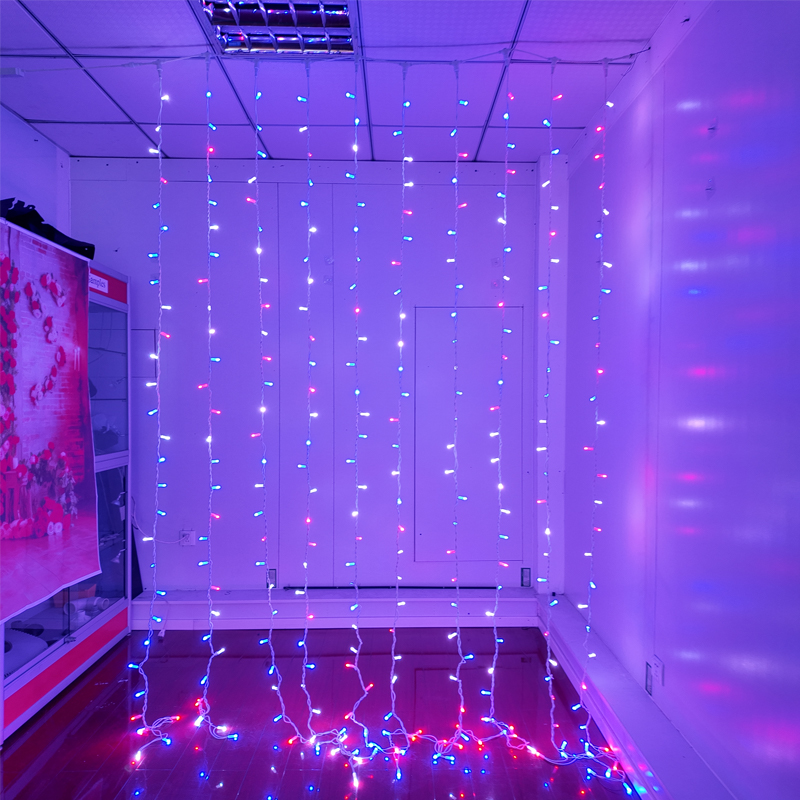 7-Color Synchronous RGB Curtain Light String with 300 LEDsThis curtain-style string light features 300 RGB LEDs across 10 hanging strips, offering 7-color synchronous dynamic effects like flowing and breathing. Its IP44 rating suits both indoor and outdoor seasonal displays.View Product →
 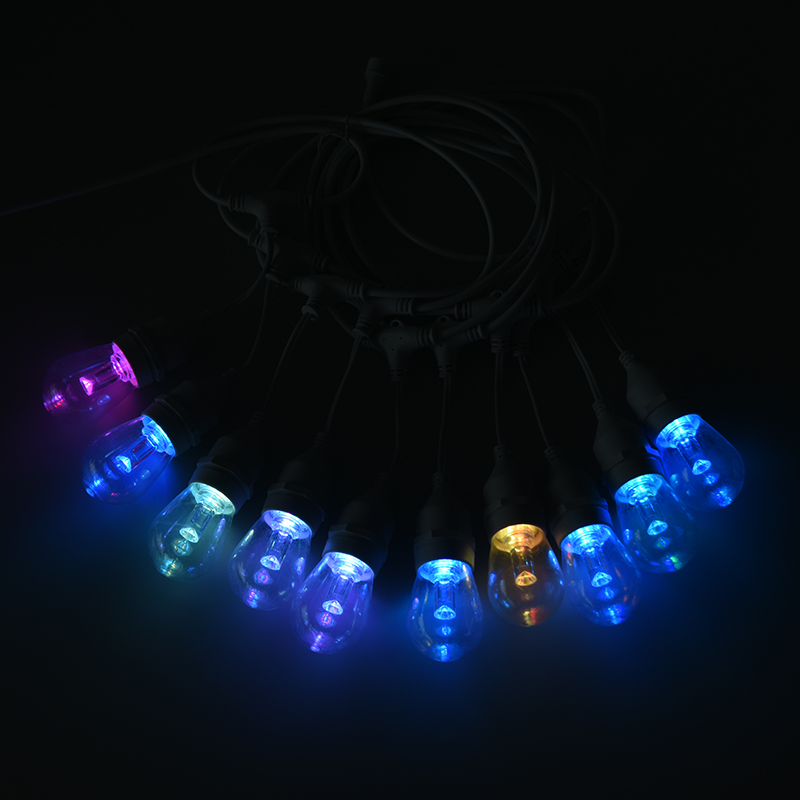 S14 Pixel-Controllable RGB and Warm White String LightsThese pendant string lights combine RGB and warm white LEDs with independent pixel control via power line communication. An RF remote enables flexible dynamic effects, and the IP44 design suits courtyards and commercial displays.View Product →
Key point: Standard curtain light SKUs are a faster route to market when you need proven performance.
Curtain Lights Wholesale: Key Specifications to Evaluate
When you buy curtain lights as a business, visual appearance is only one part of the decision. The following specifications affect reliability, installation time, and long-term maintenance costs.
| Specification | What to Check | Why It Matters |
|---|---|---|
| IP rating | IP44 for indoor, IP65 or higher for outdoor | Determines resistance to rain, dust, and humidity |
| Input voltage | 110–120V, 220–240V, or low-voltage DC | Affects safety, energy cost, and compatibility with local grids |
| Socket type | E12, E14, E26, E27 | Determines whether bulbs can be replaced and which standards are met |
| Lead wire and drop length | Measured in meters per set | Defines installed width and visual density |
| LED lifetime | Look for 25,000–50,000 hours | Reduces replacement frequency and total cost of ownership |
| Control method | ON/OFF, remote, app, DMX, pixel | Determines whether animation and zoning are possible |
A common mistake is selecting a product by brightness alone. Brightness is measured in lumens, but curtain lights are a decorative layer, not a primary light source. Instead, consider uniformity, color rendering, and beam angle, which shape how the light appears on a vertical surface.
Waterproof performance deserves special attention in outdoor projects. Check whether the LED sockets are sealed, whether the plug has a rubber gasket, and whether the controller can be mounted in a weatherproof enclosure. A product with inconsistent sealing can fail within one rainy season.
Key point: For outdoor curtain lights, IP rating and socket sealing are the specifications most likely to cause field failures.
Power Consumption of Curtain Lights at a Glance
Power consumption is one of the first questions buyers ask when planning a decorative lighting installation because it affects transformer size, operating cost, and the number of circuits required. Curtain lights are sold by set length and drop density, so comparing watts per meter is more useful than comparing total wattage. The following chart compares typical power draw values for common curtain light types. These figures are based on standard LED configurations sold by professional suppliers and should be used for preliminary planning. Always confirm the exact value with the factory sample, since LED chip quality and socket spacing alter the real number.
Typical Power Draw by Curtain Light Type (W/m)
Warm White
5 W/m
RGB
12 W/m
Waterproof
10 W/m
Solar
0.5 W/m
Pixel
20 W/m
Warm white LED curtain lights draw the least power because they use simple filament or SMD LEDs without IC drivers. RGB curtain lights need more power because each LED contains three color channels and requires a controller signal line. Waterproof outdoor versions often sit near the middle because silicone coating and sealing materials increase the cable thickness but only slightly affect LED power. Solar curtain lights show a very low system wattage because the panel charges batteries and the LEDs operate on a low-voltage DC circuit. Pixel-controllable curtain lights consume the most power due to individually addressable LEDs and constant communication circuits. For a standard 5-meter-wide installation with 1.5-meter drops, a warm white set may need less than 25 watts, while a pixel-controlled set could require 80 watts or more. This difference affects which transformer, distribution box, and cable diameter you choose for the project. It also changes ongoing energy costs, which matters for venues that keep lights on for eight hours a day. Bear in mind that actual power draw depends on brightness level and animation mode. When in doubt, ask the manufacturer for a real measured wattage from the production line. With this information, you can compare quotes from different suppliers on an equal basis.
Key point: Power draw per meter is the most reliable way to compare curtain light energy costs across different suppliers.
Where Curtain Lights Work Best: Commercial and Residential Uses
Curtain lights are used in four main contexts: indoor ambiance, seasonal displays, event staging, and exterior facade decoration.
- Indoor ambiance: Bedrooms, living rooms, stairways, and restaurant booths use warm white curtain lights to create a cozy layered glow without harsh glare.
- Seasonal displays: Retail windows and shopping malls use RGB or icy white curtain lights during the holidays to attract foot traffic. The vertical format fills a window more efficiently than a horizontal string.
- Event staging: Weddings, concerts, and corporate events use curtain lights as photo backdrops or stage dividers. Pixel-controllable versions allow programmed color motion that matches a theme.
- Exterior facades: Waterproof IP65 curtain lights can be mounted under eaves, along balconies, or on outdoor pergolas to add depth to building entrances.
When planning an installation, start with the mounting width and drop length. Measure the actual installation area, then choose a product where the main cable spans the full width, or plan for multiple sets with aligned connectors. Also consider weight. A dense curtain light with heavy cables may pull away from double-sided tape or weak fasteners, so use compatible hooks or guide tracks.
Key point: Always measure the mounting area and account for cable weight before buying curtain lights.
Custom Curtain Lights: How a Manufacturer Adds Value
For lighting brands and wholesalers, the fastest way to differentiate a curtain light range is to customize standard designs. A factory that controls its own tooling and assembly line can adapt several variables without delaying the production schedule.
Common customization options include:
- Voltage: Adjusting transformers and sockets for North American E26/E12, European E27/E14, or low-voltage DC systems.
- Wire material and color: Transparent PVC, white rubber, black rubber, or color-matched cables for facade installations.
- Bulb shape and color temperature: G40, G45, C7, S14, ST38, and custom glass bulbs from warm white 2200K to daylight 6500K.
- Control system: A simple foot switch, a remote control, a smartphone app, or a DMX controller for synchronized zoning.
- Packaging: Retail boxes with multilingual instructions, hang tags, or bulk cartons for split shipments.
A factory with in-house production can also build samples from a drawing or an existing sample. This shortens the development cycle for new SKUs and makes it possible to test a small batch before mass production. As a supplier, we also prepare the full set of export documents, including packing lists, commercial invoices, and certificates that help customs clearance run smoothly.
Key point: A factory with in-house tooling can turn a basic curtain light into a proprietary SKU faster than a trading company.
Curtain Light Care and Maintenance
Even well-built curtain lights last longer when they are handled correctly. For removable installations, store the lights on a reel or a flat sheet, not in a tangled heap. Coiling around a large spool helps preserve the drop spacing and prevents stress on the solder joints.
Clean surfaces with a soft dry cloth before the light has been switched on for a long period. Do not spray water directly onto the sockets, even if the product is rated IP65, because the connection between the plug and the socket may not be sealed. Inspect the main cable before each installation, especially if the set has been stored for months.
Key point: Replace damaged bulbs immediately and avoid mixing bulbs with different wattages on the same string.
Frequently Asked Questions About Curtain Lights
-
What are curtain lights used for?
Curtain lights are used to create a vertical wall of soft, decorative light. Common applications include bedroom windows, holiday displays, wedding backdrops, stage dividers, and covered patios.
-
How many LEDs do I need for a curtain light?
The number depends on the drop length and spacing. A typical 1.5 m drop with 10 cm spacing uses about 15 LEDs per drop. A wider area requires more drops or multiple sets.
-
Can curtain lights be used outside?
Yes, if the product has an IP65 rating and a sealed plug. You should also check the operating temperature range and protect the controller from direct rain.
-
Are RGB curtain lights more expensive than warm white?
RGB curtain lights usually cost more because they include addressable ICs, a controller, and more complex wiring. Warm white is more economical for simple static ambiance.
-
Can I customise the drop length for a curtain light?
Yes. A manufacturer can adjust the drop length, socket spacing, wire color, and total set length to match your installation drawings or design intent.
Key point: Keep these curtain light facts in mind when planning your next project.
Related Reading for Professional Buyers
For more information about selecting waterproof string lights for commercial projects, read our guide on uniform waterproof outdoor lighting for commercial string lights. It covers IP terminology, cable choices, and installation planning.
Key point: Use technical guides to verify your product specification before placing a large order.
Conclusion
Curtain lights are a versatile lighting category that works across residential, retail, event, and architectural settings. Whether you need a standard warm white set or a pixel-controlled RGB installation, the most important factors are consistent quality, the right IP protection, and a supplier who can adapt the product to your market.
Buyer takeaway: Work with a curtain lights manufacturer that offers flexible customization, documented quality checks, and stable volume production, because these capabilities determine whether your finished product arrives on time and performs in the field.
Related Products
-
 View More
-
 View More
US Standard S14 String Lights, Integrated E26 Spiral Socket, Warm White Light, Heavy-Duty Engineering Model
-
 View More
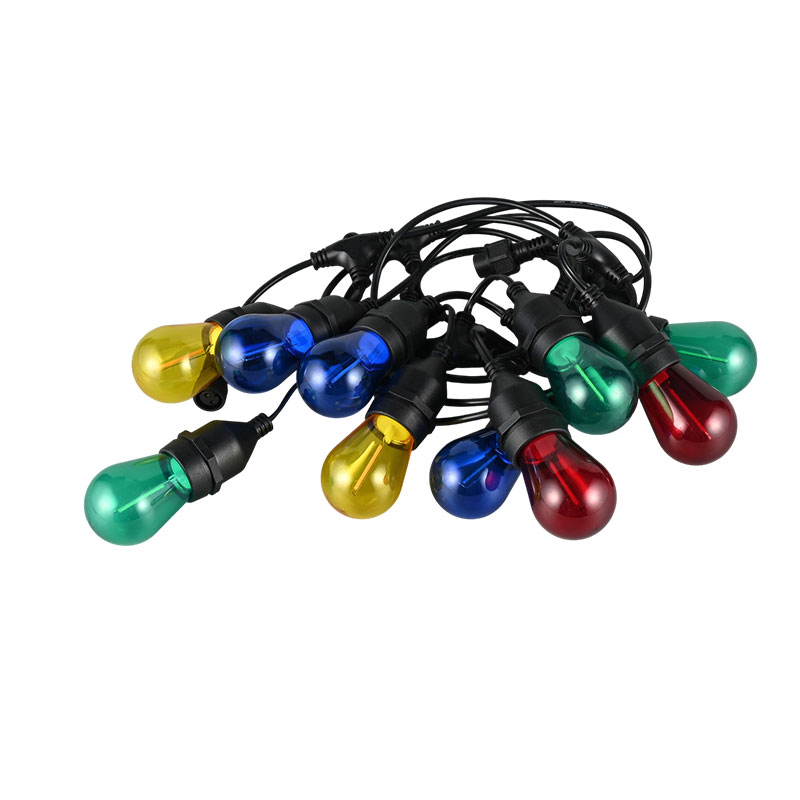
S14 Hanging E27 Spiral RGBWY Multi-Color String Lights
-
 View More
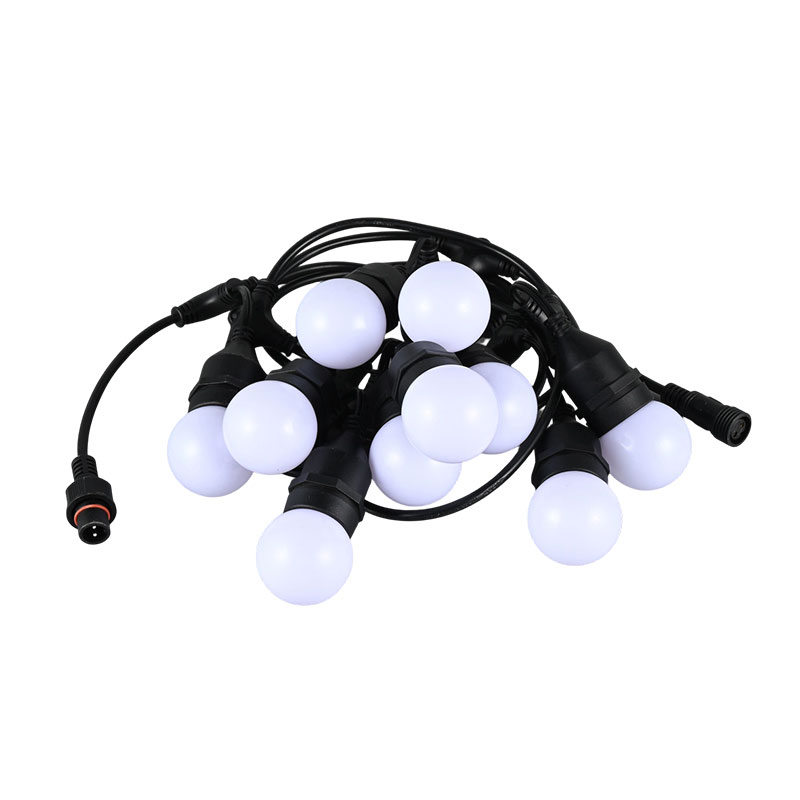
G45 Hanging Type E27 Spiral RGB Synchronized Flashing String Lights
-
 View More
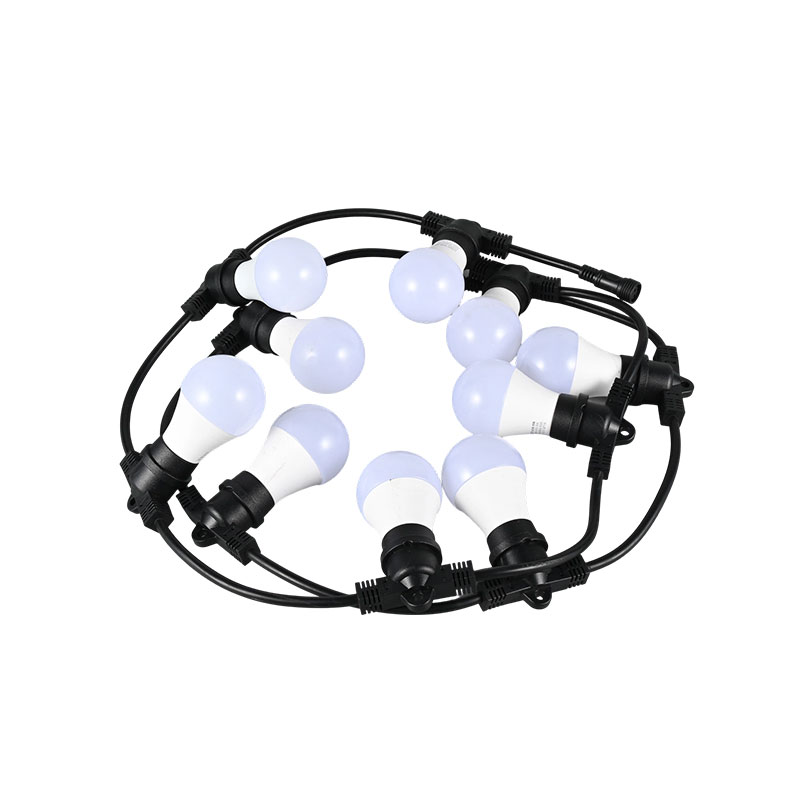
E27 Spiral RGB Infrared Remote Control Energy-Saving String Lights
-
 View More
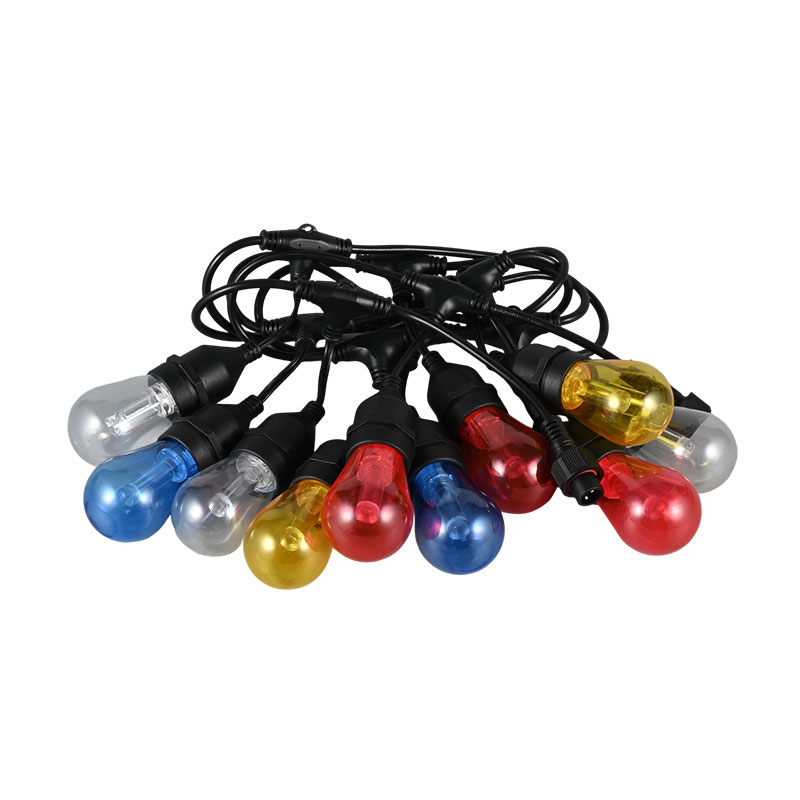
S14 Light Guide Pillar Pendant Type E27 Spiral String Lights
Hengboyi are always ready to help you and answer your question if you need.
Request A Quote
Contact Info.
 Mob: +86-13901119074
 Tel: +86-574-62838966
 E-mail: sale2@hengboyi.com
 Add: No. 18 Rongchuang Road, Mingwei Village, Lizhou Street, Yuyao City, Ningbo, Zhejiang Province, China
Quick Links
Product List
QR CODE
Copyright Ningbo Hengboyi Lamp Co., Ltd. All rights reserved.
China best outdoor decorative solar lights Manufacturer
Custom decorative string lights indoor Factory

