 Telephone: +86-574-62838966
 E-mail : sale2@hengboyi.com

 en
en  English
 Español
 中文简体
中文简体
Decorative Lights Buying Guide: Types, Specs, Solar vs Plug-In & Supplier Tips
Content
- 1 Why Decorative Lights Matter for Commercial Buyers
- 2 Decorative Lights Defined: Construction, Bases, and Common Formats
- 3 Key Specifications and Procurement Checklist for Decorative Lights
- 4 Solar vs. Plug-In Decorative Lights: Choosing the Right Power Architecture
- 5 Bulb Shapes, Light Effects, and Control Options Explained
- 6 Application Scenarios and Selection Points for Decorative Lighting Projects
- 7 Manufacturing Quality, Customization, and Supplier Evaluation
- 8 Maintenance and Care Guide for Decorative Lighting Products
- 9 Frequently Asked Questions About Decorative Lights
- 9.1 What is the difference between E12, E26, and E27 bases?
- 9.2 What does IP44 versus IP65 mean for decorative lights?
- 9.3 Can solar decorative lights work in cloudy or winter conditions?
- 9.4 How long do LED decorative lights last?
- 9.5 Which bulb shape is best for commercial outdoor use?
- 9.6 Can I customize voltage, cable length, and packaging?
- 9.7 Are decorative lights suitable for indoor use?
- 9.8 What control options can a buyer select?
- 10 Conclusion: Building a Winning Decorative Lights Sourcing Strategy
Why Decorative Lights Matter for Commercial Buyers
A hotel procurement manager is planning a terrace lighting refresh. A garden-center retailer needs a weatherproof string line for the coming season. An event company is quoting a wedding package that requires 300 meters of warm-white festoon lighting. In each case, the conversation starts with decorative lights, yet the purchase decision depends on much more than how the product looks. For buyers at lighting brands, importers, wholesalers, and installation contractors, the real question is which supplier can deliver consistent brightness, reliable waterproofing, regulatory compliance, and flexible customization at scale.
The short answer is that decorative lights are no longer a seasonal commodity. They are a planned product category with defined technical parameters, and the brands that treat them as such tend to achieve fewer returns, longer field life, and stronger margins. This guide explains the specifications that matter, compares solar and plug-in solutions, reviews common bulb shapes, and outlines the manufacturing and quality factors that separate a dependable decorative lights manufacturer from a short-term trading partner.
Restaurants use warm-white festoons to make outdoor seating more inviting. Hotels rely on facade lighting to strengthen their brand image. Retailers rotate seasonal string lights to drive footfall, and property developers specify decorative lighting as a standard feature of communal gardens and rooftops. Because these products operate outdoors for months at a time, the cost of failure is high: a dim string, a corroded socket, or an inconsistent batch can force a mid-season replacement that erodes margin and reputation. Professional buyers therefore approach decorative lighting with the same discipline they apply to any engineered product.
Ningbo Hengboyi Lighting, a decorative and solar lighting manufacturer established in 2003, builds this category around four product families: solar string lights, solar wall lights, curtain string lights, and conventional string lights. Its lineup covers popular bulb shapes such as G40, G45, C7, S14, and ST38, with E12, E26, and E27 bases plus integrated and replaceable-lamp configurations. For a broader context on how these products fit hospitality, retail, and residential projects, read our commercial and indoor decorative lighting guide.
This article covers the full sourcing journey. You will learn how to read a decorative lights specification, compare solar and plug-in architectures, choose among common bulb shapes and control schemes, match products to application scenarios, and verify a supplier's manufacturing and customization capability. Each section closes with a takeaway you can use directly in an RFQ, a product review, or a seasonal buying plan.
Decorative lights are a specification-driven category. Buyers who evaluate bulb format, ingress protection, and supplier flexibility first will consistently outperform those who make decisions on appearance alone.
Decorative Lights Defined: Construction, Bases, and Common Formats
A decorative light string is essentially a flexible lighting circuit made of a cable, a series of lamp holders or integrated LED modules, and a set of bulbs or optical covers designed to create an ambient effect. The category includes festoon lighting, curtain lights, net lights, and wall-mounted decorative luminaires, but the technical core is the same: a base standard, a bulb shape, a wiring method, and a control interface.
The base type determines compatibility and market targeting. E12 is the common small candelabra screw base used in many decorative strings and is typical of C7 and ST38 bulbs. E26 is the standard North American edison base, while E27 is the equivalent European base with a similar thread but different regional certification expectations. Integrated lights, where the LED module is sealed into the holder, are popular for outdoor use because there is no replaceable bulb to loosen or corrode. Pendant and clip-on formats give buyers more flexibility for maintenance and lamp replacement in commercial settings.
From a supplier's perspective, the bulb envelope is the most visible differentiator. Glass and plastic covers come in spherical (G40, G45), strawberry (C7), straight-sided vintage (ST38), and larger tubular (S14) shapes. Each shape changes the light distribution, the perceived brightness, and the overall character of the installation. That is why established decorative lights suppliers tend to standardize their catalog around a small set of proven shapes while offering multiple bases, wattages, and control versions for each.
A typical example is the S14 pendant string light with an E27 screw base and warm-white output. It offers a larger light-emitting surface than mini decorative lamps, making it suitable for restaurant terraces and garden paths where visible sparkle matters. On the opposite end, ST38 vintage bulbs with 1W LED modules provide a nostalgic, dimmer glow that suits boutique interiors and café windows. Between the two, G40 and G45 ball shapes deliver a round, friendly light that works well in both residential and commercial programs.
| Bulb shape | Typical base | Typical LED wattage | Light character | Common use |
|---|---|---|---|---|
| C7 | E12 | 0.5–5 W | Compact, often colorful | Garden strings, integrated festival lights |
| G40 | E12 | 1–2 W | Round, soft glow | Patio strings, solar lights |
| G45 | E27 | 2–5 W | Smooth, medium brightness | Outdoor festoons, pergolas |
| S14 | E27 / E26 | 3–7 W | Large, bright pool of light | Commercial terraces, events |
| ST38 | E12 | 1–2 W | Vintage, warm ambience | Cafés, boutique décor |
| A60 | E27 | 5–7 W | Classic, functional brightness | Wall lights, general use |
The table shows that decorative bulb families overlap in size but differ in light character and application weight. A C7 strawberry bulb produces a small, colorful accent, while an S14 tubular bulb delivers a broad pool of warm light that reads clearly from a distance. Consequently, a buyer planning a rooftop bar will likely choose S14 or G45, whereas a residential garden collection may favor G40 and C7. For a supplier, offering multiple bulb shapes under one product platform reduces inventory complexity and lets a brand address several market segments with the same wiring and control architecture.
There is also an important distinction between integrated and replaceable-lamp construction. Integrated decorative lights seal the LED directly into the socket or housing, which improves weather resistance and reduces assembly time on site. Replaceable-lamp strings use screw bases such as E12 or E27, allowing the end customer to swap bulbs, change color, or replace a damaged unit without losing the whole string. Event rental companies often prefer replaceable formats; permanent hospitality installations frequently choose integrated designs for reliability. Both are valid, but they lead to different maintenance requirements, spare parts strategies, and cost structures.
The base type and bulb envelope define the product family. Confirm the market's expected base standard (E12, E26, or E27) before comparing prices, because the same bulb shape is often available in more than one base.
Key Specifications and Procurement Checklist for Decorative Lights
Before a decorative light can be quoted, it must be translated into a specification sheet. The five most important parameters are operating voltage, wattage, ingress protection (IP rating), cable and connector material, and control type. Buyers who request these in writing get comparable offers; buyers who skip them end up comparing appearance and price with no reliable basis.
One specification that deserves early attention is the ingress protection rating, because it determines where a product can be installed safely. IP codes express resistance to dust and water; the first digit covers solids and the second digit covers moisture. A rating of IP20 means indoor protection against solid objects, while IP44 adds splash resistance, and IP65 resists jets of water from any direction. Outdoor decorative lights commonly require at least IP44, while fully exposed installations need IP65 or higher. The chart below shows typical IP levels expected for common installation environments.
The chart draws a clear line between covered and exposed locations. An indoor curtain light can operate with IP20 because it never faces rain, dust, or condensation. A covered patio is a borderline zone: the product is sheltered, but wind-driven moisture can still reach the cable and sockets, so IP44 is the sensible minimum. Open gardens are the most demanding domestic environment because string lights hang directly in the weather, which is why IP65 is widely recommended. Wall-mounted fixtures deserve the same IP65 treatment, as water runs down facades and collects around mounting points. Commercial roofs and terraces sit at the top of the scale, with IP67 recommended for products that may sit in puddles or face aggressive cleaning with pressure equipment. The differences are not academic; they translate directly into return rates and warranty claims. A non-waterproof product installed outdoors will typically fail at a connector or socket within a single season. By contrast, a properly rated string light survives years of weather exposure when the cable, socket, and bulb seals are all matched to the same standard. Buyers should also understand that an IP rating applies to the assembled product, not to a bare bulb or cable, and the weakest interface determines the protection level. This is why integrated and fully sealed designs often outperform replaceable-bulb strings in wet applications, even when the bulb itself has a high rating. For outdoor decorative lighting, therefore, the IP code is not a minor technicality; it is the primary predictor of field life.
Beyond the IP code, the procurement checklist should cover voltage and market compliance: 110–120V for North America, 220–240V for Europe and most of Asia, and dual-voltage designs for global programs. Plug and connector types must match the destination country, and certifications such as CE and RoHS should be confirmed in the supplier's documentation rather than assumed. Many markets also require national or regional marks, so a decorative lights manufacturer with independent export experience is usually better positioned to guide a buyer through the compliance steps.
| Parameter | Why it matters | What to verify |
|---|---|---|
| Operating voltage | Determines market compatibility and safety | 120V vs 230V, dual-voltage approval |
| Wattage | Affects energy cost and circuit load | Total string wattage vs per-bulb wattage |
| IP rating | Determines indoor/outdoor suitability | IP20 / IP44 / IP65 / IP67 on finished product |
| Cable material | Impacts UV and cold resistance | PVC vs rubber vs silicone jacket |
| Connector type | Ensures installation compatibility | US, EU, UK, AU plug and inter-connectors |
| Control type | Defines user experience | On/off, timer, remote, RGB sync, pixel control |
| Certifications | Controls market access | CE, RoHS, UL, GS and other relevant marks |
| Warranty | Reflects supplier confidence | Typical 1–3 years depending on application |
A common procurement mistake is to treat wattage as a brightness indicator. In decorative lighting, bulb shape, diffuser, and spacing often influence perceived brightness more than the wattage number. A 5W integrated C7 bulb will look bright up close, while a string of 1W ST38 bulbs creates a wide ambient glow without a strong hotspot; both are correct for different atmospheres. Buyers who compare only wattage may select a product that feels harsh, or one that disappears against a dark facade.
LED quality is the next layer of the specification. Color temperature, usually expressed in kelvin, determines whether the light feels warm (2700K), neutral (3000K), or cool (4000K and above). Warm white is the dominant choice for decorative applications because it flatters skin tones, wood, and natural stone. Color rendering index, or CRI, describes how accurately colors appear under the light; a CRI above 80 is generally acceptable, and above 90 is preferred for premium hospitality settings. A dependable decorative lights supplier will state the color temperature range and CRI of each SKU, and will keep the LED bin consistent across production batches so that a 300-meter installation does not show visible color differences between cartons.
Cable and connector choices deserve equal attention. Rubber engineering string lights are designed for temporary and semi-permanent outdoor installation, including event and construction applications, because the jacket withstands abrasion, sunlight, and low temperatures better than standard PVC. Silicone cables offer even wider temperature tolerance but at a higher cost. Buyers sourcing for hospitality or municipal projects should ask the supplier to state the cable material and its UV testing status, because a cracked jacket exposes conductors and creates a safety hazard as well as a performance failure.
Treat the IP rating, operating voltage, and cable material as the three non-negotiable specifications. If a supplier cannot document them clearly, every other quality claim becomes difficult to verify.
Solar vs. Plug-In Decorative Lights: Choosing the Right Power Architecture
The first structural decision in a decorative lighting project is power source. Solar decorative lights convert sunlight into stored energy through a photovoltaic panel and battery, then use that energy to drive LEDs at night. Plug-in decorative lights draw mains power continuously and are limited by cable reach but offer predictable brightness and runtime. For wholesale buyers, the comparison should be framed around installation conditions rather than product fashion.
Solar lights win where there is no convenient outlet, where trenching is expensive, or where the client specifically values energy independence. Gardens, remote seating areas, market stalls, and temporary event installations all benefit from a self-contained light source that needs no electrician. Plug-in lights win where brightness, runtime, and controllability are non-negotiable and where a qualified installer is already on site. A hotel rooftop bar, for instance, will almost never rely on solar because the operating hours and brightness expectations are too demanding.
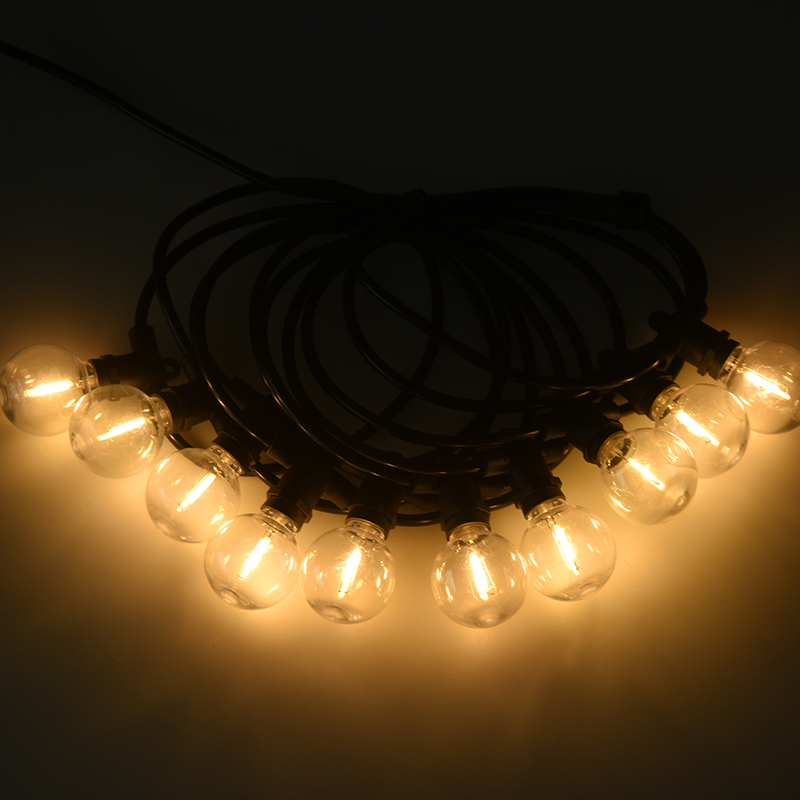 G40 Integrated Solar String Light with E12 Base, 5m 10 LightsThis solar-powered string light suits gardens and patios where no outlet exists. With automatic dusk activation and IP44 protection, it offers a wiring-free way to add warm ambiance to temporary or remote outdoor setups.View Product →
| Criterion | Solar decorative lights | Plug-in decorative lights |
|---|---|---|
| Power source | Photovoltaic panel plus rechargeable battery | Mains AC supply |
| Installation | No cabling; flexible placement | Requires nearby socket and safe cable routing |
| Brightness | Low to medium; depends on daily charge | Full and consistent output |
| Runtime | Typically 6–10 hours per full charge | Continuous, timer-based, or on demand |
| Maintenance | Battery replacement every 2–4 years | Bulb and connector maintenance only |
| Weather resistance | Needs high IP on panel, battery, and housing | Depends on cable and connector rating |
| Best scenarios | Gardens, remote areas, rentable décor | Terraces, events, commercial façades |
The table underlines that solar and plug-in solutions rarely compete in the same installation. A city hotel's permanent rooftop line is usually plug-in, while a garden-center display or a beach wedding setup may lean solar because the location has no outlet and the décor moves frequently. Buyers who try to force one architecture into both scenarios will end up either paying for unnecessary cabling or accepting disappointing brightness.
Modern solar decorative lights have closed the convenience gap in several ways. Integrated designs simplify assembly because the panel, battery, and lamp holders are delivered as one unit. Monocrystalline and polycrystalline panels convert available sunlight more efficiently than older amorphous types, and rechargeable batteries with higher cycle life extend seasonal value. That said, buyers should manage expectations about placement. A solar string light installed under a dense tree canopy will not deliver the same nightly performance as one mounted in direct sunlight, and in winter months the charging window may drop to half the summer value.
Ningbo Hengboyi Lighting offers examples of both architectures. The G40 integrated solar string light uses an E12 lamp holder, a 5-meter cable, and a solar top, which suits gardens and temporary layouts where wiring is impractical. On the plug-in side, G45 and S14 pendant strings with E27 bases provide the steady brightness that hospitality venues typically require. This mix means a buyer can build a catalog with solar entry-level products and premium plug-in lines under one supplier relationship.
Hybrid product lines are also worth considering for distributors. A brand can offer solar and plug-in versions of the same bulb shape and cable length, using the same packaging artwork and control logic. This reduces design cost, simplifies spare-parts management, and gives retail customers a clear upgrade path from entry-level solar to premium mains-powered festoon lighting. The supplier's ability to support both architectures in one factory also shortens lead times and lowers the administrative burden of managing multiple vendors.
Choose solar only when the installation site justifies it. If an outlet exists and brightness is critical, plug-in decorative lights will normally deliver better performance per euro, dollar, or pound invested.
Bulb Shapes, Light Effects, and Control Options Explained
Every decorative lighting program eventually narrows to a bulb shape. The shape defines the silhouette in daylight, the light pattern after dark, and the emotional tone of the space. The most common shapes in commercial decorative lighting are G40, G45, C7, S14, and ST38, with A60 appearing mainly in wall-mounted units. The distinction matters in procurement because bulb shape affects packaging size, fixture spacing, and replacement stock levels.
A client who asks for ball lights may mean G40, G45, or even a round diffuser, so a decorative lights manufacturer that documents the shape code, base, wattage, and envelope dimension prevents costly order errors. In practice, buyers should write the full product code into their purchase order: for example, G40 round bulb, E12 base, warm white, 5-meter string, 10 lights. This precision protects both the buyer and the factory.
Bulb shape also correlates with power draw, which influences energy cost and inverter or dimmer selection. The chart below plots typical wattage mid-points for popular LED decorative bulb shapes in a typical manufacturer reference range. LED replacements are far more efficient than the old incandescent equivalents, so the wattage numbers remain low even for large envelopes. Still, the differences between shapes are meaningful: a larger envelope usually accommodates a larger LED board or multiple LED filaments. Comparing these values helps a buyer estimate running costs for a 100-meter installation before committing to a product.
The chart shows a clear progression from compact decorative shapes to larger functional bulbs. The C7 shape, with its small strawberry-like envelope, typically draws around 1 watt in LED form, which is why it is popular in long strings where dozens of bulbs run simultaneously. G40 ball bulbs and ST38 vintage bulbs sit in a similar low-power zone, usually between 1 and 2 watts, and both are chosen for ambient glow rather than task brightness. G45 bulbs move into the 2 to 5 watt band, giving a noticeably brighter spot that reads well on outdoor ceilings and pergolas. S14 tubular bulbs occupy the top band, commonly running from 3 to 7 watts, which explains their use in premium commercial festoons and event lighting. For a 50-socket S14 string at 5 watts per socket, the total load reaches 250 watts; on a 230V circuit that is manageable, but on a 120V circuit the same string approaches the limit of a single branch circuit. Plug-in decorative lights also interact with dimmers and timers, so the driver or control system must be matched to the total wattage of the string. Energy cost is not trivial for seasonal displays: a 250W string running 8 hours a day for 60 days consumes 120 kilowatt-hours, which becomes visible on a business electricity bill. Consequently, many commercial buyers choose LED bulbs with lower wattage and rely on reflectors, clear covers, and warm color temperatures to maximize the perceived effect. The practical takeaway is that the bulb shape sets a power budget, and the power budget sets the electrical design of the project.
Control options add a second layer of differentiation. Simple on/off strings are the default for cost-sensitive programs; infrared remote control adds convenience for hospitality staff; RGB synchronization produces coordinated color changes across the whole string; and pixel-level control allows individual bulbs to be addressed, enabling chasing, wave, and gradient effects. RGBWY and RGBY combinations expand the color palette further, giving event designers the saturation they need for brand colors and themed nights.
| Control type | Capability | Recommended use |
|---|---|---|
| On/off | Basic switching | Budget programs, passive décor |
| Timer | Automatic on/off at set hours | Garden and window displays |
| Infrared remote | Manual color and brightness control | Terrace and hospitality settings |
| RGB sync | Coordinated color changes across the full string | Festive events, brand displays |
| Pixel-level | Individual bulb control, dynamic effects | Architectural and stage settings |
Pixel-level controllable strings, such as S14 pendant lights with RGB and warm-white LEDs, are the fastest-growing segment for commercial installation because one product can serve many moods. A restaurant can run a slow warm-white gradient during dinner service and switch to a dynamic pattern for weekend events. The extra cost of pixel control must be weighed against the actual usage; if the end customer never changes the program, a simple on/off product would deliver the same visual result at a lower price and with fewer failure points.
Match the bulb shape to the viewing distance first, then add control complexity only where the end customer will actually use it. Unused smart features add cost and failure points without adding perceived value.
Application Scenarios and Selection Points for Decorative Lighting Projects
Decorative lights are specified across a wide range of projects, from a single café window to a city-wide festival installation. Each scenario imposes different constraints on bulb shape, power source, IP rating, and control. The main application segments are private gardens, hospitality terraces, building façades, curtain and window décor, and temporary event structures. The selection points are consistent: exposure to weather, distance from power, viewing distance, installation height, and expected operating hours.
| Garden and patio | Solar or plug-in strings of 5–15 meters; IP44–IP65; G40, G45, or S14. Check daily sun exposure for solar, and confirm hook points and spacing. |
| Restaurant and hotel terrace | Plug-in festoon; S14 or G45; warm white or RGB; IP65 minimum. Confirm circuit capacity, dimmer compatibility, and spare lamp stock. |
| Building façade and wall | Solar wall lights or wall-mounted strings; IP65; A60 or G45. Check mounting surface material, drill depth, and solar panel orientation. |
| Window and curtain décor | Curtain lights; indoor IP20; RGB if a dynamic effect is needed. Measure drop height, choose vertical spacing, and plan power access. |
| Events and weddings | Solar for remote sites; plug-in for tents; rubber cable for staging. Calculate quantity per meter and battery capacity for solar models. |
For a garden program, the key question is orientation: the solar panel must face the sun for a meaningful part of the day, and the cable length must allow the panel to be mounted away from dense foliage. For hospitality, the priority is uniform appearance, which pushes buyers toward a decorative lights supplier that can guarantee consistent color temperature across batches and production runs. A terrace with mismatched bulbs between two tables looks unprofessional, so the supplier's quality control on LED binning is as important as the product itself.
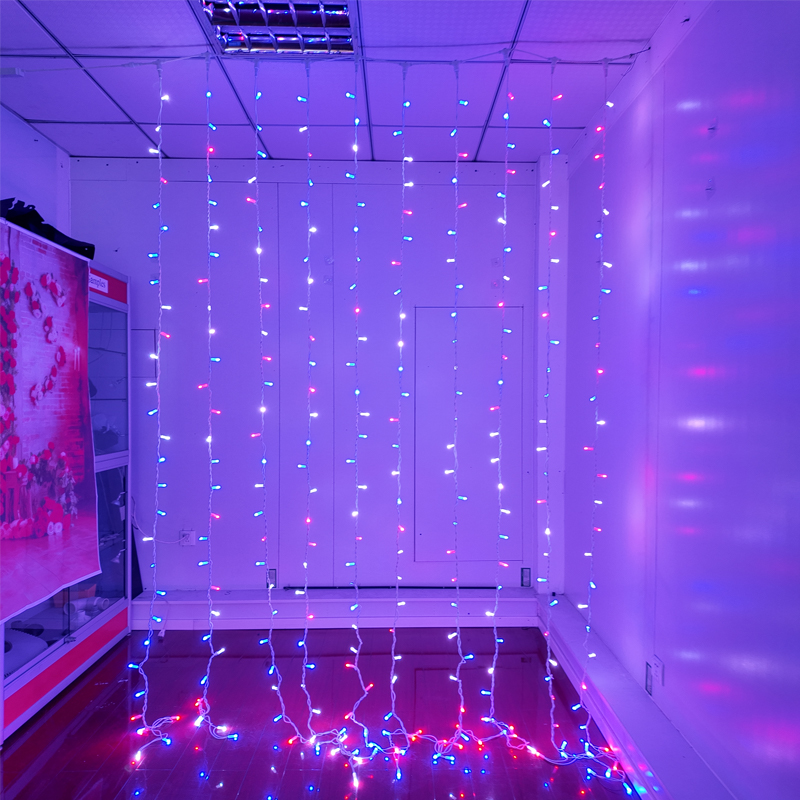 7-Color Synchronous RGB Curtain Light String with 300 LEDsFeaturing 300 RGB beads across a 3.5-meter curtain layout, this light supports flowing and gradient effects via AC 220-240V. Ideal for hospitality interiors and displays where vertical coverage and synchronized color control matter.View Product →
Curtain lighting is a separate category because the form factor is vertical. A curtain string light typically uses a bus bar with multiple drops, and its selection hinges on drop length, drop spacing, and whether the customer wants static white or synchronized RGB effects. In interior settings, the IP requirement drops to IP20, but the control interface and transformer placement become the limiting factors. Curtain lights are widely used behind reception desks, in shop windows, and as room dividers in restaurants and event halls.
Event and rental companies face a different trade-off. They want products that assemble quickly, tolerate repeated handling, and survive storage in boxes. Rubber-engineered strings with strain-relieved sockets and detachable lamps are often preferred over fully integrated designs because a damaged bulb can be replaced on site without discarding the whole string. The ability to daisy-chain multiple strings is also critical, because event layouts rarely match the length of a single product.
Configuration types add another layer of choice for buyers. The same bulb shape can be delivered in several mounting formats, each with distinct installation and maintenance behavior:
Integrated sealedThe LED module is fixed in the socket. Maximum weather resistance, minimal assembly, but the bulb cannot be replaced individually. |
Pendant replaceableA screw-base socket holds a replaceable bulb. Easy to service and customize, but the socket seal must be checked regularly outdoors. |
Clip-onEach bulb clips onto a support cable or existing structure. Flexible placement, ideal for canopies and market stalls where spacing varies. |
DetachableThe lamp separates from the string for storage or replacement. A practical choice for rental fleets and seasonal displays that need compact packing. |
The commercial conclusion is that application scenarios define the specification, not the other way around. A brand that sells one outdoor string light for all projects will lose tenders to suppliers who can match product characteristics to the installation environment. Buyers should therefore organize their product selection around the end user's physical site, available power, and operating hours before they compare unit prices.
Create a simple selection matrix before sourcing: application, power availability, exposure level, viewing distance, and operating hours. These five inputs will narrow the product list to a manageable number of SKUs.
Manufacturing Quality, Customization, and Supplier Evaluation
For buyers who source decorative lights on a branded or private-label basis, the supplier's manufacturing process is as important as the product specification. Factories behind decorative lighting differ significantly in the depth of their quality control, testing equipment, and tolerance for customization. A reliable decorative lights manufacturer typically controls the process from raw material to finished carton, including incoming inspection of cable, sockets, and LED modules; in-process checks on soldering and sealing; and a final electrical test on every string before packaging.
Waterproof products also require water-resistance testing on connectors and lamp housings, because this is where field failures concentrate. Without this testing, a product can carry an IP rating on paper while failing in the first rainstorm. Buyers should ask which tests are actually performed, how many samples are tested, and whether the factory keeps batch records that can be traced back to a production run. This level of transparency is a strong indicator of a professional manufacturing partner.
Ningbo Hengboyi Lighting exemplifies this approach through its stated commitment to design with purpose, strict quality control, and dedicated production and testing facilities. The company positions itself as a decorative lighting manufacturer for lighting brands and importers worldwide, with independent export qualifications and familiarity with international market regulations. Its product families span solar string lights, solar wall lights, curtain lights, and conventional string lights, which gives buyers a single source for multiple programs.
Customization is the decisive competency in private-label programs. Buyers should ask whether the supplier can adapt operating voltage, cable length, wire gauge, connector type, bulb color, and packaging artwork. The ability to develop prototypes quickly from drawings or samples shortens the product development cycle and reduces risk at launch. A factory that only offers stock products may be cheaper on the first order but more expensive across a multi-year brand program because it cannot evolve with the market.
Minimum order quantities are another reality of factory sourcing. A supplier with broad product families can aggregate different SKUs under one production run, which helps an importer test multiple designs without committing excessive inventory to a single model. Buyers should also confirm lead times, payment terms, and Incoterms before sampling, because these commercial conditions affect landed cost as much as the unit price does.
Certification and documentation should be verified in writing. Independent export qualification means the manufacturer handles customs documentation and logistics directly, which simplifies communication and reduces third-party costs. Market-specific certificates demonstrate that the product has been tested against a recognized standard rather than self-declared, so buyers should request the certificate numbers and, when possible, the corresponding test reports. A factory that cannot produce documentation will struggle to support a brand in regulated markets.
A practical supplier evaluation checklist for decorative lights:
- Does the factory control raw materials, soldering, sealing, and final testing in-house?
- Can it show a working sample that matches the target IP rating?
- Does it support voltage, cable, connector, appearance, and packaging customization?
- Can it provide certificates and test reports for the destination market?
- Is the export documentation complete and the logistics process tested?
- Does it offer mixed-SKU consolidation for seasonal programs?
Visiting the factory or scheduling a video audit can reveal even more. Look at how components are stored, whether soldering stations have fume extraction, and how many workers are dedicated to inspection. These details are not cosmetic; they correlate with consistency in large orders. A supplier that treats quality control as a separate department with real authority is more likely to catch problems before shipment than one where the production manager is also responsible for inspection.
The best decorative lights supplier is not necessarily the cheapest; it is the one that documents quality, answers specification questions precisely, and proves customization capability with samples before the order is placed.
Maintenance and Care Guide for Decorative Lighting Products
Even well-built decorative lights last longer when they are handled correctly. The main enemies are not the LED chip but water ingress at connectors, ultraviolet damage to the cable jacket, and careless storage. A product that has done three outdoor seasons can often do three more if the owner follows a simple routine.
Cleaning should be done with the product unplugged or the battery disconnected. A soft cloth and mild soapy water are sufficient for most surfaces; abrasive cleaners and pressure washers can destroy the IP seals and force water into the sockets. For glass and plastic bulb envelopes, a gentle wipe removes the dust that otherwise reduces light output by up to twenty percent over a single season.
For solar decorative lights, the panel needs the most attention. Dust, leaf litter, and bird droppings reduce charging current, which shortens the evening runtime. Wiping the panel every two to four weeks during the season maintains performance. The battery is a normal consumable: most rechargeable batteries in solar lights deliver two to four years of daily cycles before replacement, so the supplier should specify the battery type and recommend a replacement schedule to the end customer.
Plug-in strings require less daily care, but the connection between the transformer and the string is the weakest point. Buyers should specify a connector that seals tightly and avoids ingress, especially for commercial installations that stay up all season. It is also wise to position any transformer or driver above ground level, protected from standing water, and to use a GFCI-protected outlet for outdoor installations in North America or the equivalent residual current device in Europe.
A seasonal maintenance checklist for decorative lights:
- Unplug or remove batteries before long-term storage.
- Coil the string loosely; tight coiling can crack internal conductors.
- Store in a dry, dark container below 40°C.
- Check connectors for corrosion before reinstallation.
- Inspect the cable jacket for cracks or abrasion.
- Replace damaged bulbs with the same wattage and base type.
Storage is especially important for rental equipment. A string that is coiled too tightly develops memory kinks and internal wire fatigue, which later show up as flicker or open circuits. Detachable and clip-on designs reduce this risk because the bulbs are stored separately from the cable. Buyers who plan seasonal programs should also keep spare bulbs and connectors in the same carton as the string, so that field repairs do not require a separate order and a week of waiting.
Maintenance begins at the specification stage. Choosing an integrated design, a UV-stable cable, and a sealed connector eliminates most of the upstream causes of field failure.
Frequently Asked Questions About Decorative Lights
The FAQs above cover the questions that recur in most decorative lights RFQs. If a supplier answers them with data rather than marketing phrases, the commercial conversation can move quickly to samples, testing, and pricing. If the answers are vague or contradictory on IP rating, voltage, or certification, that is a clear warning sign regardless of how attractive the product photos look.
A supplier that answers technical questions clearly is more likely to handle production, testing, and customs documentation with the same discipline. Use the FAQ exchange as the first filter in your supplier evaluation.
Conclusion: Building a Winning Decorative Lights Sourcing Strategy
Decorative lights are a mature, global product category with a clear procurement logic. The product must fit the application, comply with the destination market, and be supported by a manufacturer with documented quality control and customization capability. None of these factors can be assessed from a product photo alone; they require a specification sheet, a sample, and honest technical answers from the supplier.
Start with the installation environment to define the IP rating, power source, and bulb shape. Then translate those choices into a spec sheet with voltage, wattage, base, cable, and control. Finally, evaluate suppliers on samples, certificates, and responsiveness. This sequence reduces returns, shortens project timelines, and builds product lines that perform reliably season after season.
The range of decorative lights available from manufacturers today covers nearly every combination of bulb shape, base, and power source. Solar string lights handle off-grid gardens, S14 and G45 festoons serve hospitality terraces, curtain lights add vertical accents indoors, and rubber-engineered strings support professional events. A buyer who knows which combination each project needs will always negotiate from a stronger position.
Long-term partnerships matter more in decorative lighting than in many other product categories, because labor costs, certification updates, and material choices evolve every year. A factory that shares its testing data, proposes improvements, and delivers consistent batches becomes an extension of your own product team. That is the real value of sourcing from a specialized decorative lights manufacturer rather than from a general trading agent.
A successful decorative lights program is built on specifications first, samples second, and price last. Suppliers that can document all three are the ones worth keeping for the long term.
Related Products
-
 View More
-
 View More
G40 Clip-on E12 Spiral Colored Decorative String Lights
-
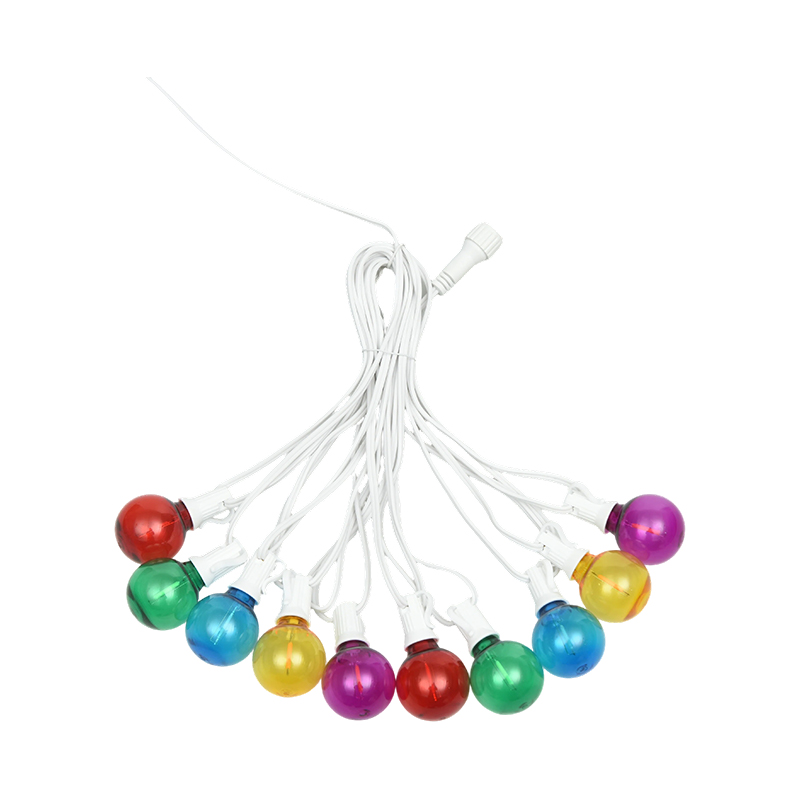 View More
G40 Clip-on E12 Spiral Colored Decorative String Lights(White style)
-
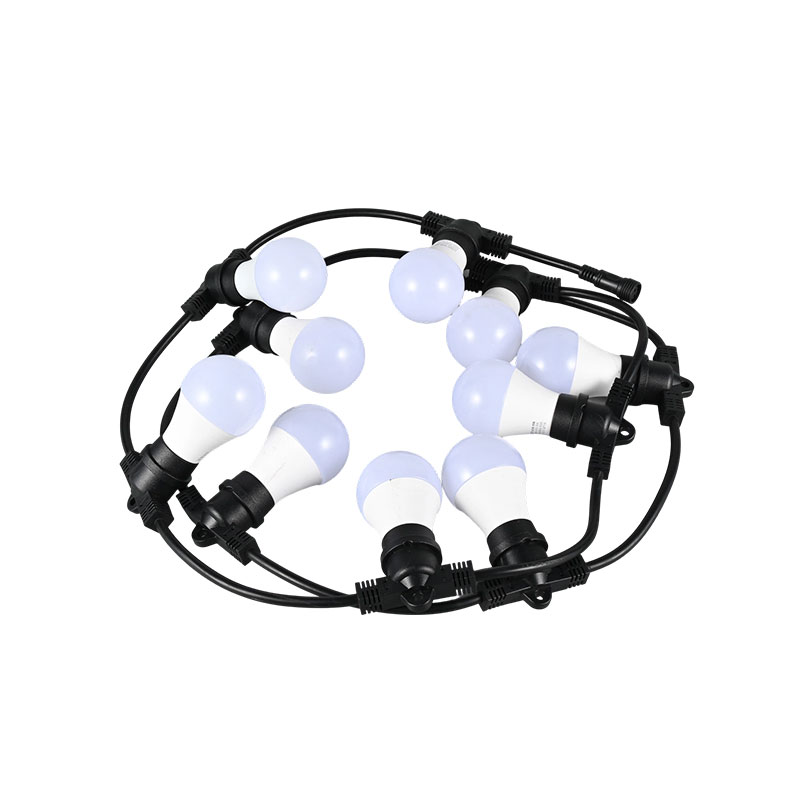 View More
E27 Spiral RGB Infrared Remote Control Energy-Saving String Lights
-
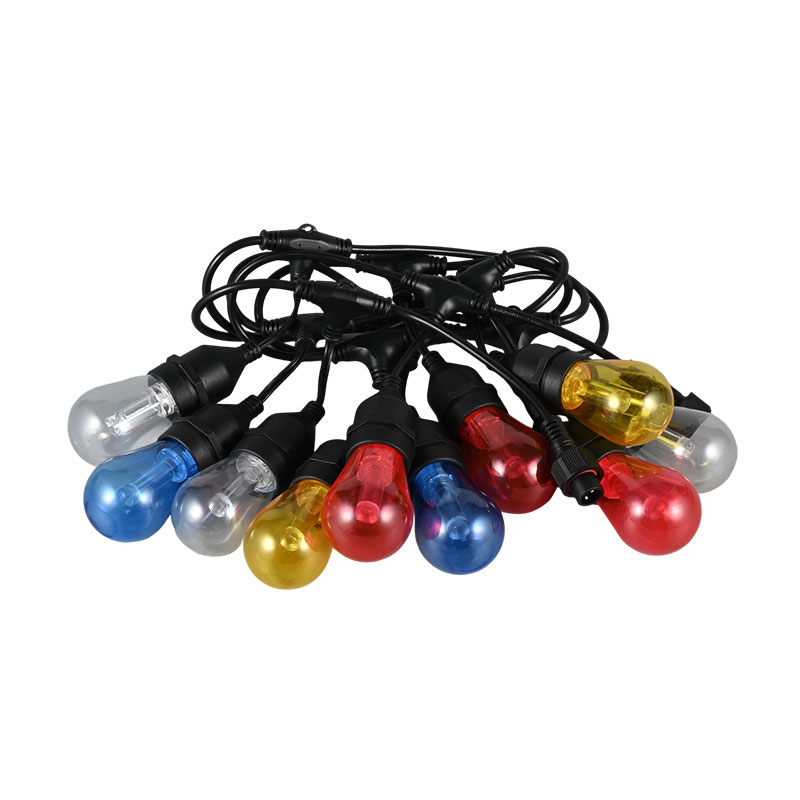 View More
S14 Light Guide Pillar Pendant Type E27 Spiral String Lights
-
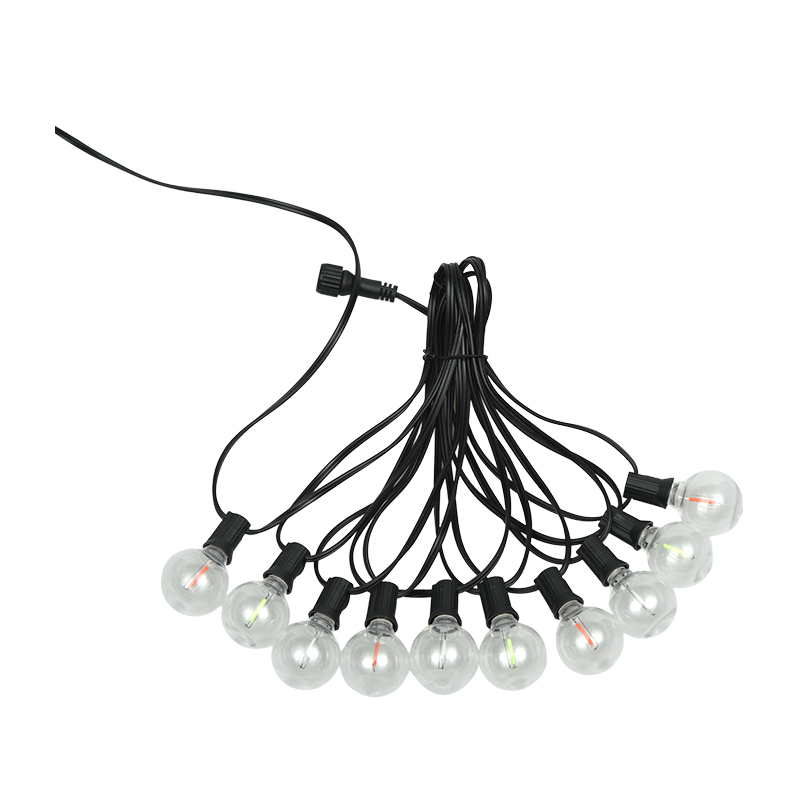 View More
G40 Clip-on E12 Spiral Colored String Lights
Hengboyi are always ready to help you and answer your question if you need.
Request A Quote
Contact Info.
 Mob: +86-13901119074
 Tel: +86-574-62838966
 E-mail: sale2@hengboyi.com
 Add: No. 18 Rongchuang Road, Mingwei Village, Lizhou Street, Yuyao City, Ningbo, Zhejiang Province, China
Quick Links
Product List
QR CODE
Copyright Ningbo Hengboyi Lamp Co., Ltd. All rights reserved.
China best outdoor decorative solar lights Manufacturer
Custom decorative string lights indoor Factory

