 Telephone: +86-574-62838966
 E-mail : sale2@hengboyi.com


 en
 English
 Español
 中文简体

LED Bulbs for Decorative String Lights: A Practical B2B Sourcing Guide
Content
- 1 Why LED Bulbs Decide the Fate of a Decorative Lighting Order
- 2 LED Bulbs in String Lights: The Specifications That Cascade Through Everything
- 3 Solar LED Bulbs: The Constraint Most Buyers Underestimate
- 4 Colour Consistency in LED Bulbs: Where Quiet Failures Happen
- 5 Outdoor LED Bulbs and Moisture: The IP Conversation You Need to Have
- 6 LED Bulbs for Wall Lights and Enclosed Fixtures: A Different Job
- 7 What to Put in an RFQ for LED Bulbs and Bulb-Based Strings
- 8 Sourcing LED Bulbs: How Factory Capability Changes Your Risk Profile
- 9 Frequently Asked Questions About LED Bulbs for Decorative Lighting
- 9.1 Are LED bulbs interchangeable between E12, E26 and E27 sockets?
- 9.2 Do coloured LED bulbs lose much light compared with clear ones?
- 9.3 How long should decorative LED bulbs last outdoors?
- 9.4 Can I mix LED bulbs from different batches in one order?
- 9.5 Why do solar decorative lights dim after a few hours?
- 9.6 Should the bulbs be integrated or replaceable?
- 9.7 What should a first sample order include?
- 10 Bringing the Bulb Decision Forward
A carton of five hundred S14 warm white strings landed at a distributor's warehouse in Rotterdam last spring. On the test bench, string by string, the first forty were perfect. Strings forty-one through sixty read visibly warmer, almost amber, and the measured output had dropped by roughly a fifth. The wire was the same, the sockets were the same, the packaging was the same. The only variable was a reel of LED bulbs pulled from a different production batch. That one reel turned a clean delivery into a re-shipment, a credit note and a very uncomfortable phone call.
The short version of what follows: when you buy decorative string lights, you are buying LED bulbs with a cable attached. The cable is mature technology. The bulbs are where the order succeeds or fails. Base format, wattage, colour bin, diffusion, sealing and replaceability all sit inside a component about the size of a plum, and every one of those decisions cascades into tooling, freight, certification and after-sales cost. This guide is written from the manufacturing side of that equation, for the buyers, product developers and quality managers who have to sign off on the specification before a container leaves.
Why LED Bulbs Decide the Fate of a Decorative Lighting Order
Most sourcing conversations about string lights start with the cable: length, gauge, colour, plug type, spacing. That is understandable, because cable is easy to quote and easy to compare. It is also the wrong place to start, because cable performance is broadly predictable across suppliers while bulb performance is not. Two factories can quote the same five-metre, ten-lamp G40 string at similar prices and deliver radically different products, entirely because of what sits in the sockets.
The bulb is the only part your end customer actually looks at
A buyer judging a festoon string from three metres away sees bulbs, not conductors. They see the shape of the glow, the smoothness of the diffuser, whether the white is a clean white or a yellow-green compromise, and whether all ten bulbs match. A slightly oversized bulb reads as generous and premium; a slightly undersized one reads as cheap, even if the copper inside is identical. This is why experienced product developers treat bulb selection as a design decision rather than a purchasing one, and why a mould for a new lens or a new globe profile is often worth more to the final product than a few cents saved on wire.
Bulbs concentrate the failure modes
In a decorative string, the bulb carries the driver, the solder joints, the seal and the optical element. Failures cluster there: moisture ingress through the base, a potting cavity that was not fully filled, a lens that yellowed under UV, a colour shift after two hundred hours. A cable that fails is a warranty claim. A batch of bulbs that fails is a reputation problem, because the strings are usually installed in visible places, often in clusters, and the failure is conspicuous.
Integrated or replaceable is a bulb strategy, not a cable strategy
This is the decision that quietly determines your service model. Integrated strings seal the bulb to the socket: better ingress protection, lower unit cost, cleaner appearance, but nothing can be swapped in the field. Detachable or replaceable designs cost more per unit at the factory and simplify the spare-part conversation later. Neither is universally correct. Commercial installations where access requires a lift or a scaffold tend to prefer the integrated route because the seal is stronger and the failure rate lower. Rental and event fleets, which rebuild layouts weekly, usually prefer replaceable bulbs because a damaged lamp does not retire an entire string. Decide this early, because the socket, the gasket and the bulb base are all downstream of it.
Bulb selection drives return rate, perceived quality and after-sales cost more than any other part of a decorative string, so it belongs in the first specification meeting, not the last.
LED Bulbs in String Lights: The Specifications That Cascade Through Everything
Once you accept that the bulb is the product, the specification list becomes manageable. There are really six things to pin down: the base format, the electrical rating, the light output band, the colour and diffusion, the ingress protection, and whether the lamp is sealed or user-replaceable. Everything else, from packaging to certification, follows from those six.
| Bulb format | Common base | Typical role on a string | What to lock down in the order |
|---|---|---|---|
| C7 | E12 | Small decorative accents, strawberry and smooth lens shapes | Lens shape and colour saturation, wattage of the integrated version, whether the lamp is sealed |
| C45 | E27 | Mid-size pendants, flashing and multi-colour effects | Control protocol, flicker behaviour, colour sequence and speed range |
| G40 | E12 | Globe clusters in gardens, patio and event dressing | Globe diameter and tolerance, glass or polycarbonate, warm white bin range |
| G45 | E27 | Larger globes, outdoor and commercial runs | Gasket specification, base plating thickness, lumen band and beam spread |
| S14 | E27 or E26 | Festoon and commercial outdoor installations | Replaceable versus integrated construction, ingress rating, colour consistency across the run |
| ST38 | E12 | Vintage and filament-look strings at low wattage | Filament appearance under low light, 1W class performance, colour uniformity |
| A60 | E27 or fixed panel | Wall lights and enclosed fixtures | Diffuser material, heat path in an enclosed housing, output after diffuser loss |
Base and socket lock-in is permanent, so get it right first
E12, E26 and E27 are not interchangeable, and neither are the markets that favour them. A G40 programme built around E12 sockets cannot be converted to E27 without new sockets, new moulds for the lamp base, new packaging cavities and a new compliance file. In practice, the base format is set by the destination market and the intended installation, and it is the single hardest decision to reverse. If you are developing a product for both North American and European channels, be honest about whether you want two SKUs or one compromise.
Wattage, lumens and the low-wattage trap
Decorative LED bulbs live in an unusual electrical band. Many formats run at roughly one to a few watts, far below general lighting products, and in that band lumen claims become fragile. A supplier may quote a nominal figure measured at the bare lamp, while the lens, the diffuser and the coloured polycarbonate all remove light before it reaches the eye. Coloured lenses can cut measurable output substantially. If your brief says "must look bright at eight metres", that requirement has to be converted into a measured value at the finished product, not at the diode.
Brightness also interacts with density. Ten brighter bulbs on five metres will look punchier but also glare more, and on a restaurant terrace that glare can be the difference between atmospheric and uncomfortable. The planning bands below are the rough ranges we use when a buyer describes a scene rather than a datasheet; they are indicative, not guaranteed figures, and every programme should be confirmed with a photometric check on the finished string.
Indicative lumen planning bands by LED bulb format
ST38
20-40 lm
C7
20-50 lm
G40
30-70 lm
G45
50-100 lm
S14
70-140 lm
A60
150-400 lm
Bands describe the finished lamp in a decorative context, not bare diode output. Confirm with a photometric report on the assembled string.
The shape of that chart explains a lot of sourcing friction. A60 lamps sit in a completely different output class from string bulbs, which is why wall lights and festoons are rarely the same programme even when they share a colour temperature. Within the string formats, the difference between an S14 and a C7 is not just size; it is a two- to threefold difference in how much light you are placing in the scene. Matching the band to the installation distance matters more than chasing the highest number on a quotation sheet. In our own production, we routinely build strings around a target scene rather than a single lamp rating, because the customer's photograph of the finished terrace is the real acceptance test.
Base format and output band are the two decisions that cannot be fixed later, so settle them before any tooling or mould work begins.
Solar LED Bulbs: The Constraint Most Buyers Underestimate
Solar decorative lighting looks like string lighting with a panel bolted on. It is not. A solar string is an energy-budgeted system in which the bulb's appetite has to fit inside what a small photovoltaic panel can collect during a short winter day and what a compact cell can hold until dusk. That changes which bulbs are viable, and it changes the honest conversation you should have with a supplier.
A typical solar garden string runs a panel of modest dimensions and a battery capacity measured in a few watt-hours. The lamp therefore has to draw very little, and the control electronics have to be efficient. This is why solar programmes gravitate toward globe formats in the one-watt class and why asking for a high-output version of the same physical bulb usually produces either a shorter run time or a visibly dimmer lamp after the first three hours. Neither outcome is a defect; both are physics.
Duty cycle and the "eight hours" promise
Suppliers frequently quote an eight-hour run time. The useful question is at what output, at what ambient temperature and after how many charge cycles. A lamp that starts at full brightness and steps down after two hours can look excellent in a showroom and disappointing in a garden in November. When specifying, ask for the discharge curve rather than the headline figure, and ask what happens in a week of overcast weather. A modest automatic dimming profile is often a better product than an aggressive peak brightness that collapses.
Why the bulb shape matters more on solar
Smaller globes and lenses have less surface area to diffuse, which means the designer can use a lower-output lamp and still produce a pleasing glow. Large clear globes look impressive in daylight and demand more light to feel alive at night. If you are developing a solar range, the bulb selection and the panel sizing should happen in the same conversation, with the target scene fixed first. Our own solar string development follows that order, and it is why the range tends to favour globe and lantern profiles rather than very large clear lamps.
 G40 Integrated Solar String Light with E12 HoldersA five-metre, ten-lamp integrated solar string with G40 globes and E12 holders, useful for pergolas or boundary fences needing soft, no-wiring outdoor light.View Product →
A G40 globe format on an E12 holder, supplied as an integrated solar string, is a good illustration of the trade-off made deliberately rather than accidentally: a bulb size that diffuses well at low output, a sealed construction that survives weather, and a five-metre ten-lamp layout that suits a pergola or a boundary fence. Buyers comparing solar offers should look at whether the bulb, panel and cell were specified together or assembled from whatever was on the shelf.
On solar strings, the LED bulbs and the energy budget must be designed as one system, and the discharge curve is a more useful specification than the quoted run time.
Colour Consistency in LED Bulbs: Where Quiet Failures Happen
The Rotterdam story at the start of this article was not a brightness problem. It was a binning problem. Every LED bulb that leaves a production line sits inside a colour tolerance band, and if two bands are mixed within a single string, or within a single shipment, the eye will find the mismatch even when the instrument readings both fall within a generous specification.
Binning, tolerance and the number that matters
Colour temperature is usually quoted as a single figure such as 2700K or 3000K. That figure describes a centre point, not a range. The meaningful question is how wide the tolerance is around that centre and whether the supplier can hold the entire order inside one tight group. Narrower tolerances cost more, because they require the manufacturer to sort and to accept yield loss. Buyers who specify a tight band and then negotiate hard on price are, in effect, asking the factory to break the specification quietly. It is better to widen the band explicitly and keep the promise than to keep the band and lose it in production.
The warm white problem in mixed orders
Warm white is the hardest colour to keep consistent across a long programme, because small shifts are more visible in the amber region than in neutral white. A string of ten warm white globes with two slightly pink lamps will read as faulty to a homeowner, even though the supplier can produce a test report showing both lamps inside a stated range. Practical mitigations include ordering all bulbs for a season in a single production run, reserving stock, and requiring the factory to build strings from one reel rather than from leftovers across multiple reels.
Test the finished string, not the lamp
Acceptance testing at the lamp level misses the interaction between bulb, lens and socket. A coloured polycarbonate lens shifts the perceived hue, and a frosted diffuser can flatten the difference between two bins into something that looks acceptable on a bench and wrong in a photograph. If your channel sells on lifestyle imagery, test under the same camera and the same white balance you will use for the shoot, and test at least one full string rather than a handful of loose lamps.
Colour consistency is a promise about a batch, not a lamp, so it should be written as a batch-level requirement with an agreed acceptance method.
Outdoor LED Bulbs and Moisture: The IP Conversation You Need to Have
Ingress protection ratings are widely quoted and widely misunderstood. A string rated for outdoor use may still fail after a season if the water reaches the base through capillary action along the cable, or if condensation forms inside a sealed globe that was assembled in humid air. The bulb is where these scenarios converge.
What the rating actually covers
An IP rating describes the enclosure's resistance to dust and water under defined test conditions. It does not describe the life expectancy of the gasket, the UV stability of the lens, or the behaviour of the product after a hundred thermal cycles. Two products carrying the same rating can behave very differently after two winters. When comparing offers, ask how the base is sealed, whether the driver cavity is potted, what material the gasket is, and how the cable entry is strain-relieved. Those four answers tell you more than the number on the label.
Rubber cable and the engineering strings
For installations that stay outdoors year-round, cable compound matters as much as bulb sealing. Rubber-jacketed constructions tolerate cold flexing and UV exposure better than many inexpensive alternatives, which is why engineering-grade strings are specified for construction sites, temporary venues and exposed facades. If the bulbs are well sealed and the cable is not, the product still fails, just somewhere else.
Condensation is the invisible failure
A sealed lamp assembled in a warm, humid room can carry moisture inside it forever. In cold weather the moisture condenses on the inside of the lens, and the lamp looks cloudy. In warm weather it fogs differently. The remedy is controlled assembly conditions and, in some designs, a deliberate venting path that lets the enclosure breathe without letting water in. This is one of those details that never appears on a quotation sheet but determines whether a commercial customer renews. Buyers who want the technical background can read our notes on what makes a waterproof LED string light genuinely waterproof, which covers the sealing decisions in more detail.
 S14 E27 Warm White Pendant String LightsA five-metre, ten-light pendant string using E27 warm white lamps, suitable for canopies, terraces and outdoor restaurant seating where layered light is wanted.View Product →
An S14 pendant format on an E27 spiral holder with warm white output is the workhorse of commercial outdoor dressing for a reason: the bulb is large enough to look generous in a photograph, the output band suits a canopy or a beer garden, and the format allows straightforward sealing at the base. It is not the right answer for every project, but it is a useful reference point when comparing a supplier's approach to outdoor construction.
Ask how the bulb base is sealed and how condensation is handled, because the IP number alone will not tell you what happens in year two.
LED Bulbs for Wall Lights and Enclosed Fixtures: A Different Job
Wall-mounted decorative lighting puts LED bulbs somewhere they are not usually designed to be: inside an enclosure with limited airflow, often facing down, often exposed to driven rain. The bulb that works beautifully on an open festoon string can fail early in a sealed wall lantern, and the cause is heat rather than water.
Thermal path in a closed housing
A decorative lamp dissipates only a few watts, which sounds trivial until it is trapped in a small housing with no convection. Over a summer, that steady warmth accelerates lens yellowing and driver drift. When specifying for enclosed fixtures, ask what temperature the lamp reaches inside the housing rather than on a bench, and consider a lower drive current even at the cost of some output. The trade is usually worth it, because the failure mode is cosmetic and permanent.
Diffusion and the flame effect
Wall lanterns often aim for a vintage look, and the optical trick that produces a convincing flame or filament effect depends on a shaped diffuser and a deliberately uneven light distribution. That is a bulb-level design decision. A generic lamp behind a flame-shaped lens rarely convinces, because the source is too uniform. Buyers developing this kind of product should expect to discuss lens geometry, not just colour temperature.
 Vintage Kerosene-Style Solar Wall Light with Flame EffectA wall-mounted solar lantern in a kerosene-lamp style, with a warm flickering flame effect for courtyard walls, gate posts, fences and vintage outdoor settings.View Product →
A kerosene-lamp-style solar wall light with a flame effect shows how far the bulb decision reaches. The lamp, the diffuser and the solar budget are all shaped by the intended visual result, and the product only works because none of those three was chosen in isolation. For buyers building a coordinated outdoor range, matching wall lights to strings at the same nominal colour temperature is usually the difference between a collection and a pile of items.
In enclosed fixtures the heat path and the diffuser geometry matter more than headline output, so specify them together with the bulb.
What to Put in an RFQ for LED Bulbs and Bulb-Based Strings
Most weak quotations are the result of a weak request. A factory will quote what it can infer, and inference usually lands on the cheapest interpretation. A useful request for quotation describes the finished product, the acceptance test and the commercial constraints in enough detail that a competent supplier has no room to guess.
- State the finished product, not the components: string length, lamp count, spacing, cable colour and plug type.
- Name the bulb format and base explicitly, including the market standard the socket must satisfy.
- Give a light output band for the assembled string and say how it will be measured.
- Specify colour temperature as a centre point plus a tolerance, and require batch consistency across the order.
- State the ingress protection target and the intended installation environment in plain language.
- Confirm whether the lamp is integrated or replaceable, and whether spares will be stocked.
- List the compliance documents required for the destination market and who bears the cost of testing.
- Describe packaging, including retail-ready requirements and carton marking.
- Ask for a prototype or pre-production sample with a written deviation list, not just a photograph.
| Parameter | Why it matters commercially | Suggested approach |
|---|---|---|
| Colour temperature | Drives perceived quality and returns in mixed shipments | Fix a centre point and negotiate a tolerance band, then require single-batch supply |
| Output at the finished string | Determines whether the installation reads as intended at distance | Specify a measured range on the assembled product, not on the bare lamp |
| Base and socket fit | Prevents rework, cross-threading and field complaints | Treat as fixed; require a sample fit check with a torque and insertion test |
| Sealing method | Predicts year-two failure rates on outdoor installations | Ask for the construction description and a soak or spray test result |
| Packaging and labelling | Affects retail readiness, freight cost and claims handling | Approve artwork and drop-test a carton before mass production |
| Spare parts policy | Determines the after-sales cost of replaceable designs | Agree a stocking commitment or a reorder lead time in writing |
The tolerance sheet is not about being difficult with a supplier. It is about making the trade-offs visible so that both sides are negotiating the same product. A factory that can see which parameter is genuinely commercial will often propose a cheaper way to reach the same visual result, which is exactly the conversation you want to have before tooling.
A request that describes the finished installation and its acceptance test will produce far more usable quotations than a list of component prices.
Sourcing LED Bulbs: How Factory Capability Changes Your Risk Profile
There is a real difference between a supplier who assembles strings from purchased bulbs and a manufacturer who develops the bulb, the socket and the string together. The difference rarely shows up in a unit price. It shows up in what happens when something goes wrong.
Where the two models diverge
An assembler can switch bulb sources quickly, which is useful for cost pressure and awkward for consistency. A manufacturer with its own development capability absorbs more of the risk: it can hold a colour band across a season, adjust a mould when a fit issue appears, and trace a complaint back to a production run. For buyers running a branded range, that traceability is usually worth more than a few percent on the invoice. It also shortens the loop when a retail customer asks for a variant, because the prototype does not have to wait for a third party.
The questions that reveal capability quickly
- Can you show a colour tolerance report for a recent production run rather than a laboratory sample?
- Which parts of this product do you make in-house, and which are purchased?
- How do you record and trace a batch if a customer reports a fault twelve months later?
- What is your realistic lead time for a customised voltage, cable length or packaging change?
- Which markets do you already ship to, and who prepares the export documentation?
Answers to those five questions separate a trading intermediary from a production partner faster than any factory tour. A supplier with genuine manufacturing depth tends to answer with specifics, including the parts they do not control. That honesty is more useful than a perfect sales deck.
Customisation is a specification exercise
Requests to change voltage, length, wire type, appearance and packaging are routine in decorative lighting, and they are where a good manufacturer earns its place. The valuable version of that conversation is not "can you change it" but "here is the scene we are selling into, here is the price ceiling, what is the most reliable way to get there". Buyers who frame the request that way usually end up with fewer prototypes and a shorter path to a production-ready product. For a broader view of how specification decisions play out across a commercial project, our guide to uniform waterproof outdoor lighting walks through the same logic from an installation angle.
Choose a supplier by what they can trace, adjust and document after the order ships, not only by the price on the first quotation.
Frequently Asked Questions About LED Bulbs for Decorative Lighting
Are LED bulbs interchangeable between E12, E26 and E27 sockets?
No. E12 is a small screw base used on compact decorative formats such as C7, G40 and ST38, while E26 and E27 are larger bases used on S14, G45 and C45 styles. The diameter and thread pitch differ, and the electrical ratings that accompany each format usually differ too. Substituting one for another requires new sockets and new housing tooling, which is why the base should be fixed at the concept stage.
Do coloured LED bulbs lose much light compared with clear ones?
They do, and the amount depends on the lens material and how saturated the colour is. A deeply coloured polycarbonate lens absorbs a meaningful share of the output before it leaves the bulb, so a coloured lamp with the same nominal rating as a clear one will usually appear dimmer. When brightness matters, specify output at the finished product and test it in the intended colour.
How long should decorative LED bulbs last outdoors?
That depends far more on sealing, cable compound and installation than on the diode. A well-sealed lamp on rubber-jacketed cable in a sheltered position can serve for several seasons; the same lamp with a poor base seal in an exposed coastal location may discolour within a year. Rather than relying on a headline hour figure, ask for the sealing construction and any weathering test results.
Can I mix LED bulbs from different batches in one order?
You can, but you probably should not. Mixing batches is the most common cause of visible colour mismatch within a shipment, and it is hard to defend in a retail claim because both batches may be individually within tolerance. If a programme runs across several months, agree a stock reservation or a single production run for the season.
Why do solar decorative lights dim after a few hours?
Because the energy collected during the day is finite and the control electronics manage that budget. Many solar products step down output deliberately to extend run time, which is a design choice rather than a fault. Ask for the discharge profile and for behaviour in sustained overcast weather before committing to a run-time claim in your marketing.
Should the bulbs be integrated or replaceable?
Integrated designs generally seal better and cost less per unit, which suits permanent outdoor installations. Replaceable designs suit rental fleets, event suppliers and any project where a single damaged lamp should not retire a whole string. The right answer follows from how the product will be used and serviced, not from a general preference.
What should a first sample order include?
At minimum, a finished string rather than loose lamps, a written deviation list against your specification, a colour comparison across at least two production runs if available, and the packaging in its final form. Testing the complete product is the only way to catch the interactions between bulb, socket, diffuser and cable that a component sample will hide.
Most LED bulb questions in decorative lighting resolve to one principle: specify and test the finished string, because that is the product your customer will judge.
Bringing the Bulb Decision Forward
The practical takeaways are not complicated. Fix the base format early, because it is the hardest thing to change. Define output and colour at the level of the assembled string, because that is where the customer's judgement happens. Treat sealing as a construction question rather than a label, because the rating does not predict year two. And choose a manufacturing partner on traceability, prototype speed and documentation, because those are the capabilities that matter when a container is already on the water.
Ningbo Hengboyi Lighting has been building decorative and solar string lighting since 2003, working with lighting brands and manufacturers across export markets. The work is split between solar strings, wall lights, curtain strings and conventional festoon ranges, and most programmes involve some degree of customisation across voltage, length, cable type, appearance or packaging. If you are developing a range and want a second opinion on how a bulb choice will behave in production, the most useful starting point is a description of the installation and a target price, not a finished drawing.
Related reading from our workshop
Settle the LED bulbs first and the rest of the string becomes a manufacturing detail; leave them until last and every other decision becomes a rescue operation.
Related Products
-
 View More
-
 View More
C45 Hanging Type E27 Spiral RGB Synchronized Flashing String Lights
-
 View More
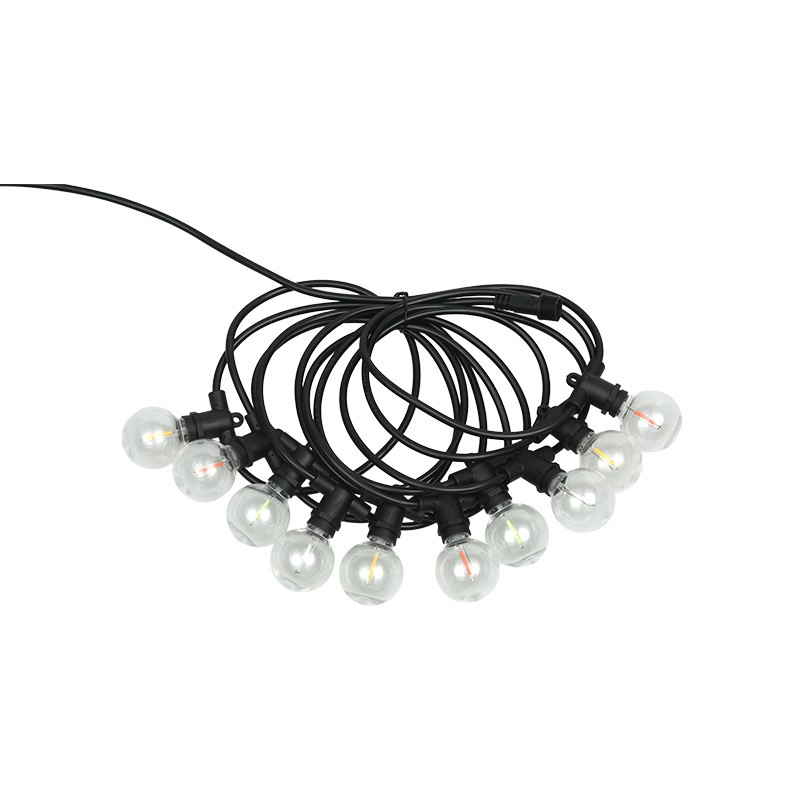
G40 Ball Bubble E12 Spiral Mouth Colorful LED Decorative Festoon Lighting
-
 View More
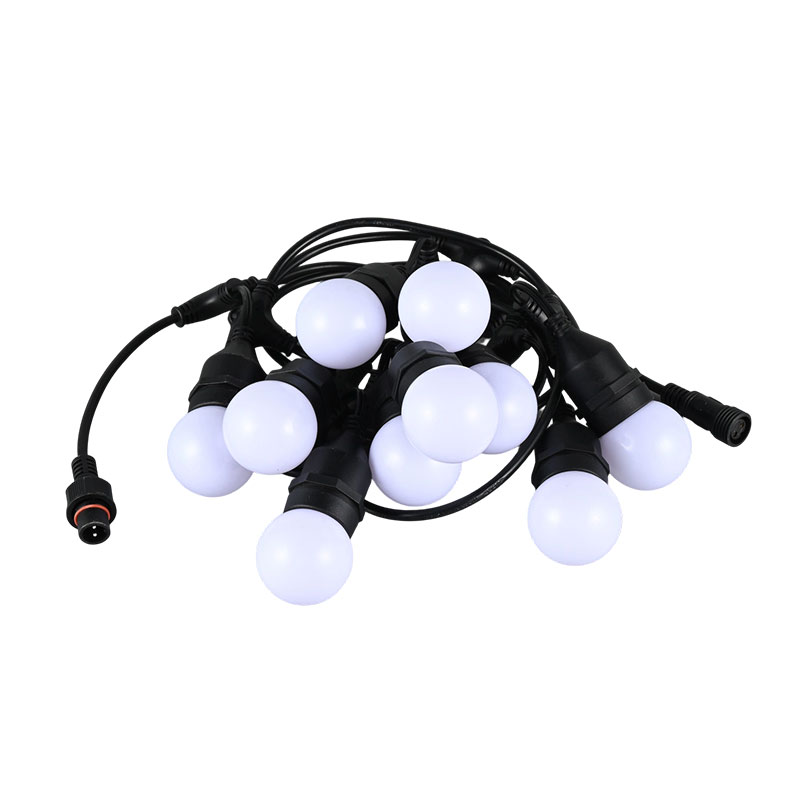
G45 Hanging Type E27 Spiral RGB Synchronized Flashing String Lights
-
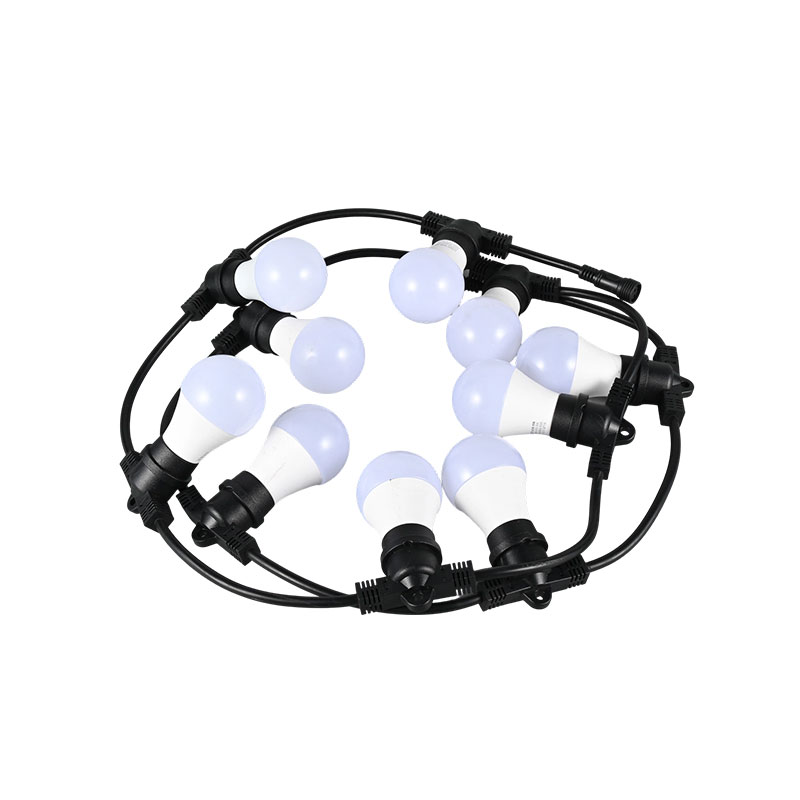 View More
E27 Spiral RGB Infrared Remote Control Energy-Saving String Lights
-
 View More
Bamboo weave G40 solar light string (5 meters 10 lights)
Hengboyi are always ready to help you and answer your question if you need.
Request A Quote
Contact Info.
 Mob: +86-13901119074
 Tel: +86-574-62838966
 E-mail: sale2@hengboyi.com
 Add: No. 18 Rongchuang Road, Mingwei Village, Lizhou Street, Yuyao City, Ningbo, Zhejiang Province, China
Quick Links
Product List
QR CODE
Copyright Ningbo Hengboyi Lamp Co., Ltd. All rights reserved.
China best outdoor decorative solar lights Manufacturer
Custom decorative string lights indoor Factory

