 Telephone: +86-574-62838966
 E-mail : sale2@hengboyi.com


 en
 English
 Español
 中文简体

Smart LED Lights: A Sourcing Guide for String Light Wholesale and OEM Buyers
Content
- 1 What Smart LED Lights Mean in a Decorative Lighting Catalog
- 2 Choose the Control Architecture Before the Bulb
- 3 Where Each Control Option Sits on Integration Effort
- 4 Solar Smart LED Lights: The Off-Grid Segment Buyers Ask About First
- 5 Sockets, Bulb Shapes, and Their Effect on Available Smart Features
- 6 Smart Control for Curtains, Windows, and Indoor Displays
- 7 Waterproofing: The Part of Smart That Fails First
- 8 How to Verify a Smart LED Light Manufacturer Before You Commit
- 9 The Customization Levers That Actually Change the Product
- 10 Cost, MOQ, and Lead Time: Planning a Realistic Program
- 11 Seven Mistakes Buyers Make With Smart String Lights
- 12 FAQ: Smart LED Lights for Commercial Buyers
- 12.1 What actually makes a string light a smart LED light?
- 12.2 Are smart LED lights waterproof enough for permanent outdoor installation?
- 12.3 Can solar string lights be smart?
- 12.4 What is pixel-level control and does my project need it?
- 12.5 How do I choose between E12, E26, and E27 sockets?
- 12.6 What determines the minimum order quantity for a custom smart string light?
- 12.7 Can voltage, length, cable, appearance, and packaging be customized?
- 12.8 How should smart LED lights be written into a tender document?
A brief that lands in our inbox often reads like this: smart LED lights, 10 meters, warm white, remote control, outdoor use, 5,000 sets, ship by August. It sounds complete. It actually leaves about eight decisions open, and every one of them changes the price, the lead time, or the warranty profile of the finished order.
The short answer first, before the detail: when you source smart LED lights for a commercial program, lock down the control method and the power source before you touch the bulb shape. Voltage, controller placement, cable jacket, IP rating, packing, and certification scope all follow from those two choices. Buyers who start at the bulb and work backwards usually pay for a second sample round. Buyers who start at the control architecture usually reach a workable prototype on the first pass.
Ningbo Hengboyi Lighting has been developing and manufacturing decorative string lights and solar lighting since 2003, with production and testing facilities, independent export qualification, and long-running relationships with lighting brands and manufacturers in overseas markets. That position on the supply side is exactly why this guide is written for the people who write the specification: product developers at lighting brands, category managers at importers and wholesalers, and project buyers who need a decorative lighting run to behave the same in month five as it did in week one.
What follows covers control options, solar integration, socket and bulb geometry, waterproofing, customization levers, supplier verification, and the questions that separate a manufacturer from a trading desk. No marketing language, just the practical sequence we see working on real programs.
Control method and power source are the two decisions that determine everything else; the bulb shape is the last choice, not the first.
What Smart LED Lights Mean in a Decorative Lighting Catalog
Walk through a supplier catalogue and the phrase smart LED lights covers products with wildly different internal electronics. At one end sits a sealed string of warm white lamps with a two-position switch on the lead cable. At the other end sits a string where every single lamp carries its own control chip, reads a data signal from the lamp before it, and can be addressed individually by a controller.
The working definition we use on the factory floor is simple: a string light is smart when at least one lighting parameter, meaning color, brightness, timing, or pattern, can be changed without swapping the lamps. Under that definition, a fixed warm white set with an inline steady and flash switch is mildly smart, an infrared remote RGB set is smart, a synchronized RGB run is smarter, and an addressable pixel string is very smart.
That spread matters because the word smart inside a purchase order is ambiguous, and two suppliers can quote the same sentence and deliver completely different products. The table below maps the control methods actually used in decorative string lighting and what each one adds to the build.
| Control method | How it behaves | Where it fits | What it adds to the build |
|---|---|---|---|
| Fixed single color | No controller; on or off only | Permanent terraces, hospitality installations | Lowest component count, simplest paperwork |
| Inline switch with steady and flash | Two or three preset patterns | Seasonal retail, quick-set displays | One sealed switch, one extra cable joint |
| Infrared remote RGB | Handheld remote, multiple colors and speeds | Home and garden sets, patio bundles | IR receiver, remote handset, extra packing item |
| RGB synchronized flashing | Every string on a run flashes in step | Commercial facades, event venues | Sync module and matched firmware per production batch |
| RGBWY multicolor and meteor | Dedicated white plus several colors, chase effects | High-visibility retail displays | More channels and more conductors in the cable |
| Seven-color RGB curtain sync | Controller drives vertical drops in unison | Window and curtain displays | Drop wiring, larger controller sizing |
| Pixel-level addressable RGB plus warm white | Each lamp addressable by the controller | Brand activations, custom installations | Control chip per lamp, data line, programming and version control |
The third column is where most sourcing mistakes live. A buyer who specifies RGB synchronized flashing for a facade project is not just buying color. They are buying matched firmware, meaning every string in the shipment has to flash at the same rate, and that has to hold across production batches separated by months. If a supplier cannot describe how they keep firmware consistent, the sync feature will drift.
The fourth column explains the gap between quotations that look suspiciously close in price. RGB mixed from three color channels produces a white that many buyers find flat and slightly cold. Adding a dedicated warm white channel, as in RGBWY and pixel-level RGB plus warm white designs, keeps the ambience intact while preserving the color effects. That extra channel is a real cost, and it is also the reason two visually similar strings can differ by a meaningful margin per set.
If a supplier cannot name which lighting parameter changes without swapping lamps, the product is not smart, whatever the catalogue page says.
Choose the Control Architecture Before the Bulb
Control electronics need somewhere to live, a supply rail to run from, and a cable that can carry the extra signal. Those three constraints decide more of the final product than the lamp shape does, so they belong in the first conversation.
Voltage and control are one decision, not two
Decorative lighting in this category splits into two supply families. The first is low voltage direct current, which covers solar products running from a small battery bank and sets fed by a 12 V to 30 V adapter. The second is mains voltage at 120 V or 220 to 240 V.
The family you pick changes where the control electronics can sit. On a low-voltage design, the controller is small, runs cool, and can be sealed into the solar panel housing or tucked into the lead cable with a simple enclosure. On a mains design, the controller is larger, generates more heat, and needs proper creepage distances inside a sealed box with a cable gland. That is why a mains RGB set usually has a noticeably chunkier controller block than a low-voltage equivalent, and why the mains version often ships with a certified external adapter rather than an integrated supply.
Where the controller physically sits
- At the plug: easiest to replace in the field, most exposed to standing water and impact.
- Mid-cable: needs a sealed enclosure and somewhere to hide it; a common failure point if the enclosure is weak.
- Inside the first lamp holder: well protected, but a controller failure then means replacing a lamp rather than a plug.
- Inside the solar panel housing: protected from cable entry problems, though battery aging becomes the long-term service item.
This is a service question disguised as an engineering question. Decide which failure mode you can live with before the tooling is cut. A hospitality chain that replaces whole strings when anything fails will accept a sealed controller. A rental or event supplier that repairs sets between seasons wants the replaceable plug version.
Late changes are the expensive ones
Adding synchronized RGB control to a string that was designed as single color is not a firmware update. It usually means re-spacing conductors, adding a wire to the cable, re-tooling the moulded connector, re-running the test plan, and re-issuing compliance documents. In practice that is weeks of engineering time, not days. Bringing the control method into the original design brief costs a fraction of that.
Control architecture is a tooling decision, not an accessory decision, so it has to be settled before the mould opens.
Where Each Control Option Sits on Integration Effort
Control features are not free, and they are not equally difficult to build into a string. The chart below ranks the main options used in decorative lighting by relative integration effort on a five-point scale, where 1 is a plain fixed-output string and 5 is a fully addressable system.
Relative integration effort by control type (1 = simplest, 5 = most complex)
Fixed warm white string, no controller
1
Inline switch with steady and flash modes
2
Infrared remote RGB with color memory
3
RGB synchronized flashing across a full run
4
RGBWY multicolor and seven-color curtain sync
4
Pixel-level addressable RGB plus warm white
5
The step from a fixed string to a remote-controlled RGB set is modest, because the control gear stays a single sealed module and the cable keeps its basic two-conductor structure. The step from synchronized color to addressable color is different in kind: the cable must carry a data line, every lamp needs a control chip, and the controller has to be programmed and version-controlled so production batches behave identically.
For a buyer, the practical reading of this chart is that effort should follow the service model, not the marketing ambition. A garden center selling seasonal sets to consumers rarely needs anything above level three. An event venue running twenty synchronized strings across a facade gets real value from level four. A brand activation that wants a moving wave traveling along the cable is asking for level five, and should expect a longer development cycle and a stricter change-control process.
Our own range deliberately covers both ends of that scale. A vintage ST38 warm white integrated string sits at the simple end, with one watt per lamp and no controller to fail. The S14 pixel-level controllable RGB and warm white pendant string sits at the complex end, where each lamp can be addressed and the ambience can still be warm. In between are the G45 and C45 synchronized RGB families and the RGBWY multicolor sets that most commercial programs end up ordering.
Match integration effort to the service model: addressable control is worth paying for only when the display actually needs per-lamp movement.
Solar Smart LED Lights: The Off-Grid Segment Buyers Ask About First
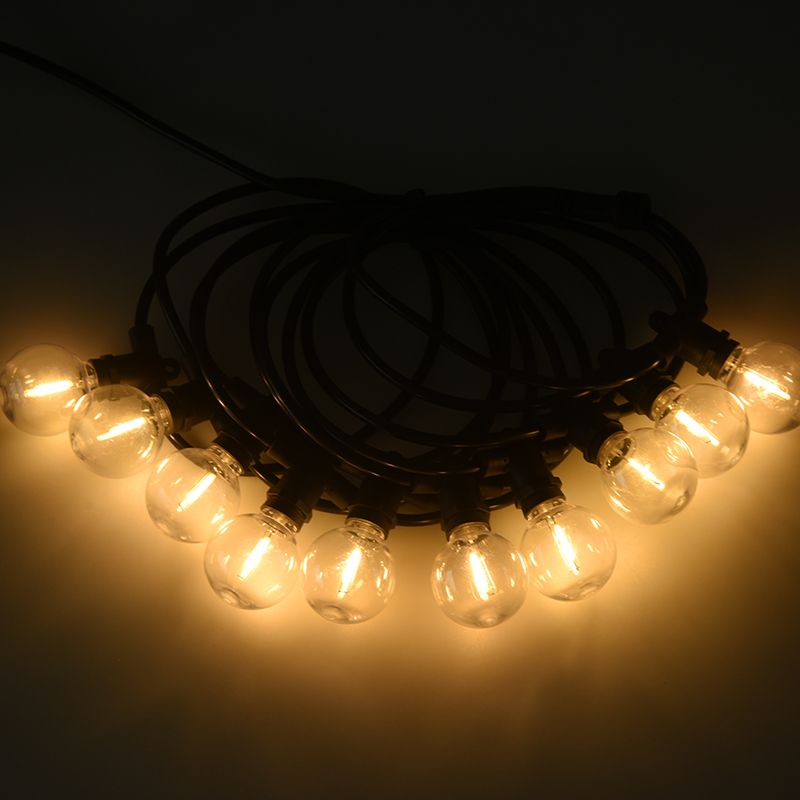 G40 integrated solar string light (E12 lamp holder, 5 meters 10 lights)The G40 integrated solar string light is an outdoor lighting product that combines illumination and decoration. It is suitable for courtyards, patios, gardens, and out...View Product →
Solar is the part of this category where buyer expectations and physics meet hardest. A solar string works well when the panel gets five or six hours of direct sun and the site is not asking for more run time than the battery can hold. It struggles on a north-facing balcony in a northern winter, and no specification sheet can change that.
So the useful sourcing conversation is about which numbers to fix. Panel type and rated output, battery capacity and chemistry, expected run time per full charge, charging time under average conditions, and whether the set switches on automatically at dusk and remembers its last mode. That last point is underrated. A solar set that wakes up in a different pattern every evening creates complaints from end users who cannot find their way back to the setting they liked.
Integrated designs are where the category gets interesting. A G40 integrated solar string with an E12 lamp holder at a five-meter, ten-light configuration pairs a photovoltaic panel and battery with a socket format that buyers already know, so replacement lamps remain a normal spare part rather than a factory-only item. The solar element covers the power and the control, and the socket covers the serviceability. For an importer building a program across several years, that combination reduces the risk of a sealed product becoming obsolete when a battery ages.
Solar wall lights follow the same logic with a different mounting method. A60 bulb shapes with a diffused patterned lens, G45 smooth surface bodies, and vintage kerosene-lamp style housings with a flame effect all target the same buyer need: light on a wall, a fence, a gate pillar, or a garden path where no mains cable exists. These are often specified for villa projects and hotel gardens where the installer can reach the screw holes but not a junction box.
Three practical checks before committing to a solar program. First, ask for the run time figure to be stated alongside the charging condition, because a number without a condition means nothing. Second, confirm the ingress protection rating of the panel and the controller separately from the lamps, since the panel is usually the most exposed component. Third, agree on a battery service position: replaceable, or sealed for the life of the product.
Always ask for solar run time together with the charging condition; a run time figure quoted alone is not a specification.
Sockets, Bulb Shapes, and Their Effect on Available Smart Features
The socket is a small metal and plastic detail that quietly decides which smart features are realistic. Candelabra sockets and medium sockets behave differently under the same control scheme, and the available voltage range narrows the options further.
| Socket | Common bulb shapes | Typical supply | Control options that fit |
|---|---|---|---|
| E12 candelabra | G40, C7, C45, ST38 | Low voltage DC or 120 to 240 V AC | Integrated single color, solar integrated, one watt warm white, steady and flash switch |
| E26 medium, US standard | S14 | 120 V | Integrated warm white, RGB, synchronized runs |
| E27 medium, EU standard | S14, G45, C45 | 220 to 240 V | RGB synchronized flashing, RGBWY multicolor, infrared remote, pixel-level control |
Two structural choices sit behind that table. The first is integrated versus detachable. An integrated set seals the lamp and socket into one assembly, which lowers cost and simplifies the build, but it also means a single failed lamp has no field repair path except a service loop. A detachable design keeps the socket usable and lets the end user change a lamp, which suits hospitality and rental businesses that measure cost per season rather than cost per unit.
The second is mounting geometry. A pendant or hanging string positions the lamp holder downward and gives a traditional festoon silhouette. A clip-on version grips a cable, a gutter, or a frame, which is what event installers want. A flat-head integrated design sits tighter to the surface. None of these are smart features by themselves, but they determine whether the smart feature is ever seen, because a controller tucked behind a clip mount tends to be the part the installer breaks first.
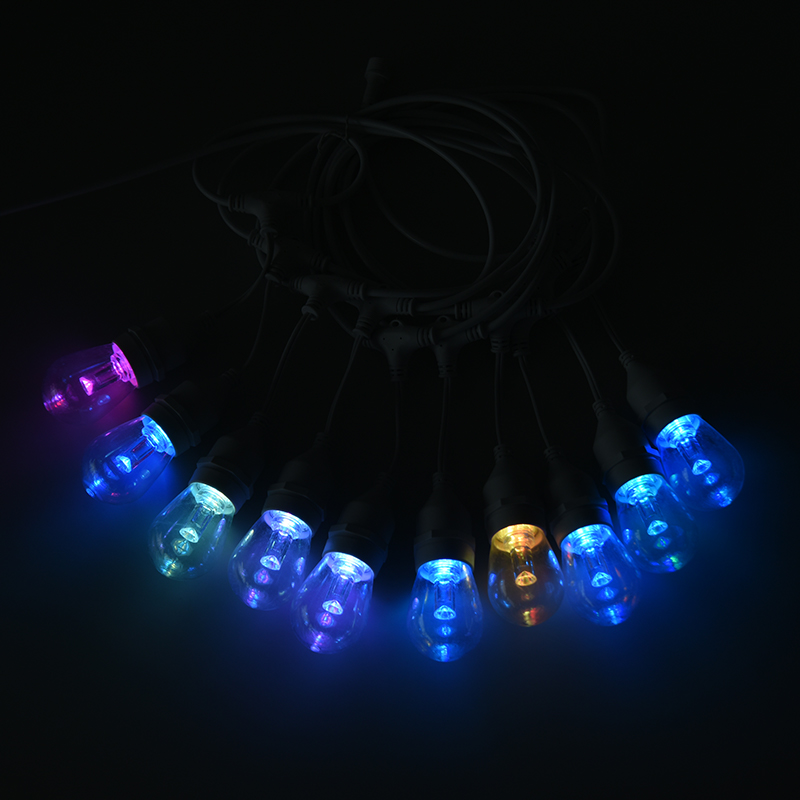 S14 pixel-level controllable RGB warm white pendant string lightsThe S14 pixel-controlled string lights utilize an RGB + warm white light source combination with power line communication technology. Each light point can be independe...View Product →
For high-specification projects, the S14 pendant format at E27 with pixel-level RGB plus warm white is the practical ceiling of this family, because the larger lamp body has room for the control chip and the light output supports a commercial display. At the other end, a one watt ST38 vintage warm white string on E12 is the simplest build in the catalogue and often the right answer for permanent installations where nothing should ever need programming.
Integrated lowers cost and removes field repair; detachable raises cost and protects the service model, so choose based on who owns the product after delivery.
Smart Control for Curtains, Windows, and Indoor Displays
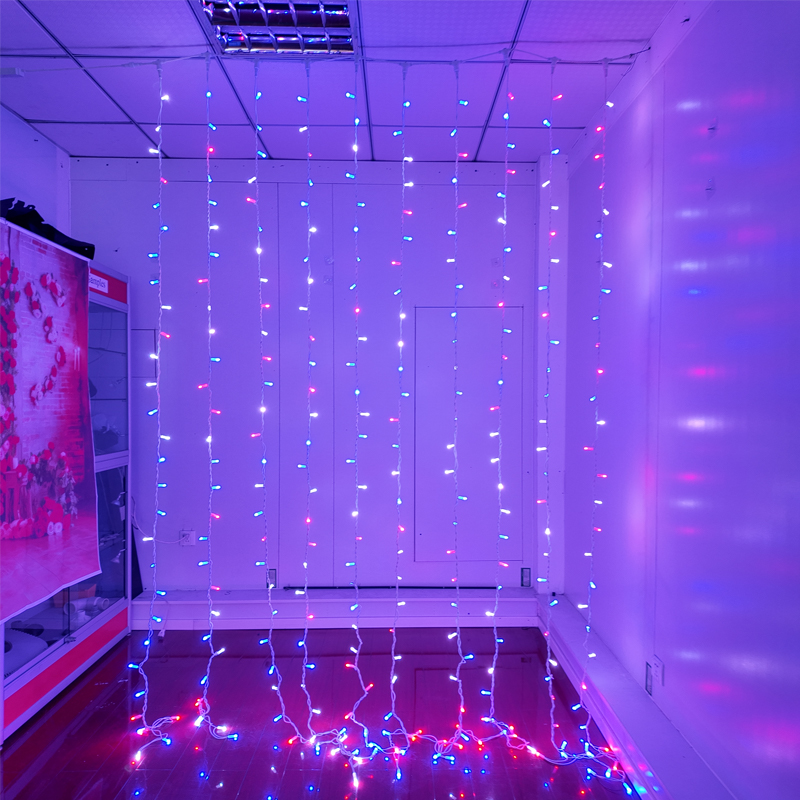 7-color synchronous RGB control curtain light stringThe "7-Color Synchronized RGB Curtain Light String" features 10 vertically hanging light strips connected in parallel to a horizontal main line, forming a curtain-styl...View Product →
Curtain string lights are a different product problem disguised as the same product. Instead of a horizontal run, the light falls vertically in drops, and the controller has to drive all of those drops in step. A seven-color RGB synchronous control curtain string is the format most commonly requested for window displays, retail interiors, hotel lobbies, and event backdrops, because the synchronized drops create a clean moving surface rather than a collection of independent strings.
The specification points that matter are drop length, spacing between drops, the number of drops a single controller can carry, and whether the set remembers the last selected mode after a power cut. In a retail window, a set that resets to a default color every time the store power cycles will be noticed by staff within a week. Memory is a small firmware feature with an outsized effect on complaint rates.
Cable appearance also matters more indoors than outdoors. In an outdoor installation, cable color hides against soil or bark. Indoors, the cable often crosses a white curtain and a colored or glossy cable becomes part of the visual. Buyers who care about this should specify cable finish and color at sample stage, because changing it later affects the whole run.
Many indoor programs pair a curtain set with a matching horizontal string so that the window and the surrounding interior use the same lamp appearance and the same control language. That consistency is easier to achieve when both items come from the same manufacturer working from one design brief, rather than from two suppliers interpreting the same color code separately.
Mode memory and cable appearance are the two indoor details that generate the most field complaints and the least attention at specification stage.
Waterproofing: The Part of Smart That Fails First
Water, not electronics, ends most decorative lighting programs early. The lamp itself is usually the most robust component in the assembly. The failure points concentrate at the controller enclosure, the moulded connector joints, and the point where the cable enters the panel or the first lamp holder. Buyers who treat waterproofing as a system property rather than a lamp property tend to avoid the second half of that sentence.
Ingress protection ratings need to be read together with the location of the joint. A set rated for outdoor use but with an exposed controller sitting in a planter will still fail, because the rating describes the component in test conditions, not the installation as built. For long runs across a facade, voltage drop compounds the problem: at 100 meters, undersized conductors reduce brightness at the far end and increase current in the near end, which ages the first lamps faster. If you are planning a large outdoor installation, the overview in our guide to commercial string lights and uniform waterproof outdoor lighting is a useful starting point for the questions to bring to a supplier.
Cable material is the other half of the waterproofing conversation. Standard PVC jacket strings suit sheltered terraces and seasonal use. For sites exposed to sun, salt air, and mechanical stress, rubber engineering strings are built differently: thicker jacket, better low-temperature flexibility, and moulded joints designed to survive being dragged across a rooftop. Coastal installations in particular punish thin jackets, because UV exposure hardens the plastic until it cracks at the first bend.
The verification question is straightforward. Ask which tests were run on the finished assembly, not on the lamp alone: water spray on the controller enclosure, immersion or spray on the connector joint, and thermal cycling between hot and cold. A supplier that has those reports to hand has usually thought about the failure modes you will meet in the field.
Waterproofing is a property of the assembly: the controller enclosure, the moulded joints, and the cable jacket matter more than the lamp rating on the box.
How to Verify a Smart LED Light Manufacturer Before You Commit
In this category, the difference between a manufacturer and a trading intermediary shows up in three places: who controls the tooling, who writes the test report, and who answers when the second production batch drifts from the first. All three matter more for smart products than for fixed ones, because firmware and controller consistency cannot be inspected by looking at a photo.
Start with the factory, not the catalogue. Production and testing facilities, the presence of an in-house engineering function, and the ability to build a prototype from a drawing or a physical sample tell you how fast a specification change can be absorbed. A supplier that can only quote from an existing mould will struggle with anything beyond a color swap.
Then look at document control. International market compliance is not a single certificate; it is a set of declarations and reports that have to match the exact configuration being shipped. A smart set with a controller, a remote, and a solar panel has a wider compliance footprint than a plain string, and the paperwork has to follow the configuration.
Export capability is the third check. Independent export qualification, familiarity with destination market regulations, complete shipping documentation, and reliable logistics handling reduce the friction at the port end, which is where late-stage surprises are most expensive.
Finally, test the engineering conversation. Ask two questions that are hard to bluff. How do you keep firmware consistent between production batches? And how do you verify that a sample and a mass production unit perform identically under load? The answers will tell you more than any factory tour photograph.
Tooling control, document control, and firmware consistency are the three checks that separate a real manufacturing partner from a reseller.
The Customization Levers That Actually Change the Product
Customization in decorative lighting is often described in vague terms, so it helps to list the levers that genuinely change what the end user receives. These are the ones we work with on OEM and private label programs.
- Voltage and supply type: low voltage direct current, mains 120 V, mains 220 to 240 V, or solar with an integrated battery.
- Length and lamp count: total run length, spacing between lamps, and the number of lamps per controller.
- Wire specification: conductor gauge, jacket material, jacket color, and whether the cable is round or flat.
- Appearance: bulb shape and finish, lamp holder color and material, and the overall silhouette of the string.
- Control configuration: which modes ship as defaults, whether the set remembers the last mode, and whether a remote is included.
- Packaging: retail box artwork, instruction sheet language, barcode format, and master carton configuration.
- Plug and connector type: destination market plug, connector gender, and whether extensions can be linked end to end.
- Spare parts: replacement lamps, spare fuses, spare stakes, and whether a service kit ships with the order.
The prototype stage is where these levers become concrete. Building a working sample from a drawing or a physical reference is the fastest way to expose mismatches, for example a controller that cannot physically fit into the lamp holder the buyer has chosen, or a cable gauge that cannot carry the current over the requested run length. Catching those in a prototype costs days. Catching them after tooling costs weeks and a re-test.
Build a physical prototype before tooling: it is the cheapest stage at which a control, cable, or holder mismatch can still be corrected.
Cost, MOQ, and Lead Time: Planning a Realistic Program
Every specification decision moves at least one of three numbers: unit cost, minimum order quantity, or lead time. The table below summarizes how the main decisions behave in practice, which is useful when a buyer is negotiating a target price without losing the features that make the product work.
| Decision | Cost effect | Order quantity effect | Risk if ignored |
|---|---|---|---|
| Control method | Rises from fixed to addressable | Higher volumes for custom firmware | Product cannot deliver the promised effect |
| Supply type and voltage | Solar adds panel and battery cost | Panel tooling may set a floor | Compliance scope mismatched to destination |
| Cable jacket material | Rubber above PVC | Moderate, material driven | Premature cracking in UV and coastal sites |
| Lamp holder design | New mould is a fixed cost | Usually the largest MOQ driver | Tooling amortized over too few units |
| Ingress protection scope | Sealing and testing add cost | Limited | Field failures concentrated at joints |
| Packaging and documentation | Low per unit, fixed setup cost | Print run sets a minimum | Retail compliance rejection at destination |
| Spare parts inclusion | Small per set | Limited | Service complaints escalate to returns |
Two patterns repeat across programs. The first is that tooling, not electronics, usually sets the minimum order quantity, because a new lamp holder or connector mould has to be amortized. The second is that lead time is driven less by assembly than by component availability and testing, especially when a controller or a solar panel is sourced outside the factory.
Planning advice that has held up across our own production schedules: fix the control method and the voltage first, order samples of the exact configuration, and only then negotiate packaging and documentation. Buyers who invert that order often end up reprinting cartons when the product changes.
Tooling sets your minimum order quantity and testing sets your lead time, so settle both before you negotiate unit price.
Seven Mistakes Buyers Make With Smart String Lights
- Specifying smart without naming a control method. The supplier chooses the cheapest interpretation, and the buyer discovers it at the sample stage.
- Choosing a lightweight set for a site with strong wind, salt air, or long sun exposure. The lamps survive, the jacket does not.
- Assuming solar run time is the same in December as it is in June. Seasonal expectation management belongs in the instruction sheet, not in the warranty discussion.
- Mixing color temperatures across a single program. Two batches of warm white from different bins look wrong side by side, and the difference is invisible in a single sample.
- Forgetting spare parts. Replacement lamps and fuses are cheap at order stage and impossible to source quickly two years later.
- Treating waterproofing as a lamp rating rather than an assembly property. The controller and the joints decide the outcome.
- Approving a sample that was hand-built rather than produced on the same line as mass production. Consistency has to be demonstrated, not assumed.
Each of these can be resolved with a single question at the right moment. The pattern behind all seven is the same: decisions that look like details at the quotation stage become the defining characteristics of the finished product.
Most smart string light problems are specification problems that were visible at quotation stage and simply were not asked about.
FAQ: Smart LED Lights for Commercial Buyers
What actually makes a string light a smart LED light?
A string qualifies as smart when at least one lighting parameter can be changed without swapping lamps. That covers color, brightness, timing, and pattern. It does not have to mean an app or a wireless hub. An infrared remote RGB set, a synchronized flashing run, and a pixel-level addressable string are all smart in this practical sense, while a fixed warm white string with no controller is not.
Are smart LED lights waterproof enough for permanent outdoor installation?
It depends on the assembly, not only the lamp. Look at the controller enclosure, the moulded connector joints, and the cable jacket material together. A set with a sealed controller, moulded joints, and a rubber jacket will hold up on exposed facades and coastal sites far better than a set with a plug-mounted controller and a thin PVC jacket, even if both carry an outdoor claim.
Can solar string lights be smart?
Yes, and solar is often the most practical smart option because there is no wiring to run. The control electronics, the battery, and the photovoltaic panel are integrated into the product, and features such as dusk activation, last-mode memory, and multiple color modes work without any mains connection. The limitation is energy, not intelligence, so run time has to be matched to the site's sun exposure.
What is pixel-level control and does my project need it?
Pixel-level control means each lamp has its own control chip and can be addressed individually, so effects can travel along the string rather than applying to the whole run at once. It suits brand activations, custom installations, and high-visibility retail displays. For garden centers, hospitality terraces, and standard seasonal programs, synchronized color at a lower control level usually delivers most of the visual value at a lower cost.
How do I choose between E12, E26, and E27 sockets?
The socket follows the destination market and the bulb shape. E12 candelabra suits G40, C7, C45, and ST38 bulbs and works well in low-voltage and solar designs. E26 is the US medium standard and is typically paired with S14 lamps at 120 V. E27 is the European medium standard and carries the widest range of control features, including synchronized RGB, RGBWY multicolor, and pixel-level options, especially in the S14 and G45 families.
What determines the minimum order quantity for a custom smart string light?
Tooling usually decides it. A new lamp holder mould, a custom connector, or a dedicated controller board each carries a setup cost that has to be spread over a production run. Standard configurations in existing moulds can be produced at much lower volumes. Buyers planning a first order often start from an existing format and reserve custom tooling for the second or third season.
Can voltage, length, cable, appearance, and packaging be customized?
All five are normal customization levers in this category, along with plug type, control mode defaults, and spare parts content. The practical constraint is not whether a change is possible but whether the change is compatible with the rest of the assembly, for example whether the chosen controller fits inside the chosen lamp holder. That is why a physical prototype is worth building before tooling is committed.
How should smart LED lights be written into a tender document?
Name the control method, the supply type, the socket, the bulb shape, the run length, the IP expectation for each component, the plug type, and the documentation you require. Then add one line that most tenders omit: state whether the last selected mode must survive a power cycle. That single requirement eliminates a large share of products that look compliant on paper but behave poorly in use.
A tender that names the control method, the supply type, and the mode memory requirement will filter out most non-compliant smart LED lights before sampling begins.
Smart LED lights reward buyers who treat them as systems rather than as lamps with features attached. Fix the control method, fix the supply, choose a socket that suits the market, and design the waterproofing around the assembly instead of the bulb. Everything after that is execution, and execution is where a manufacturing partner earns the relationship.
As a decorative lighting manufacturer working with lighting brands and importers across overseas markets, we handle that execution through in-house production and testing, flexible customization from drawings or samples, and the export documentation that international shipments require. If your next program involves solar string lights, solar wall lights, curtain strings, or a festoon run in E12, E26, or E27 formats, the conversation is easier to have at the specification stage than at the sample stage.
Where to go next on this site
For a full view of the factory, certification, and product structure, start at the Ningbo Hengboyi Lighting homepage, which connects the company background, production capability, and export experience in one place.
From there you can move directly into the four product families: solar string lights for off-grid installations, solar wall lights for facades and garden walls, curtain string lights for windows and interiors, and the wider string light range covering G40, G45, C7, C45, S14, and ST38 shapes across E12, E26, and E27 sockets.
Bring the control method, the power source, and the service model to the first supplier conversation; the rest of the specification becomes straightforward from there.
Related Products
-
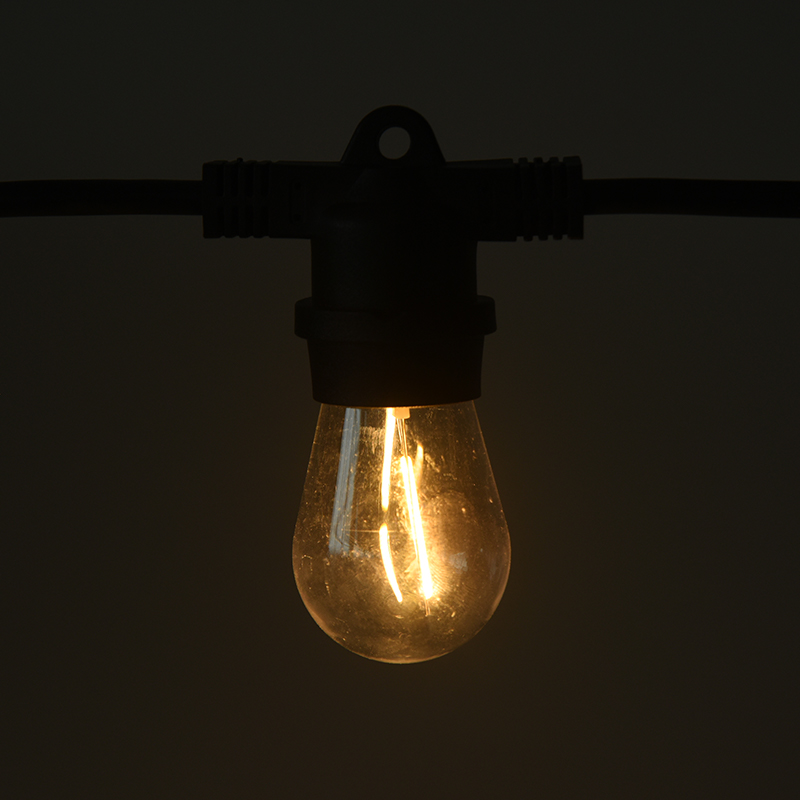 View More
-
 View More
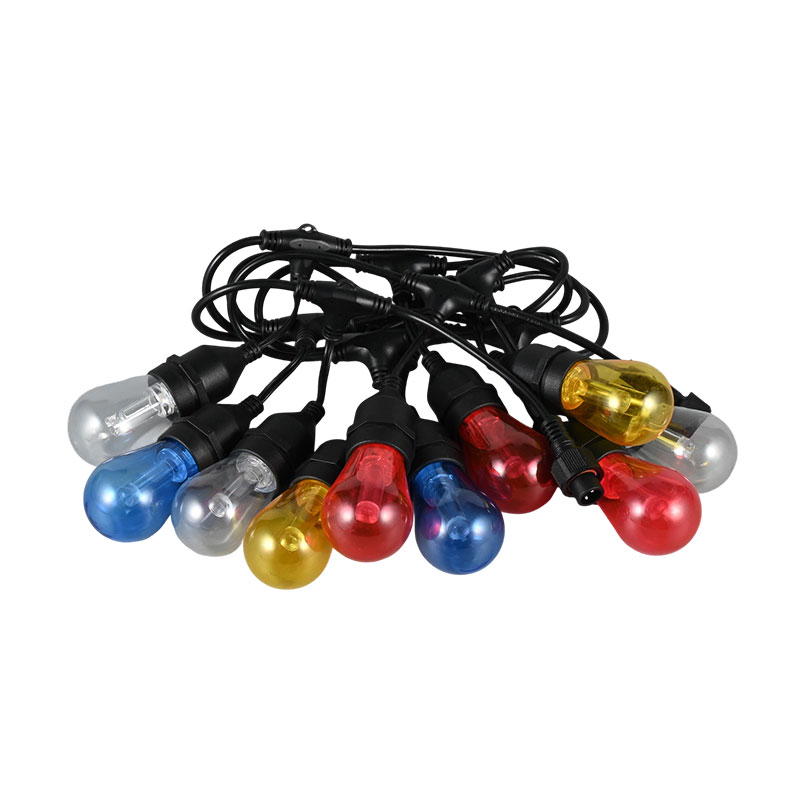
S14 Light Guide Pillar Pendant Type E27 Spiral String Lights
-
 View More
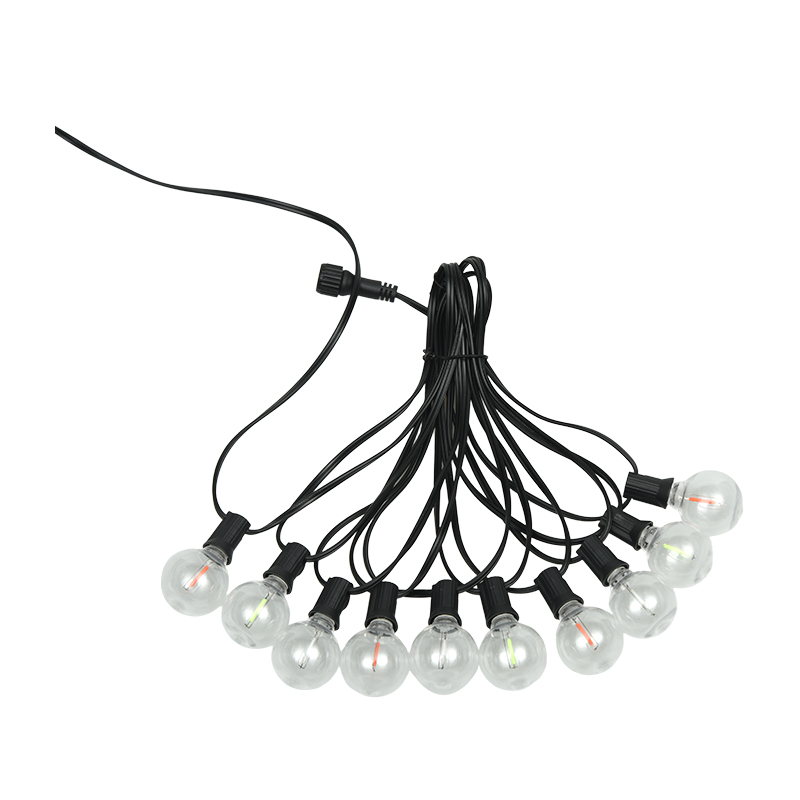
G40 Clip-on E12 Spiral Colored String Lights
-
 View More
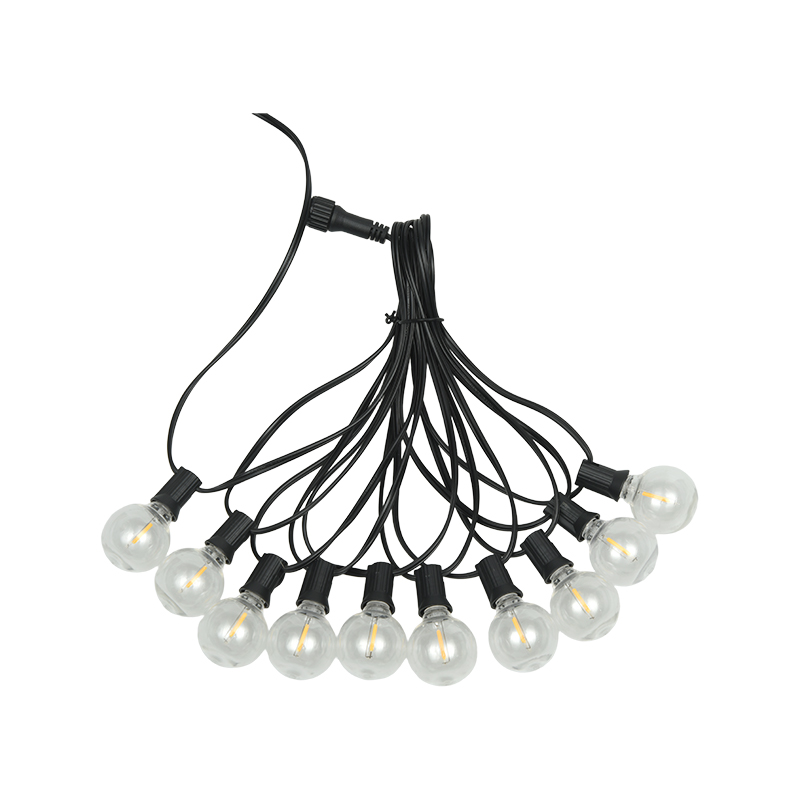
G40 Clip-on E12 Spiral Warm White String Lights
-
 View More
C45 Pendant Type E27 Spiral String Lights
-
 View More
C45 Hanging Type E27 Spiral RGB Synchronized Flashing String Lights
Hengboyi are always ready to help you and answer your question if you need.
Request A Quote
Contact Info.
 Mob: +86-13901119074
 Tel: +86-574-62838966
 E-mail: sale2@hengboyi.com
 Add: No. 18 Rongchuang Road, Mingwei Village, Lizhou Street, Yuyao City, Ningbo, Zhejiang Province, China
Quick Links
Product List
QR CODE
Copyright Ningbo Hengboyi Lamp Co., Ltd. All rights reserved.
China best outdoor decorative solar lights Manufacturer
Custom decorative string lights indoor Factory

