 Telephone: +86-574-62838966
 E-mail : sale2@hengboyi.com


 en
 English
 Español
 中文简体

Garden Lights Buying Guide: Types, Bulb Sizes, Solar vs Wired, Quality Tips
Content
- 1 Why Garden Light Choice Depends on Installation Conditions
- 2 Common Garden Lights Types and Their Characteristics
- 3 Bulb Shapes and Socket Bases Explained
- 4 Solar vs Wired: Which Garden Light System Fits Your Project
- 5 Garden Light Selection by Application Scenario
- 6 Quality Checks to Perform Before Buying Garden Lights
- 7 Garden Light Maintenance and Lifespan
- 8 Buying Garden Lights as a Wholesaler or Brand
- 9 Frequently Asked Questions About Garden Lights
- 9.1 What is the best bulb size for garden string lights?
- 9.2 Are solar garden lights bright enough for outdoor use?
- 9.3 What is the difference between E12, E26, and E27 bases?
- 9.4 How long do LED garden lights last?
- 9.5 Can solar garden lights stay outside in winter?
- 9.6 How do I choose a reliable garden lights manufacturer or supplier?
A purchasing manager at a European retail chain once rejected a garden lights sample because the socket rims measured 0.3 mm over tolerance. A homeowner in Florida, by contrast, installed a budget solar string on a screened porch and complained only that the lights dimmed after nine months. Both buyers were shopping for the same product category, but their expectations, installation conditions, and performance standards were completely different. Garden lights are not a single commodity; they are a family of fixtures built around varying bulb shapes, socket bases, power sources, and weather-resistance grades. The fastest way to make a wrong purchase is to start with a decoration idea and skip the engineering context.
This guide is written for anyone buying garden lights for residential or commercial projects, as well as for buyers evaluating lighting manufacturers, suppliers, and wholesalers before placing an order. You will learn the main product types covered by the keyword garden lights, the meaning behind common bulb codes and socket bases, the solar-versus-wired trade-off, the quality checks that separate durable outdoor products from cheap disposables, and the maintenance habits that keep a string alive for years. By the end, you should be able to read any specification sheet with confidence and match the right product to the right location.
The outdoor lighting market is full of overlapping terms: festoon, string lights, fairy lights, solar garden lights, wall sconces, and curtain lights. What keeps them together is a shared design goal: to define space after dark, create a warm atmosphere, and extend the usable hours of a garden. A reliable supplier builds every one of these around a few controlled variables, which are bulb geometry, base standard, wire quality, voltage, and ingress protection. Once those variables are decided, product selection becomes a straightforward process instead of a guessing game.
Keep one principle in mind before looking at the product list: the garden environment is harsher than most indoor spaces. UV exposure, humidity swings, insect activity, watering systems, and seasonal temperature extremes all attack the same components. A garden light that passes a bench test indoors may fail within months outdoors if it was not specified for that environment. Therefore, this guide treats installation conditions as the starting point of the buying process, and everything else follows from that decision.
Why Garden Light Choice Depends on Installation Conditions
The first conclusion of this guide is simple: no single garden light works everywhere. A solar string that performs perfectly on an open lawn will fail under a dense tree canopy that blocks sunlight during charging hours. A wired festoon with excellent brightness will create a trip hazard if there is no outdoor socket near the planned mounting points. A wall light with an IP44 rating may survive a sheltered porch but will not survive a fence corner that receives direct rain and sprinkler spray. The installation condition is the primary filter, and aesthetics comes second.
Three variables define the installation condition. The first is access to electricity. If a power outlet is within reach and the customer is willing to run a low-profile extension cord, wired garden lights offer the most predictable brightness and runtime. If the location is remote, such as a tree line, a pergola top, or a fence far from the house, solar-powered garden lights remove the need for wiring entirely. The second variable is sun exposure. Solar garden lights depend on the panel receiving four to six hours of direct sunlight per day, so installers must check the compass orientation and seasonal shade pattern before specifying solar products.
The third variable is moisture exposure. Outdoor products are rated with an IP code that describes how well they resist solid particles and water. A light mounted under a covered balcony has a different risk profile from a light mounted at ground level near a sprinkler, and a product used in a commercial restaurant terrace has different durability requirements from a product used in a private backyard. Professionals always match the IP rating to the exposure level, not to the product price. Choosing a garden light without considering these three variables is like choosing a rain jacket without considering whether you will wear it in a drizzle or a storm.
Another factor often overlooked is seasonal temperature range. Solar batteries lose capacity in cold weather, and some PVC wire jackets become stiff and brittle below freezing after several years of exposure. In hot climates, the opposite problem appears: cable insulation softens, and the adhesive used in some integrated solar fixtures degrades faster. A serious garden lights manufacturer designs and tests for the whole temperature band expected in the destination market, and a good supplier will state the operating temperature range in the datasheet.
The practical consequence is that buyers should define their installation condition in writing before contacting any supplier. A short brief with the mounting position, distance from the nearest socket, daily sun hours, expected exposure to rain and sprinklers, and the desired average brightness per square meter will save hours of comparison shopping. It also makes the conversation with a manufacturer much more productive because the supplier can immediately narrow down the product family that fits the environment.
Key point: match the garden light to the installation position first, then to the decoration style. Environment, sun exposure, and moisture dictate how long the product will survive.
Common Garden Lights Types and Their Characteristics
Garden lights can be grouped into five families that cover the majority of residential and commercial outdoor decoration projects. Each family has a distinct structure, a typical bulb format, and a recommended use range. Understanding these families makes it easier to scan a product catalog and identify which page deserves a detailed review.
Solar String Lights
Solar string lights combine a small photovoltaic panel, a rechargeable battery, and a string of LED bulbs in one self-contained system. They are the most convenient option for locations without a power outlet. Typical specifications in the market include 5-meter strings with 10 bulbs, E12 screw bases, and bulb shapes such as G40, G45, and C7. The solar panel charges during the day, a photoresistor turns the lights on at dusk, and the battery powers the LEDs for several hours. A well-made solar string with a larger panel and higher battery capacity can remain lit for six to eight hours after sunset.
The main advantage of solar garden lights is placement freedom. They can hang on trees, along fences, around gazebos, and across shrubs without any cable running back to the house. The trade-off is that solar lights produce a softer, more ambient brightness compared to wired systems, and their performance depends on the quality of the solar cell and battery. For decorative evening gatherings, this ambient level is often exactly what the customer wants.
 Bamboo Weave G40 Solar String Light with Remote ControlThis 5-meter solar string light pairs a natural bamboo weave look with a warm 2700K glow, making it a fitting choice for the article's discussion of cable-free decorative lighting for patios, courtyards, and outdoor gatherings.View Product →
Solar Wall Lights
Solar wall lights are designed for vertical surfaces such as building facades, garden walls, fences, and gate posts. They integrate the solar panel into the fixture housing or separate the panel with a cable. Bulb shapes for this category commonly include A60 and G45, and some models use a vintage kerosene lantern silhouette with a flame effect. The diamond-pattern diffused style and the smooth G45 surface style are two popular variations. Wall-mounted solar garden lights provide both safety lighting along walkways and decorative accents on plain wall surfaces.
Because solar wall lights are fixed in one position, the installer must orient them toward the sun path. A south-facing wall usually delivers the best charging performance in the northern hemisphere. Wall lights also require secure mounting hardware, especially in regions with strong wind, and the fixture body must have adequate sealing around the LED module to prevent condensation inside the lens.
Curtain String Lights
Curtain string lights, also called waterfall lights, hang vertically to create a curtain of light. The category is most commonly used for windows, glass partitions, porches, and event backdrops. A 7-color synchronized RGB curtain string is a typical example, where multiple vertical drops share a single control box and can change color in sync. These products are popular for festivals, weddings, and themed commercial spaces because they deliver high visual impact over a wide area with a single hanging point.
When selecting curtain garden lights, check the drop length, the spacing between drops, and the control options. RGB models may include remote control or synchronize modes with other strings. The hanging structure must be able to support the weight of the entire curtain, and the power supply should be positioned where it will not be exposed to direct rain unless the product is rated for outdoor use.
Wired Festoon and String Lights
Wired festoon lights are the classic outdoor string with socket bases attached along a cable, designed to receive replaceable bulbs. This category contains the largest variety of bulb shapes and base sizes, including G40, G45, S14, ST38, C7, and C45, with E12, E26, and E27 screw bases. Some models are sold as a complete string with bulbs included, while others are sold as sockets and bulbs for bulk installations. Wired systems deliver consistent brightness, are easy to repair by replacing a single bulb or socket, and work reliably in any weather when the cable and connectors have the correct IP rating.
Engineering rubber string lights form a subcategory within wired festoon systems. These are built with heavy-duty rubber cable, reinforced sockets, and higher waterproof ratings, and they are intended for outdoor construction sites, event stages, restaurant terraces, and any venue that requires daily handling and exposure to rain. A high-quality rubber engineering string can outlast several seasonal decorative strings because the cable is designed for abrasion resistance and the sockets are molded to prevent moisture ingress.
| Product family | Power source | Common bulb and base | Best application |
|---|---|---|---|
| Solar string lights | Solar panel plus battery | G40, C7, E12 | Patios, trees, fences away from outlets |
| Solar wall lights | Solar panel plus battery | A60, G45 | Building facades, garden walls, gates |
| Curtain string lights | Wired or battery control box | Mini LED drops, RGB | Windows, porches, event backdrops |
| Wired festoon lights | Mains AC low voltage | G40, G45, S14, ST38, C45, E12/E26/E27 | Pergolas, restaurants, terrace bars |
| Rubber engineering strings | Mains AC low voltage | Heavy-duty socket, E27 | Construction sites, stages, high-wear venues |
Each family has its own logic. Solar types trade maximum brightness for installation freedom, while wired types deliver the strongest and most consistent performance. The catalog of a professional garden lights manufacturer usually covers all these families, because projects rarely use only one product type. A terrace may combine a wired festoon over the seating area, solar wall lights along the access path, and a curtain string behind the bar counter. Planning the full light layer leads to a balanced result.
Key point: choose the product family based on the installation constraints first. Solar garden lights solve the no-outlet problem, wired festoons deliver the highest brightness, and rubber engineering strings handle the most demanding commercial environments.
Bulb Shapes and Socket Bases Explained
Not all 5-meter strings create the same visual effect, and the first clue is the bulb code printed on the package. Codes such as G40, G45, S14, ST38, and C7 describe the bulb shape and diameter, not the brightness. Once you can read these codes, you can predict how a string will look over a patio, along a railing, or inside a fixture. The chart below compares the most common garden light bulb diameters used in decorative outdoor strings. Use it as a quick reference when comparing supplier catalogs or planning bulb spacing.
The C7 bulb, at 22 mm, is the smallest of the group and is often installed in tight rows on trees, garlands, or window frames. Because C7 bulbs are light, they place less mechanical stress on the wire, which makes them a favorite for long horizontal runs. ST38 bulbs, at 38 mm, reproduce the vintage Edison look with a straight glass envelope and a warm filament-style LED. G40 and G45 are the workhorses of patio festoon lighting, with 40 mm and 45 mm globes respectively. A garden string fitted with G40 globes gives a classic cafe appearance, while G45 creates a slightly larger light pool and a bolder visual presence.
S14 at roughly 44 mm has an elongated, cigar-like shape that distributes light along the length of the bulb, making it ideal for rows of parallel strings. The difference between 40 mm and 45 mm may sound small, but across a 5-meter string with ten bulbs, the total lit surface area is noticeably larger on the G45. Larger bulbs also catch more wind, so for exposed patios you should check that the socket grip and wire gauge are matched to the bulb weight. Glass bulbs offer better color rendering and clarity, while plastic or acrylic versions reduce breakage risk during transport and installation. Bulb shape has no direct relationship with wattage; two G40 strings may consume different power because the LED chips and driver circuits differ.
When replacing bulbs, keep the same code and base size, since a G40 with an E12 base will not fit a socket designed for S14 with an E27 base. For wholesale garden lights projects, specifying the exact bulb diameter also helps you estimate the packing density and carton dimensions. A change from C7 to G45 can increase the carton volume by a large margin, which affects sea freight cost and warehouse space.
The socket base matters just as much as the bulb shape. E12 is the candelabra base with a 12 mm thread diameter, commonly used for compact decorative bulbs. E26 is the standard North American medium base with a 26 mm thread, and E27 is the European standard medium base with a 27 mm thread. The visual difference between E26 and E27 is small, but the voltage ratings and thread dimensions follow different regional standards, so a supplier must know the destination market before manufacturing the socket. Some factories produce a dual-format socket for E26 and E27 bulbs, but the safest approach is to confirm the exact base requirement for each order.
| Bulb code | Shape | Approximate diameter | Typical base | Common use |
|---|---|---|---|---|
| C7 | Candle | 22 mm | E12 | Dense trims on trees and windows |
| C45 | Candle | 45 mm | E27 | Classic hanging festoon lines |
| ST38 | Straight tubular | 38 mm | E12 | Vintage filament style |
| G40 | Globe | 40 mm | E12 | Standard patio cafe string |
| G45 | Globe | 45 mm | E27 | Brighter patio and restaurant lighting |
| S14 | Sign or elongated | 44 mm | E27 | Parallel rows, modern terrace designs |
Key point: the bulb code tells you the shape and diameter, the base code tells you which socket it fits, and both together determine the visual density, wind load, and regional compatibility of the finished string.
Solar vs Wired: Which Garden Light System Fits Your Project
The most common decision in outdoor decorative lighting is choosing between solar and wired systems. The conclusion from years of field feedback is clear: solar garden lights win when installation freedom matters most, and wired garden lights win when brightness and runtime consistency are the priority. Neither system is universally better; the correct answer depends on how the lights will be used, where they will be mounted, and how much maintenance the owner is prepared to accept.
Solar garden lights capture energy during the day, store it in a rechargeable battery, and release it at night. Their main strength is that they require no cable connection, which eliminates the cost of hiring an electrician for many projects. Modern solar products have improved significantly, with monocrystalline panels, higher-capacity lithium batteries, and more efficient LED drivers. The visible difference between a low-end and a high-end solar string is large: a cheap unit may last only two hours after sunset and dim quickly, while a quality unit maintains stable brightness for six hours with a smooth fade at the end of the discharge cycle.
 S14 E27 Low-Voltage Warm White Pendant String LightsFeatured as a wired alternative in the comparison, this 5-meter string uses a 3.5V adapter for safer operation and stable warm white illumination, well suited for balconies, fences, and terrace decoration where consistent brightness is preferred.View Product →
Wired garden lights, by contrast, connect directly to the mains through a transformer. They deliver full brightness throughout the evening with no dependence on the weather, and they support larger bulb sizes such as G45, S14, and C45 without worrying about battery capacity. Wired systems are also easier to control, especially when paired with a timer, a photocell, or a smart switch, because the power supply is stable and predictable. The main cost of wired systems is the installation: outlets must be available, cables must be routed safely, and waterproof connectors must be used at every joint.
A third option is the hybrid approach, where a few solar garden lights cover the far areas of the garden and wired lights handle the main entertaining zone. This is common on larger properties where running a cable to every tree is impractical. For commercial projects such as restaurant terraces and event venues, wired systems are almost always preferred because customers expect consistent lighting levels every evening regardless of weather. A terrace that dims after a cloudy day is a poor experience for guests.
Battery life is another factor to compare. A solar light battery is measured in milliampere-hours, and the panel output in watts determines how quickly the battery fills. In winter, shorter daylight and lower sun angles reduce the charging current, so the runtime may shrink by 30 to 50 percent. Wired systems have no such seasonal variation. On the other hand, solar products have no electricity cost, which matters for installations with many strings running every night for months.
| Factor | Solar garden lights | Wired garden lights |
|---|---|---|
| Power source | Solar panel and rechargeable battery | Mains AC through a transformer |
| Brightness | Soft ambient glow | Full and consistent output |
| Runtime | Two to eight hours depending on sun and battery | As long as the power is on |
| Installation | No wiring, fix panel in direct sun | Needs outlet, cable routing, waterproof joints |
| Operating cost | Zero electricity usage | Small continuous energy consumption |
| Maintenance | Battery replacement every two to three years | Bulb and socket replacement when damaged |
| Best environment | Remote corners, fences, trees, paths | Pergolas, terraces, commercial spaces |
For a buyer evaluating suppliers, the key question is not which technology is newer but which one is appropriate for the target market. A garden lights manufacturer that produces both solar and wired lines with the same quality control demonstrates a clear understanding of the market. When placing a wholesale order, specify the expected runtime, the average sun hours in the destination region, and the type of bulbs the customer base prefers. These details allow the factory to recommend the right solar panel size, battery capacity, and bulb configuration for the climate.
Key point: use solar garden lights for locations where wiring is impractical and ambient brightness is acceptable; use wired garden lights when every evening must deliver the same strong, reliable glow.
Garden Light Selection by Application Scenario
Once the product family and power source are decided, the next step is matching the light to a specific garden zone. Tables and list-style guidance are useful here because each zone has a typical mounting method, exposure level, and desired light effect. The two most important selection questions are what surface the light will be mounted on and how far the light needs to reach. Below are the recommended selections for the main residential and commercial scenarios.
Residential garden areas
|
Commercial and hospitality venues
|
Within each scenario, consider the mounting height. A string hung at 2.5 meters above a dining table creates a different light spread from one hung at 1.8 meters. Higher mounting reduces direct glare and requires slightly larger bulbs to maintain the same perceived brightness at table level. Wall lights should be installed at around 1.6 to 1.8 meters above the ground for path lighting, or at 2.5 meters for facade washing. The vertical position also affects solar charging in wall-mounted products, so the panel should face the open sky and not be shaded by an eave or a climbing plant.
 Vintage Kerosene Lamp Style Solar Wall Light with Flame EffectThis wall-mounted solar light combines a kerosene lamp silhouette with a flickering flame effect, offering dual solar and USB charging. It fits the mounting-height guidance, adding decorative vintage ambiance to facades, gate posts, and garden walls.View Product →
One common mistake is using lights with different color temperatures in the same visual field. A string with warm white 2700K bulbs next to a wall light with cool white 6500K creates a harsh contrast that makes the garden feel fragmented. Professionals set a unified color temperature across the entire garden, usually warm white for residential spaces and neutral white for commercial security-conscious areas. When buying from a supplier, confirm that all products in the same project can be provided with the same correlated color temperature.
Another selection consideration is the control method. Basic garden lights use a manual switch or a built-in photocell that turns on automatically at dusk. More advanced models include an infrared remote for changing colors, or a pixel-level control system that allows each bulb to be programmed independently. RGBWY and RGBY meteor effects are popular for festive installations. The control choice should be made at the project planning stage because it affects the wiring, the control box location, and the user training required for the operator.
Key point: divide the garden into zones, assign a product type to each zone, keep one color temperature across the whole project, and choose the control system before ordering.
Quality Checks to Perform Before Buying Garden Lights
General appearance and lumen output are easy to judge, but the durability of outdoor decorative lighting depends on details that are hard to see in a photo. A serious buyer, whether a homeowner or a wholesale importer, should build a short inspection checklist before committing to a product. The checklist starts with the IP code, then moves to the cable, socket, solder joints, and the certification documents.
The IP code is the first quality filter. The first digit describes protection against solid objects, and the second digit describes protection against moisture. A product labeled IP44 is protected against splashing water but is not dust-tight; it is suitable for a sheltered porch with minimal wind-blown rain. IP54 adds partial dust protection, IP65 means dust-tight and protected against low-pressure water jets, and IP67 allows temporary immersion. Garden lights that will be exposed to direct rain and irrigation should carry at least IP65.
| IP rating | Solid protection | Water protection | Recommended exposure |
|---|---|---|---|
| IP44 | Objects larger than 1 mm | Splashing water from any direction | Sheltered porch, covered terrace |
| IP54 | Dust protected, limited ingress | Water splashed from any direction | Partially exposed garden areas |
| IP65 | Dust-tight | Low-pressure water jets from any direction | Open patios, rain-exposed walls |
| IP67 | Dust-tight | Temporary immersion up to 1 meter | Ground-level and flood-prone locations |
Inside a string light, the cable conductor material is the most important hidden component. Full copper conductors offer low resistance and good corrosion resistance, while copper-clad aluminum or pure aluminum conductors reduce cost but also reduce current-carrying capacity and long-term reliability. For a 5-meter string with ten bulbs, a pure copper conductor with an adequate cross-section is the right choice. The cable insulation should be a flexible PVC or rubber compound that stays soft at low temperatures and resists ultraviolet degradation. Rubber-jacketed engineering strings are preferred in commercial environments because the jacket tolerates abrasion and repeated coiling.
The socket is another critical point. A good socket grips the bulb base firmly without forcing the user to overtighten, and it has a corrosion-resistant contact that maintains a stable connection over years of thermal cycling. In low-quality strings, the socket contact is thin, the spring tension drops after a few bulb changes, and intermittent flickering appears. Buyers should test several bulbs in the same socket to confirm consistency. The solder joints between the cable and the socket must be sealed with waterproof caps or molded housings; bare solder points exposed to moisture are the leading cause of premature failure in cheap garden lights.
Certification documents matter for both safety and commercial distribution. A supplier should be able to provide test reports and certificates for the destination market, covering electrical safety, electromagnetic compatibility, and hazardous substance restrictions. Buyers should also request the product spec sheet with the declared IP rating, voltage, wattage, color temperature, and operating temperature range. If a factory is willing to share these documents before the order, that is a strong signal of a reliable garden lights manufacturer.
Key point: the real quality of garden lights lives in the cable conductor, socket contact, solder sealing, and certification documents, not in the look of the bulb or the packaging.
Garden Light Maintenance and Lifespan
Garden lights are exposed to the elements every day, so a small maintenance routine has an outsized impact on lifespan. A set of solar garden lights that receives a simple cleaning twice per season can last significantly longer than one that is installed and forgotten. The same applies to wired strings: a five-minute inspection before the holiday season prevents most mid-event failures. This section outlines a practical maintenance schedule that works for both residential and commercial installations.
For solar garden lights, the top maintenance task is keeping the panel clean. Dust, pollen, bird droppings, and leaf particles accumulate on the glass surface and reduce the charging current. Wipe the panel with a soft damp cloth every two to four weeks during the growing season. Also trim any branches that begin to shade the panel. The battery is a consumable component; most solar garden lights use a rechargeable lithium or nickel-metal hydride battery that holds less charge after two or three years. Replacing the battery with the same model restores most of the original runtime.
For wired garden lights, the main tasks are checking the connectors and replacing failed bulbs. Waterproof connectors should be inspected for cracked seals after the winter season, because freeze-thaw cycles can break the gasket. If a section of a string goes dark, first replace the bulb, then check the socket for corrosion, and finally inspect the cable for cuts. A well-made festoon string allows each bulb to be replaced independently, which is much more cost-effective than replacing the whole string. The new range of waterproof LED garden lights from the factory shows how sealed components can further reduce maintenance frequency, especially in humid climates.
Every month
- Wipe solar panels with a soft cloth.
- Remove leaves and debris from fixture housings.
- Check that bulbs are seated firmly.
Each season
- Inspect waterproof connectors for cracked seals.
- Trim branches shading the solar panel.
- Test all bulbs and replace any dead ones.
After heavy rain or storm
- Check that sockets are dry and free of water ingress.
- Look for cable abrasion on sharp mounting points.
- Straighten any twisted string sections.
Before long-term storage
- Clean the string and dry it completely.
- Remove batteries from solar units.
- Coil the cable loosely to avoid kinks.
Seasonal storage deserves special attention for solar garden lights in cold climates. Freezing temperatures reduce battery capacity and can permanently damage a fully charged lithium battery if it is left in a cold fixture for months. The recommended practice is to remove the battery, store it indoors at moderate temperature, and protect the solar panel and lamp housing from mechanical damage. When the warm season returns, reinstall the battery, place the fixture in full sun for two full charging cycles, and observe whether the runtime returns to normal before installing it in the garden.
For commercial installations, maintenance should be scheduled and recorded. A terrace with daily operation may need a monthly inspection of all connectors and a visual check of the cable along the entire run. A construction site using rubber engineering strings should inspect the cable for cuts from tools and vehicle traffic. In both cases, keeping a spare set of bulbs and a few spare connectors on site shortens downtime dramatically.
Key point: a few minutes of routine care, particularly cleaning solar panels and checking waterproof connectors, can extend the lifespan of a garden light installation by many seasons and prevent most common failure modes.
Buying Garden Lights as a Wholesaler or Brand
Buying garden lights for resale is a different exercise from buying them for a single backyard. Wholesalers, importers, and lighting brands evaluate the factory as much as the product. The right garden lights manufacturer should offer not only a good product catalog but also the engineering flexibility to adapt voltage, length, wire, bulb type, and packaging to a specific market. A factory that can develop a prototype from a drawing or a sample within a short time gives the buyer a commercial advantage over competitors who can only sell off-the-shelf items.
The first thing to verify is the factory scope. Some trading companies present themselves as manufacturers but have no production line of their own. A genuine garden lights manufacturer can show a production facility, testing equipment, and a quality control process that covers incoming materials, in-process inspection, and final testing. When evaluating a supplier, ask for a factory tour, a list of their test equipment, and copies of their internal inspection records. The company profile of an established outdoor lighting factory should demonstrate experience with export markets and the ability to produce complete and accurate export documentation.
Customization is where a manufacturer creates real value. Common customization options for garden lights include operating voltage for the destination market, total string length, bulb spacing, wire color and material, bulb color temperature, and packaging design. A factory that offers OEM and ODM services can manufacture under the buyer's brand and develop new product designs based on market feedback. The ability to produce small-batch prototypes quickly is also important, because it allows the buyer to test the market before committing to a large volume.
Quality control in a professional factory does not stop at the finished product. The process should begin with incoming materials such as copper wire, PVC granules, LED chips, and socket components, and each stage of assembly should have a checkpoint. Final inspection should include an electrical test for every string, a visual check of the bulbs and sockets, and a sample pull test on the cable joints. For waterproof products, random samples should be tested against the declared IP rating. Buyers can request a pre-shipment inspection or hire a third-party inspection agency, but a factory with a strong internal system makes the extra inspection less painful.
Wholesale buyers should also understand the cost structure. The price of a garden light is driven by the bulb type, the wire gauge, the control system, the packaging, and the required certifications. Asking for a price before specifying these details will produce a misleading number. A transparent B2B supplier should be able to break down the cost by component and explain where the money is spent. This builds trust and helps the buyer explain the pricing to their own customers.
For further guidance on commercial and indoor decorative lighting projects, buyers can review this commercial decorative lighting guide that explains how to plan a multi-zone lighting purchase. It covers the same selection logic applied to larger venues and seasonal buying cycles.
Key point: when buying garden lights as a wholesaler, evaluate the factory's production depth, customization flexibility, quality control system, and ability to deliver complete export documentation, not just the sample price.
Frequently Asked Questions About Garden Lights
Buyers ask the same practical questions every season. The answers below summarize the most important points from this guide and should help resolve common specification issues quickly.
What is the best bulb size for garden string lights?For a typical patio or pergola, G40 and G45 are the most balanced choices because they offer a broad light pool and a classic cafe look without excessive wind load. S14 is a good alternative if you prefer an elongated, modern line of light, while C7 suits dense decorative trimming on trees and hedges. The best size depends on the mounting height and the visual density you want to achieve. |
Are solar garden lights bright enough for outdoor use?Yes, for ambient and decorative purposes. A quality solar product with a large monocrystalline panel and a high-capacity battery can deliver a soft, warm glow for six to eight hours after a full day of sun. Solar garden lights are not designed for task lighting or security floodlighting; choose wired garden lights for those functions. |
What is the difference between E12, E26, and E27 bases?E12 is the candelabra base with a 12 mm thread, used mainly for small decorative bulbs. E26 is the standard medium base in North America with a 26 mm thread, and E27 is the standard medium base in Europe and many other regions with a 27 mm thread. The products are visually similar, but the thread and voltage standards differ, so the base must match the socket and the local supply voltage. |
How long do LED garden lights last?The LED chips themselves are rated for roughly 25,000 to 50,000 hours, which is equivalent to many years of nightly use. In practice, the weakest links are the driver circuit, the socket contacts, and the solder joints. A well-sealed product with quality sockets will last much longer than a cheap string whose LEDs fail due to moisture ingress. |
Can solar garden lights stay outside in winter?Most solar garden lights are weather-resistant, but freezing temperatures reduce battery performance and can damage a fully charged battery over months of exposure. If your region has persistent sub-zero temperatures, remove the battery and store it indoors, protect the panel and housing, and reinstall everything in the spring. Check the product manual for the recommended storage temperature range. |
How do I choose a reliable garden lights manufacturer or supplier?Look for a factory with its own production line, testing equipment, strict incoming and outgoing quality control, and experience with export documentation. Verify that they can customize voltage, length, wire type, bulb configuration, and packaging, and request prototypes before mass production. A reliable supplier will also share certifications and test reports for the destination market without hesitation. |
Key point: the answers all point to the same rule: start with the installation environment, then match the bulb, base, power source, and quality level to that environment.
The process of choosing garden lights becomes much simpler when you look at the product as an engineering system instead of a decoration. Start by defining the installation condition, including access to power, sun exposure, and moisture risk. Next, choose the product family that matches the condition, then the bulb shape and base that create the intended look and fit your market. Finally, verify the IP rating, cable quality, socket construction, and certifications before placing an order.
For residential users, the practical takeaway is to combine a few product families: wired festoons for the main entertaining area, solar garden lights for the remote parts of the garden, and solar wall lights for paths and vertical surfaces. For commercial buyers and wholesalers, the takeaway is to work with a manufacturer that offers both solar and wired lines, customization options, complete export documentation, and a transparent quality control process. This combination makes it possible to deliver consistent products season after season and avoid the failures that create customer complaints and returns.
Before making your final decision, request samples and test them in realistic conditions. A garden light may look attractive in a showroom, but the real test is how it performs after a summer of UV exposure, a week of rain, and dozens of thermal cycles. The factory that helps you answer those questions honestly is the one worth keeping as a long-term partner.
Key point: choose by environment, verify by inspection, and test by real-world exposure. That method works whether you are lighting a private garden or building a wholesale garden lights brand.
Related Products
-
 View More
-
 View More
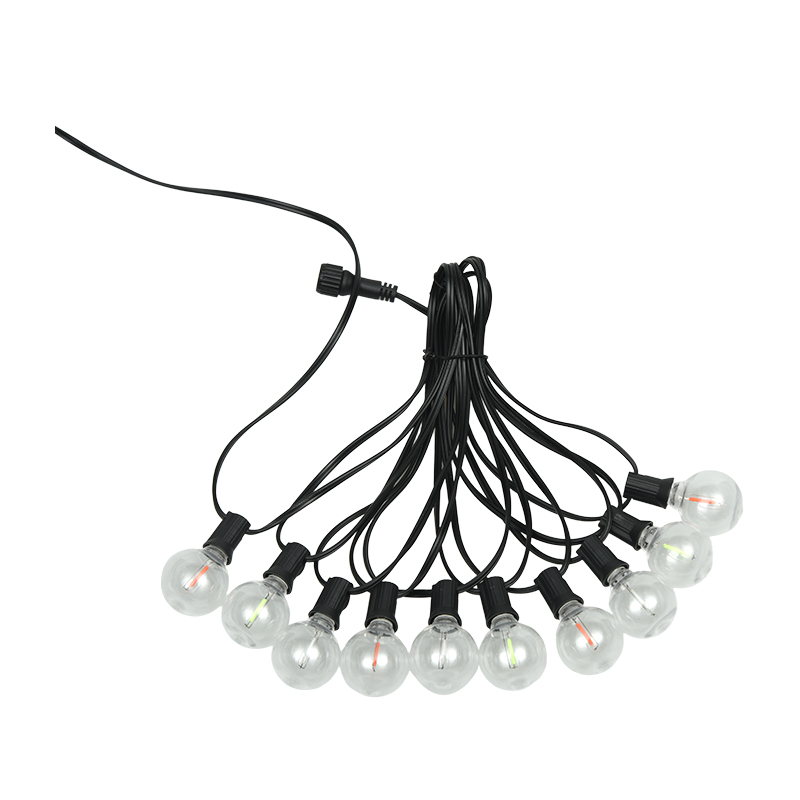
G40 Clip-on E12 Spiral Colored String Lights
-
 View More
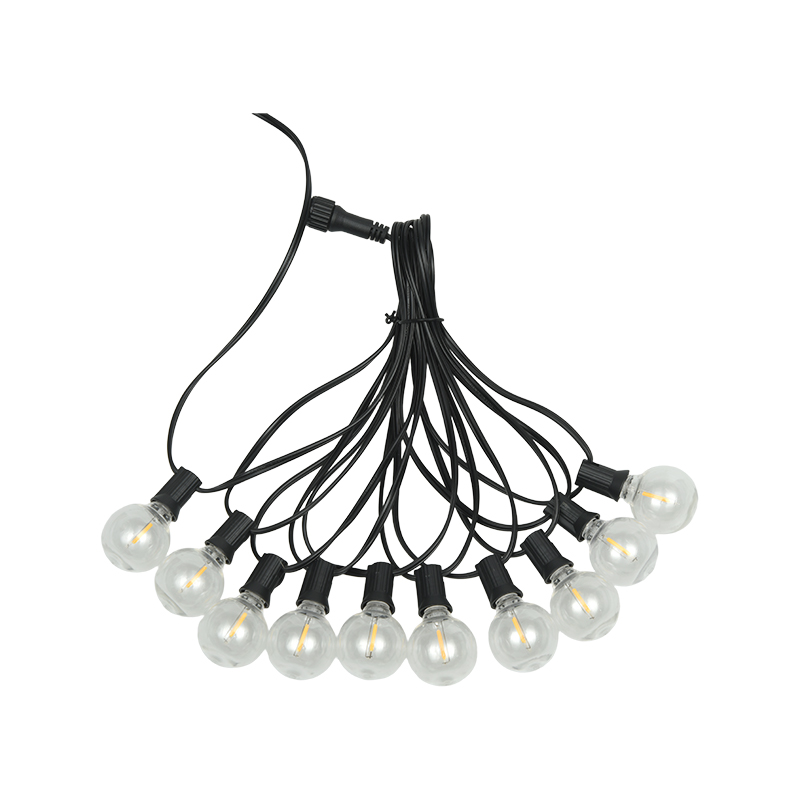
G40 Clip-on E12 Spiral Warm White String Lights
-
 View More
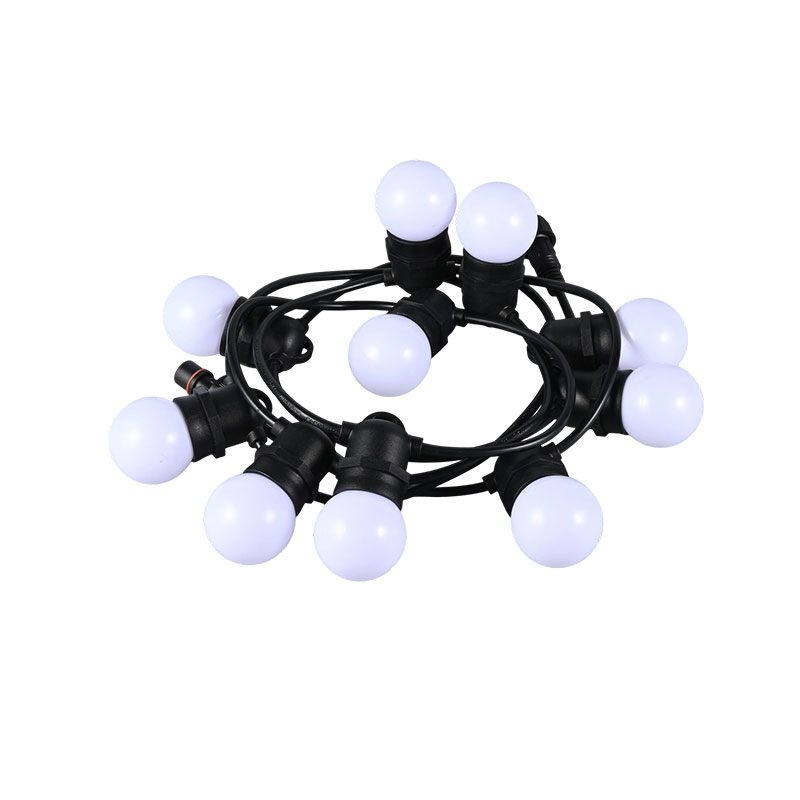
G45 Outdoor E27 White Light String Lights
-
 View More
C45 Pendant Type E27 Spiral String Lights
-
 View More
C45 Hanging Type E27 Spiral RGB Synchronized Flashing String Lights
Hengboyi are always ready to help you and answer your question if you need.
Request A Quote
Contact Info.
 Mob: +86-13901119074
 Tel: +86-574-62838966
 E-mail: sale2@hengboyi.com
 Add: No. 18 Rongchuang Road, Mingwei Village, Lizhou Street, Yuyao City, Ningbo, Zhejiang Province, China
Quick Links
Product List
QR CODE
Copyright Ningbo Hengboyi Lamp Co., Ltd. All rights reserved.
China best outdoor decorative solar lights Manufacturer
Custom decorative string lights indoor Factory

