 Telephone: +86-574-62838966
 E-mail : sale2@hengboyi.com


 en
 English
 Español
 中文简体

Glass Shades for Decorative String Lights: A Buyer's Specification Guide
Content
- 1 Glass Shades Are a Controlled Part, Not a Decorative Afterthought
- 2 Glass, Polycarbonate or Acrylic: Choosing the Right Shade Material
- 3 Matching Glass Shades to E12, E26 and E27 Bases
- 4 The Five Numbers on a Glass Shade Drawing That Actually Matter
- 5 Wall Thickness, Annealing and Why Cheap Glass Costs More Later
- 6 Finishes: Clear, Frosted, Coloured and Flame Effects
- 7 Where Glass Meets Rubber: Waterproofing at the Shade Seat
- 8 Solar Sets: Extra Constraints on Shade Choice
- 9 Custom Development: From Drawing to Working Sample
- 10 A Sourcing Checklist for Brands, Importers and Wholesalers
- 11 Frequently Asked Questions About Glass Shades
- 11.1 What exactly counts as a glass shade on a string light?
- 11.2 Are glass shades always better than plastic ones for outdoor string lights?
- 11.3 How do I know which shade fits an E12 versus an E27 base?
- 11.4 What tolerance should I accept on shade diameter and neck fit?
- 11.5 Can glass shades be made in our brand colour?
- 11.6 Do glass shades affect the IP rating of an outdoor set?
- 11.7 What is a reasonable lead time for a custom shade?
- 11.8 How should I test glass shades before placing a mass production order?
- 12 Keep Reading Before You Send the Next RFQ
A buyer opens a carton of five-metre festoon sets on a warehouse floor, lifts one bulb against the window, and asks the question that almost every decorative lighting order eventually runs into: why does this glass look greener, thinner and slightly out of round compared with the sample we approved six months ago?
The answer usually sits in the glass shades, not in the LED, the wire or the solar panel. The shade is the visible envelope around the light source, and on a decorative string light it controls brightness, colour appearance, weather resistance, packing weight and, in the end, how the product is judged on a shelf or in a garden. When the shade is treated as a controlled part with a written specification, complaints fall and repeat orders grow. When it is treated as a cheap accessory bought on price alone, the same product starts generating claims inside one season.
This guide is written for lighting brands, importers, wholesalers and product managers who buy decorative and solar string lights in commercial volumes. It covers the material choices behind glass shades, the fit rules for E12, E26 and E27 bases, the tolerances that actually matter on a drawing, the way finishes change light output, and the practical checks that separate a real manufacturer from a trading office with a photo library.
Treat the glass shade as a controlled part number with its own drawing, tolerance and incoming inspection, because it drives appearance, safety and warranty cost more than any other component on a decorative string light.
Glass Shades Are a Controlled Part, Not a Decorative Afterthought
Most purchasing teams spend their attention on the LED chip, the copper content of the cable, the IP rating of the connector and the capacity of the solar panel. The shade often appears in the purchase order as a single line: glass, clear, coloured. That line hides roughly a dozen decisions, and each one has a measurable consequence.
A shade that is 0.2 mm thinner than the approved sample will pass a casual visual check and fail a 1-metre drop test. A shade with a slightly wider neck aperture will sit loose on the lamp holder, allow water to pool at the seal, and turn an IP44 product into a warranty case after two weeks of rain. A shade with an uncontrolled tint will make the same SKU look like two different products when two production batches sit side by side in a retail display.
What "controlled" means in practice
- Material grade and supplier of the raw glass, so transmission and tint stay stable between batches.
- Wall thickness with a minimum value, not just a nominal one.
- Neck aperture and thread engagement, measured with a go/no-go gauge rather than by eye.
- Finish specification: clear, frosted, opal, sprayed colour, or a flame-effect coating.
- Annealing condition, so the shade survives heat cycling above a real lamp instead of cracking at the neck.
- Packing method, because glass shades break in transit more often from poor packaging than from poor glass.
For a commercial buyer, the value of this discipline is simple. A manufacturer such as Ningbo Hengboyi Lighting works with lighting brands and manufacturers that resell into hospitality, garden retail and event markets, and those customers cannot absorb a mid-season colour shift or an unexplained failure rate. The same logic applies whether you buy G40 globes on E12 bases, S14 lamps on E27 bases, or ST38 vintage bulbs on E12 bases: the shade is the part the end user actually touches, sees and remembers.
There is also a commercial argument. When two suppliers quote the same price for a 5-metre, 10-lamp set, the difference is almost always hidden in the shade. One is using a thinner envelope with a wider tint band; the other is using a heavier, annealed shade with a tighter neck. The first looks cheaper on the invoice; the second protects the retail price of your brand.
Two quotes that look identical on price are rarely identical on shade specification, and the difference shows up as claims rather than as savings.
Glass, Polycarbonate or Acrylic: Choosing the Right Shade Material
The first decision is not shape or colour, it is material. Glass, polycarbonate and acrylic all appear in decorative string lights, and each one solves a different commercial problem. Choosing the wrong one is expensive, because the tooling and the marketing story both have to change when you correct it later.
| Attribute | Glass | Polycarbonate (PC) | Acrylic (PMMA) |
|---|---|---|---|
| Optical clarity | Highest, no haze, stable over years | Good, slight haze on thicker walls | Very good, crisp sparkle |
| Impact resistance | Moderate, cracks from point impact | High, bends instead of shattering | Low to moderate, brittle under sharp impact |
| UV and outdoor life | Excellent, no yellowing | Fair unless UV stabilised grades are specified | Good, better than PC in direct sun |
| Heat tolerance | High, suits 1W to 5W retrofit lamps | Lower, can deform close to a hot lamp | Moderate, softens above typical ambient plus lamp heat |
| Tooling and unit cost | Higher tooling, mid to high unit cost | Low tooling, lowest unit cost at volume | Moderate tooling, mid unit cost |
| Typical best fit | Premium and retro SKUs, hospitality, vintage ranges | High-volume promotions, garden ranges, family products | Indoor decorative sets and covered patio applications |
For a brand building a vintage or heritage range, glass is usually the only credible answer. Buyers recognise the weight and the clarity, and the light from a filament-style lamp reads correctly through glass in a way it rarely does through plastic. For a wholesaler filling a garden centre with a price-point promotion, a UV-stabilised polycarbonate shade can be the sensible choice, provided the specification says "UV stabilised" and the supplier can show a test report rather than a verbal promise.
The mistake to avoid is mixing materials inside one carton without telling the customer. If half the sets in a container have glass shades and half have PC shades because of a glass shortage at the factory, the retailer will notice, and the brand will be the one explaining it.
Match the shade material to the market position of the SKU, and never allow a material substitution inside a single order without written approval.
Matching Glass Shades to E12, E26 and E27 Bases
Screw base size is the most common source of quiet failure in decorative lighting. E12, E26 and E27 look similar in a photograph, and a shade that fits one will not necessarily seat correctly on another. Getting this wrong produces loose lamps, poor contact, water paths and, in the worst case, a shade that falls from a height.
E12 is the small candelabra base with a nominal 12 mm diameter, widely used on G40 globes, C7 and C9 strawberry or candle shapes, and ST38 vintage bulbs. E26 and E27 are the medium Edison bases at roughly 26 mm and 27 mm, used on larger S14 and G45 lamps and on many RGB and pixel-controllable products. The shade neck must be sized to the base it is paired with, and the lamp holder must match both.
| Shade family | Typical diameter | Common base | Typical application |
|---|---|---|---|
| G40 globe | About 40 mm | E12 | Festoon sets, garden and patio, solar string lights |
| G45 globe | About 45 mm | E27 | Outdoor white-light strings, larger festoon runs |
| C7 and C9 candle and strawberry | About 20 to 26 mm | E12 | Coloured decorative sets, indoor and covered outdoor |
| C45 candle | About 45 mm | E27 | RGB synchronised and flashing commercial sets |
| S14 sign lamp | About 44 mm | E26 / E27 | Hospitality, event and commercial string lighting |
| ST38 vintage | About 38 mm | E12 | Low-wattage retro strings, cafes and restaurants |
| A60 classic | About 60 mm | E27 | Wall lights and larger decorative fixtures |
A practical rule when writing a specification: state the base, the shade family and the mating lamp holder in the same document. If your supplier's quotation lists only "coloured bulb, 5 metres, 10 lamps", you do not yet have a specification, you have a description. Ask for the neck aperture, the thread form, and the height of the shade from the base rim to the top, and compare them with the lamp holder drawing.
Integrated versus detachable shades
Integrated sets, where the lamp and shade are sealed as one unit, remove the fit problem for the end user and are usually the better choice for consumer channels. Detachable shades give maintenance teams the option to replace a single broken bulb, which matters in hospitality and event rental. Both approaches are valid; the mistake is choosing integrated construction for a market that expects replaceable lamps, or detachable construction for a market that will lose the bulbs within a season.
Always specify base size, shade family and mating lamp holder together, because a shade that fits one holder perfectly can be unusable on another.
The Five Numbers on a Glass Shade Drawing That Actually Matter
When a new shade is developed, the drawing usually carries dozens of dimensions. In day-to-day production and inspection, only five of them decide whether the product works in the field. The rest matter for appearance and tooling, but these five decide function.
The five numbers are outside diameter, overall height, neck aperture, wall thickness and neck length. A deviation of half a millimetre on diameter is invisible; the same deviation on neck aperture can turn a snug fit into a loose one or crack the shade during assembly.
Illustrative scoring model: where decorative string light complaints originate (0 to 5 scale)
Cracked shade in transit
4.6
Water ingress at the shade seat
4.1
Colour drift between batches
3.5
Loose or tight fit on the base
3.0
Yellowing of plastic substitutes
2.8
The pattern above is a scoring model rather than a published statistic, but it matches what most decorative lighting suppliers see in their own feedback. Transit damage and water ingress dominate, which is why packing design and the seal at the shade seat deserve the same attention as the light output. Colour drift sits in the middle: it rarely fails electrically, yet it is the reason a retailer rejects a second shipment after approving the first.
If you buy solar string lights, the shade seat matters even more, because the product spends its life outdoors with no installer checking it. If you buy pixel-controllable S14 strings for commercial installations, a loose neck is worse than a cracked shade, since a loose bulb can drop into a walkway. Both cases point to the same specification line: neck aperture tolerance measured with a gauge, and a defined torque or push force during assembly.
Control diameter, height, neck aperture, wall thickness and neck length on the drawing, and inspect them with gauges rather than with eyes.
Wall Thickness, Annealing and Why Cheap Glass Costs More Later
Thinner glass is cheaper glass, and the saving is real at the factory gate. The cost appears later, in the container, in the warehouse and in the customer's complaint inbox. Shade wall thickness on decorative string lights typically sits in the range of roughly 0.8 mm to 1.2 mm depending on the family, and moving from the top of that range to the bottom changes both drop performance and the perceived weight of the product in the hand.
Anneal properly or pay for it twice
Glass that cools too quickly carries internal stress. It looks perfect on the day it is packed and cracks weeks later, often near the neck where the wall changes thickness. A proper annealing cycle costs the factory time and energy, which is exactly why it is one of the first places an aggressive cost cut appears. When you audit a supplier, ask how the kiln or lehr is controlled and whether records exist. An honest manufacturer will answer directly; a trading company will change the subject.
Packaging is part of the shade specification
Cartons, dividers, foam inserts and the way lamps sit inside the box decide whether transit damage stays under control. A common improvement is to move from a single layer of loosely packed bulbs to a moulded insert that holds each shade at the neck, not at the widest point. The added packaging cost is usually less than the value of one returned container load, and far less than the cost of a retail customer switching brands.
For larger formats such as G45 and C45 used in commercial installations, shipping weight also matters. Heavier glass raises freight cost per container, which is why some projects deliberately choose a slightly smaller shade with a thicker wall instead of a larger, thinner globe. Both approaches can work; the decision should be made with the freight cost in front of you, not after the order is placed.
Wall thickness, annealing control and packing design work as one system, and cutting any of the three moves the cost from the invoice to the warranty budget.
Finishes: Clear, Frosted, Coloured and Flame Effects
The finish on a glass shade changes light output, glare and mood, and it is the single most visible way to differentiate a product line. Two sets can use the same lamp, the same wire and the same controller, and feel completely different because one uses clear glass and the other uses frosted or coloured shades.
Clear
Clear glass delivers the highest transmission and the sharpest sparkle. It suits vintage filament looks and any product where the light source itself is the design feature. It is also the least forgiving: the lamp, the filament and any colour inconsistency are fully visible.
Frosted and opal
Frosting spreads the source into a soft, even glow and hides the individual LED dots behind the diffuser. It reduces peak brightness slightly but improves visual comfort, which is why it works well on indoor and covered patio products. For solar sets with lower lumen output, a light frost is usually a better compromise than a heavy opal, because heavy diffusion costs you usable light.
Coloured and sprayed
Coloured glass and sprayed finishes are where batch control becomes commercially critical. Colour should be matched against a retained master sample under a fixed light source, and the tolerance should be written down. A practical method is to keep one approved shade per colour in a sealed bag at the factory and compare each production run against it, rather than trusting the last shipment as the reference.
Flame and lantern effects
Flame-effect shades combine a shaped glass envelope with a flickering light source to mimic a candle or a kerosene lantern. They sell well in garden and hospitality ranges because they read as warm and traditional, and they perform better when the glass has a slight tint and the internal surface is shaped to catch the light unevenly. This is a case where a custom mould usually makes sense, because a stock globe cannot produce the look.
 Vintage kerosene lamp style solar wall light (flame effect)Vintage kerosene lamp solar wall light focuses on classic styling and wall-mounted ambient lighting. It features a kerosene lamp appearance combined with a flame light...View Product →
A wall-mounted flame-effect unit shows why shade design and fixture design belong in the same conversation: the shape of the glass, the height of the light source inside it, and the angle at which the unit is mounted all influence the final effect. Buyers evaluating a range like this should ask for samples at two different mounting heights, because a lantern that looks convincing at eye level can look flat when mounted above a door.
Lock every colour and finish against a retained master sample, because finish consistency is the quality issue that customers notice first and forgive last.
Where Glass Meets Rubber: Waterproofing at the Shade Seat
An outdoor string light does not usually fail because water enters through the glass. It fails because water sits at the point where the shade, the lamp holder and the cable meet. That junction is the reason two products with the same IP claim can behave very differently after a wet autumn.
Look at three details. First, the gasket or silicone seal between the lamp holder and the shade neck: does it compress evenly, or does it distort when the bulb is tightened? Second, drainage: if water pools in a horizontal shade neck, it will eventually find the thread. Third, cable entry: an under-moulded or over-moulded joint on a rubber cable resists moisture far better than a crimped joint wrapped in tape.
Rubber engineering strings exist for exactly this reason. Heavier rubber insulation, moulded lamp holders and a properly seated shade give a product that can survive installation on a building facade, a construction site boundary or a year-round pergola. For buyers sourcing that category, the shade is not the weak point as long as the neck is dimensionally correct and the seal is specified.
 High quality rubber engineering string lightsThe hanging string lamp holder adopts E27 standard lamp head design with high specification engineering wire structure and high power bearing capacity, suitable for co...View Product →
A simple field check you can request
- Assemble ten sets exactly as the end user would, using the supplied instructions.
- Place them in a spray test rig at a shallow angle, so water runs along the string as it would on a wall.
- Run the lights for four hours, then leave them unpowered overnight.
- Inspect the shade seat and lamp holder for standing water, and repeat for three cycles.
- Open two lamp holders from each set and check for moisture inside the contact area.
This test is not a substitute for formal IP testing, but it separates suppliers who have thought about the shade seat from those who have only thought about the bulb. For a brand selling into Northern European or coastal markets, that difference is worth more than a small price advantage.
Waterproofing on a decorative string light is decided at the shade seat, the gasket and the cable entry, so specify and test all three together.
Solar Sets: Extra Constraints on Shade Choice
Solar string lights add two constraints that ordinary mains-powered sets do not have: less available light output, and a stronger sensitivity to weight. Both push shade design in a specific direction, and ignoring them produces a product that looks right in a catalogue and disappoints in a garden.
Because the panel and battery set a ceiling on how much energy is available each night, every percentage point of transmission lost in the shade is light the customer never sees. A heavy opal finish on a solar G40 globe can cut usable output noticeably, which is why solar ranges tend to favour clear or lightly frosted glass with a well-designed internal diffusion rather than dense opal. The same logic applies to colour: deep saturated glass absorbs more light than a light tint, so a deep red solar set will always look dimmer than a warm white one with the same panel.
Weight matters on a different axis. Shade mass multiplies across ten or twenty lamps on a string, and that affects how the cable hangs, how the clips grip a branch or gutter, and how much packaging is needed. Heavier glass is not automatically better on a solar product, even when it looks more premium.
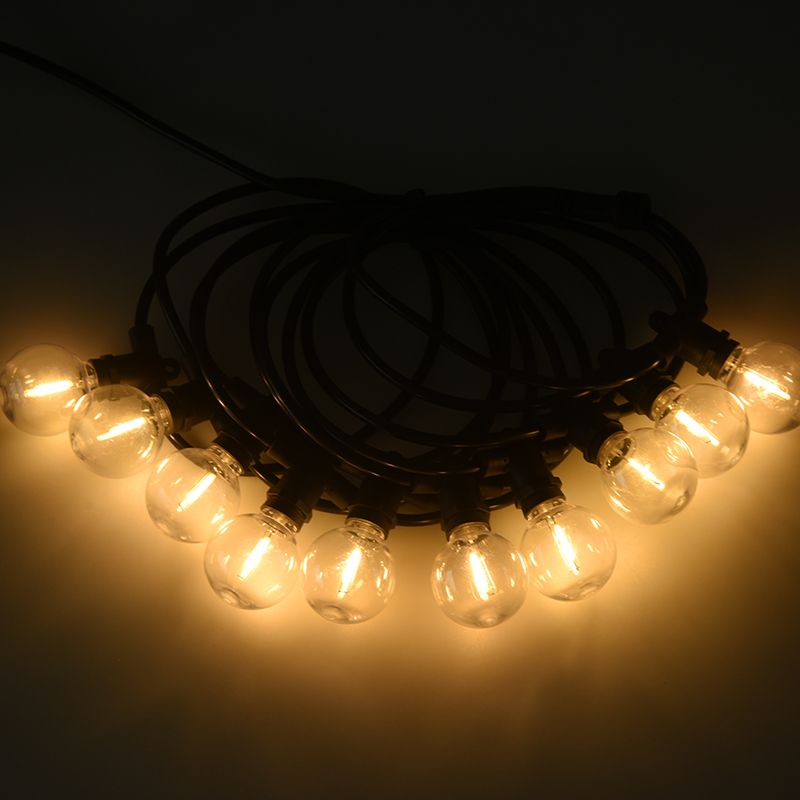 G40 integrated solar string light (E12 lamp holder, 5 meters 10 lights)The G40 integrated solar string light is an outdoor lighting product that combines illumination and decoration. It is suitable for courtyards, patios, gardens, and out...View Product →
Integrated solar construction, where the lamp and shade are sealed as a unit, removes most of the fit and moisture problems described earlier and is usually the safer choice for consumer channels. For projects that need replaceable lamps, a detachable design works if the neck specification is tight and the seal is genuine. Buyers should also ask about charging behaviour in low winter light, because a product that performs in July can underperform in December, and the shade transmission is part of that equation.
On solar string lights, choose shade finishes that preserve transmission and keep shade mass low, because the energy budget is fixed before the glass is chosen.
Custom Development: From Drawing to Working Sample
Most buyers reach a point where standard shades no longer differentiate the product. That is when custom glass becomes a commercial decision rather than an aesthetic one. The question is not whether a factory can make a new shape, but how quickly and how reliably it can move from drawing to a sample that passes your own tests.
What a supplier needs from you
- A dimensioned drawing or a physical sample, with the critical dimensions marked.
- The lamp or LED module that will sit inside the shade, including its heat output.
- The base type and the lamp holder it must mate with.
- Finish requirements: clear, frosted, sprayed colour or effect coating, with a colour reference.
- Target quantity per year, which drives whether a new mould is justified.
- Compliance requirements for the destination market, including documentation expectations.
With those inputs, an experienced manufacturer can review the mould, produce samples and return them for validation. Typical custom work on decorative string lights also covers voltage, string length, wire type, appearance and packaging, which means a single project can combine a new shade with a new cable construction. Keeping those changes in one validation cycle saves months.
How to run the sample stage
- Approve the drawing before any mould work starts, including tolerances on the neck aperture.
- Request samples from the actual production mould, not from a hand-finished prototype.
- Test drop, heat cycling at the neck, and spray exposure at the shade seat.
- Confirm colour against a retained master sample under two different light sources.
- Sign off the packaging, because a new shade often needs a new insert.
One point that experienced buyers insist on: the first mass production run should be compared against the approved sample by the factory, with photographs and measurements, before the container leaves. It is far cheaper to catch a half-millimetre drift at the factory than to negotiate a claim after arrival.
Approve the drawing, then approve a production-mould sample, and only then approve mass production, because each stage eliminates a different class of risk.
A Sourcing Checklist for Brands, Importers and Wholesalers
Use the following list when evaluating a glass shade supplier or a finished decorative string light manufacturer. It is written so that it can be sent to a prospective vendor as a questionnaire, and the quality of the answers will tell you as much as the answers themselves.
- Ask for a shade drawing with diameter, height, neck aperture, wall thickness and neck length, plus the tolerance for each.
- Ask which base sizes the shade is designed to mate with, and request the matching lamp holder drawing.
- Request the glass material grade and the transmission target, and ask how it is verified between batches.
- Ask how colour is controlled, and whether a retained master sample is kept on site.
- Confirm the annealing process and the records available for review.
- Request drop test and spray test results on the assembled set, not on the shade alone.
- Ask for the packaging design and the transit test that supports it.
- Confirm certifications and export documents relevant to your destination market.
- Ask for the minimum order quantity for custom shades and the expected lead time for a new mould.
- Request references from customers in your own channel, such as hospitality, garden retail or event rental.
- Clarify how a material or component substitution would be handled if a shortage occurs mid-order.
- Agree in writing that the first production batch will be compared against the approved sample before shipment.
Questions that reveal the real structure of a supplier
Ask where the glass is made and who owns the mould. A genuine manufacturer will answer both immediately. A trading intermediary will often answer the first and deflect the second. Also ask what happens when a customer requests a change to wire type or string length two weeks before production: an integrated factory can usually absorb it, while an intermediary has to negotiate with a third party and may simply refuse.
Price should be evaluated per delivered, working set rather than per quoted unit. Add the expected claim rate, the freight difference caused by shade weight, and the cost of one reworked container, and the cheapest quotation frequently stops being the cheapest option. For buyers who order twice a year, that calculation is straightforward once the numbers are on one page.
Compare suppliers on delivered cost per working set, including claim rate and freight, rather than on the unit price of the shade.
Frequently Asked Questions About Glass Shades
What exactly counts as a glass shade on a string light?
It is the glass envelope that surrounds the lamp or LED, including the neck that seats on the lamp holder. On a G40 globe, an S14 sign lamp or an ST38 vintage bulb, the shade is the visible outer body that defines the look, the light distribution and part of the weather protection.
Are glass shades always better than plastic ones for outdoor string lights?
Not always. Glass resists UV and heat better and keeps its clarity for years, which suits premium and vintage ranges. A UV-stabilised polycarbonate shade can be the better commercial choice for high-volume garden promotions, provided the grade is specified and the heat from the lamp is kept within safe limits.
How do I know which shade fits an E12 versus an E27 base?
Check the neck aperture and the mating lamp holder drawing. E12 is the small candelabra base at a nominal 12 mm, while E26 and E27 are the medium Edison bases at roughly 26 mm and 27 mm. The shade family usually follows the base: G40, C7 and ST38 on E12, and G45, C45 and S14 on E27 or E26.
What tolerance should I accept on shade diameter and neck fit?
Diameter tolerance is mostly cosmetic and can be relatively generous. Neck aperture and neck length are functional and should be tight, measured with a go/no-go gauge, because they control seating force, water sealing and the risk of cracking during assembly.
Can glass shades be made in our brand colour?
Yes, through coloured glass, sprayed finishes or effect coatings. The important part is agreeing a colour reference and a retained master sample, plus a defined acceptable variation under both daylight and warm indoor light.
Do glass shades affect the IP rating of an outdoor set?
Indirectly, yes. The shade itself is not the sealing element, but the fit between the shade neck, the gasket and the lamp holder determines whether water can pool and reach the contacts. A loose or oversized neck can undermine an otherwise well-sealed product.
What is a reasonable lead time for a custom shade?
It depends on whether a new mould is required, how complex the shape is and how many approval rounds are needed. Buyers should ask for a written schedule covering drawing approval, mould making, sampling and validation, and should expect the sampling stage to take longer than the mould itself.
How should I test glass shades before placing a mass production order?
Combine three checks: a drop test on the packed set, heat cycling with the intended lamp, and a spray test focused on the shade seat and cable entry. Repeat the spray test over several cycles, then open a few lamp holders and inspect for moisture.
A glass shade is judged by three questions only: does it fit, does it survive, and does it still look like the approved sample a year later.
Keep Reading Before You Send the Next RFQ
Related resource on this site
If your next project involves larger commercial runs, the technical notes on outdoor commercial string lighting cover waterproofing, uniform brightness and installation in more detail, and they pair well with the shade specification points above.
Shade specification is not a technicality reserved for engineers. It is the point where design intent, manufacturing discipline and commercial risk meet, and it is the part of a decorative string light that customers see, touch and judge. Buyers who control it early spend less time on claims and more time on the next product.
Write the shade specification once, verify it with gauges and samples, and you protect both the product and the retail price behind it.
Related Products
-
 View More
-
 View More
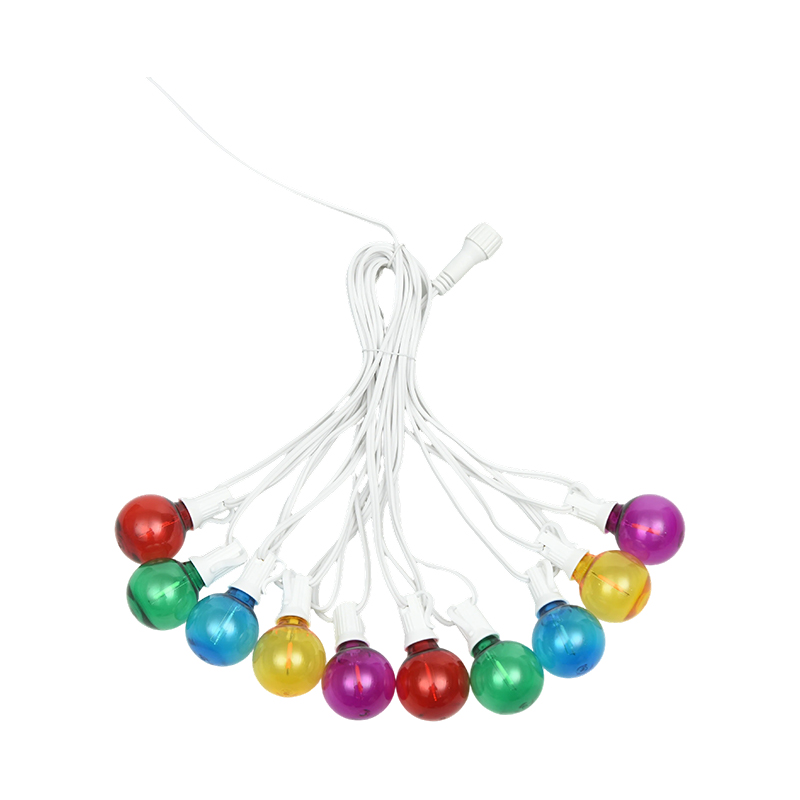
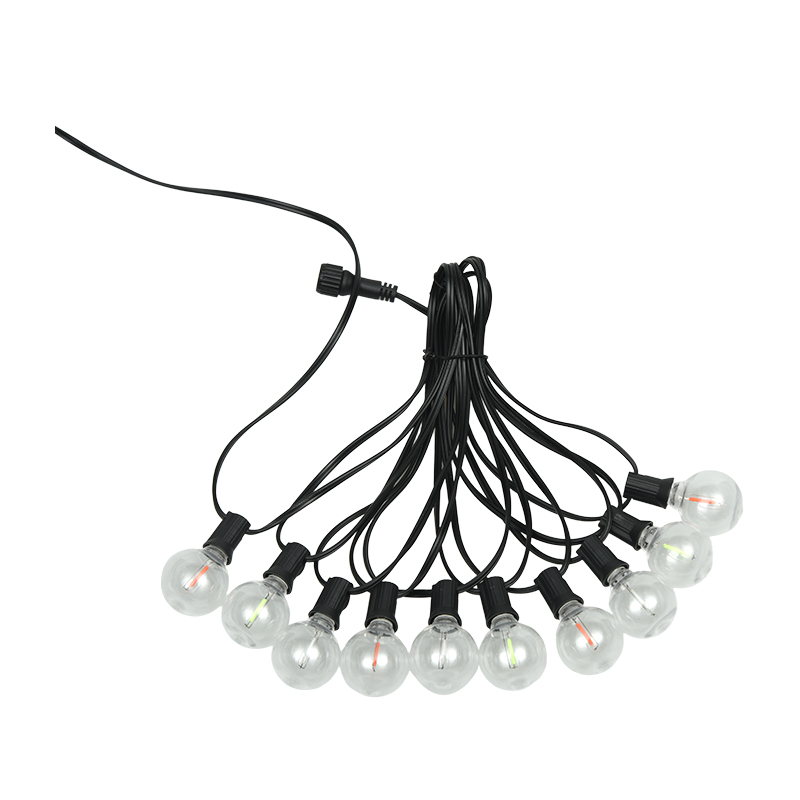
G40 Clip-on E12 Spiral Colored Decorative String Lights(White style)
-
 View More
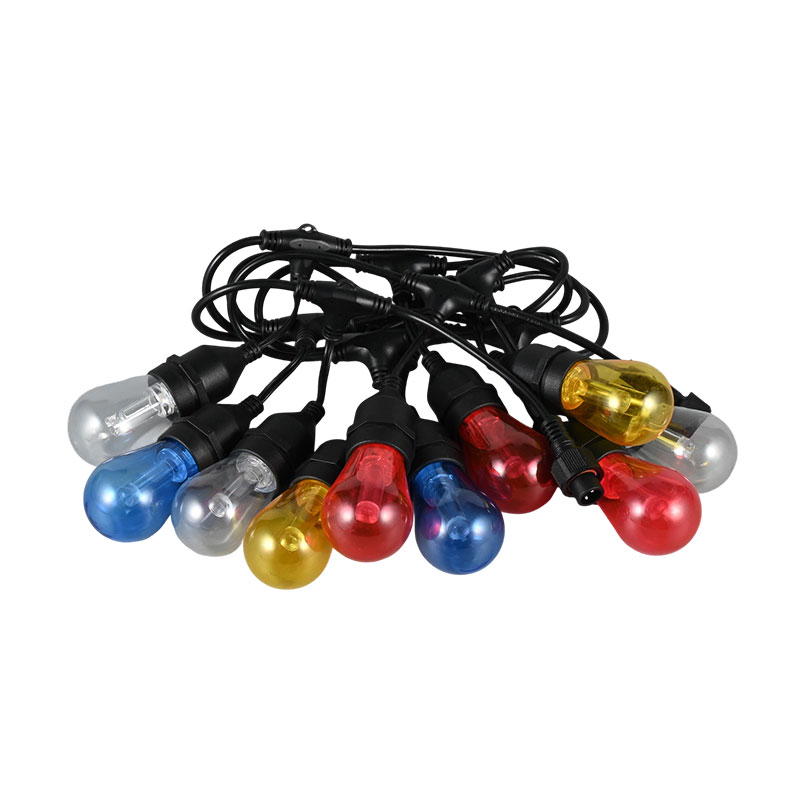
S14 Light Guide Pillar Pendant Type E27 Spiral String Lights
-
 View More
G40 Clip-on E12 Spiral Colored String Lights
-
 View More
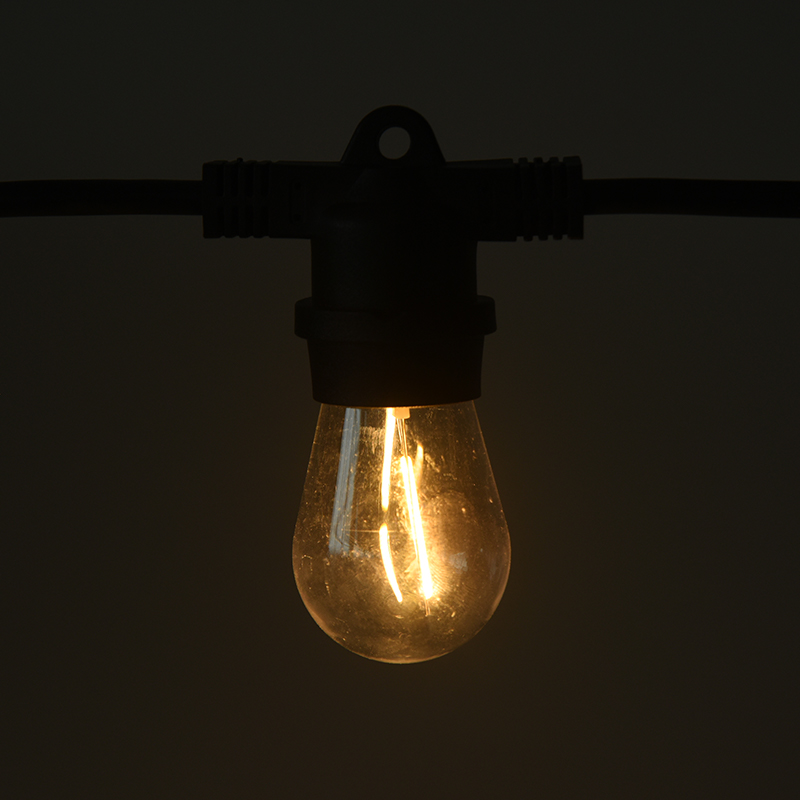
US Standard S14 String Lights, Integrated E26 Spiral Socket, Warm White Light, Heavy-Duty Engineering Model
-
 View More
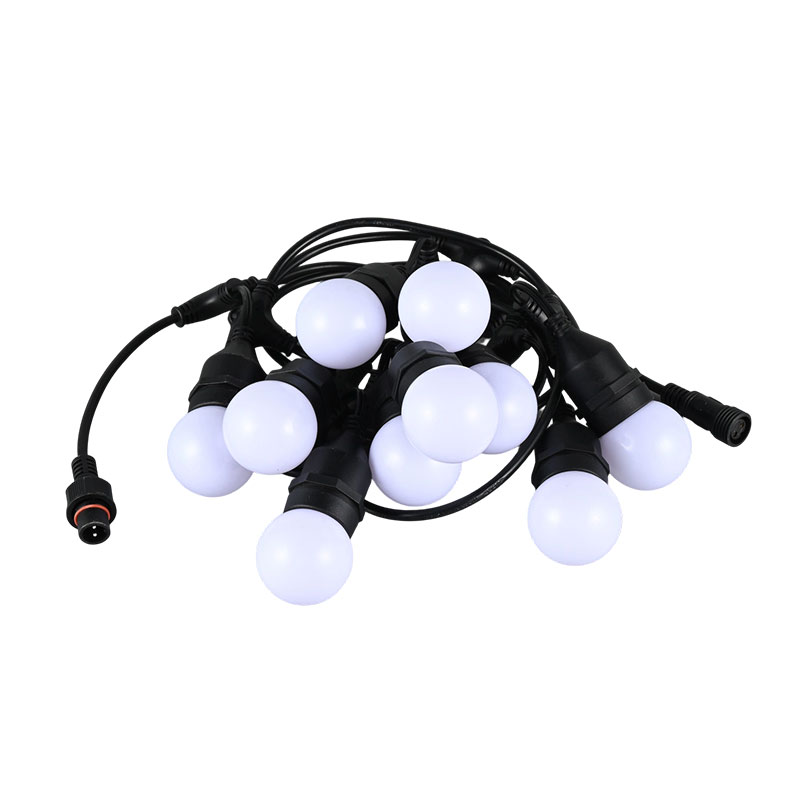
G45 Hanging Type E27 Spiral RGB Synchronized Flashing String Lights
Hengboyi are always ready to help you and answer your question if you need.
Request A Quote
Contact Info.
 Mob: +86-13901119074
 Tel: +86-574-62838966
 E-mail: sale2@hengboyi.com
 Add: No. 18 Rongchuang Road, Mingwei Village, Lizhou Street, Yuyao City, Ningbo, Zhejiang Province, China
Quick Links
Product List
QR CODE
Copyright Ningbo Hengboyi Lamp Co., Ltd. All rights reserved.
China best outdoor decorative solar lights Manufacturer
Custom decorative string lights indoor Factory

