 Telephone: +86-574-62838966
 E-mail : sale2@hengboyi.com


 en
 English
 Español
 中文简体

Remote Control Lights: A Buyer's Guide for Brands, Importers and Wholesalers
Content
- 1 Six Specifications That Decide Whether a Remote Control Light Ships or Fails
- 2 Why Most Remote Control Light Complaints Trace Back to the Receiver
- 3 How a Remote Control Light Set Is Built: Transmitter, Receiver, Driver, and Load
- 4 Infrared, RF, Bluetooth, Wi-Fi, and Pixel Control Compared
- 5 How Far Will the Handset Actually Reach? A Control Distance Benchmark
- 6 Which String Light Formats Accept a Remote Control Cleanly
- 7 Selection Points for Wholesalers, Importers, and Private-Label Brands
- 8 Enclosure Ratings, Cable, and Connectors
- 9 Customisation Scope: What a Manufacturer Can Change Without Retooling
- 10 Quality Control and Compliance Documentation for Export Orders
- 11 Installation and Maintenance Guidance for Remote Control Lights
- 12 Frequently Asked Questions About Remote Control Lights
- 12.1 Can a remote control be added to an existing string light that was not designed for one?
- 12.2 Why does my remote control light respond inconsistently at night?
- 12.3 How many strings can one handset control?
- 12.4 Is radio frequency safe and legal in every market?
- 12.5 What is the difference between a remote control light and a smart light?
- 12.6 How should remote control lights be stored between seasons?
- 13 Further Reading on Outdoor Lighting Sourcing
- 14 Bringing the Specification Together
A garden-lighting brand ordered five thousand metres of remote control lights, and the first container arrived with handsets that only responded when pointed directly at the receiver from less than two metres away. Nothing was broken. Nothing was even technically out of specification. The purchase order had simply never stated which wireless protocol had to sit inside the box, so the supplier filled the gap with the cheapest option available.
That scenario is far more common than most buyers expect. Remote control lights are one of the product categories where a purchasing team is most likely to compress an entire control specification into the phrase "with remote" and move on. In reality, a remote control light is four subsystems bound together: a transmitter, a receiver module, a driver or control circuit, and the light-emitting load itself. Misalign any one of them and the fault shows up in the field, not in the factory. Ningbo Hengboyi Lighting has been manufacturing string lights and solar lighting since 2003 and supplies lighting brands and manufacturers worldwide, and the complaints that reach factories almost always trace back to control details buried in a specification sheet rather than to the bulbs.
This article is written for the people who specify, purchase, or resell remote control lights: importers, wholesale buyers, private-label brands, and the engineers who have to approve a sample. It covers what remote control lights actually contain, how infrared and radio frequency behave differently in an outdoor installation, which string formats accept a remote control cleanly, what a manufacturer can customise without retooling, and how to keep quality consistent across repeat orders. The short version comes first: fix the protocol, the working distance, and the ingress protection before you negotiate price.
Six Specifications That Decide Whether a Remote Control Light Ships or Fails
Before a quotation is compared, these six items should already be written into the enquiry. If they are missing, every supplier will quote a different product and the prices will look comparable when they are not.
- Wireless protocol. Infrared and 433 MHz radio frequency are not interchangeable. Infrared needs line of sight and a receiver window that faces the user. Radio frequency passes through a wall and works from a pocket. Choosing the wrong one changes the retail price, the enclosure, and the return rate.
- Effective working distance. A datasheet figure quoted in open air is not the same as the distance a homeowner gets with the receiver mounted behind a planter. State the distance you need under real conditions, not the distance the chipset can theoretically achieve.
- Receiver ingress protection. The bulb may be rated for outdoor use while the receiver box is not. When the control module sits in a sealed inline housing, the IP rating of that housing matters as much as the IP rating of the lamp holder.
- Standby current draw. A receiver that listens continuously consumes power around the clock. On a solar product this can flatten a battery before the panel has a chance to recharge it during a cloudy week.
- Memory behaviour. Does the string return to its previous state after a power cut, or does it default to a flashing mode at full brightness at two in the morning? Memory behaviour is a support cost, not a feature.
- Remote pairing model. Fixed-code remotes let any handset in the neighbourhood control any string. Rolling-code or paired remotes cost slightly more and eliminate a whole class of customer complaints in dense housing or hospitality installations.
Each of these points has a measurable consequence. A rolling-code receiver adds a small amount to the bill of materials but removes the risk of a hotel guest controlling the terrace lighting from the room next door. A receiver rated IP44 rather than IP65 saves money on the invoice and generates a warranty claim in the first rainy season. The economics are straightforward once the numbers are laid out side by side.
The single most useful step a buyer can take is to write the protocol, the real-world working distance, and the receiver IP rating into the purchase order. Those three lines eliminate most field failures before production begins.
Why Most Remote Control Light Complaints Trace Back to the Receiver
When a customer says the remote stopped working, the handset is rarely the cause. A remote control is a low-stress device: a small circuit board, a battery, a membrane keypad, and an infrared or radio transmitter. It sits indoors, it gets pressed a few times a day, and it has no thermal load. The receiver, by contrast, lives outdoors, handles the switching current of the entire string, and sits inside an enclosure that has to survive rain, condensation, and temperature swings.
Three failure modes dominate. The first is moisture ingress at the cable gland. Water tracks along the wire, enters the receiver housing, and corrodes the switching contacts. The string may still light when the remote is pressed, but the response becomes intermittent, and the customer reports it as a remote problem. The second is thermal stress. A receiver rated for a small load is sometimes used with a longer string for cost reasons, and the switching element runs hot inside a sealed box with no airflow. The third is voltage drop. On a long run with a low-voltage supply, the receiver may see a supply voltage below its operating threshold at the far end of the string, and it simply refuses to latch.
Each of these has a design answer. Specify a potted or encapsulated receiver module rather than a bare board in a loose shell. Match the receiver's rated current to the actual load with headroom, typically at least twenty percent above the measured current of the string. Keep the receiver near the supply end of the run rather than at the far end, or increase the conductor cross-section so the control module always sees a stable voltage.
Treat the receiver as an outdoor electrical component with a load rating and an IP rating, not as an accessory bundled with a handset. That shift in framing prevents most warranty returns.
How a Remote Control Light Set Is Built: Transmitter, Receiver, Driver, and Load
Understanding the internal chain helps when a sample has to be approved or rejected, because it tells you which component to question when something behaves unexpectedly.
The transmitter side
A handset contains a battery, a keypad matrix, an encoder chip, and either an infrared emitter or a radio frequency module. Infrared transmitters modulate a carrier at around 38 kHz and require a clear optical path. Radio transmitters operate at 315 MHz or 433 MHz in most consumer products, and the signal passes through plasterboard, timber, and thin masonry but is attenuated by metal, reinforced concrete, and water. Battery type matters more than buyers expect: a coin cell lasts a long time but delivers weak pulses in cold weather, while two AAA cells hold voltage better at low temperature.
The receiver and driver side
The receiver demodulates the incoming signal and passes a logic command to a driver stage. In a simple on-off product, that driver is a relay or a MOSFET. In a dimming or colour-changing product, the driver is a microcontroller that generates pulse-width modulation across several channels. This is where the difference between a fixed-colour string and a pixel-controllable string appears. A three-channel driver handles red, green, and blue globally. A pixel-controllable driver addresses every lamp individually along the run, which allows chasing, meteor, and gradient effects but requires data to travel with the power on the same cable.
Power topology
Most remote control string lights fall into one of three power arrangements. Low-voltage DC products use a separate adapter or a solar module with a battery. Mains-voltage products switch directly at 110 V or 230 V and require the receiver to carry full mains isolation. Solar products add a charge controller and a battery between the panel and the string, and the receiver has to work within the battery's usable voltage window. The topology determines which receiver can be used, so it should be confirmed at the enquiry stage rather than after the sample arrives.
Ask for a block diagram of the control chain before approving a sample. A supplier who can supply one understands the product; a supplier who cannot is assembling parts.
Infrared, RF, Bluetooth, Wi-Fi, and Pixel Control Compared
The table below summarises how the main control technologies behave in real installations. It is written from the perspective of an outdoor or semi-outdoor decorative lighting project, where weather, distance, and the number of people operating the product all matter.
| Control type | Typical working distance | Obstruction behaviour | Pairing model | Best suited to |
|---|---|---|---|---|
| Infrared remote | Up to about 8 m with clear line of sight | Blocked by walls, plants, and glass | Fixed code, universal handsets often work | Indoor curtain strings, small tabletop and shelf products |
| Radio frequency 315 or 433 MHz | 20 to 30 m in open outdoor space | Passes through one or two interior walls | Fixed code or rolling code pairing | Garden and patio string lights, permanent outdoor installations |
| Bluetooth mesh | 10 to 15 m per hop, extended by mesh | Moderate penetration, reduced by dense foliage | App pairing, per-device addressing | Residential feature lighting, hospitality and retail displays |
| Wi-Fi 2.4 GHz | Roughly 10 to 15 m outdoors from a router | Weak penetration through masonry | App plus router, cloud optional | Smart-home integrated installations with reliable network coverage |
| Pixel or SPI addressable control | Determined by controller and cable length | Not applicable, data travels on the cable | Wired controller or app through a bridge | Meteor effects, chasing patterns, themed commercial displays |
Several conclusions follow from this comparison. Infrared remains the lowest-cost option and is entirely adequate for a curtain string that hangs behind glass in a living room, but it is a poor fit for anything that has to be operated from inside a house while the string hangs outside. Radio frequency covers the majority of outdoor decorative requirements at a modest cost premium, and the rolling-code variant removes interference from neighbouring handsets. Bluetooth mesh is attractive when the buyer wants per-lamp control without running data cable, but it depends on a phone being present and on the mesh staying in range. Wi-Fi brings cloud control and scheduling, at the price of a dependency on the customer's network. Pixel control sits in a different category altogether, because it is a wired data architecture rather than a wireless remote system.
For a wholesale buyer assembling a catalogue, the practical distribution is usually three tiers. An entry tier with infrared for indoor decorative items, a mainstream tier with radio frequency for garden and patio products, and a premium tier with Bluetooth mesh or pixel control for customers who want app-based effects and per-lamp addressing. Selling all three tiers from the same manufacturer keeps the packaging, documentation, and certification language consistent.
Match the protocol to the installation, not to the price list. A cheap infrared handset on an outdoor string is not a saving; it is a predictable return.
How Far Will the Handset Actually Reach? A Control Distance Benchmark
Working distance is the specification most often quoted loosely and most often disputed later, so it deserves its own benchmark. The numbers below were gathered with the handset held at roughly 1.5 m above ground, the receiver mounted on a string run at the same height, and no deliberate shielding around the receiver. They are intended to show the order of magnitude between technologies rather than the guaranteed performance of any single product. Individual results will vary with battery condition, antenna orientation, foliage density, and the amount of metal in the surrounding structure. Read the chart as a planning tool: it tells you which technology can plausibly cover a given garden, patio, or facade, and which one cannot.
Typical effective control distance by technology (metres, open outdoor conditions)
RF 433 MHz 30 m
Bluetooth mesh 15 m
Wi-Fi 2.4 GHz 12 m
Infrared 8 m
The chart shows a spread of roughly a factor of four between the strongest and weakest wireless options, and that spread explains a large share of field complaints. Radio frequency at 433 MHz reaches about thirty metres in open conditions, which is enough to cover a typical residential garden from a kitchen window or a doorway. That single characteristic is why radio frequency remains the default choice for outdoor decorative string lighting, even though it costs more than infrared.
Bluetooth mesh lands at roughly half that distance per hop. On paper, fifteen metres sounds limiting, and for a single long garden run it is. The mesh architecture compensates by allowing each powered node to relay commands to the next, so a string with many lamps can effectively extend its own range. The catch is that every relay node must be powered and in range of its neighbour, which means a mesh product degrades when only part of the installation is energised at any one time.
Wi-Fi sits close behind mesh in raw distance but is far less predictable, because the effective range depends on the customer's router, the wall between the router and the garden, and the number of competing networks in the area. In a detached house with a modern router near the rear wall, twelve metres is realistic. In a dense urban block with dozens of overlapping networks, the same product may become unreliable at half that distance. Buyers who choose Wi-Fi should expect a support conversation about router placement.
Infrared is the clear outlier at around eight metres, and even that figure assumes a direct optical path. In practice, a handset that has to be aimed at a receiver window across a patio is a usability problem, not just a range problem. Infrared remains perfectly serviceable indoors where the customer is already standing in the same room, but it should not be specified for an outdoor product unless the receiver can be mounted at eye level and facing the operating position.
The benchmark also highlights why the receiver location inside the string matters. Placing the receiver at the far end of a long run reduces both the received signal strength and the supply voltage it sees, and the two effects compound. Moving the receiver to the supply end typically restores both.
For buyers comparing quotations, the useful takeaway is that a distance figure without a stated test condition is not a specification. Two suppliers can both claim twenty metres and deliver products that behave completely differently, because one measured in an open field and the other measured across a furnished garden with a hedge in the way. Ask for the test condition in writing and keep it on file with the approved sample.
Radio frequency at 433 MHz covers roughly four times the distance of infrared and remains the most reliable wireless choice for outdoor remote control lights.
Which String Light Formats Accept a Remote Control Cleanly
Not every string format is a natural fit for wireless control, and forcing a remote onto the wrong format creates assembly complexity without adding real value to the customer. Three broad families work well.
The first family is the classic festoon format built around G40, G45, and S14 lamps on E12 or E27 screw bases. These are the workhorses of garden and patio lighting, and they accept an inline receiver module without any change to the lamp holder design. A typical configuration pairs a warm white or multicolour lamp with a radio frequency receiver tucked into a sealed housing near the transformer or the first lamp position. The E27 spiral RGB infrared remote control energy saving string light from our range is a direct example of this approach: the control receiver is integrated into the run, and the handset handles on-off, colour selection, and brightness steps.
 E27 Spiral RGB Infrared Remote Control Energy-Saving String LightsThe E27 all-in-one RGB string light uses a 3W high-brightness light source paired with an infrared remote control system. It allows for free switching of multiple ligh...View Product →
The second family is curtain and drop-style strings. Because they are usually installed indoors behind a window or on a wall, infrared is entirely acceptable here, and the receiver can sit at the top of the drop where it faces the room. A seven-colour synchronised RGB curtain string is a good match for retail window displays and residential feature walls, where the operator stands within a few metres of the product.
The third family is the small-bulb decorative format using C7 or ST38 lamps. These are often sold as low-power accent products, and a compact radio receiver fits easily into the supply line. The lower current draw of these products also means the receiver runs cooler, which improves long-term reliability in sealed housings.
Formats that fit less naturally are high-count pixel runs and very long mains-voltage runs. Pixel products need data to travel along the length of the string, so a simple wireless receiver is not sufficient; a controller and a data architecture are required. Very long mains runs concentrate switching current in one place, and the receiver has to be rated accordingly or replaced with a contactor driven by a low-power receiver.
Festoon formats on E12 and E27 bases integrate wireless control most cleanly, because the receiver can be housed in the supply line without altering the lamp holder.
Selection Points for Wholesalers, Importers, and Private-Label Brands
Once the protocol and format are settled, the selection process narrows to a smaller set of commercial and technical questions. These are the items that experienced buyers check before placing a first order with any supplier.
- Load matching. Confirm the receiver's rated switching current against the measured current of the full string, including inrush at switch-on. Incandescent-style filament lamps draw a surge that can weld relay contacts over time.
- Voltage options. Confirm whether the product is offered at 12 V, 24 V, 110 V, or 230 V, and whether the same receiver module is used across all variants or whether a different board is required for mains operation.
- Connectivity between sets. Decide whether multiple strings should be controllable from one handset. This requires matched coding at the factory and is difficult to retrofit after shipment.
- Colour and effect library. Establish exactly which colours, chase patterns, and brightness levels the driver supports, and whether the end user can add or modify patterns.
- Packaging language. Instruction sheets, safety warnings, and battery disposal notes must match the destination market. A supplier who already exports to that market will have templates ready.
- Solar or mains. Solar versions remove the need for an outdoor socket, which is a genuine selling point for garden products. They also add a battery and charge controller, both of which affect the standby budget and the achievable runtime.
- Sample lead time. Ask how quickly a modified sample can be produced from a drawing or a reference sample. A responsive prototype cycle shortens the whole development programme.
Solar-powered variants deserve a specific mention. For garden and courtyard installations where no socket exists, a solar string with an integrated receiver and a small panel is often the only practical option, and the customer's expectation of runtime should be set honestly in the packaging. A solar module with an E12 lamp holder and a five-metre run is a common configuration, and it demonstrates how the control electronics, the battery, and the light output have to be balanced together rather than specified independently.
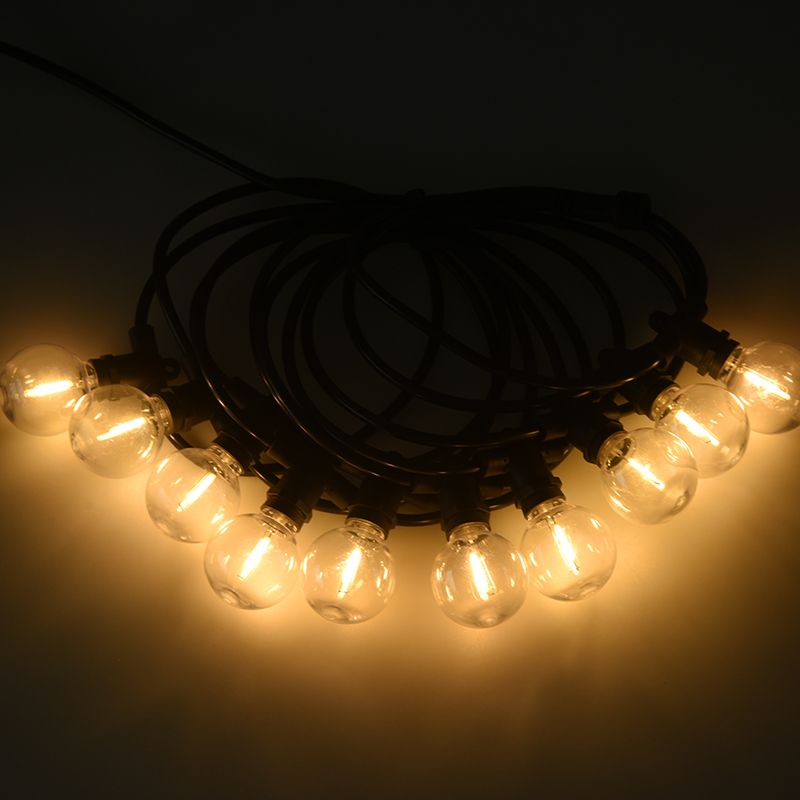 G40 integrated solar string light (E12 lamp holder, 5 meters 10 lights)The G40 integrated solar string light is an outdoor lighting product that combines illumination and decoration. It is suitable for courtyards, patios, gardens, and out...View Product →
Working with a manufacturer that offers all of these options under one roof shortens the qualification process considerably. A supplier that produces its own string assemblies, its own solar modules, and its own control housings can adjust the whole system when one part changes, instead of negotiating between three vendors.
Ask for the receiver's load rating, the coding model, and the sample lead time in the same message. Suppliers who answer all three precisely are the ones worth a second order.
Enclosure Ratings, Cable, and Connectors
The control electronics may be the brain of a remote control light, but the enclosure and cable are what keep it alive outdoors. Buyers should treat these as primary specifications rather than afterthoughts.
For the receiver housing, IP44 protects against splashing water and is adequate for a covered porch or a sheltered wall. IP65 protects against water jets from any direction and is the appropriate minimum for a garden installation exposed to rain and irrigation. IP67 adds temporary immersion and is used for products that may sit in standing water after heavy rainfall. The lamp holders themselves are frequently IP44 rated, so an IP65 receiver on an IP44 lamp holder still leaves a weak point; the lowest rating in the chain governs the assembly.
Cable selection follows the same logic. Rubber-sheathed cable resists abrasion, UV degradation, and low-temperature cracking better than PVC in permanent outdoor installations, which is why engineering-grade rubber strings are specified for commercial and long-term deployments. Connector design matters too: a screw-together waterproof connector with an O-ring seal outperforms a push-fit connector in every field test, at a small cost premium.
Practical checks before approval
- Confirm the receiver IP rating separately from the lamp holder rating.
- Check that the cable gland compresses the sheath, not just the conductors.
- Verify that the connector can be mated and separated by hand in cold weather without tools.
- Confirm that the receiver housing has a drain path or is fully potted, so condensation cannot accumulate.
- Check UV stability of any exposed cable jacket with a supplier statement rather than an assumption.
These checks take under an hour on a sample bench, and they reveal more about a supplier's manufacturing discipline than any brochure. A factory that thinks about cable glands and condensation is usually also thinking about solder joints and burn-in testing.
The weakest ingress protection rating in the assembly determines the real-world reliability, so always ask for the receiver rating separately.
Customisation Scope: What a Manufacturer Can Change Without Retooling
Customisation is where a manufacturing partner adds the most value to a private-label programme, and it is also where buyers most often assume more flexibility than exists. The useful question is not "can you customise" but "which changes affect tooling and which do not".
Changes that typically require no new tooling include voltage and plug type, overall string length and lamp spacing, wire gauge and jacket material, lamp colour temperature, packaging artwork and carton dimensions, and the coding of the remote handset. These are configuration changes, and a well-organised factory can handle them within a normal production cycle. A buyer specifying a five-metre run in warm white for one market and a ten-metre run in multicolour for another is really ordering two configurations of the same platform.
Changes that usually require new tooling or new board design include lamp holder geometry, receiver housing shape, and any change to the driver architecture. Moving from a three-channel colour driver to a per-lamp addressable driver is a redesign, not a configuration, because the data path changes and the cable may need an additional conductor.
This distinction is worth keeping in mind when a buyer requests pixel-level control on a product that was originally designed as a simple on-off string. The S14 pixel-level controllable RGB warm white pendant string light illustrates what becomes possible once the driver architecture supports individual lamp addressing: chasing effects, gradients, and scene programming all become available, but they come from a different control platform rather than from a different handset.
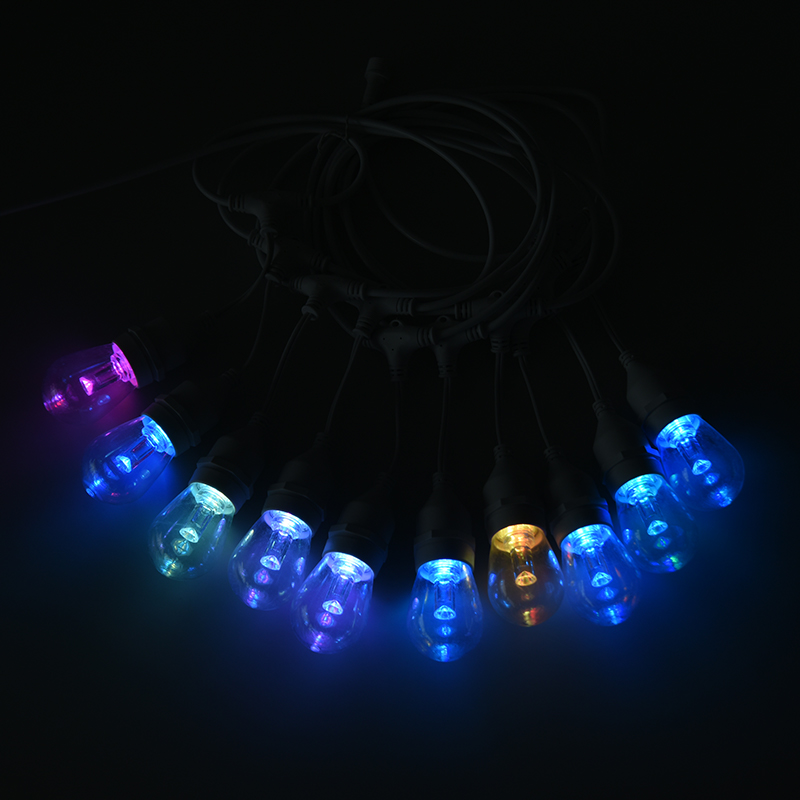 S14 pixel-level controllable RGB warm white pendant string lightsThe S14 pixel-controlled string lights utilize an RGB + warm white light source combination with power line communication technology. Each light point can be independe...View Product →
Rapid prototyping deserves a mention here as well. A manufacturer that can build a working sample from a drawing or a competitor reference within a short cycle allows a brand to test a concept in a real installation before committing to a production run. That cycle time is often a stronger differentiator than unit price, particularly for brands launching a new seasonal range.
Separate configuration changes from design changes before the enquiry goes out. Configuration can be quoted immediately; design changes need a development schedule.
Quality Control and Compliance Documentation for Export Orders
For importers and brands, the paperwork can be as decisive as the product. A supplier that cannot produce the right documents on time will delay a shipment regardless of how good the samples looked.
At the factory level, a credible quality process covers incoming material inspection, in-process checks at assembly, and a functional test of every finished unit before packing. For remote control products specifically, the functional test should include pairing verification, a full sweep of brightness and colour functions, and a check that the receiver responds at a defined distance rather than at point-blank range. Ageing or burn-in of the control module, even for a short period, catches early failures that would otherwise appear in the customer's first week of use.
At the documentation level, buyers should confirm that the supplier holds independent export rights and understands the regulatory requirements of the destination market. This includes safety documentation for the mains adapter where applicable, battery transport documentation for solar products, and the correct disposal and recycling statements on the packaging. A supplier already exporting to Europe, North America, and Australia will normally have these templates available and will know which market requires which marking.
Documentation checklist for a first order
- Signed specification sheet with protocol, distance, load rating, and IP ratings stated.
- Approved golden sample retained by both parties.
- Packaging artwork approval with barcode and warning text verified.
- Functional test record or inspection report for the production batch.
- Battery and adapter documentation appropriate to the destination market.
- Carton drop-test and stacking specification for the shipping method used.
The value of this checklist is that it converts informal assurances into records. When a second order is placed a year later, the approved sample and the signed specification are what keep the product identical, even if the production team has changed.
A retained golden sample plus a signed control specification is the cheapest insurance available against drift between production batches.
Installation and Maintenance Guidance for Remote Control Lights
Time spent on installation guidance reduces support cost more effectively than almost any other investment, because most field problems are created during installation rather than during manufacture.
The receiver should be mounted where it can be reached without dismantling the installation and where it is not permanently shaded from the handset. On a garden run, positioning it near the power source is preferable to positioning it at the far end, for both signal and voltage reasons. Waterproof connectors should be mated firmly and, where the design allows, positioned with the joint slightly above the lowest point of the cable so that water cannot pool around the seal.
Solar products have their own installation rules. The panel needs an unobstructed southern or northern exposure depending on hemisphere, and it needs to be clear of shade during the middle of the day when charging is most productive. The battery compartment should be accessible for seasonal replacement without removing the whole string. Setting realistic expectations in the instruction sheet about runtime during winter or extended overcast periods prevents a large share of returns.
Routine maintenance that actually matters
- Clean the solar panel surface at the start of each season; dust and pollen reduce charge current measurably.
- Check and replace handset batteries before peak season rather than after a complaint.
- Inspect cable glands and connector seals annually for hardening or cracking.
- Verify that every lamp holder is fully seated; a loose lamp can cause intermittent behaviour that looks like a control fault.
- Confirm that the receiver housing has not filled with condensation after the wettest month of the year.
None of these tasks requires specialist tools, and a short maintenance section in the manual turns a potential warranty claim into routine care. For commercial installations such as hospitality terraces and retail facades, an annual inspection routine is worth writing into the service contract.
Receiver placement and solar panel exposure are installation decisions, and they determine more of the customer's experience than the electronics inside the housing.
Frequently Asked Questions About Remote Control Lights
Can a remote control be added to an existing string light that was not designed for one?
It is possible with an inline plug-in receiver that sits between the supply and the string, provided the receiver is rated for the string's voltage and current. It is not possible to add per-lamp effects this way, because that requires a driver architecture that addresses each lamp individually. For a permanent solution, ordering a string with integrated control is more reliable than retrofitting.
Why does my remote control light respond inconsistently at night?
Temperature is the usual reason. Battery voltage in the handset drops in cold conditions, and the receiver's crystal oscillator drifts slightly with temperature. A handset using two AAA cells generally performs better in cold weather than one using a single coin cell. If the inconsistency only appears in one season, battery chemistry and receiver placement are the first things to check.
How many strings can one handset control?
This depends entirely on the coding model chosen at the factory. Fixed-code systems allow one handset to control any receiver that shares the same code, which is convenient but not selective. Paired or rolling-code systems can be configured so that one handset controls a defined group of receivers, or so that each receiver responds only to its own handset. Decide which behaviour you need before placing the order, because it is difficult to change afterwards.
Is radio frequency safe and legal in every market?
Radio frequency control in the 315 MHz and 433 MHz bands is widely used in consumer lighting and is subject to national radio equipment regulations. Most established manufacturers design to the common international requirements and can supply the relevant documentation. Buyers should confirm that the destination market accepts the frequency band used, since a small number of countries restrict specific ranges.
What is the difference between a remote control light and a smart light?
A remote control light responds to a dedicated handset over infrared or radio frequency and normally works without a network. A smart light typically connects over Wi-Fi or Bluetooth to an app, often with scheduling and voice assistant integration. The two overlap, and some products support both a physical handset and an app, which is often the most practical combination for outdoor products where the network may not reach.
How should remote control lights be stored between seasons?
Remove the batteries from the handset and, on solar products, charge the battery to roughly half capacity before storage. Store the string loosely coiled rather than tightly wound, keep the receiver housing dry, and avoid storing in a location that reaches extreme temperatures. A string stored correctly will usually perform identically the following season.
Most questions about remote control lights come down to three variables: protocol, distance, and battery behaviour in cold weather. Document all three and the support volume drops.
Further Reading on Outdoor Lighting Sourcing
The topics covered here connect to a wider set of questions about outdoor decorative lighting, from waterproof construction to solar sizing. Two background pieces on this site go deeper into those areas and are useful for buyers building a category plan.
- Commercial string lights guide to uniform, waterproof outdoor lighting, which covers run planning, load distribution, and waterproofing practice for larger installations.
- Choosing outdoor decorative solar lights and indoor decorative lighting, which explains panel sizing, battery capacity, and the trade-offs between solar and mains supply.
Both articles are written for buyers rather than end users, and they assume the reader is comparing suppliers and specifications rather than browsing for a single purchase. Used together with the control specification checklist in this article, they form a practical preparation package before any quotation is requested.
Bringing the Specification Together
Remote control lights reward buyers who treat control as an engineering decision rather than a feature checkbox. The protocol determines where the product can be installed, the receiver rating determines whether it survives the first rainy season, the load rating determines whether it survives the first year, and the coding model determines how much support time it consumes. None of these are expensive to specify correctly at the enquiry stage, and all of them are expensive to correct after a container has shipped.
For brands, importers, and wholesale buyers, the practical sequence is straightforward. Define the installation environment, choose the protocol that matches the required working distance, specify the receiver's IP rating and load rating separately from the lamp holder, agree the coding model, and confirm the customisation items that can be handled as configuration changes rather than redesigns. Then ask for a sample and test it under realistic conditions rather than on a bench.
A manufacturer that can discuss all of these points in one conversation, and can produce a prototype from a drawing quickly, is worth more than a supplier quoting a marginally lower unit price. Ningbo Hengboyi Lighting has been building string lights and solar lighting since 2003 and works with lighting brands and manufacturers internationally, which means the control questions raised in this article are part of everyday order preparation rather than exceptions.
Specify protocol, real-world distance, receiver IP rating, and load rating before price. Those four lines decide whether a remote control light order is profitable or a warranty problem.
Related Products
-
 View More
-
 View More
US Standard S14 String Lights, Integrated E26 Spiral Socket, Warm White Light, Heavy-Duty Engineering Model
-
 View More
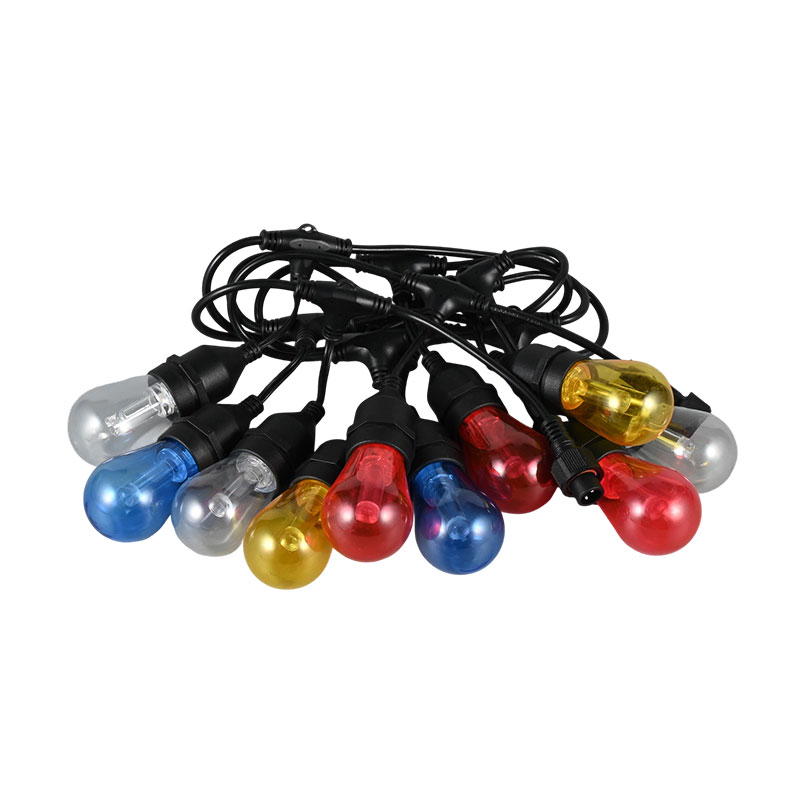
S14 Light Guide Pillar Pendant Type E27 Spiral String Lights
-
 View More
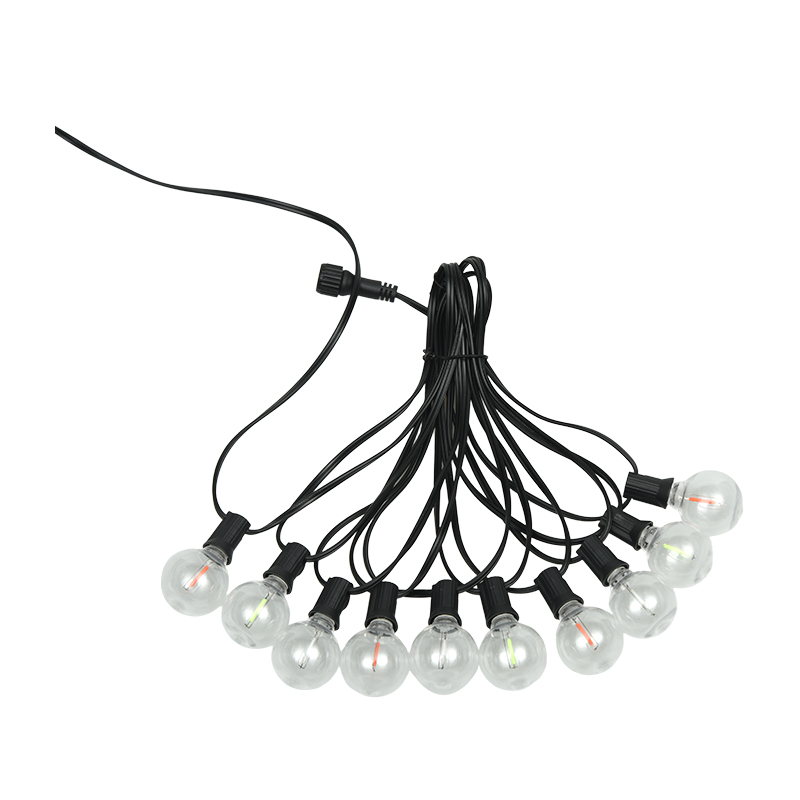
G40 Clip-on E12 Spiral Colored String Lights
-
 View More
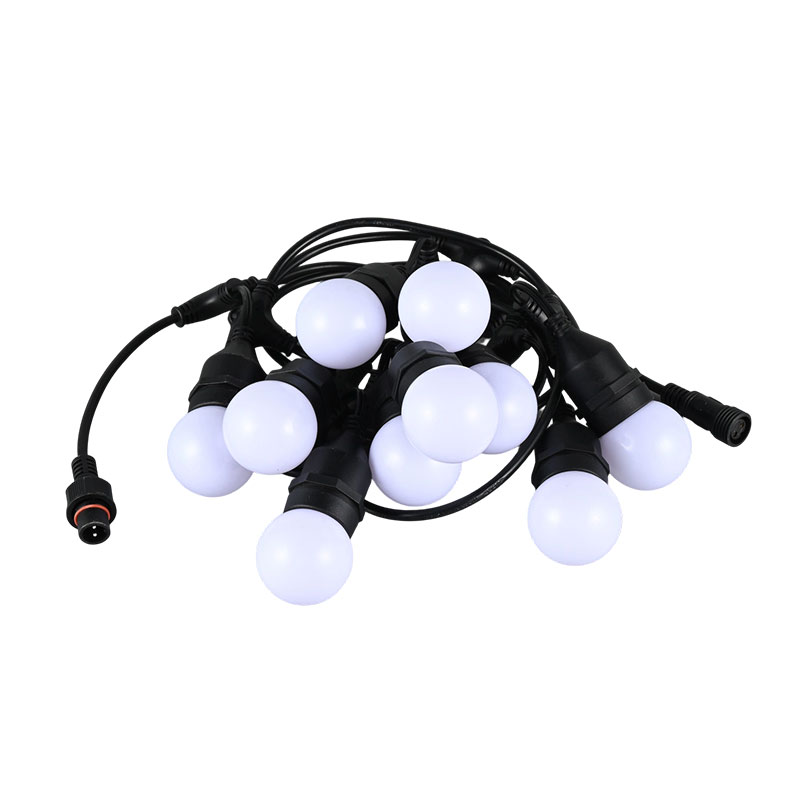
G45 Hanging Type E27 Spiral RGB Synchronized Flashing String Lights
-
 View More
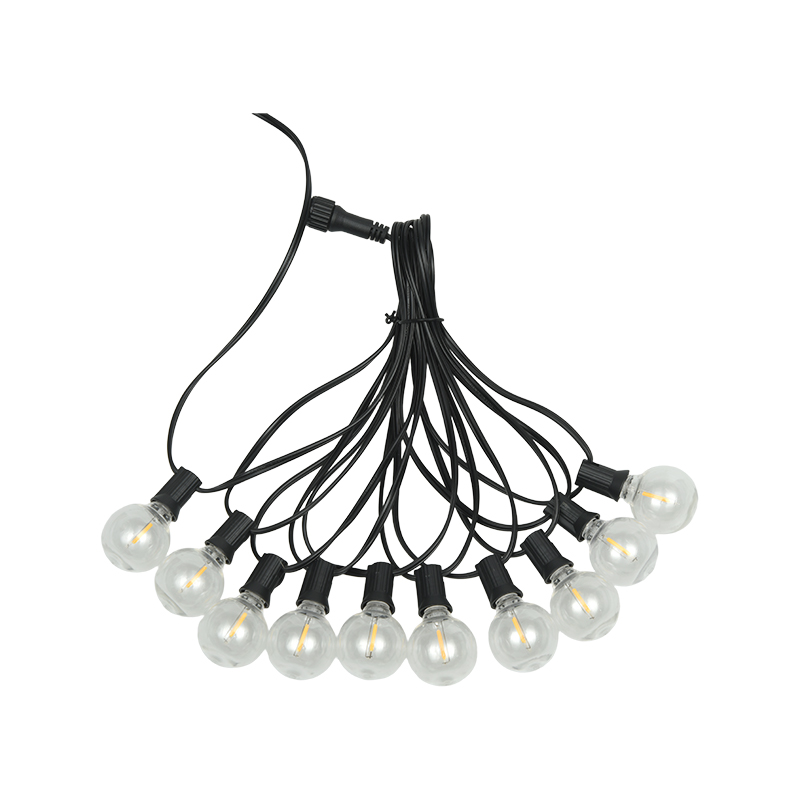
G40 Clip-on E12 Spiral Warm White String Lights
Hengboyi are always ready to help you and answer your question if you need.
Request A Quote
Contact Info.
 Mob: +86-13901119074
 Tel: +86-574-62838966
 E-mail: sale2@hengboyi.com
 Add: No. 18 Rongchuang Road, Mingwei Village, Lizhou Street, Yuyao City, Ningbo, Zhejiang Province, China
Quick Links
Product List
QR CODE
Copyright Ningbo Hengboyi Lamp Co., Ltd. All rights reserved.
China best outdoor decorative solar lights Manufacturer
Custom decorative string lights indoor Factory

